
Why Your Well Water Smells Like Rotten Eggs in 2026: Causes & Solutions
Imagine the hesitation you feel when a guest asks for a glass of water, only to be met with a pungent stench that belongs in a swamp. That sulfur scent isn’t just an embarrassment; it’s a specific chemical signal from your South Jersey aquifer. Understanding what causes rotten egg smell in well water is the first step toward reclaiming your home’s comfort and confidence. Whether the culprit is hydrogen sulfide gas or sulfate-reducing bacteria, you shouldn’t have to settle for water that tastes metallic or ruins your brass fixtures with corrosion.
You already know that living with that swampy odor is a daily frustration that affects everything from your morning shower to your evening tea. You deserve a solution that works silently in the background so you can focus on enjoying your space. This guide will help you identify the exact source of that sulfur odor and introduce you to the professional filtration solutions that restore fresh, clean water to your home. We’ll break down the chemical causes, explain why your water heater might be part of the problem, and show you how modern technology makes crystal-clear water a permanent part of your lifestyle.
Key Takeaways
- Pinpoint exactly what causes rotten egg smell in well water by distinguishing between naturally occurring hydrogen sulfide gas and sulfur-reducing bacteria.
- Learn the “Cold Water Test” to quickly diagnose whether your odor issue starts in the well or is a reaction inside your water heater.
- Protect your home’s plumbing from the hidden costs of sulfur, including copper pipe corrosion and fixture-clogging “black slime” buildup.
- Discover why modern, chemical-free filtration like Air Induction Oxidation (AIO) is the gold standard for restoring fresh water to your entire house.
- Understand the value of local South Jersey expertise in choosing a permanent, low-maintenance solution tailored to our region’s unique aquifers.
What Causes the Rotten Egg Smell in Well Water?
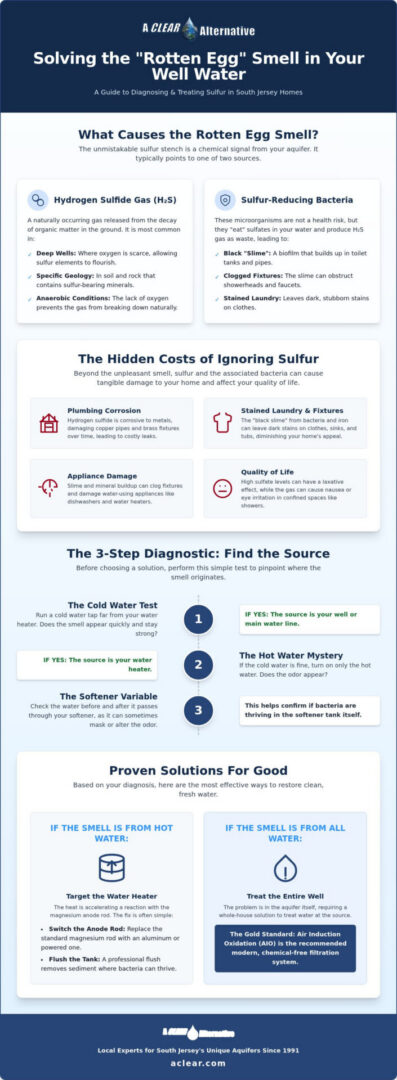
The unmistakable stench of sulfur is more than a nuisance. It’s a chemical signal from your aquifer. When homeowners ask what causes rotten egg smell in well water, the answer usually points to hydrogen sulfide gas (H2S). This gas occurs naturally as organic matter decays in the earth or when groundwater reacts with minerals in the soil. Deep wells are particularly susceptible because they lack oxygen. These anaerobic conditions allow sulfur-producing elements to flourish undisturbed. You might find that the odor fluctuates. It often peaks during seasonal shifts or periods of high demand, like when you’re running multiple loads of laundry or hosting a houseful of guests.
Sulfur-Reducing Bacteria vs. Hydrogen Sulfide Gas
Distinguishing between gas and bacteria is vital for a permanent fix. Understanding what causes rotten egg smell in well water in your specific home helps you choose between a simple maintenance task and a specialized filtration system. Sulfur-reducing bacteria don’t just exist; they actively transform your water’s chemistry. These organisms consume sulfates and release H2S gas as a waste product. While they aren’t considered a pathogen, they are a nightmare for your plumbing. They produce a characteristic “slime” or biofilm that clings to surfaces. You can often spot this by checking your toilet tank. If the interior walls feel slippery or show black or reddish deposits, you have a bacterial colony. This sulfur water environment eventually clogs fixtures and leaves dark stains on your laundry, stripping away the premium feel of your home.
Is Sulfur in Water Dangerous?
Your family’s health is the most important factor. Generally, the levels of sulfur found in domestic wells aren’t toxic to humans. Hydrogen sulfide is so potent that you’ll likely stop drinking the water long before it reaches a dangerous concentration. However, high sulfate levels can trigger a laxative effect, which is particularly hard on children or guests who aren’t used to your local water. There’s also the air quality to consider. In confined spaces like a small shower stall, the released gas can lead to minor eye irritation or nausea. It’s a quality-of-life issue that affects your confidence and your home’s overall atmosphere. Addressing the source isn’t just a technical task; it’s a way to restore the peace and clarity your household deserves.
The 3-Step Diagnostic: Is the Smell in the Well or the Heater?
Before you invest in a whole-house system, you need to pinpoint the origin. Guesswork leads to wasted money and continued frustration. The easiest way to understand what causes rotten egg smell in well water in your specific home is a simple nose test at various taps. This diagnostic process saves you time and ensures you aren’t treating the wrong part of your plumbing system.
- The Cold Water Test: Run the cold water for several minutes at a sink far from the well pressure tank. If the stench is immediate and persistent, the source is likely your well or the main service line.
- The Hot Water Mystery: If the odor only appears when you turn on the hot tap, your water heater is the culprit. The heat accelerates chemical reactions that don’t happen in your cold pipes.
- The Softener Variable: Check the water both before and after it passes through your water softener. Salt-based systems can sometimes mask the scent or, in some cases, provide a breeding ground for bacteria that alter the odor.
The Water Heater Anode Rod Connection
Your water heater contains a magnesium anode rod designed to prevent tank corrosion. In many South Jersey homes, naturally occurring sulfates react with this magnesium rod to create H2S gas. This reaction happens exclusively inside the tank. You can often solve this instantly by switching to an aluminum or powered anode rod. If the smell persists despite a rod change, your tank might need a professional flush to clear out sediment where bacteria thrive. If you’re unsure about the next step, a comprehensive water test can provide the clarity you need.
When to Suspect the Well Aquifer
If the cold water test confirms the odor is everywhere, the issue lies deep underground. Local geology in areas like Medford Lakes and Shamong often contains high levels of organic matter. This creates the perfect environment for Hydrogen Sulfide and Sulfur Bacteria in Well Water. When the entire aquifer is affected, you’ll notice the smell at every faucet, including your outside hose bibs. Many homeowners try “shocking” the well with chlorine. While this provides immediate relief, it’s usually a temporary bandage. The bacteria often return within weeks because the source-the groundwater itself-remains unchanged. Truly understanding what causes rotten egg smell in well water means recognizing when the environment requires a permanent, professional filtration shield rather than a one-time fix.
The Hidden Costs of Ignoring Sulfur and Iron
The stench is just the beginning of the problem. While you’re investigating what causes rotten egg smell in well water, the gas is already working against your home’s infrastructure. Hydrogen sulfide is notoriously aggressive toward metal. It triggers rapid corrosion in copper piping, often leading to those frustrating pinhole leaks that are difficult to track until they cause water damage. Beyond the pipes, you might notice a frustrating drop in water pressure. This is usually caused by “black slime,” a thick biofilm produced by sulfur bacteria that accumulates in faucet aerators and showerheads. It isn’t just a cleaning hassle; it’s a structural threat that compromises your plumbing’s efficiency.
Sulfur also ruins the aesthetic experience of your daily life. It tarnishes silverware and leaves dark, unsightly stains on light-colored laundry that are nearly impossible to remove. In South Jersey, we frequently see this issue paired with acidic water. This combination is why many local homeowners require acid neutralizer systems to protect their investment and restore the clarity of their water. When you ignore the root cause, you aren’t just living with a bad smell; you’re allowing your home’s value to erode from the inside out.
Damage to Appliances and Fixtures
Your high-end appliances aren’t immune to chemical wear. Sulfur gas accelerates the degradation of rubber seals in dishwashers and washing machines, leading to premature leaks and expensive repairs. Bathroom fixtures made of brass or chrome can lose their luster in months as the gas reacts with the finish, leaving behind a dull, corroded appearance. Tankless water heaters are especially vulnerable to this environment. The internal heat exchangers can develop sulfur-based scale, which reduces heating efficiency and eventually causes total system failure long before the manufacturer’s expected lifespan. For insights into how professional plumbing teams like CQR Plumbing manage these types of infrastructure risks, you can learn more about their approach to maintenance.
Living in South Jersey means dealing with the unique chemical fingerprint of the Kirkwood-Cohansey aquifer. This groundwater source is known for being naturally acidic, which creates a challenging environment for modern plumbing. There is a strong correlation between low pH levels and the high sulfur or iron content that defines what causes rotten egg smell in well water in our region. The dense, mineral-rich soil conditions in Tabernacle directly contribute to H2S gas formation by providing the ideal anaerobic environment for bacteria to thrive. This local geological reality is well-documented in research regarding Hydrogen Sulfide (Rotten Egg Odor) in Water Wells, making professional, localized filtration a necessity rather than a luxury.
Proven Solutions: How to Remove Sulfur Smell for Good
Once you identify what causes rotten egg smell in well water, you can move from frustration to a permanent solution. Treating this issue effectively requires a Point-of-Entry (POE) system. A single filter under the sink won’t help when you’re standing in a stinky shower or washing your clothes in swampy water. For 2026, the gold standard is Air Induction Oxidation (AIO). It’s an eco-friendly, chemical-free technology that transforms your water’s profile by using the power of oxygen. We also utilize catalytic carbon filtration to “scrub” any remaining gas, leaving your water crisp and odorless. Choosing the right tech starts with data. A comprehensive water testing session ensures your system is calibrated to your home’s specific mineral levels.
Air Induction vs. Chemical Injection
AIO systems are incredibly efficient and modern. They work by maintaining a pocket of compressed air inside the filter tank. When the sulfur gas hits that air, it oxidizes and turns into a solid that the system can easily trap and flush away. It’s a natural process that doesn’t require you to store, handle, or refill heavy chemical tanks. In contrast, chemical feed pumps inject chlorine or hydrogen peroxide into your water line. While these are sometimes necessary for extreme bacterial contamination, they involve significantly more maintenance and recurring costs. Most families prefer the simplicity and “set it and forget it” nature of air-based oxidation. It’s a cleaner, more sustainable approach to water quality.
The Role of Iron and Sulfur Filtration Systems
Our specialized iron and sulfur filtration systems are engineered to handle the heavy mineral loads common in the Tri-State area. You might be tempted to try a standard water softener, but these are designed to remove calcium and magnesium, not hydrogen sulfide gas. They simply aren’t equipped to neutralize the odor. We also prioritize your home’s peak flow rate. Your filtration should be a silent, invisible partner in your daily routine. It needs to provide high-pressure, fresh water even when the dishwasher and the master shower are running simultaneously. Investing in a professional, correctly sized system means you never have to apologize for your water again.
Ready to restore the fresh, clean atmosphere of your home? Schedule your professional water analysis with A Clear Alternative today.
The A Clear Alternative Advantage: Local Experts Since 1991
Since 1991, we’ve focused on one thing: ensuring your home’s water reflects the quality of your life. We aren’t a distant national franchise following a corporate script. We’re a family-owned team that lives in the same South Jersey communities we serve. When you’re struggling to identify what causes rotten egg smell in well water, you don’t need a “one-size-fits-all” filter from a big-box store shelf. Those generic systems often fail to address the high iron and low pH levels specific to our local aquifers. You need a custom-engineered shield designed for the unique mineral profile of your Tabernacle or Medford Lakes home. Our solutions are built to be discreet, efficient, and perfectly aligned with your modern lifestyle.
Serving South Jersey, PA, and DE
Our expertise spans over 35 years across New Jersey, Pennsylvania, and Delaware. We’ve watched local water quality trends shift and regulations become more stringent, particularly regarding NJDEP standards for 2026. As one of the most trusted expert water treatment companies, we prioritize a personalized experience over high-pressure sales. We don’t just install hardware; we provide an aesthetic and functional upgrade to your daily routine. Every Tri-State family deserves water that’s safe, crystal clear, and completely odorless. We understand the local geology better than anyone, which allows us to build filtration systems that actually last in our demanding environment.
Next Steps: Restoring Your Water Quality
Reclaiming your home’s comfort and your own confidence starts with a professional analysis. It’s the only way to pinpoint exactly what causes rotten egg smell in well water at your specific address. Our holistic approach covers the entire lifecycle of your water system. From specialized water softener salt delivery to bulk potable water hauling, we ensure you’re never left without a clean supply. We also provide 24/7 emergency support because a sudden sulfur spike or a well pump failure shouldn’t ruin your weekend. Partnering with a licensed, multi-generational expert means you get a permanent solution and a partner who stands by their work. Let’s make your water a source of pride again.
Reclaim the Freshness of Your Home Today
Living with a pungent odor shouldn’t be part of your daily routine. By identifying what causes rotten egg smell in well water, you’ve already taken the most important step toward a cleaner home. Whether the issue is a simple anode rod reaction or a complex bacterial colony in the aquifer, you now have the tools to diagnose and solve it. Modern, chemical-free technology like Air Induction Oxidation makes it easier than ever to enjoy crystal-clear water without the maintenance of heavy chemicals.
At A Clear Alternative, we’ve spent over 35 years perfecting the science of local water treatment. As a family-owned business since 1991, we don’t just see a technical problem; we see a neighbor who deserves better. With our 24/7 emergency support, you’re never alone in a water crisis. You’re just one step away from the fresh, odor-free water your family deserves and the peace of mind that comes with a professional solution.
Schedule Your Professional Water Test and Eliminate Sulfur Odors Today
Frequently Asked Questions
Is it safe to bathe in water that smells like rotten eggs?
Bathing in sulfur-scented water is generally safe because hydrogen sulfide is considered an aesthetic contaminant rather than a direct health hazard. However, the experience is far from premium. The gas can cause minor eye irritation in confined shower stalls and the lingering scent on your skin can be quite embarrassing. Most South Jersey homeowners find that removing the odor is essential for restoring their sense of comfort and personal confidence.
Can I use bleach to get rid of the sulfur smell in my well?
Bleach or “shock chlorination” is a temporary bandage that rarely provides a permanent fix. While chlorine kills sulfur-reducing bacteria on contact, it doesn’t stop new bacteria from migrating back into your well from the surrounding aquifer. The stench often returns within a few weeks. For a lasting solution, you need a dedicated filtration system that treats the water continuously as it enters your home, ensuring fresh water every day.
Will a standard refrigerator filter remove the rotten egg smell?
Standard refrigerator filters are usually too small and basic to handle hydrogen sulfide gas effectively. These small carbon cartridges are designed to improve the taste of city water by removing chlorine, but they can’t keep up with the volatile nature of sulfur gas. To truly eliminate the odor from your drinking water and ice cubes, you need a professional, whole-house solution that scrubs the gas before it reaches your kitchen.
How much does a whole-house sulfur filtration system cost?
The investment for a professional filtration shield depends on your home’s specific mineral levels and water usage. According to verified 2026 industry data, most homeowners spend between $2,000 and $5,000 for a multi-stage well water treatment system. This investment covers the advanced technology required to neutralize odors and protect your plumbing. We recommend starting with a professional analysis to determine the exact configuration your South Jersey property requires for long-term clarity.
Does a water softener make the sulfur smell worse?
A water softener can sometimes intensify the stench by providing a breeding ground for sulfur-reducing bacteria within the resin tank. Softeners are engineered to remove hardness minerals like calcium, not gases. If you’ve noticed the scent getting stronger after installing a softener, it’s a sign that you need a specialized system. Understanding what causes rotten egg smell in well water helps you realize that softening and sulfur removal are two different processes.
How often do sulfur filters need maintenance?
Modern Air Induction Oxidation (AIO) systems are designed for a “set it and forget it” lifestyle, typically requiring just one professional check-up per year. Unlike old-fashioned systems that need heavy chemical refills, AIO units use natural air to oxidize the gas. You’ll only need to monitor for sediment buildup and ensure the system’s backwash cycle is functioning correctly. This low-maintenance approach is perfect for busy families who value both convenience and water quality.
What is the difference between sulfate and hydrogen sulfide?
Sulfate is an odorless, naturally occurring mineral that doesn’t cause a stench, though it can have a laxative effect at high concentrations. Hydrogen sulfide is the gas that creates the actual rotten egg odor. Knowing what causes rotten egg smell in well water involves understanding how bacteria convert sulfate into gas. A professional test can determine which form is present in your Medford Lakes or Tabernacle home, allowing for a more targeted and effective treatment plan.
Can sulfur in my water damage my dishwasher or washing machine?
Sulfur gas is highly corrosive and can lead to expensive repairs for your major appliances. It aggressively attacks rubber seals and metal components in dishwashers and washing machines, often causing premature leaks. Over time, the “black slime” associated with sulfur bacteria can also clog internal valves and sensors. Investing in a professional filtration system is a smart way to protect your high-end appliances and extend their operational lifespan significantly.