
Water Softener Maintenance Tips: The Complete 2026 Homeowner’s Guide
What if the secret to lower energy bills and a 20-year appliance lifespan was hiding in your basement? Most homeowners treat their water systems like a “set it and forget it” device. Neglecting basic care is a recipe for sudden hard water and costly repairs. You’ve likely felt the frustration of finding a salt bridge just when you need soft water most. Perhaps you’re tired of hauling heavy salt bags. It’s time to move past the guesswork. This guide provides the essential water softener maintenance tips you need to keep your system running at peak performance without the stress.
We understand that you want a home that runs smoothly and feels modern. You deserve the confidence that comes with soft water, from better-looking skin to appliances that actually last. In this complete 2026 guide, we break down everything from managing salt levels to knowing exactly when to call in a professional. We’re sharing expert-backed strategies specifically tailored for the unique water challenges in Tabernacle, Shamong, and Medford Lakes. Let’s transform your water care from a chore into a simple, high-performance habit. Protect your investment and your peace of mind.
Key Takeaways
- Protect your home’s aesthetic and appliance longevity by mastering the routine inspection of your brine and resin tanks.
- Implement expert water softener maintenance tips like the “half-full” salt rule to ensure peak efficiency and consistent water quality.
- Learn to distinguish between simple monthly DIY tasks and the annual professional oversight needed to lubricate valves and clean resin beds.
- Gain the confidence to troubleshoot common system errors and break up salt bridges before they impact your daily comfort.
- Discover why specialized care for iron and sulfur is essential for homeowners in Tabernacle, Shamong, and Medford Lakes.
Why Water Softener Maintenance is Essential for Your Home
Think of your water softener as the silent guardian of your home’s aesthetic and functional health. It’s not just a tank in the basement; it’s a sophisticated system that requires consistent attention to perform its best. Proper water softener maintenance tips involve the routine inspection and cleaning of the brine and resin tanks. This ensures the system continues to facilitate the essential chemical swap that keeps your water soft. If you understand how water softeners work, you know that keeping the resin bed clean is the difference between silky water and a system that’s just taking up space.
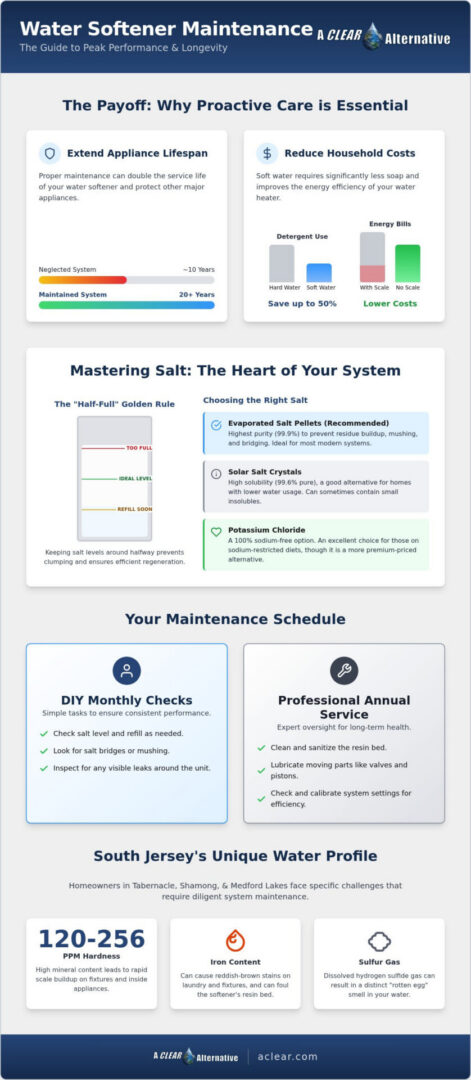
Neglecting this care has a high price. Without maintenance, scale buildup begins its slow destruction of your water heater and dishwasher. In South Jersey, where municipal water hardness often reaches 120 to 256 ppm, this mineral accumulation happens faster than you might think. A well-maintained system operates with surgical precision, using less salt and water to achieve the same results. While a neglected unit might fail after just 10 years, a proactive approach can easily extend that lifespan to 20 years or more. It’s about moving from reactive repairs to long-term reliability.
Protecting Your Plumbing and Appliances
Hard water is aggressive. It creates scale that narrows the diameter of your pipes and can even cause pinhole leaks in copper piping over time. Ion exchange is the core process of water softening where hard minerals like calcium and magnesium are replaced by sodium or potassium ions. When this process fails due to poor maintenance, your high-efficiency washing machine and modern designer fixtures are the first to suffer. Maintenance keeps the water quality consistent, protecting the internal seals and heating elements of your most expensive home investments.
- Prevents pipe corrosion: Keeping minerals in check stops the internal degradation of your plumbing.
- Appliance efficiency: Soft water ensures your dishwasher doesn’t need to work twice as hard to get dishes clean.
- Fixture aesthetics: Stop the white, chalky buildup from ruining your matte black or brushed gold faucets.
The Financial Benefits of Proactive Care
Investing time in maintenance pays immediate dividends in your monthly budget. You’ll notice the difference in your shopping cart and your utility bills. When your softener is tuned for peak efficiency, you don’t need to overcompensate with chemicals or energy. It’s a modern lifestyle choice that rewards you with lower overhead and a more sustainable home. Proactive care also means you aren’t surprised by the “emergency repair” premium when a system fails on a holiday weekend.
- Reduced cleaning costs: You can reduce your soap and detergent consumption by up to 50% when your water is truly soft.
- Lower energy bills: Your water heater stays efficient because it isn’t heating through a thick layer of rock-hard scale.
- Predictable maintenance: Small check-ups are always more affordable than a total system replacement.
Mastering Salt Management: The Heart of Maintenance
Salt management is the pulse of your water system. It’s the most frequent interaction you’ll have with your unit, and getting it right ensures the ion exchange process never falters. Think of salt as the fuel that keeps your water feeling luxurious and your fixtures looking pristine. One of the most effective water softener maintenance tips is to follow the “half-full” golden rule. Filling your brine tank to the brim might seem like a time-saver, but the extra weight and lack of airflow often lead to clumping. Keeping the tank about half-full allows the salt to dissolve evenly and prevents the system from working harder than it needs to.
Choosing the right salt is just as vital as the level itself. Most modern systems perform best with high-purity pellets, which are designed to resist breaking down into a messy sludge. Solar crystals are an alternative, but they are often best suited for homes with lower water usage. For those looking to avoid sodium, potassium chloride is a premium option that works beautifully, though it comes at a higher price point. According to university research on water softening, the purity of your salt directly impacts the longevity of the resin bed. High-quality salt keeps the internal components clean and reduces the frequency of deep-cleaning cycles.
Dealing with Salt Bridges and Mushing
In the humid basements of South Jersey, salt can sometimes rebel. High moisture levels cause salt to fuse together, creating a hard crust known as a salt bridge. This shelf sits above the water level; your tank looks full, but the system is actually starving for brine. You can test for this by gently tapping the salt with a broom handle. If you feel a hard layer that doesn’t budge, break it up carefully without hitting the tank walls. Salt mushing is a different beast. This happens when salt dissolves into a thick, sandy sludge at the bottom of the tank. If your softener stops regenerating properly, you might need to scoop out this mush to clear the intake area and restore peak efficiency.
The Convenience of Salt Delivery Services
Let’s be honest; lugging 40-pound bags of salt down the basement stairs is the biggest reason homeowners skip their checks. It’s a physical chore that turns a simple task into a dreaded weekend project. This is where a water softener salt delivery service becomes a game-changer for your lifestyle. Beyond just saving your back, professional delivery ensures your system never runs dry. When a technician handles the refill, they also perform a quick visual inspection. They can spot a developing salt bridge or a small leak before it turns into a midnight emergency. It’s a modern, hands-off approach to water softener maintenance tips that fits a busy schedule. If you want to reclaim your weekends while keeping your water perfect, a scheduled salt delivery plan is the ultimate upgrade for your home.
DIY vs. Professional Maintenance: What You Need to Know
Balancing home ownership means knowing when to roll up your sleeves and when to trust an expert. Modern water softener maintenance tips focus on a “hybrid” approach. You handle the basics; we handle the technical precision. Every month, take five minutes for a visual leak inspection. Check the floor around the unit for moisture and test your bypass valve to ensure it moves freely. These small acts prevent major headaches and keep your system’s aesthetic as clean as the water it produces.
Professional intervention is about the things you can’t see. Once a year, a technician should perform deep maintenance that goes beyond the surface. This includes lubricating internal valves and re-testing your water quality to ensure settings are still accurate. DIY valve disassembly is risky. Without specialized tools, you might crack the housing or lose a tiny, essential O-ring. If your water starts tasting salty or you notice a sudden drop in water pressure, don’t wait. These are clear signals that your system needs expert attention to avoid a total failure.
Cleaning the Resin Bed and Brine Tank
The resin bed is the engine of your system. Over time, iron and heavy minerals coat the beads, which reduces their efficiency and makes your water feel “less soft.” You can use specialized resin cleaners to strip away these deposits and restore the beads’ capacity. Every 12 months, you should also sanitize the brine tank to prevent bacterial growth and “mushing.” The frequency of these deep cleanings depends entirely on your raw water profile. Regular well water testing is the only way to know if your resin needs extra attention due to shifting mineral levels in Tabernacle, Shamong, or Medford Lakes.
Inspecting the Control Valve and Injectors
The control valve is the “brain” of your unit. It directs water flow and manages the timing of your regeneration cycles. A common issue is a “stuck” cycle, which can waste hundreds of gallons of water in a single night. Cleaning the venturi valve and nozzle is essential for ensuring proper suction during the brine draw. These parts are small and delicate, requiring a steady hand. If your home experiences a local power outage, your unit might need professional calibration. We ensure the digital timer syncs perfectly with your actual water usage habits. This keeps your system in its prime without wasting resources or salt.
Step-by-Step Troubleshooting for Common System Issues
Troubleshooting doesn’t have to be a technical nightmare. When you notice a change in your water quality, follow a logical sequence to identify the culprit. These water softener maintenance tips will help you regain control and confidence in your home’s water system without unnecessary stress. Most issues stem from simple settings or physical blocks that you can identify in minutes.
- Step 1: Check the power supply and timer. Ensure the unit is plugged in and the display is active. If the clock is wrong after a power flicker, your system might regenerate at the wrong time, leaving you with hard water during peak usage hours.
- Step 2: Inspect the salt level. Look for salt bridges or mushing. If your salt level hasn’t moved in weeks despite heavy water use, the salt has likely formed a hard crust that needs to be broken up.
- Step 3: Trigger a manual regeneration. Most modern units have a “Regen” button. Pressing this forces the system to run through its cycles, allowing you to listen for the motor and ensure water is moving through the lines properly.
- Step 4: Check the bypass valve. Ensure the valve handles are in the “service” position. It’s surprisingly common for these to be bumped into “bypass” mode during basement cleaning or storage.
- Step 5: Test at the tap. Use a basic hardness test kit at the sink closest to the softener. This confirms whether the hard water is a whole-house issue or localized to a specific fixture.
Diagnosing Changes in Water Pressure
A sudden drop in water pressure is a red flag that your system is struggling. If your resin bed becomes clogged with sediment or iron, it acts like a plug, restricting the flow of water into your home. Check your pre-filter first; a dark or sludge-filled cartridge is often the hidden culprit. If cleaning the filter doesn’t restore your flow, the pressure drop might indicate that your water needs more than just softening. In areas with high sediment, you may need whole house water filtration to protect your softener and maintain your home’s modern plumbing efficiency.
Fixing ‘Salty’ Water or Brine Tank Overflows
Finding excess water in your brine tank after a cycle is a sign that the suction process has failed. This is usually caused by a clog in the small brine line or the drain line. If the system can’t pull the salty brine out during the rinse cycle, you’ll end up with a salty taste at your taps. You can try cleaning the brine line with warm water, but if the tank continues to fill, it’s time to stop the flow. Use the bypass valve to isolate the unit until a professional can inspect the internal injectors. If you’re tired of DIY guesswork, reach out to A Clear Alternative for a professional diagnostic visit to get your system back to peak performance.
The Local Advantage: Maintaining Softeners in South Jersey
Living in South Jersey means dealing with a unique water chemistry that generic guides simply don’t cover. The mineral profiles in Tabernacle, Shamong, and Medford Lakes aren’t just “hard”; they are often acidic and heavily laden with minerals that can bypass standard filtration. This is why standard water softener maintenance tips sometimes fall short if they don’t account for these local conditions. You need a strategy that reflects the reality of your specific well water to keep your home running beautifully.
In many of our local communities, many homes benefit from acid neutralizer systems working in tandem with their softeners. Low pH water is common here; it can eat through copper pipes and damage your softener’s internal components over time. Balancing the pH first ensures your softener can do its job without being corroded from the inside out. It is a modern, integrated approach that protects your plumbing and your peace of mind.
Combating High Iron and Sulfur Levels
If you’ve seen orange staining on your pristine white towels or smelled a “rotten egg” scent at the tap, you’re dealing with iron and sulfur. These minerals are notorious for “fouling” softener resin, which means they coat the beads so salt can’t clean them. Standard salt alone isn’t enough to strip these heavy minerals away. Specialized iron filters act as a shield, catching these contaminants before they ever hit your softener’s resin bed. For high-sediment well water, frequent backwashing and specific resin cleaning chemicals are essential water softener maintenance tips. It’s about protecting the aesthetic of your home and the long-term health of your filtration investment.
Partnering with A Clear Alternative
Choosing a partner for your water care shouldn’t feel like a cold, corporate transaction. We’ve been family-owned and operated since 1991, bringing over 30 years of local expertise to every home we visit. We understand the specific quirks of South Jersey well water because we’ve been solving these challenges for decades. When you look for water treatment companies near me, you’re looking for a team that values your time and your home’s comfort. Our 24/7 emergency support and deep local roots provide a level of security that national brands simply can’t match. We’re here to ensure your water remains a source of comfort, not a source of stress. Schedule a professional system health check today and experience the difference that local expertise makes for your home.
Elevate Your Home’s Water Quality for Years to Come
Your home is an investment in your daily lifestyle and personal comfort. Mastering these water softener maintenance tips ensures that every shower feels luxurious and every appliance operates at peak efficiency. From the half-full salt rule to identifying the unique mineral challenges in Tabernacle, Shamong, and Medford Lakes, you now have the tools to extend your system’s life. Proactive care isn’t just about avoiding repairs; it’s about the confidence that comes with knowing your water is pure and soft. It’s a simple habit that protects your home’s modern aesthetic and functional health.
We understand that life gets busy and heavy salt bags are a physical chore. A Clear Alternative has been a trusted, family-owned partner since 1991. Whether you need a technical calibration or the convenience of scheduled refills, we’re here with 24/7 emergency service to keep your home running smoothly. Don’t let hard water compromise your plumbing’s health or your peace of mind. We’re ready to help you achieve the effortless, high-quality water experience you deserve.
Schedule your professional water softener maintenance or salt delivery today!
Frequently Asked Questions
How often should I check the salt level in my water softener?
You should check your salt level at least once every month to ensure consistent performance. A typical family of four uses about 9 to 10 pounds of salt weekly, so a monthly check prevents the tank from running dry. Integrating this into your water softener maintenance tips routine ensures you never experience a sudden breakthrough of hard water. Keeping the tank at least half-full is the ideal standard for most modern systems.
What is the best type of salt to use for a water softener in South Jersey?
High-purity salt pellets are generally the best choice for homes in Tabernacle, Shamong, and Medford Lakes. Pellets are specifically designed to resist “mushing” and bridging, which are common issues in our humid New Jersey basements. If you prefer a sodium-free lifestyle, potassium chloride is an excellent premium alternative. Always choose high-quality salts to protect your resin bed from unnecessary mineral impurities and sediment buildup.
Why does my water softener tank have standing water in it?
It is normal to see a few inches of water at the bottom of a “wet” brine tank. However, if the water level is halfway up the tank or higher, you likely have a clog in the brine line or a dirty injector. This prevents the system from sucking the brine out during the regeneration cycle. Cleaning the venturi valve or checking the drain line for kinks usually resolves this common overflow issue.
Can I clean my water softener resin myself, or do I need a pro?
You can easily perform basic resin maintenance by adding a liquid resin cleaner to the brine well. This is a great DIY step for preventing iron buildup. However, if your resin is heavily fouled by the high iron levels common in South Jersey, a professional deep clean is necessary. A technician has the specialized chemicals and tools to strip deep-seated minerals without damaging the delicate resin beads.
How do I know if my water softener is actually working?
The most immediate sign is the “silky” or “slippery” feel of the water on your skin while showering. You will also notice a lack of white scale on your faucets and better lathering from your soaps. For a technical confirmation, use a simple chemical hardness test kit at your kitchen tap. If the test shows more than 1 grain per gallon of hardness, your system isn’t regenerating properly.
What should I do if I find a salt bridge in the brine tank?
If you find a hard crust of salt suspended above the water, use a blunt object like a broom handle to gently break it up. Apply steady pressure to the center of the bridge until it collapses into the water below. Be careful not to strike the sides of the brine tank, as this can crack the plastic. Once the bridge is cleared, your system will begin creating brine again.
Is it normal for a water softener to make noise at night?
Yes, it is perfectly normal to hear your system running in the middle of the night. Most softeners are programmed to regenerate around 2:00 AM when water usage is lowest. You will hear the internal motor turning and the sound of water rushing through the drain line for about 60 to 90 minutes. This rhythmic sound is a sign that your system is successfully cleaning itself for the day ahead.
How long does a typical water softener last with regular maintenance?
A high-quality water softener can last between 15 and 20 years if you follow consistent water softener maintenance tips. Without routine care, many systems begin to fail or lose efficiency after just 7 to 10 years. Regular salt management, annual professional check-ups, and protecting the resin from local iron deposits are the most effective ways to double the lifespan of your investment and ensure long-term water clarity.