
Professional Water Testing Services in South Jersey: The 2026 Homeowner’s Guide
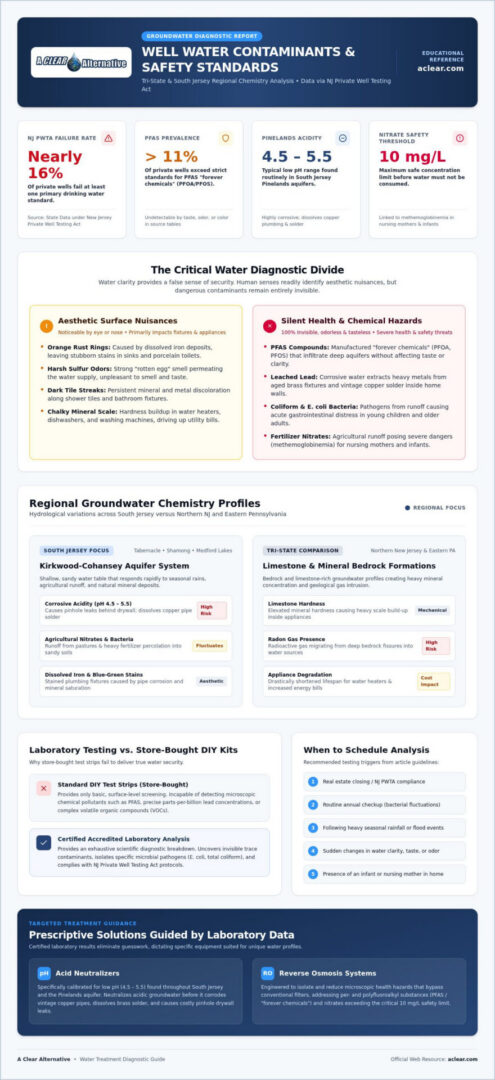
State data reveals that nearly 16% of private wells tested under the New Jersey Private Well Testing Act fail at least one primary drinking water standard. That means clear, odorless water can still harbor unseen risks. For families across South Jersey, relying on professional water testing services is no longer just a closing requirement for real estate transactions; it is an essential diagnostic checkup for your entire home.
You shouldn’t have to live with the quiet worry of invisible contaminants like PFAS and lead, or battle persistent blue-green fixture stains and harsh sulfur odors alone. You deserve absolute clarity and confidence every time you turn on the tap. In this guide, you will discover exactly what is in your regional groundwater and how certified laboratory analysis provides straightforward answers to protect both your family’s health and your plumbing. From local Pinelands aquifer chemistry to decoding complex lab results, here is everything you need to secure pure, refreshing water throughout 2026.
Key Takeaways
- Learn how to separate visible aesthetic annoyances like orange rust stains and sulfur odors from silent health hazards like lead and bacteria.
- Discover why standard store-bought test strips fall short and why accredited professional water testing services are necessary for genuine laboratory accuracy.
- Understand the unique groundwater chemistry affecting South Jersey communities like Tabernacle, Shamong, and Medford Lakes, including mandatory NJ Private Well Testing Act protocols.
- Use a straightforward homeowner checklist to know exactly when to analyze your well, whether closing on a home or responding to sudden changes in water quality.
- See how certified test results guide tailored water treatment solutions, from acid neutralizers to reverse osmosis systems, for complete confidence at the tap.
Why Professional Water Testing is Essential for Your Home
Turn on your kitchen faucet. The stream looks crystal clear, fills your glass without a hint of cloudiness, and leaves no aftertaste. That visual clarity often creates a false sense of security. True water safety is invisible to the human eye. Investing in professional water testing services means partnering with an accredited, certified laboratory to conduct an exhaustive diagnostic breakdown of your water supply. It transforms guesswork into precise, scientific data.
Every homeowner must distinguish between surface-level aesthetic nuisances and genuine health risks. An aesthetic issue shows up as orange rust rings in porcelain sinks or stubborn dark streaks along shower tile. These problems are frustrating to clean, yet they rarely send anyone to the emergency room. Toxic hazards operate entirely differently. Coliform bacteria, volatile organic compounds, nitrates, and microscopic heavy metals carry neither taste, color, nor odor. Drinking a glass full of odorless, transparent water could quietly expose your family to serious biological or chemical threats.
Geography shapes this equation directly. In South Jersey communities like Tabernacle, Shamong, and Medford Lakes, homes draw directly from the Kirkwood-Cohansey aquifer system. This shallow, sandy water table responds rapidly to seasonal rains, agricultural runoff, and natural mineral deposits. Rigorous analysis following standard water testing procedures is the only reliable way to pinpoint what filters into your private well before it reaches your drinking glass.
The Health Implications of Poor Water Quality
Potable water is water safe for human consumption, free from harmful concentrations of biological pathogens and toxic chemicals. Elevated nitrates present severe risks, particularly for nursing mothers and infants vulnerable to methemoglobinemia, while microbial bacteria like E. coli trigger acute gastrointestinal distress in young children and older adults. Lead represents a distinct danger; even when source aquifers test entirely pure, corrosive water leaches toxic heavy metals straight out of aged brass fixtures and vintage copper pipe solder inside your walls.
Protecting Your Home’s Infrastructure
Beyond health hazards, untreated well chemistry destroys valuable household plumbing and appliances from the inside out:
- Acidic groundwater: Pinelands aquifers routinely register a low pH between 4.5 and 5.5, creating aggressive water that dissolves copper plumbing and causes sudden pinhole leaks behind drywall.
- Mineral buildup: Elevated hardness leaves chalky scale inside water heaters, dishwashers, and washing machines, dramatically shortening their operational lifespans and driving up electric bills.
Scheduling targeted well water testing identifies these baseline chemical imbalances early, protecting your property value and sparing you thousands of dollars in emergency plumbing repairs.
Understanding Common Contaminants in the Tri-State Area
Groundwater profiles shift dramatically across the Tri-State region. Northern New Jersey and eastern Pennsylvania often encounter limestone hardness and radon gas, while South Jersey wells tap directly into acidic, mineral-heavy sand aquifers. Here, aesthetic irritants like dissolved iron and foul sulfur smells coexist alongside manufactured industrial compounds. Under the New Jersey Private Well Testing Act, state monitoring has found that over 11% of private wells exceed strict standards for per- and polyfluoroalkyl substances (PFAS). These “forever chemicals,” including PFOA and PFOS, leach into deep water tables without altering taste, odor, or clarity. Scheduling certified professional water testing services gives you an uncompromised breakdown of both natural deposits and modern chemical pollutants.
Bacteria and Nitrates: The Invisible Threats
Agricultural operations and horse pastures in rural pockets like Tabernacle play an essential role in local heritage, but heavy fertilizer applications and livestock waste can percolate into shallow groundwater supplies. Nitrogen compounds break down into soluble nitrates, which slip easily past natural soil barriers into untreated wells. Heavy seasonal rainfall can also push surface runoff toward aged well casings, introducing total coliform bacteria. Because bacterial contamination can fluctuate after severe weather, annual testing remains a vital safeguard. If your lab report confirms elevated nitrates above the 10 mg/L threshold, stop drinking the water immediately, switch to bottled water for cooking, and explore advanced treatment solutions.
Metals and Minerals: Iron, Manganese, and Lead
Step inside homes across Shamong or Medford Lakes, and you will frequently see reddish-orange stains in sinks, black specks in laundry, or smell a distinct rotten-egg odor from the hot tap. These symptoms stem from high concentrations of dissolved iron, manganese, and hydrogen sulfide gas that occur naturally throughout coastal plain geology. These aesthetic minerals damage fixtures, but they differ fundamentally from toxic heavy metals like lead, which typically leaches into drinking water when acidic water corrodes interior household plumbing. Dedicated Iron and Sulfur Filtration Systems remove heavy mineral deposits effectively, though treatment always begins with scientific diagnosis. If you suspect your well water chemistry is out of balance, connect with a South Jersey water specialist to review your parameters.
Professional Lab Testing vs. DIY Home Kits
Hardware store shelves are packed with mail-order test strips and color-matching droppers promising fast answers for twenty dollars. It is tempting to think a quick dip test is “good enough” to verify your tap water. That assumption can be a dangerous gamble. Colorimetric paper strips rely on broad chemical reactions that only show rough approximations. They completely miss trace poisons. Certified environmental laboratories utilize advanced mass spectrometry and gas chromatography to detect microscopic pollutants. A DIY strip might show a comforting pale yellow for heavy metals, yet an accredited analysis could reveal dangerous concentrations of arsenic or lead that slip right past consumer paper tests.
Sample collection matters just as much as analytical hardware. A homeowner accidentally touching the inside of a sterile collection vial or drawing water through an aerated kitchen nozzle introduces ambient bacteria instantly. That mistake triggers false alarms. Investing in professional water testing services guarantees chain-of-custody protocols. Trained technicians sterilize tap surfaces, flush stagnant plumbing lines properly, and preserve sample temperatures during transit, ensuring the final report reflects your true aquifer conditions rather than accidental surface contamination.
Accuracy and Detection Limits
Toxic chemicals don’t announce themselves in large quantities; they inflict harm at parts per billion (ppb) or parts per trillion (ppt). Aligning your home with official EPA recommendations for well water testing demands analytical sensitivity that paper test strips simply cannot deliver. While DIY kits measure coarse parts per million, certified mass spectrometry identifies synthetic compounds like PFAS down to single digits per trillion. These rigorous, legally defensible findings are mandatory during New Jersey property sales, where mortgage underwriters and state statutes strictly reject over-the-counter DIY results.
Expert Interpretation of Results
Receiving an eight-page laboratory report filled with chemical acronyms and numeric parameters can feel overwhelming. Seeing a reading like “15 mg/L” or “5 pCi/L” means very little without experienced clinical context. A Clear Alternative translates raw scientific data into an actionable roadmap for your home, helping you distinguish between harmless mineral traces and urgent health concerns. Reliable laboratory analysis serves as the essential diagnostic foundation before partnering with expert water treatment companies, ensuring every filter or neutralizer you install matches your home’s exact water chemistry.
When Should You Schedule a Water Analysis?
Your well system operates quietly underground, but its chemistry fluctuates throughout the year. You don’t have to wait for an obvious crisis to verify the purity of your home’s supply. Scheduling professional water testing services establishes a clear baseline and catches developing issues before they escalate into health concerns or plumbing failures. Review this checklist to determine if your well is due for an immediate evaluation:
- Buying or selling a home: New Jersey law mandates certified lab testing before transferring residential property titles.
- Post-repair contamination: Servicing a submersible pump, fracturing a well, or opening wellhead seals can introduce surface dirt and airborne microbes straight into the bore.
- Severe weather events: Heavy rainfall, seasonal pooling, and nearby construction can shift local soil gradients and wash contaminants into shallow sand aquifers.
- Household changes: Welcoming a newborn, caring for elderly relatives, or experiencing unexplained gastrointestinal issues warrants an immediate check of your potable supply.
Real Estate Transactions and Legal Requirements
Real estate transfers in Medford Lakes and surrounding communities require compliance with the NJ Private Well Testing Act. State statutes mandate that certified laboratories collect raw, untreated groundwater samples directly from the source. In South Jersey, mandatory testing covers heavy metals like mercury, volatile organic compounds, nitrates, coliform bacteria, PFAS compounds, and specialized 48-hour rapid gross alpha radiation. A clean, verified test report removes transaction roadblocks, giving prospective buyers confidence and preserving the full market value of your property.
Physical Signs Your Water Has Changed
Your plumbing fixtures often provide the first visible warning signs of trouble. A sharp rotten-egg odor points to hydrogen sulfide gas, which thrives in low-oxygen well environments and requires targeted sulfur testing. If you spot distinctive blue-green stains across your sinks, tubs, and porcelain surfaces, your water is too acidic and is actively eating away at your home’s copper pipe walls. Read our Acid Neutralizer Systems Guide to understand how balancing low pH halts this corrosion. If you have noticed sudden changes in odor, staining, or taste, schedule your comprehensive water analysis to get clear answers and protect your home.
The A Clear Alternative Approach to Pure Water
A detailed lab report is only as valuable as the action plan that follows it. Getting accurate data is step one; resolving the underlying chemistry is step two. That is where working with a dedicated partner transforms the entire experience. Founded in 1991, A Clear Alternative brings over three decades of hands-on expertise to homeowners across New Jersey, Pennsylvania, and Delaware. As a family-owned team, we don’t hand you an intimidating sheet of scientific numbers and walk away. We bridge the gap between technical diagnostics and everyday home comfort, pairing certified professional water testing services with custom filtration systems tailored to your property.
Handling both laboratory diagnostics and system installation under one roof eliminates miscommunication. When the same specialists analyzing your water are the ones configuring your equipment, you avoid generic retail units that underperform or fail prematurely.
From Lab Results to Custom Filtration
Effective water treatment relies on exact engineering rather than guesswork. Testing metrics dictate the precise tank sizing and media blends for Acid Neutralizers, correcting low pH without restricting water flow to your showers. Those same numbers reveal whether your home benefits most from whole-house filtration, an Ultraviolet (UV) sterilizer for biological protection, or point-of-use Reverse Osmosis systems for pure drinking water. Long-term performance also requires steady upkeep. Scheduled system checkups and hassle-free salt delivery services ensure your softening and filtration equipment runs at peak efficiency through every season.
Emergency Support and Bulk Water Services
Well failures and water emergencies rarely happen on a convenient schedule. When a pump fails or an unexpected contamination issue arises, we provide 24/7 emergency support to keep your family protected. As a licensed potable water hauler, we deliver bulk drinking water directly to your home during well repairs or replacements, so your daily routine never grinds to a halt. You deserve complete peace of mind whenever you turn on the tap. Reach out to A Clear Alternative today to schedule your professional water analysis consultation and take the first step toward lasting water clarity.
Take Control of Your Home’s Water Quality Today
Clean, reliable drinking water is central to your home’s daily comfort and long-term safety. While nuisance stains and sulfur odors reveal obvious mineral imbalances, unseen contaminants require definitive laboratory science. Choosing accredited professional water testing services removes the guesswork, replacing uncertainty with certified data that protects your plumbing, preserves appliance life, and shields your family’s health.
You don’t have to navigate confusing chemical metrics or complex treatment decisions alone. Family-owned and operated since 1991, A Clear Alternative combines trusted regional diagnostic testing with 24/7 emergency support across the Tri-State area. From precision laboratory analysis to custom-tailored filtration systems, we deliver straightforward guidance and lasting results. Schedule your professional water analysis with A Clear Alternative today, and enjoy the pure, refreshing confidence you deserve every time you turn on the faucet.
Frequently Asked Questions
How often should I have my well water tested professionally?
At minimum, schedule professional water testing services once a year for total coliform bacteria, nitrates, and pH. If you live in agricultural communities like Tabernacle or Shamong, annual verification keeps tabs on shifting fertilizer runoff. You should also retest immediately after major floods, nearby excavation, pump replacements, or if you notice sudden changes in water color, taste, or household pressure.
Does the NJ Private Well Testing Act apply to my South Jersey home sale?
Yes, the Private Well Testing Act (PWTA) mandates raw groundwater testing prior to closing on any real estate contract in South Jersey. For homes in Medford Lakes and surrounding counties, the legal panel mandates checks for bacteria, nitrates, VOCs, lead, mercury, PFAS, and rapid 48-hour gross alpha radiation. Both buyer and seller must review the certified lab report before finalizing title transfer.
What is the difference between a “basic” and “comprehensive” water test?
A basic test screens standard aesthetic and biological parameters like hardness, iron, pH, and coliform bacteria. Comprehensive testing utilizes certified laboratory instrumentation to measure trace contaminants at microscopic levels. That includes toxic heavy metals, volatile organic compounds, synthetic pesticides, and PFAS. Comprehensive testing is required for legal real estate transactions and provides the complete data needed to configure whole-house treatment correctly.
How long does it take to get professional water test results back?
Most standard lab results take between three and seven business days depending on the specific testing panel. Basic bacterial cultures often yield results within 24 to 48 hours, while specialized environmental analyses like PFAS or 48-hour rapid gross alpha radiation require precise laboratory processing. Once the certified lab completes the analysis, you receive a transparent report outlining your numbers alongside state drinking water benchmarks.
Can professional water testing detect “forever chemicals” like PFAS?
Yes, accredited professional water testing services utilize liquid chromatography and tandem mass spectrometry to detect PFAS compounds down to single parts per trillion. Over-the-counter DIY strips cannot measure concentrations this small. Because South Jersey sand aquifers face documented risks of PFOA and PFOS contamination, certified laboratory analysis is the only dependable method to confirm whether your tap water meets New Jersey’s strict safety standards.
Is my city water tested automatically, or do I need a private test?
Municipal utilities must test treated water regularly at the treatment facility and publish annual consumer confidence reports. However, that monitoring ends at the municipal water main. Contaminants like lead, copper, and sediment can leach into your water directly from aging municipal service lines or interior home plumbing. Testing your tap directly confirms what you are actually drinking inside your home.
What happens if my water test fails for bacteria?
If a sample detects coliform bacteria or E. coli, switch immediately to bottled water for drinking and cooking. Do not drink tap water without boiling it first. The next step involves well chlorination or shock treatment alongside a thorough physical inspection of your wellhead cap and casing. Installing an Ultraviolet (UV) sterilizer provides permanent biological protection against recurring bacteria blooms without adding harsh chemicals.
Why does my water smell like sulfur only in the morning?
Morning odors usually point to sulfur-reducing bacteria reacting inside your hot water tank overnight rather than aquifer contamination. As water sits stagnant, chemical reactions between warm water and the water heater’s sacrificial magnesium anode rod generate hydrogen sulfide gas. If cold water runs completely odor-free while morning hot water smells like rotten eggs, replacing the anode rod or servicing the heater often resolves the issue.