
Iron and Sulfur Filters for South Jersey Well Water
Imagine hosting a dinner in your Tabernacle home, only to have the evening dampened by a sudden whiff of sulfur from the kitchen tap. It’s more than just a nuisance. Those stubborn orange streaks on your porcelain and the metallic taste in your coffee are clear signs that your water is working against you. Nearly 60% of private wells in New Jersey struggle with these secondary contaminants, but you don’t have to settle for “good enough” water quality.
We know how frustrating it is to see your favorite white linens ruined in the wash or to worry that your expensive dishwasher is being eaten away by minerals. Finding the right iron and sulfur filter for well water is the key to reclaiming your home’s comfort and your own peace of mind. In this article, you’ll discover how to eliminate those rotten egg smells and metallic stains forever. We will walk you through the latest filtration technologies designed specifically for South Jersey’s unique aquifer chemistry, ensuring your home enjoys crystal clear, odorless water from every faucet.
Key Takeaways
- Learn why South Jersey’s unique aquifer chemistry causes the distinctive “rotten egg” smell and how to identify iron buildup before it ruins your plumbing.
- Understand how a modern iron and sulfur filter for well water uses advanced oxidation to turn dissolved minerals into filterable solids for crystal clear results.
- Compare high-tech Air Injection (AIO) systems with traditional chemical methods to find the most efficient, low-maintenance solution for your lifestyle.
- Discover the essential steps for sizing your system, starting with professional water testing to ensure your filtration matches your household’s peak flow needs.
- See why local expertise and 24/7 emergency support from a family-owned partner provide a level of security that national brands can’t offer.
The Rotten Egg Smell & Orange Stains: Identifying Your Well Water Issues
Living in South Jersey means enjoying beautiful landscapes in Tabernacle or Medford Lakes, but it also means dealing with the unique challenges of the Coastal Plain aquifer system. High concentrations of iron and manganese are incredibly common here. While these are considered secondary contaminants according to the NJDEP, their impact on your daily life is anything but secondary. They ruin your favorite white linens, leave unsightly orange rings in your tub, and create a metallic taste that spoils your morning coffee. Over time, these minerals build up inside your pipes and water heater. This leads to expensive repairs and reduced efficiency for your most important appliances. To further improve your home’s performance and energy savings, you might also consider professional services like insulationmagic.com to ensure your living space remains comfortable and efficient.
Why Your South Jersey Well Smells Like Sulfur
That unmistakable rotten egg odor comes from hydrogen sulfide gas. In our local area, this usually happens when organic matter decays in the deep soil layers of the aquifer. If you notice the smell only when you run hot water, the culprit might be your water heater’s anode rod. However, if the scent is present in both hot and cold taps, it’s definitely a well issue. You’ll likely notice the scent gets stronger during high usage times, like when the whole family is getting ready in the morning. This gas is corrosive. It doesn’t just smell bad; it actively attacks the copper and brass components in your plumbing system.
The Different Faces of Iron: Clear Water vs. Ferric Iron
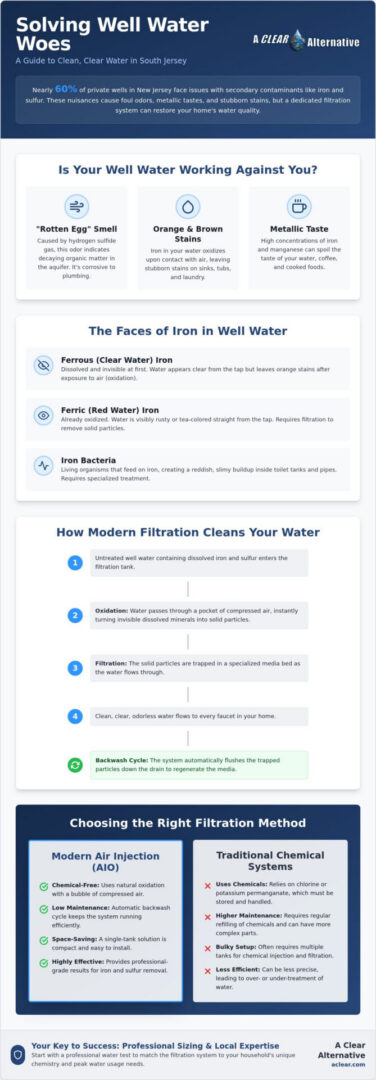
Not all iron looks the same when it enters your home. Ferrous iron is often called clear water iron because the water looks perfectly fine when it first comes out of the faucet. Once it hits the air, it oxidizes and leaves those dreaded orange stains on your porcelain. Ferric iron is already oxidized. It looks like tea or rusty water immediately. Both types are frustrating, but they require different approaches for removal.
Then there’s iron bacteria. This isn’t just a mineral; it’s a living organism that feeds on iron and creates a thick, reddish slime. You can spot it easily by lifting the lid of your toilet tank. If you see a gelatinous coating on the walls or the flapper, you have iron bacteria. Standard softeners often fail here because they aren’t designed for these specific water purification processes. To truly protect your home and restore your water quality, installing a dedicated iron and sulfur filter for well water is the most effective choice. It stops the staining and the smells at the source, ensuring your water is as clean as it looks.
How Iron and Sulfur Filtration Systems Actually Work
Understanding the science behind your water treatment doesn’t have to be complicated. An iron and sulfur filter is a whole-house solution that uses oxidation and specialized media to trap contaminants. Think of it as a two-step process: first, we make the invisible visible, and then we catch it. In its dissolved state, iron is like a ghost that passes through standard screens. Oxidation forces these minerals to “rust” instantly, turning them into solid particles that can’t hide anymore.
While many homeowners try to use a standard water softener, these systems often fall short when mineral levels are high. Softeners are designed to swap calcium for sodium, but heavy iron can actually “foul” the resin beads inside the tank. This makes the softener sluggish and eventually useless. Scientific approaches to treating iron in well water show that dedicated filtration is the only way to prevent this mineral buildup from reaching your faucets. To keep the system running at peak performance, a built-in backwash cycle periodically flushes the trapped solids out of the media and down the drain, keeping your water clear and your system fresh.
Air Injection Oxidation (AIO) Technology
The modern standard for South Jersey homes is Air Injection Oxidation, or AIO. Instead of using harsh chemicals like chlorine or potassium permanganate, these systems maintain a pocket of compressed air at the top of the tank. As your well water passes through this air, the iron and sulfur gas oxidize instantly. It’s a clean, elegant solution that’s perfect for families who want to avoid adding extra chemicals to their daily lives. Because it’s a single-tank process, it saves space in your utility room while delivering professional-grade results. It’s a smart lifestyle choice that prioritizes both health and efficiency.
Manganese Greensand and Alternative Filtration Media
The “media” inside the tank is the secret to its success. While traditional Manganese Greensand was the go-to for decades, modern alternatives like Katalox Light have changed the game. This high-performance media can handle much higher concentrations of iron and manganese without needing frequent chemical regeneration. Choosing the right media depends heavily on your home’s flow rate. If the water moves too fast, the media won’t have time to trap the particles. If it’s too slow, the backwash cycle won’t be strong enough to clean the tank. A professional comprehensive water test is the best way to determine which media matches your specific well chemistry and household needs.
Comparing Filtration Methods: Which is Right for Your Home?
Choosing the right technology for your home is a major step toward better living. While some homeowners start with small cartridge-based filters, these are usually just a temporary band-aid for minor sediment issues. If you’re dealing with the heavy sulfur or iron common in Shamong or Medford Lakes, these small filters will clog within days. A true, whole-house iron and sulfur filter for well water is the only permanent way to ensure every tap in your home delivers pristine water. These systems require a bit more space in your utility room, but the trade-off is a life free from metallic tastes and embarrassing odors.
Air Injection vs. Chemical Feed Systems
The most popular choice today is the Air Injection Oxidation (AIO) system. It’s clean, quiet, and doesn’t require you to handle heavy jugs of chemicals. It works perfectly for the majority of residential wells in our area. However, there are specific cases where a chemical feed system using chlorine or peroxide is necessary. If your water test reveals high levels of iron bacteria or extreme concentrations of hydrogen sulfide, a chemical injection provides the extra “punch” needed to sanitize the water. Research on iron removal filters shows that while AIO is the modern preference, chemical systems remain a vital tool for the most challenging water chemistries.
Maintenance is where these two paths diverge. AIO systems are virtually hands-off, relying on air and water to do the work. Chemical systems require you to monitor and refill tanks regularly. While the initial investment for AIO might be slightly higher, the long-term savings on chemical costs and the convenience of a simpler system usually make it the favorite for South Jersey families. It’s about choosing the level of involvement that fits your lifestyle.
Maintenance Requirements and Long-Term Costs
No filtration system is truly “set it and forget it.” To keep your water quality at its peak, you should schedule a professional check-up once a year. Over time, the filter media inside the tank will eventually lose its effectiveness. This process, known as “re-bedding,” typically happens every five to ten years depending on your water usage and mineral concentration. If you notice the old smells returning or see faint staining in your sinks, it’s a sign that your media is exhausted.
Many of our neighbors find it easiest to bundle their maintenance needs. If you also have a water softener, we can handle everything in one visit. We even offer a Water Softener Salt Delivery Service to take the heavy lifting off your hands. This proactive approach ensures your appliances stay protected and your water remains crystal clear year after year. Investing in a reliable local partner means you never have to worry about the technical details; you just get to enjoy the results.
Planning Your Installation in Tabernacle, Shamong, and Medford Lakes
Setting up a new system in towns like Shamong or Tabernacle requires more than just picking a tank off a shelf. You need a plan that respects the specific chemistry of our local soil. South Jersey water is unique because we often deal with very low pH levels alongside high iron. This acidity can prevent a standard iron and sulfur filter for well water from working correctly if the system isn’t calibrated properly. Following a clear, logical path to installation ensures your investment actually delivers the results you want.
The Role of Professional Water Testing
Everything starts with data. While DIY test strips are fine for a quick check, they often fail to identify the complex forms of iron or the exact concentration of hydrogen sulfide gas in your well. You need a laboratory grade report that covers pH, iron, manganese, and sulfur in one comprehensive look. This data tells us exactly which media will work best for your home. For a detailed look at what to expect, check out our Well Water Testing in Tabernacle, Shamong, and Medford Lakes guide. It’s the essential first step in designing a system that fits your life.
Sizing Your System for Residential Use
An undersized filter is one of the most common mistakes homeowners make. If the tank is too small, you’ll experience a significant drop in water pressure when two people try to shower at the same time. We calculate your peak flow rate by looking at the number of bathrooms and the total number of people in your household. This determines the Gallons Per Minute (GPM) your system must handle. Additionally, we have to ensure your existing well pump is strong enough to provide the backwash flow needed to clean the filter media. If the pump can’t push enough water to lift and rinse the media, the system will clog and fail prematurely.
Plumbing, Drains, and Local Codes
Before the installation team arrives, we evaluate your utility room or basement for two things: plumbing access and a reliable drain. The system needs a place to send the mineral heavy water during its regeneration cycle. We also look at the footprint of the equipment to ensure it fits comfortably without blocking access to your water heater or furnace. Finally, choosing an installer who understands New Jersey regulations is vital. Local codes and well pump pressure settings are specific. A generic approach often leads to performance issues down the road. If you’re ready for clear water, you can schedule a professional consultation with our local experts today.
Why Local Expertise Matters for South Jersey Water Treatment
South Jersey water isn’t just a technical challenge; it’s a lifestyle one. When you invest in an iron and sulfur filter for well water, you aren’t just buying hardware for your utility room. You’re choosing a partner who knows exactly what’s flowing through the ground in Shamong and Medford Lakes. National companies often see a spreadsheet of generic data. We see the neighbors we’ve been helping for over three decades. This local connection is the difference between a temporary fix and a lifetime of crystal clear water.
The A Clear Alternative Difference: Family-Owned Since 1991
Being family-owned means we’re personally invested in your home’s comfort and your family’s peace of mind. We’ve served the Tri-State area since 1991, and that history gives us a deep understanding of local aquifer shifts that national brands simply can’t match. We don’t use call centers or generic troubleshooting scripts. Instead, we offer a 24/7 emergency support safety net. If your well system has a critical failure in the middle of the night, you aren’t waiting for a technician from three states away. As a licensed potable water hauler, we provide a level of security and professional accountability that makes your water treatment feel like a modern lifestyle choice rather than a technical burden.
Integrating Iron Filtration with Acid Neutralizers
One of the most common mistakes national installers make is ignoring the low pH levels common in our region. If your water is too acidic, it can actually prevent your iron filter from working. Most homes in Tabernacle and the surrounding areas require a multi-layered approach to achieve perfect results. Correcting the pH is often the first step in ensuring your iron and sulfur filter for well water can trap every single particle effectively. This synergy between systems is vital for protecting your expensive plumbing and keeping your skin and hair feeling great.
Proper sequencing is the secret to maximum efficiency. By placing an acid neutralizer before your filtration system, we create the ideal environment for mineral removal. You can learn more about this process in our Acid Neutralizer Systems Guide. We design these systems to work in harmony, creating an invisible shield for your home. It’s about giving you the freedom to enjoy your house without worrying about stains, smells, or plumbing damage. That’s the confidence that comes from working with a local expert who understands your specific needs.
Reclaim Your Home’s Pure Water Today
You don’t have to live with metallic stains or that frustrating rotten egg smell another day. By understanding the unique chemistry of our South Jersey aquifers and choosing a modern iron and sulfur filter for well water, you can protect your appliances and restore your family’s comfort. We’ve seen how the right oxidation technology transforms daily life in Tabernacle and Shamong, turning “good enough” water into a crystal clear luxury you can rely on.
Since 1991, our family-owned and operated team has been dedicated to providing personalized solutions that national brands just can’t match. We understand that water issues don’t follow a schedule, which is why we offer 24/7 emergency service for well failures to keep your home running smoothly. Don’t wait for another ruined load of laundry to take action. You deserve water that reflects the quality of your home and the lifestyle you’ve built.
Ready to see the difference for yourself? Get a Professional Water Test and Quote from A Clear Alternative today and take the first step toward a cleaner, fresher future.
Frequently Asked Questions
How do I know if I have iron or sulfur in my well water?
You’ll notice orange or brown stains on your sinks, tubs, and laundry if iron is present. Sulfur is even easier to spot because it creates a distinct rotten egg smell. While these physical signs are clear indicators, a professional lab test is the only way to measure the exact concentrations. This data allows us to customize your system for the best results. Identifying these issues early protects your plumbing and your peace of mind.
Will a water softener remove the rotten egg smell?
No, a standard water softener isn’t built to handle sulfur gas. Softeners focus on removing hardness minerals like calcium, but hydrogen sulfide gas passes right through the system. In many cases, high levels of iron and sulfur can even damage a softener’s internal components over time. You need a dedicated iron and sulfur filter for well water to properly oxidize and remove these specific contaminants before they reach your faucets.
How long do iron and sulfur filtration systems last?
Most high-quality systems provide reliable service for 10 to 15 years. While the tank and control valve are built to last, the filter media inside the tank eventually wears out. Depending on your water usage and the mineral levels in your South Jersey well, you’ll typically need to replace the media bed every 5 to 7 years. Regular annual check-ups help ensure your system stays efficient and your water remains crystal clear.
Are iron and sulfur filters safe for septic systems?
If you choose a modern Air Injection Oxidation system, you don’t need to add any chemicals at all. These systems use a pocket of natural air to oxidize iron and sulfur, eliminating the need for chlorine or messy potassium permanganate. This makes an iron and sulfur filter for well water a very low-maintenance choice for busy families. You get the benefit of premium water quality without the chore of handling heavy chemical jugs every month.
What is the difference between air injection and a carbon filter?
Air injection is a high-tech oxidation process that turns dissolved minerals like iron into solid particles so they can be trapped. It’s the best choice for the heavy mineral loads found in South Jersey. Carbon filters are great for polishing the taste of water and removing chlorine, but they’re not strong enough to handle high iron or sulfur. They clog quickly when used as the primary filter for untreated well water.
Can iron and sulfur filters be installed in a crawl space?
We can install these systems in a crawl space as long as there’s enough height for the tank and room for our technicians to perform maintenance. Most tanks require about 5 to 6 feet of vertical clearance. The area also needs to be protected from freezing temperatures and have access to a drain for the regeneration cycle. We’ll assess your home’s layout to find the most discreet spot that doesn’t compromise performance. Since managing humidity is vital for any equipment housed below ground, you can visit Subfloor Ventilation Sydney to discover how professional ventilation systems keep subfloor areas dry and free from mould.
How much maintenance does an iron and sulfur filter require?
These systems are designed to be almost entirely “set it and forget it.” Beyond a professional annual check-up to ensure the settings are still optimal for your water chemistry, there’s very little for you to do. You don’t have to worry about monthly filter changes or messy chemical refills. It’s a sophisticated, modern solution that works quietly in the background, giving you the freedom to focus on enjoying your home and your life.