
Carbon Filtration: 2026 Guide for South Jersey Homeowners
Did you know that New Jersey currently faces the second-highest rate of PFAS contamination in the United States? For families in Tabernacle, Shamong, and Medford Lakes, this isn’t just a headline; it’s a concern that hits home every time you fill a glass. You’ve likely noticed that sharp chlorine smell or the frustrating scent of rotten eggs during your morning shower. It’s natural to feel overwhelmed by the technical jargon of various filter stages or the growing news about “forever chemicals” in our local groundwater.
You shouldn’t have to settle for water that smells like a swimming pool or leaves you questioning its safety. We believe that clean, delicious water is a fundamental part of a modern, healthy lifestyle. This 2026 guide will show you exactly how carbon filtration systems act as the ultimate workhorse for your home. You’ll discover the mechanics behind the technology, see how it compares to reverse osmosis, and learn why it’s the most effective way to ensure every tap in your house delivers nothing but pure, odor-free water across the Tri-State area. As a local family business serving this community since 1991, we’re here to help you move past the confusion and toward a low-maintenance solution that brings confidence back to your kitchen.
Key Takeaways
- Understand how modern adsorption technology acts like a powerful magnet to pull “forever chemicals” and organic contaminants from your local groundwater.
- Discover the specific differences between GAC and carbon block media. You’ll be able to choose the perfect flow rate and filtration level for your specific household needs.
- Compare carbon filtration systems with reverse osmosis to determine which technology best addresses your concerns about taste, odor, or inorganic minerals.
- Identify the local warning signs, like persistent sulfur or chlorine odors, that indicate your South Jersey home is ready for a professional water upgrade.
- Uncover why professional installation and periodic media re-bedding are the secrets to a low-maintenance system that provides great-tasting water for years.
What Are Carbon Filtration Systems and How Do They Work?
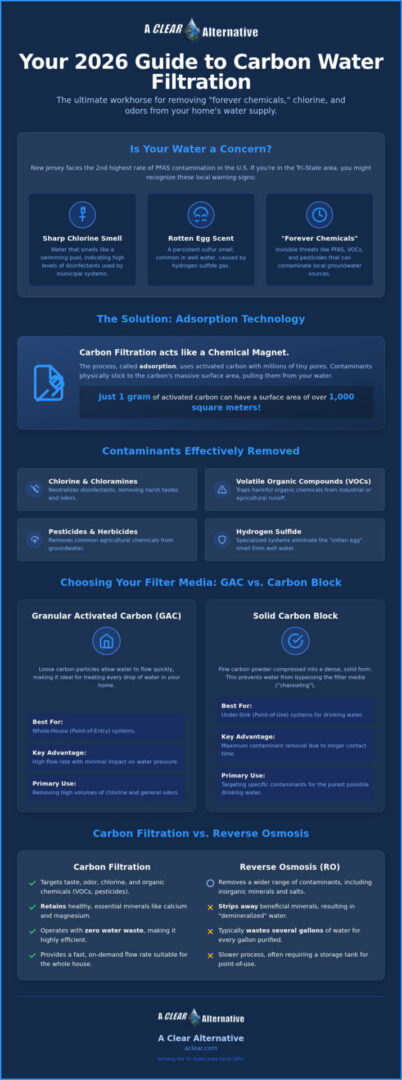
Imagine your water feeling as clean and crisp as a morning in the Pine Barrens. That’s the promise of Carbon filtering. It isn’t just a simple strainer. It’s a sophisticated treatment method that uses activated carbon to pull impurities out of your water supply. These carbon filtration systems are the workhorses of modern home water treatment. They act like a chemical magnet for impurities; ensuring that what comes out of your tap is pure and refreshing.
You have two main paths to choose from for your home. Point-of-use systems sit right under your sink, providing a dedicated tap for drinking. Point-of-entry systems, often called whole-house systems, treat every drop entering your home. For South Jersey families, treating the whole house is often the gold standard. It protects your skin in the shower and keeps your laundry smelling fresh, not like chemicals or sulfur.
The Role of Activated Carbon in Water Purification
The secret lies in the surface area. Through thermal or chemical activation, carbon develops millions of tiny pores. These microscopic tunnels increase the surface area so much that a single gram of activated carbon can have a surface area of over 1,000 square meters. Adsorption occurs when contaminants physically stick to the surface of the carbon media, while absorption is when a substance is fully integrated into the volume of another material.
While you can find carbon made from coal or wood, we prefer coconut shells. They are a renewable resource and produce a higher density of micropores. This makes them exceptionally efficient at capturing the smallest organic molecules. It’s a vital feature for the specific water profiles we see in Medford Lakes and Shamong.
Contaminants Carbon Filters Effectively Remove
If your water tastes like a swimming pool, you’re likely dealing with high levels of chlorine or chloramines. Municipal systems in the Tri-State area use these for disinfection, but you don’t want to drink them. Carbon is remarkably effective at neutralizing these chemicals on contact. It removes the harsh taste and the drying effect on your skin.
In our local agricultural areas, Volatile Organic Compounds (VOCs) and pesticides are a real concern for groundwater. High-quality carbon filtration systems trap these organic chemicals before they reach your glass. If you’re on a well in Tabernacle and notice a rotten egg smell, specialized backwashing carbon systems can even tackle hydrogen sulfide. It’s about more than just safety. It’s about the confidence that comes with every sip. For those exploring premium filtration technology, greatwaterfilters.com.au provides insight into how whole-house and reverse osmosis units work to eliminate these persistent odors and contaminants.
Not all carbon filtration systems are built the same. The difference usually comes down to the physical form of the carbon inside the tank or cartridge. You’ll generally choose between loose granules or a solid, compressed block. This choice impacts how long the water stays in contact with the media. We call this “empty bed contact time.” It’s the most critical factor in determining how many contaminants the system actually captures. The longer the water sits with the carbon, the more chemicals the media can pull out of your supply.
Choosing the right media is about balancing your home’s water pressure with the level of purity you desire. While both options use the same science of adsorption, their physical structures serve different purposes. For most South Jersey homes, the decision depends on whether you are treating the whole house or just a single kitchen tap.
When to Use Granular Activated Carbon (GAC)
GAC consists of loose carbon particles that allow water to flow through at high speeds. It’s the preferred choice for whole-house applications in larger homes throughout Shamong and Medford Lakes. Because the water moves through loose media, you won’t see a significant drop in water pressure when multiple showers are running. It’s highly effective for removing high volumes of chlorine and addressing general odor issues across every tap. Plus, the media is easily replaceable, making it a cost-effective choice for long-term home maintenance.
The Advantages of Solid Carbon Block Filters
Carbon blocks are made from fine carbon powder compressed into a solid form. This density prevents “channeling,” which is when water finds a path of least resistance through loose media and bypasses the filtration process. These filters are incredibly effective at removing PFAS and other microscopic threats like lead or certain cysts. Because of their precision, they are often used as a vital pre-filter for reverse osmosis water systems.
South Jersey well water presents unique challenges that city water users don’t face. If you live in Tabernacle and deal with sediment or iron, a standard cartridge filter might clog within weeks. That’s why we often recommend backwashing carbon filtration systems. These systems automatically rinse the media to clear out trapped debris; ensuring your water stays clean without constant manual filter changes. It’s a modern, hands-off approach to water quality. If you aren’t sure which media fits your home, a quick professional water test can clear up the confusion and point you toward the best solution.
Carbon Filtration vs. Reverse Osmosis: Which Is Right for You?
Choosing between a carbon system and reverse osmosis (RO) often feels like a high-stakes guessing game. It doesn’t have to be. While carbon filtration systems are the masters of removing organic chemicals and making water taste incredible, RO systems take a more aggressive approach to purification. Carbon is your go-to for taste, odor, and organic compounds. RO is the heavy hitter for inorganic minerals, nitrates, and salts. It’s a choice about the lifestyle you want to lead and the confidence you want in every glass.
Most high-end installations don’t actually force you to choose. They use both technologies in tandem. A carbon filter acts as a vital bodyguard for the delicate RO membrane; removing chlorine that would otherwise damage it over time. This partnership ensures you get the best of both worlds: whole-house protection and ultra-pure drinking water. The ultimate decision framework should always start with a South jersey water test. Knowing exactly what’s in your well or municipal line removes the stress from your investment and ensures you aren’t over-engineering a solution.
Key Differences in Filtration Capability
Activated carbon filtration specializes in VOCs, chlorine, and even radon, which is a known concern in specific South Jersey geological pockets. It’s an exceptionally efficient process with zero water waste. RO, on the other hand, is designed to tackle lead, arsenic, nitrates, and high Total Dissolved Solids (TDS). While RO is incredibly thorough, it does produce discharge water during the purification process. It’s a trade-off for achieving near-bottled water quality at your kitchen sink without the endless plastic waste.
Maintenance and Operational Costs
Maintenance looks different for each system. A whole-house carbon tank might only need media re-bedding every three to five years. Multi-stage RO systems usually require cartridge changes every six to twelve months to keep the membrane performing at its peak. For a Medford Lakes homeowner, managing a carbon system is often simpler because it doesn’t impact water pressure across the whole house like a poorly sized RO might. Carbon keeps the flow strong in your showers while the RO provides precision at the tap. We’ve helped families since 1991 find the balance that fits their lifestyle and their home’s unique plumbing. This isn’t just about pipes; it’s about upgrading your daily routine with effortless, premium water.
Signs Your South Jersey Home Needs a Carbon Filter
Living in South Jersey often means having a close relationship with your water source. Whether you’re on a private well in Tabernacle or connected to a municipal line in Medford Lakes, your senses are the first line of defense. A persistent ‘rotten egg’ odor is a classic sign of hydrogen sulfide gas in your well. It’s frustrating and embarrassing when guests visit. Meanwhile, city dwellers often deal with a sharp chlorine scent that makes their kitchen feel like a public pool. These aren’t just minor annoyances. They’re clear signals that your home is a prime candidate for carbon filtration systems.
Sometimes the signs are visual rather than aromatic. You might notice a yellowish or brownish tint in your glass. If your water tests negative for iron, these colors often point to tannins or decaying organic matter. Additionally, your latest well water testing might reveal high levels of VOCs or PFAS. These “forever chemicals” don’t always have a distinct smell or taste. This makes professional analysis the only way to be truly sure about what you’re consuming.
Identifying Odor and Taste Issues
It helps to know exactly what you’re smelling. Sulfur smells like spent matches or rot. Chlorine has that sharp, bleach-like sting. A metallic taste usually suggests pipe corrosion or high mineral content. These issues often peak during hot NJ summers. Warm temperatures can accelerate the gassing off of chemicals and the growth of certain organic compounds in groundwater. Removing these chemical aftertastes provides more than just better coffee. It offers the psychological freedom of knowing your family’s water is pure and safe.
Protecting Your Home Infrastructure
High-quality carbon filtration does more than improve taste. It saves your appliances. Chlorine is a harsh oxidizer. It slowly degrades the rubber seals and gaskets in your toilets, dishwashers, and washing machines. Over time, this leads to slow leaks and expensive repairs. If you notice blue-green staining on your fixtures instead of odors, you might actually need an acid neutralizer to fix low pH levels. However, for chemical and odor removal, a carbon system is the undisputed champion of home maintenance. If you’re tired of water that smells or tastes “off,” it’s time for a change. Reach out to the experts at A Clear Alternative to schedule your comprehensive water evaluation and reclaim your home’s water quality.
Professional Installation and Maintenance in the Tri-State Area
Choosing the right technology is only half the battle. The long-term success of carbon filtration systems depends heavily on how they are integrated into your home’s plumbing. While it is tempting to try a DIY installation from a big-box store, these generic solutions often lead to frustrating pressure drops. A system that isn’t sized correctly for your specific peak water usage will struggle to keep up when the dishwasher and shower are running at the same time. Professional installation ensures that every connection is secure; preventing the slow leaks that can quietly damage your basement or utility room.
Maintenance is the secret to keeping your water tasting like it’s from a premium bottle. Think of media re-bedding as the essential “oil change” for your filtration unit. Every three to five years, the activated carbon reaches its capacity and can no longer adsorb contaminants effectively. We specialize in refreshing these systems to ensure your “chemical magnet” stays strong. At A Clear Alternative, we don’t believe in one-size-fits-all hardware. We design custom-sized systems specifically for NJ and PA homes; taking into account your family size and local water challenges.
The Value of a Local Family-Owned Partner
Local knowledge is irreplaceable. The water tables in Tabernacle and Shamong have unique characteristics that national brands often overlook. We’ve been serving this community since 1991; so we understand the specific seasonal shifts in local groundwater quality. If your well pump fails or a filtration component stops working, you don’t want to wait for a technician from a different time zone. Our 24/7 emergency support means you have direct access to experts who live and work in your neighborhood. We prioritize your comfort and peace of mind; treating your home with the same care we give our own.
Schedule Your Comprehensive Water Analysis
You shouldn’t have to guess about the safety of your drinking water. The first step toward a cleaner lifestyle is knowing exactly what you’re dealing with. We provide lab-grade reporting that goes far beyond basic test strips. Our analysis identifies the specific VOCs, PFAS levels, and aesthetic impurities present in your supply. This data-driven approach ensures you invest in the right equipment the first time; saving you from unnecessary expenses and providing a low-maintenance solution that lasts for years. It’s time to stop settling for water that smells or tastes “off.” You can contact our experts for a water test today and start your journey toward total water confidence.
Reclaim Your Home’s Pure Water Experience
Your home deserves water that feels as clean as it looks. Investing in modern carbon filtration systems is more than a technical upgrade; it’s a commitment to a better quality of life for your family in Tabernacle, Shamong, or Medford Lakes. By choosing the right media and understanding the science of adsorption, you can finally say goodbye to the harsh smells of chlorine and sulfur. Whether you choose a whole-house solution or a targeted point-of-use system, the result is the same: crisp, delicious water from every tap.
We’ve been helping South Jersey families find their perfect water balance since 1991. As a family-owned business and licensed potable water hauler, we provide the local expertise and 24/7 emergency support you need for total peace of mind. Don’t let confusing jargon or “forever chemicals” hold you back from the lifestyle you want. The journey to better water starts with a clear understanding of your unique supply. Take the first step toward total water confidence and Get a Professional Water Analysis from A Clear Alternative today. You’ll love the difference that truly pure water makes in your daily routine.
Frequently Asked Questions
How long do carbon filtration systems last before needing maintenance?
Whole-house carbon filtration systems typically last between three and five years before the media needs professional re-bedding. This timeline depends on your household’s daily water usage and the specific level of contaminants in your Tabernacle or Shamong supply. Smaller cartridge-based units might require changes every six to twelve months. Regular professional check-ups ensure your system continues to act as a powerful magnet for impurities without losing its effectiveness over time.
Can a carbon filter remove lead from my drinking water?
Standard carbon filters are not specifically designed for lead removal; however, specialized solid carbon blocks with high-density pores can significantly reduce lead levels. If lead is a primary concern in your Medford Lakes home, we often recommend a multi-stage approach. Combining carbon with reverse osmosis provides the most comprehensive protection. It’s essential to start with a professional water test to identify the exact lead concentration before choosing your hardware.
Does a carbon filter affect water pressure in my home?
A correctly sized system will have a negligible impact on your home’s water pressure. We focus on custom-sizing our carbon filtration systems to match the peak flow requirements of your specific household. Problems usually only arise with DIY installations or undersized units that can’t handle multiple showers running at once. Professional installation ensures that your water remains both pure and powerful; maintaining the modern comfort you expect in every room.
Will a carbon filter remove the rotten egg smell from my well water?
Yes, specialized backwashing carbon systems are highly effective at neutralizing the hydrogen sulfide gas responsible for that rotten egg odor. This is a common issue for well water users in the South Jersey area. While standard filters might struggle with heavy sulfur, our high-capacity units are designed to handle these specific geological challenges. You’ll notice an immediate difference in the aesthetic quality and freshness of your water during your next shower.
What is the difference between GAC and a carbon block filter?
Granular Activated Carbon (GAC) uses loose particles to allow for high flow rates, making it perfect for whole-house carbon filtration systems. Carbon block filters consist of compressed carbon powder, which offers a much larger surface area and longer contact time. While GAC is excellent for chlorine and large-scale odor removal, carbon blocks are superior for capturing finer sediment and specific health-related contaminants. Both technologies play vital roles in a modern water treatment strategy.
Is a whole-house carbon filter better than a Brita pitcher?
Is a whole-house carbon filter better than a Brita pitcher?
Does carbon filtration remove healthy minerals from water?
Carbon filtration is selective and does not remove beneficial minerals like calcium, magnesium, or potassium. It focuses on adsorbing organic chemicals, chlorine, and synthetic contaminants that affect taste and safety. This means you get the best of both worlds: great-tasting, purified water that still contains the natural minerals your body needs. If you’re looking for total demineralization, that would require a different technology like reverse osmosis which we also provide.
How do I know if my carbon filter is ‘spent’ and needs replacing?
The most obvious signs are the return of unpleasant tastes or odors that were previously neutralized. You might notice a slight drop in water pressure as the media becomes clogged with trapped particles. In some cases, a yellowish tint may reappear in your glass. Because some contaminants are tasteless and odorless, we recommend sticking to a professional maintenance schedule every three to five years to ensure your system remains fully effective and reliable.