
Well Water Has Strong Chlorine Smell? Causes, Fixes & Guide (2026)
Natural groundwater never produces chlorine on its own. If your well water has strong chlorine smell every time you turn on the tap, it’s completely normal to feel alarmed. You expect crisp, refreshing water from your private well, not harsh chemical fumes that sting your eyes, irritate your skin during a hot shower, or leave you questioning whether your drinking water is truly safe.
You don’t have to live with chemical vapor, dry hair, or the worry of an unsafe tap. You’ll discover exactly why chlorine odors emerge in private groundwater systems, how to pinpoint whether recent well maintenance or an overactive chemical feed is the culprit, and the most reliable steps to restore clean, odor-free water.
From practical plumbing flush routines to professional water testing and high-performance carbon filtration systems, here is everything you need to know to reclaim pure, refreshing water throughout your entire home.
Key Takeaways
- Groundwater never produces chemicals naturally, which means a recent shock chlorination or chemical feed issue is almost always why your well water has strong chlorine smell.
- A quick inspection of your wellhead tags and checking hot versus cold taps will pinpoint whether the odor is trapped in your heater or present throughout the system.
- Excessive residual chlorine dries out your hair, irritates sensitive skin during showers, and can surpass recommended drinking water thresholds if left unaddressed.
- While simple outdoor line flushing clears temporary shock treatments, installing an inline carbon filtration system provides a permanent shield against harsh chemical vapors and unpleasant tastes.
- Scheduling comprehensive water testing confirms your exact water chemistry, ensuring equipment matches local aquifer traits like low pH before you make any adjustments.
Why Does Your Well Water Have a Strong Chlorine Smell?
Groundwater drawn from deep bedrock or coastal sand aquifers contains minerals, dissolved gases, and organic matter, but it never naturally produces chlorine. Municipal utilities add disinfectants to public mains, but private wells operate independently. If your well water has strong chlorine smell, that chemical was manually introduced into your system. Homeowners occasionally mistake the sharp, swimming-pool scent of ozone oxidation systems or sulfur gas reactions for bleach, but an unmistakable chlorine odor points directly to targeted chemical treatment.
Recent Well Disinfection and Shock Chlorination Residuals
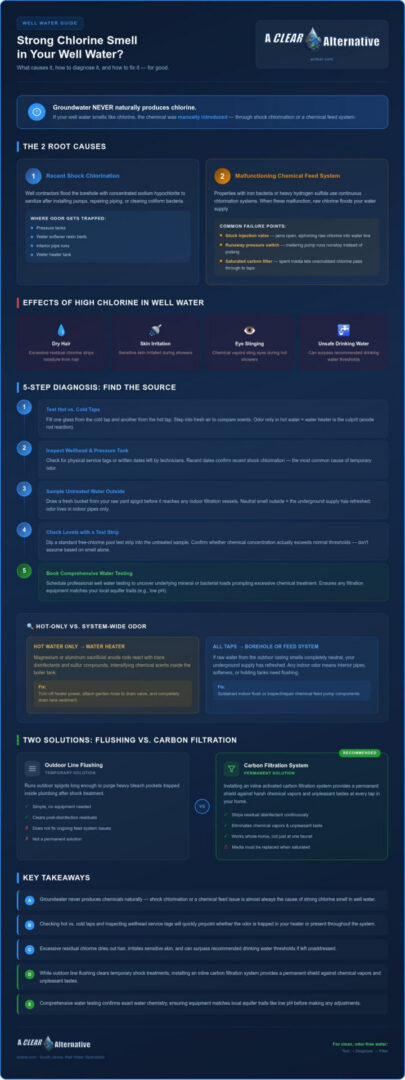
Well contractors routinely use concentrated sodium hypochlorite to sanitize well casings after installing new submersible pumps, repairing piping, or clearing coliform bacteria. Understanding the broader water chlorination process makes it easy to see why odors linger. Technicians flood the borehole with high-strength bleach to eradicate microbial biofilms. If you don’t run outdoor spigots long enough during the initial post-shock flush, heavy bleach pockets stay trapped inside your plumbing. Pressure tanks and water softeners often trap this chlorinated water inside their tanks and resin beds, slowly bleeding chemical vapors into your household fixtures for days.
Malfunctioning Chlorine Injection and Chemical Feed Pumps
Properties with stubborn iron bacteria or heavy hydrogen sulfide gas often use continuous chlorination systems. These setups utilize a chemical feed pump to inject liquid bleach into a contact tank, neutralizing odors and oxidizing metals before the water enters your living spaces. Mechanical failures happen quickly:
- Stuck injection valves: A feed pump check valve can jam open, siphoning raw chlorine solution into the water line.
- Runaway pressure switches: Faulty electrical switches can cause the metering pump to run nonstop rather than pulsing with water flow.
- Saturated carbon filters: Continuous injection systems rely on an inline activated carbon filter to strip out residual disinfectant. Once that carbon media reaches capacity, unscrubbed chlorine passes right through to your taps.
Diagnosing the Source: Step-by-Step Troubleshooting for Homeowners
Tracking down why your well water has strong chlorine smell doesn’t require complex plumbing skills. You just need a logical sequence to isolate the exact fixture or treatment tank holding the odor. Follow these five diagnostic steps to narrow down the cause before altering your equipment:
- Test hot versus cold taps: Fill one glass from the cold tap and another from the hot tap, then step away into fresh air to compare their scents.
- Inspect the wellhead and pressure tank: Check for physical service tags or written dates left behind after professional service, which indicate recent sanitation work.
- Sample untreated water outside: Draw a fresh bucket straight from your raw yard spigot before the line reaches any indoor filtration vessels.
- Check levels with a test strip: Dip a standard free-chlorine pool test strip into the untreated sample to see if the chemical concentration exceeds normal thresholds.
- Verify your broad water chemistry: Book comprehensive well water testing to uncover underlying mineral or bacterial loads that might be prompting excessive chemical treatment.
Isolating Hot Water vs. Cold Water Fixtures
When the chemical vapor emerges exclusively while running hot water, your water heater is the culprit. Magnesium or aluminum sacrificial anode rods react aggressively with trace disinfectants and sulfur compounds. This reaction intensifies chemical scents inside the boiler tank. Turning off the heater power, attaching a garden hose to the bottom drain valve, and completely draining the tank sediment usually purges these stubborn residuals.
Testing Water at the Wellhead vs. Indoor Taps
Testing your outdoor hose spigot reveals whether chemical concentrations live in the borehole or linger in indoor pipe runs. If raw water straight from the casing smells completely neutral, your underground supply has already refreshed. Any odor inside means your interior distribution pipes, water softeners, or holding tanks simply require a sustained indoor flush.
Document which faucets produce the strongest scent and whether the odor fades after running the tap for five minutes. Staying proactive with routine private well maintenance gives you total clarity over your system’s performance. If you prefer expert guidance to evaluate lingering chemical odors, partnering with a local water treatment specialist like A Clear Alternative makes restoring fresh, pure water simple and stress-free.
Health Risks and Everyday Effects of High Chlorine in Well Water
High disinfectant concentrations transform your everyday water use from a refreshing routine into a frustrating chore. The U.S. Environmental Protection Agency (EPA) enforces a Maximum Residual Disinfectant Level of 4.0 milligrams per liter (mg/L), or 4 parts per million (ppm), for treated drinking water. While the CDC outlines guidelines for safe levels of chlorine, unmonitored private well systems can surge far above these limits during aggressive treatments or equipment malfunctions. If your well water has strong chlorine smell, those elevated readings actively degrade your comfort, household plumbing, and indoor air.
Skin, Hair, and Respiratory Sensitivity
Elevated chlorine rapidly strips away the natural lipid barrier that protects human skin. Daily exposure leaves your body feeling tight, dehydrated, and intensely itchy, frequently triggering eczema flare-ups. Your hair suffers just as quickly, turning brittle as essential oils dissolve. In the shower, hot water aerosolizes dissolved disinfectant into volatile gas. Inhaling these concentrated vapors in an enclosed bathroom irritates delicate throat and airway tissues, creating serious discomfort for asthmatics, young children, and pets.
Impact on Plumbing Fixtures, Rubber Seals, and Appliances
Chlorine is a strong oxidizer. When circulating through your home at high concentrations, it quietly attacks materials that keep your fixtures watertight:
- Rubber seal degradation: Toilet tank flappers, fill valve seals, and washing machine supply lines dry out, crack, and trigger sudden leaks.
- Fixture and pipe corrosion: Aggressive chemical oxidation pits interior copper walls, weakens solder seams, and tarnishes polished brass fittings.
- Water softener destruction: High free chlorine fractures the crosslinked polystyrene resin beads inside water softeners, completely neutralizing their ability to remove mineral hardness.
Ignoring heavy chemical scents risks costly physical damage across your home. Pure water should support your personal wellness and protect your appliances, not wear them down from the inside out.
How to Eliminate Strong Chlorine Odor: Flushing vs. Carbon Filtration
Flushing clears out temporary chemical spikes, while inline filtration delivers lasting purity. If your well water has strong chlorine smell following routine service, purging your lines is the logical starting point. When odors persist or return because of continuous feed sanitizers, installing dedicated carbon filtration systems offers the only permanent defense against harsh chemical vapors.
The Step-by-Step Well Flushing Procedure
Purging your borehole requires a safe discharge path that protects your home infrastructure:
- Direct runoff safely: Attach a heavy-duty garden hose to an outside spigot and aim the discharge into a road ditch or wooded drainage area. Never direct chlorinated water into your septic tank or over delicate landscaping.
- Run lines continuously: Allow the outdoor spigot to run wide open for two to four hours. Test the runoff periodically with a free-chlorine strip until chemical readings drop to zero.
- Clear indoor branches: Once the raw supply runs pure, open every indoor cold faucet across your home for ten minutes, followed by all hot water taps, to flush residual bleach out of internal pipe loops.
Whole-House Activated Carbon and Catalytic Carbon Systems
While simple pour-through pitchers or small under-sink cartridges struggle against high flow rates, whole-home backwashing carbon vessels treat water as fast as you draw it. Activated carbon uses millions of microscopic pores to physically adsorb chlorine molecules. Catalytic carbon media goes a step further, chemically altering stubborn chloramines and disinfection byproducts into harmless, odorless compounds.
Automatic backwashing systems lift and churn the media bed on a set schedule. This periodic wash prevents channeling, rinses away trapped silt, and extends media life for several years before needing re-bedding. Pairing this equipment with comprehensive whole house water filtration systems shields your family from chemical odors, mineral staining, and off-flavors at every faucet. Ready to reclaim fresh, crystal-clear water throughout your home? Explore tailored carbon filtration solutions designed specifically for private residential wells.
Comprehensive Well Water Quality Management in South Jersey
Managing private groundwater in Burlington County demands an approach tailored to the unique geological conditions beneath your property. What works for a standard suburban well won’t deliver optimal results in the Pinelands. When your well water has strong chlorine smell alongside local mineral quirks, understanding the chemistry of regional aquifers is crucial to protecting your home and plumbing.
Pine Barrens Aquifer Realities: Tabernacle, Shamong, and Medford Lakes
Homes in Tabernacle, Shamong, and Medford Lakes tap directly into the shallow Kirkwood-Cohansey aquifer system. This sandy coastal plain delivers water that is naturally soft, iron-rich, and distinctly acidic, often registering pH levels well below 6.5. When untreated acidic water mixes with free chlorine from shock treatments or chemical feed pumps, it turns into an aggressive, corrosive slurry. This harsh blend attacks residential copper pipes, stripping metal surfaces and causing premature pinhole leaks behind your walls long before you notice water stains on the ceiling.
Building an Integrated Multi-Stage Home Water Treatment Setup
Solving complex groundwater challenges requires correct equipment staging rather than isolated fixes. Professional, comprehensive water testing forms the essential foundation. It maps out your specific pH, iron content, and hardness levels before you configure filtration gear. Once those baseline metrics are clear, installing systems in the correct sequence ensures each unit performs efficiently:
- First stage: Inline acid neutralizers balance aggressive low pH water to a safe, neutral 7.0 reading, preventing pipe breakdown.
- Second stage: Backwashing carbon filtration systems strip out lingering chlorine molecules, chemical odors, and volatile organic compounds.
- Third stage: Advanced water softeners remove residual iron and mineral ions without risk of media oxidation from unscrubbed bleach.
A properly matched treatment train restores the clean, crisp water quality you expect from a private well. For local homeowners ready to resolve chemical smells and corrosive water chemistry permanently, connecting with A Clear Alternative provides dependable water testing, premium purification equipment, and trusted regional expertise.
Restore Fresh, Odor-Free Water to Your Home Today
Living with harsh chemical vapors at the tap disrupts daily comfort, but identifying the root cause brings immediate relief. When your well water has strong chlorine smell, a thorough outdoor spigot purge often clears out recent shock sanitization. For recurring chemical feed issues, high-performance carbon filtration delivers permanent, whole-home defense.
You deserve crisp water that revitalizes your skin, protects delicate plumbing, and tastes pure. As a family-owned and operated water purification specialist serving South Jersey since 1991, A Clear Alternative provides dedicated expertise in comprehensive water testing, whole-house carbon filtration systems, and acid neutralizers tailored to regional aquifers. We proudly deliver trusted, local support across the Tabernacle, Shamong, and Medford Lakes communities.
Schedule your professional well water analysis with A Clear Alternative today to protect your plumbing and rediscover pure, refreshing water in every room.
Frequently Asked Questions
Why does my well water smell like chlorine if I do not have city water?
Natural groundwater aquifers never produce chlorine on their own. If your well water has strong chlorine smell without a municipal connection, the disinfectant was manually added to your system. This almost always stems from a recent shock chlorination treatment by a technician, a failing chemical feed pump that is over-injecting liquid bleach, or an exhausted whole-house carbon filter that can no longer capture incoming residuals.
Can drinking well water that smells strongly of chlorine make you sick?
Yes, consuming water with excessive chlorine concentrations can cause stomach cramps, nausea, vomiting, and throat irritation. While municipal tap water maintains safe disinfectant levels below 4 parts per million, shocked wells can temporarily surge beyond 50 parts per million. You should avoid drinking or cooking with chlorinated well water until test strips confirm the chemical concentration has dropped back to zero.
How long does it take for a well to stop smelling like chlorine after shocking?
Most residential wells stop smelling like bleach within 24 to 48 hours with continuous flushing. Running an outdoor hose for two to four hours usually clears the casing. If lingering chemical odors persist past two days, pockets of chlorinated water are likely trapped inside your hot water heater tank, pressure vessel, or the resin bed of your water softener.
Will boiling well water remove the strong chlorine smell and taste?
Boiling well water for fifteen minutes will evaporate free chlorine gas, eliminating the odor for small batches of cooking water. However, boiling releases concentrated chemical vapors into your indoor air and will not remove disinfection byproducts. Relying on boiling is inconvenient for daily household use compared to installing a permanent, whole-house backwashing catalytic carbon filtration system.
What happens if a chlorine injection pump overdoses my residential well system?
A stuck or runaway chemical injection pump floods your distribution lines with corrosive bleach levels. This chemical surge attacks copper pipes, degrades rubber toilet flappers, and destroys the delicate resin beads inside water softeners. If you notice an overpowering bleach odor from a continuous feed system, unplug the metering pump immediately and run outdoor spigots to purge the excess disinfectant.
Can a water softener remove strong chlorine odors from well water?
No, standard water softeners cannot remove chlorine and will suffer internal damage from continuous exposure. Softener resin beads are designed specifically for ion exchange with calcium, magnesium, and dissolved iron. Strong oxidizers break down the internal cross-links of the resin beads, turning them into mush. You must position a dedicated carbon filtration system ahead of the softener to strip out chemical odors.
Is it safe to shower in well water that has a strong chlorine odor?
Showering in heavily chlorinated water is unsafe because hot showerheads atomize the dissolved chemical into breathable gas. Inhaling these concentrated vapors in a closed stall irritates lung tissue, worsens asthma symptoms, and stings eyes. If your well water has strong chlorine smell, avoid hot showers until you flush both the hot water tank and cold distribution lines completely.