
2026 Shamong, NJ Infant Well Water Safety Guide
Did you know that the same Pinelands soil that makes Shamong so beautiful also creates some of the most naturally acidic groundwater in New Jersey? While “pure” well water sounds ideal, the low pH levels found in our local Kirkwood-Cohansey Aquifer can silently leach lead from your home’s plumbing. When you’re preparing formula or a first cup of water, well water safety for infants Shamong becomes more than a simple checklist. It’s the vital foundation for your child’s healthy development.
We understand the anxiety that comes with invisible contaminants like nitrates or the “forever chemicals” detected in Shamong wells as recently as 2025. You want to focus on your baby’s milestones, not worry about whether your water test was “enough” for a newborn. This 2026 guide provides a clear, expert plan to protect your family’s health and restore your peace of mind. We’ll explore Shamong’s unique water chemistry, explain the latest NJ Private Well Testing Act requirements, and show you exactly how to achieve laboratory-grade safety at your kitchen tap.
Key Takeaways
- Discover why an infant’s developing kidneys require much stricter water purity standards than adults to process minerals and contaminants safely.
- Learn how to navigate well water safety for infants Shamong by identifying specific local risks like nitrates and “forever chemicals” unique to the South Jersey region.
- Establish a clear timeline for comprehensive lab testing, ideally starting three to six months before your due date to ensure your home is ready for a newborn.
- Understand how combining acid neutralizers with reverse osmosis systems creates a dual-layer defense against lead leaching and agricultural runoff.
- Gain the confidence to prepare formula and hydration with total peace of mind, knowing your home’s water meets the highest 2026 safety benchmarks.
Why Infant Water Safety Differs from Adult Standards
Babies aren’t just small adults. Their bodies are in a state of rapid construction, which makes them far more sensitive to the chemical makeup of their environment. Because an infant’s diet often consists almost entirely of liquids, their exposure to water-borne substances is significantly higher relative to their body weight. Achieving well water safety for infants Shamong starts with recognizing that what’s “safe enough” for a grownup might be a heavy burden for a newborn’s developing system.
Vulnerability and Developing Systems
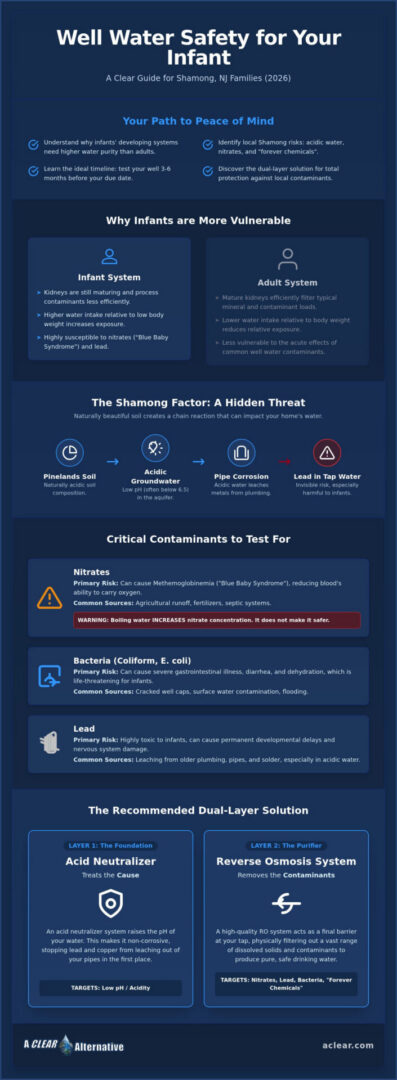
An infant’s kidneys are still maturing during the first year of life. They can’t process high mineral loads or certain chemical contaminants as efficiently as yours can. This physiological difference means that even small amounts of impurities can build up in their bloodstream more quickly. One of the most critical risks is “Blue Baby Syndrome,” or methemoglobinemia. This condition occurs when high levels of nitrates in drinking water interfere with a baby’s blood and its ability to carry oxygen. Since Shamong sits in a region with agricultural history and many septic systems, nitrates are a primary concern for any family using a private well.
Local soil conditions also play a major role in your baby’s health. Shamong’s groundwater is naturally acidic, often showing a pH level below 6.5. While this acidity doesn’t hurt you directly, it’s highly corrosive. It acts as a solvent, eating away at copper pipes and lead solder in your home’s plumbing. Infants are particularly susceptible to lead poisoning, which can cause permanent developmental delays. When you’re dealing with acidic water, “clear” water at the tap doesn’t always mean “safe” water for a bottle.
Private Wells vs. City Water for Babies
If you lived in a city, a municipal utility would monitor your water quality every single day. However, understanding what well water is means realizing that you are your own water utility manager. In Shamong, the responsibility for testing and treatment falls entirely on the homeowner. There’s no government agency checking your tap monthly to ensure it’s safe for a newborn’s formula.
This lack of daily oversight can be overwhelming for new parents. You have to be proactive about testing for bacteria, nitrates, and lead before the baby arrives. Many families find that standard “real estate” tests don’t go deep enough for infant safety. At A Clear Alternative, we provide the professional oversight and specialized testing panels that bridge the gap between “standard” well water and “infant-safe” hydration. We help you transform your home’s water from a source of anxiety into a foundation for your child’s health.
Critical Contaminants: Nitrates, Bacteria, and Lead
While you might be used to the taste of your well water, your baby’s system is a blank slate. Ensuring well water safety for infants Shamong means looking past the surface at invisible threats that standard filters often miss. In the South Jersey region, specific environmental factors like agricultural runoff and naturally occurring minerals create a unique profile of risk for newborns. Understanding these contaminants is the first step toward creating a truly safe home environment.
Understanding Nitrates and Methemoglobinemia
Nitrates are the most urgent concern for parents who use well water to prepare infant formula. In Shamong, these often enter the groundwater through fertilizers or local septic systems. When a baby consumes high levels of nitrates, it can lead to methemoglobinemia, commonly known as “Blue Baby Syndrome.” This condition reduces the blood’s ability to carry oxygen, which can cause a baby’s skin to take on a bluish tint. It’s a serious medical situation that requires immediate attention.
There’s a dangerous misconception that boiling water makes it safer for babies. While boiling kills germs, it’s the worst thing you can do for a nitrate-heavy well. Boiling water that contains nitrates is dangerous because as the water evaporates, the concentration of the remaining nitrates increases. Instead of purifying the water, you’re actually making the chemical load more intense for your child’s developing kidneys. A high-quality Reverse Osmosis System is a far more effective, modern solution for removing these chemical compounds.
Bacterial Risks and UV Sterilization
Bacteria like total coliform or E. coli are another non-negotiable risk. These can enter your well through a cracked well cap, poor sealing, or even heavy South Jersey flooding. While an adult might only experience mild stomach upset, the symptoms of waterborne illness in infants, such as severe diarrhea and dehydration, can become life-threatening very quickly. Even a “small” amount of bacteria on a lab report is a total fail when it comes to infant safety.
To provide a consistent safety barrier without the use of harsh chemicals, many Shamong families are turning to Ultraviolet (UV) Sterilizers. These systems use light to neutralize 99.9% of harmful pathogens as they pass through your pipes. It’s a sophisticated, “set-it-and-forget-it” technology that fits perfectly into a modern, health-conscious lifestyle. If you’re unsure about your current bacterial levels, scheduling comprehensive water testing is a simple way to get immediate answers before your due date.
Finally, don’t overlook lead. In Shamong, lead rarely comes from the well itself. Instead, our naturally acidic Pinelands water (often with a pH below 6.5) eats away at older copper pipes and lead solder in your home’s own plumbing. This leaching process happens silently, but the developmental impact on a child can be permanent. Balancing your water’s pH is just as important as removing the contaminants themselves.
The Shamong Factor: Local Soil and Acidic Water
Shamong’s unique environment is shaped by the Pine Barrens, a region known for its sandy, porous soil and the vast Kirkwood-Cohansey Aquifer. While this provides a beautiful backdrop for raising a family, the groundwater here is naturally acidic. This means the pH level is often well below the neutral 7.0 mark, frequently dipping into the 5.5 to 6.5 range. For parents, this “soft” water isn’t just a technicality or a plumbing nuisance. It’s a critical, hidden variable in well water safety for infants Shamong.
Acidic water acts as a mild solvent. As it travels through your home’s internal pipes, it aggressively reacts with the metal surfaces. If your home was built before the late 1980s, it likely contains lead solder. Even in newer homes, “lead-free” brass fixtures can legally contain small amounts of lead that are easily dissolved by low-pH water. When this water sits in your pipes overnight, it leaches those metals directly into the supply you use for your baby’s morning bottle. You might notice blue-green staining on your white sinks or a sharp, metallic tang. These aren’t just aesthetic issues. They are clear warning signs that your water is corroding your infrastructure and potentially carrying lead to your tap.
Acidity and Lead Leaching in South Jersey
The chemical reaction between acidic water and plumbing is constant and silent. Unlike bacteria, which might enter a system due to a specific event, acidity is a permanent characteristic of Shamong’s geography. Because infants have a significantly higher rate of lead absorption than adults, even trace amounts leached from your pipes are a concern. The most effective way to stop this process is at the source. By installing acid neutralizer systems, you raise the pH to a neutral level. This simple adjustment stops the corrosion, protecting your plumbing and your newborn’s health.
The Role of Iron and Sulfur
Beyond the safety risks of lead, Shamong well water often carries high levels of iron and sulfur. You’ll recognize sulfur by its unmistakable “rotten egg” smell, which can make hydration feel like a chore rather than a healthy habit. High iron content is equally frustrating. It leaves stubborn orange or brown stains on everything it touches, from your porcelain tubs to your baby’s white clothes and cloth diapers. While iron isn’t usually a direct health threat in typical concentrations, it significantly affects the taste and smell of the water. Positioning iron and sulfur filtration systems as a part of your home’s setup is a major quality-of-life upgrade. It ensures your nursery and laundry remain as fresh and clean as you intended.
How to Test Your Well Water for Infant Safety
Preparing your home for a newborn is a whirlwind of nursery colors and safety gates. However, the most critical safety check happens at your kitchen tap. Securing well water safety for infants Shamong requires a proactive approach that goes beyond standard real estate requirements. We recommend scheduling your comprehensive testing ideally three to six months before your due date. This timeline gives you plenty of room to review results and, if necessary, install a treatment system before the first bottle is ever prepared.
If your well fails any safety parameters, don’t panic. Most local issues, from high nitrates to acidic pH, have modern, reliable solutions. Whether it’s a specialized filtration system or a point-of-use reverse osmosis unit, the goal is to create a clear plan for remediation. Having these answers early ensures that when you bring your baby home, the water is the last thing on your mind. You can trust a certified expert for well water testing in Shamong to ensure your nursery preparation is truly complete.
What to Include in Your Test Panel
In Burlington County, the NJ Private Well Testing Act (PWTA) mandates testing for specific contaminants like mercury, arsenic, and VOCs during property transfers. While these regulations provide a baseline, an “Infant Safety” panel is more targeted. You need to verify levels for nitrates, nitrites, bacteria, and lead with high precision. Since Shamong sits in the Pinelands, testing for pH is also non-negotiable to determine if your water is corrosive enough to leach metals from your plumbing.
Always collect your sample from the kitchen tap rather than an outside spigot or the well head. This is where you’ll be mixing formula and washing bottles, so testing at the exact source of consumption is vital for accuracy. This “point-of-use” data gives you the most honest look at what your baby will actually ingest.
Professional vs. DIY Test Kits
It’s tempting to grab a DIY kit from a local hardware store, but these often lack the sensitivity required for newborn health. Most home kits only provide a binary “pass” or “fail” result, which isn’t helpful if you’re trying to track trace amounts of lead or shifting nitrate levels. A professional laboratory analysis provides a detailed breakdown of parts per billion, offering the precision you need to make informed decisions about your child’s long-term health.
We suggest starting a “Water Health” folder to keep these records alongside your pediatric visits. Having a history of your well’s performance is invaluable as your child grows. If you are ready to secure your home’s foundation, you can schedule your professional water test today to get started with a partner who understands the unique needs of Shamong families.
Treatment Solutions for Total Peace of Mind
Once you have your lab results in hand, it’s time to build your home’s defense. Securing well water safety for infants Shamong isn’t about guesswork. It’s about choosing the right technology to address your home’s unique chemistry. Whether your test flagged high nitrates, corrosive pH levels, or bacterial risks, modern treatment systems offer a permanent, sophisticated way to ensure every bottle you mix is pure. You don’t have to settle for “good enough” when laboratory-grade water is achievable at your own tap.
As we explored earlier, Shamong’s acidic water is the primary catalyst for lead leaching. An Acid Neutralizer is your essential first line of defense. By passing your water through a bed of natural minerals, these systems balance your pH levels at the point of entry. This stops the corrosion process before the water ever touches your home’s internal plumbing. It’s a proactive move that protects your baby from lead while also extending the life of your appliances and fixtures.
For biological safety, Ultraviolet (UV) Sterilizers provide a constant, chemical-free shield. Unlike older chlorine treatments, UV light neutralizes 99.9% of bacteria and viruses without changing the taste or smell of your water. It’s a high-tech, low-maintenance solution that ensures your supply remains sterile even if local environmental conditions, like heavy rainfall or flooding, shift unexpectedly.
Reverse Osmosis for Nursery Preparation
When it comes to removing nitrates and heavy metals, Reverse Osmosis (RO) is the gold standard for nursery preparation. These systems use a specialized semi-permeable membrane to strip away microscopic contaminants that standard carbon filters simply can’t catch. While some might suggest buying endless cases of bottled water, an RO system is a much more sustainable and cost-effective choice for a growing family. You gain the convenience of a dedicated “pure water” tap right at your kitchen sink. This makes late-night formula prep faster, easier, and completely worry-free.
The Importance of Professional Installation
Water treatment isn’t a “one size fits all” DIY project. Proper sizing and integration are vital to ensure your new system works in harmony with your well pump and pressure tank. A system that’s poorly integrated can lead to drops in water pressure or even damage your well’s infrastructure over time. Safety is an ongoing commitment, which is why regular maintenance and scheduled filter changes are the keys to long-term protection.
At A Clear Alternative, we’ve been supporting South Jersey families since 1991. We understand that a new baby changes your world, and we’re here to provide the professional oversight and 24/7 emergency support you need to feel confident in your home. Contact us today for a nursery-ready water assessment!
Secure Your Home’s Foundation for Your New Arrival
Bringing a baby home to Shamong should be a time of pure joy, not environmental worry. By addressing the unique acidity of our local Pinelands soil and identifying invisible risks like nitrates, you’re taking the most important step in nursery preparation. Prioritizing well water safety for infants Shamong ensures that your home’s water is a source of health rather than a hidden concern. Remember that standard real estate tests often miss the specific markers needed for newborn safety. Only a professional lab analysis can give you the total clarity you need before your due date.
As a family-owned business serving this community since 1991, A Clear Alternative understands the specific challenges of South Jersey groundwater. We combine expert local lab analysis with 24/7 emergency support to ensure your peace of mind never wavers. You’ve prepared the nursery and the car seat; now it’s time to secure the water. Schedule Your Comprehensive Infant-Safety Water Test Today and step into parenthood with the confidence your family deserves.
Frequently Asked Questions
Is it safe to mix baby formula with well water in Shamong?
Mixing baby formula with Shamong well water is only safe if you have a recent lab report confirming the absence of nitrates, lead, and bacteria. Shamong’s naturally acidic soil can cause lead to leach from your home’s plumbing, even if the well itself is clean. We recommend a comprehensive analysis before your due date. This ensures your tap meets the strict physiological needs of a newborn, whose kidneys are still maturing.
Can I just boil my well water to make it safe for my baby?
Boiling well water is not a universal safety solution because it actually makes nitrate concentrations more dangerous. While heat kills bacteria, it evaporates the water and leaves behind concentrated levels of chemicals and heavy metals. For reliable well water safety for infants Shamong, you need a physical removal method like Reverse Osmosis. This technology strips away microscopic contaminants that boiling simply cannot address, ensuring your baby’s formula is truly pure.
How often should I test my well water once the baby is home?
You should test your well water at least once a year for bacteria and nitrates to ensure consistent quality. However, many parents in the South Jersey area prefer more frequent checks during the first year of life. Environmental shifts, such as heavy Pinelands flooding or nearby construction, can change your water’s chemistry overnight. Regular testing ensures your treatment systems, like UV sterilizers or acid neutralizers, are performing exactly as they should.
What should I do if my water test shows high nitrates?
Stop using the water for formula immediately and switch to a known safe source until a treatment system is installed. High nitrates require a specialized solution, as standard carbon pitchers won’t remove them effectively. A Clear Alternative often installs Reverse Osmosis Systems to strip these chemical compounds from your drinking supply. This provides a permanent, laboratory-grade solution right at your kitchen tap, giving you total peace of mind without the need for constant bottled water runs.
Are water softeners safe for infants?
Water softeners are generally safe, but you must monitor the sodium levels in the finished water. Some older softening systems can add significant sodium, which might be a concern for an infant’s immature kidneys. We often recommend pairing a softener with a reverse osmosis system at the kitchen tap. This combination removes the hardness minerals throughout the house while ensuring the water your baby actually drinks is purified and low in sodium.
Is bottled water safer than well water for infants?
Bottled water isn’t always superior, and it’s often less regulated than a professionally managed home well. Buying endless cases is expensive, environmentally taxing, and inconvenient for late-night feedings. A professionally installed treatment system gives you laboratory-grade quality right at your sink. Prioritizing well water safety for infants Shamong with a home reverse osmosis unit provides a more reliable, sustainable, and cost-effective way to protect your child’s health over the long term.
How much does a professional infant-safety water test cost?
The cost of a professional water test depends on the specific contaminants you need to screen for in your home. A basic bacterial check is less intensive, while a full panel covering lead, nitrates, and NJ Private Well Testing Act requirements involves more complex laboratory analysis. We avoid providing fixed estimates because every home’s needs are different. However, investing in a professional analysis provides the high-precision data necessary to make informed health decisions for your newborn.