
Buying a Home With a Well in Burlington County: What the Well Test Covers
If you are buying a home with a private well in Burlington County, New Jersey’s Private Well Testing Act requires the well water to be tested by a certified lab before closing, and both buyer and seller must review the results. The test covers bacteria, nitrate, iron, manganese, pH, lead, arsenic, gross alpha, volatile organic chemicals, three PFAS and several other chemicals, plus mercury in Burlington and other southern counties. A failed result does not stop the sale, but it tells you what the house will need. Read the full report, not just the summary, and plan treatment before you move in. A Clear Alternative offers a free in-home water analysis across Burlington County. Call 1-888-577-8088.
What the Private Well Testing Act Requires
The Private Well Testing Act (PWTA) is a consumer information law. When a property with a private drinking water well is sold, the well must be tested and the results shared. According to the NJDEP’s PWTA FAQ, testing costs are negotiated between buyer and seller, and both must review the results. Landlords must test at least every five years and give the results to tenants.
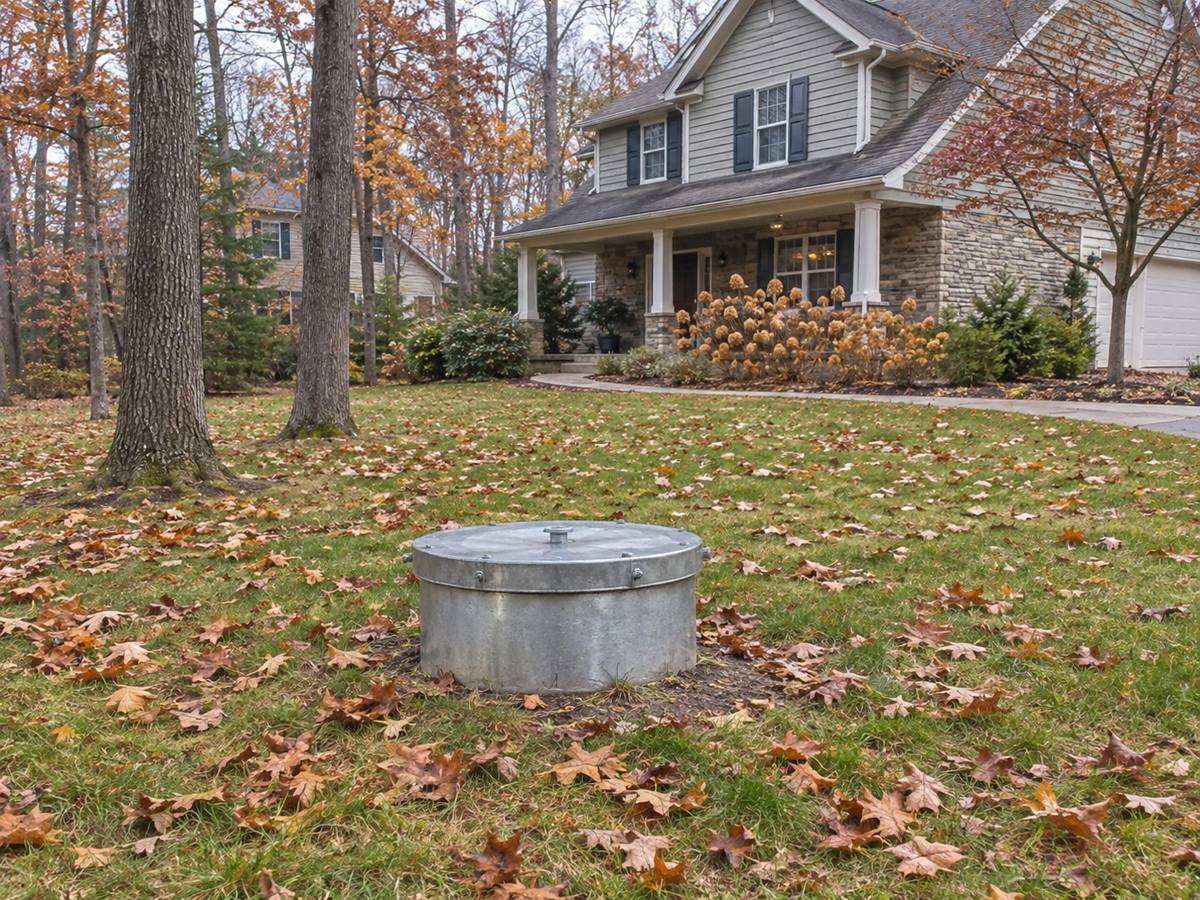
The same FAQ is clear about one thing buyers often misunderstand: the law does not prohibit a sale if the water fails a standard, and it does not require treatment before the sale. A mortgage company or local health department may require treatment in some cases, so check with your lender early.
What the Test Covers in Burlington County
The NJDEP lists the parameters required for every well in the state:
- Total coliform bacteria, and E. coli if coliform is found
- Nitrate
- Iron, manganese and pH
- Lead and arsenic
- 48-hour rapid gross alpha (a screen for radioactivity)
- Volatile organic compounds with drinking water limits
- 1,2,3-TCP, EDB and DBCP
- PFOA, PFOS and PFNA, required since December 1, 2021
Burlington County is also one of the southern counties where a mercury test is required. The NJDEP’s PWTA report lists Burlington among the nine counties with that requirement. The state’s PFAS FAQ adds that sale tests now include GenX chemicals, PFBS and PFHxS as well.
How the Sample Is Taken
A homeowner cannot take the sample. The NJDEP requires it to be collected by an employee or authorized representative of a lab certified for PWTA sampling. The water must be untreated: if the house has a softener, filter or other system, the sample comes from before it. That means the report shows what the well produces, not what comes out of the kitchen tap.
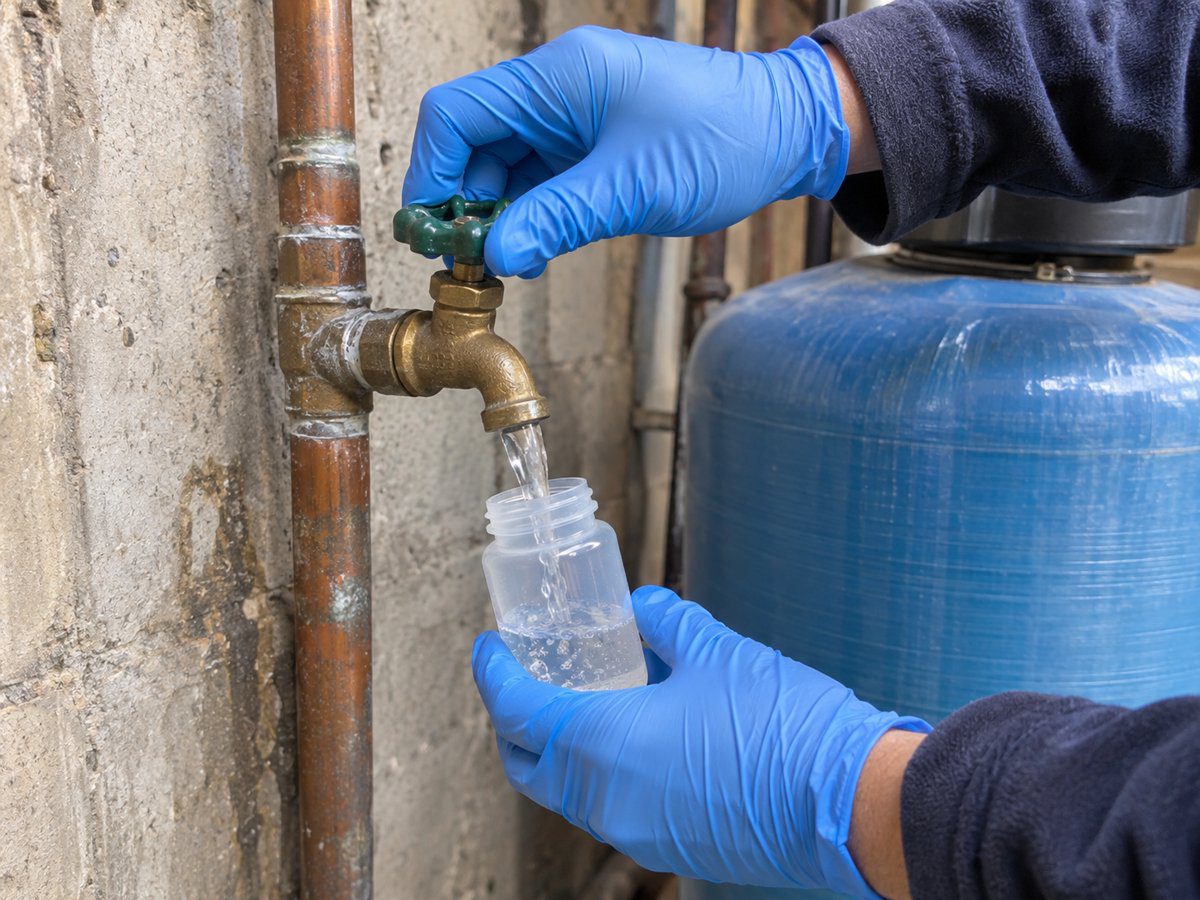
Results can be used for one year after the sample is collected, except coliform bacteria results, which are good for six months. If closing slips, ask whether a retest is needed.
How to Read the Report
The lab reports results on the New Jersey Private Well Water Test Reporting Form. For each item it shows the result, the standard and whether the sample passed. A few tips:
- Read every line, not just pass or fail. A result just under a limit is worth watching.
- Check the units. Some results are in parts per million, others in parts per billion or trillion.
- Look at pH, iron and manganese even though they are secondary (taste and staining) standards, not health limits. Low pH corrodes plumbing, and iron and manganese stain fixtures and laundry.
- Watch the gross alpha line. The NJDEP explains that if the first count is over 5 picocuries per liter, the lab runs a second count. The drinking water limit is 15, and most gross alpha in well water comes from radium.
Because the sale sample is raw water, it does not tell you whether existing equipment works. The NJDEP recommends testing again after treatment is installed to confirm it is doing its job, so ask for a sample from the kitchen tap too.
Common Results in Burlington County
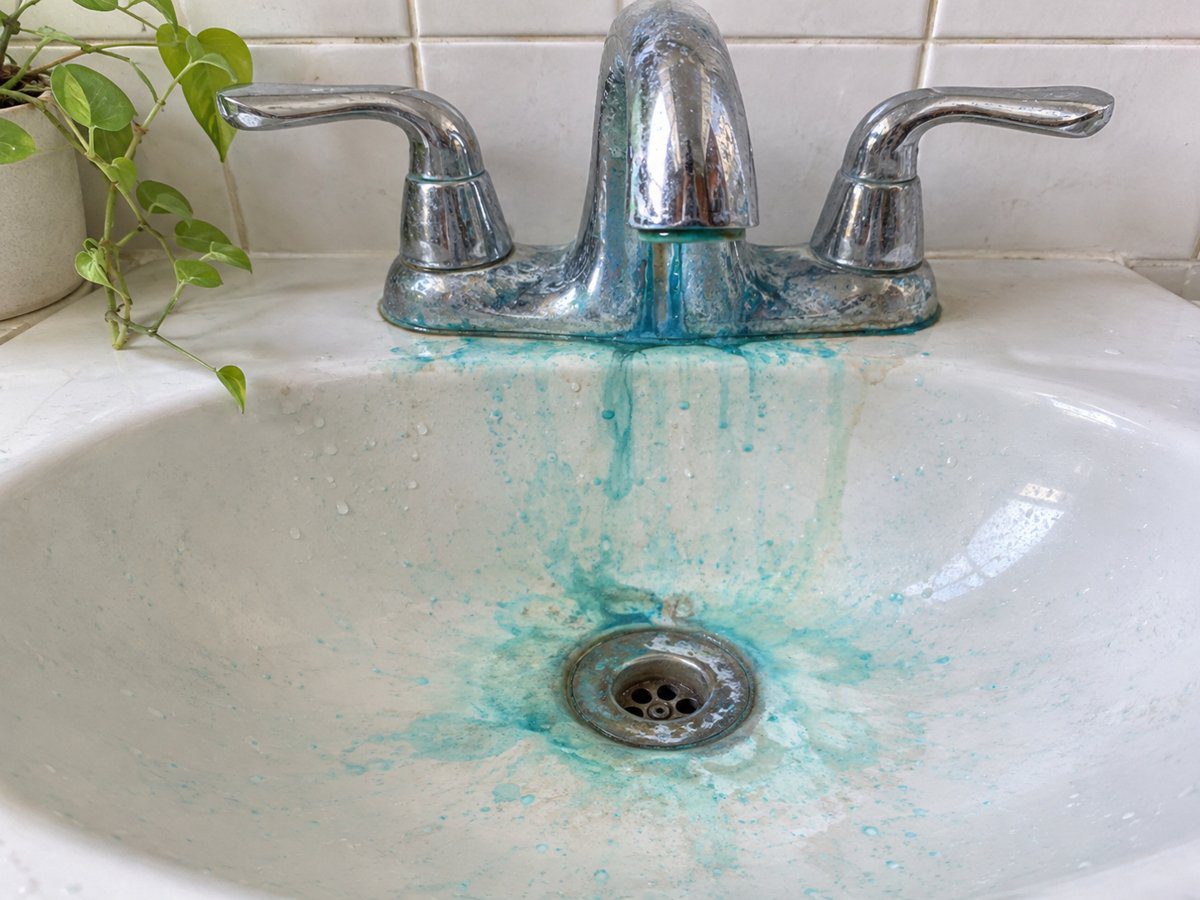
Much of Burlington County sits on the Kirkwood-Cohansey aquifer, the shallow sand aquifer under the Pinelands. Wells here often have acidic water, which causes blue-green stains and pinhole leaks in copper. Iron is common, and tea-colored water from tannins shows up in some areas. Gross alpha and radium appear more often in this aquifer, and the southern counties are where mercury has been found in some wells. Homes near busy roads can see sodium and chloride from road salt; see our guide to road salt in Burlington County well water.
What to Do If Something Fails
- Retest to confirm, especially for bacteria, which can come from a sampling problem.
- Get a treatment plan based on the full report, not one result at a time. pH, iron and hardness affect how other equipment works.
- Talk with your agent and lender about timing, since treatment may need to be installed before or after closing.
- Test again after treatment to prove it is working, and keep the report.
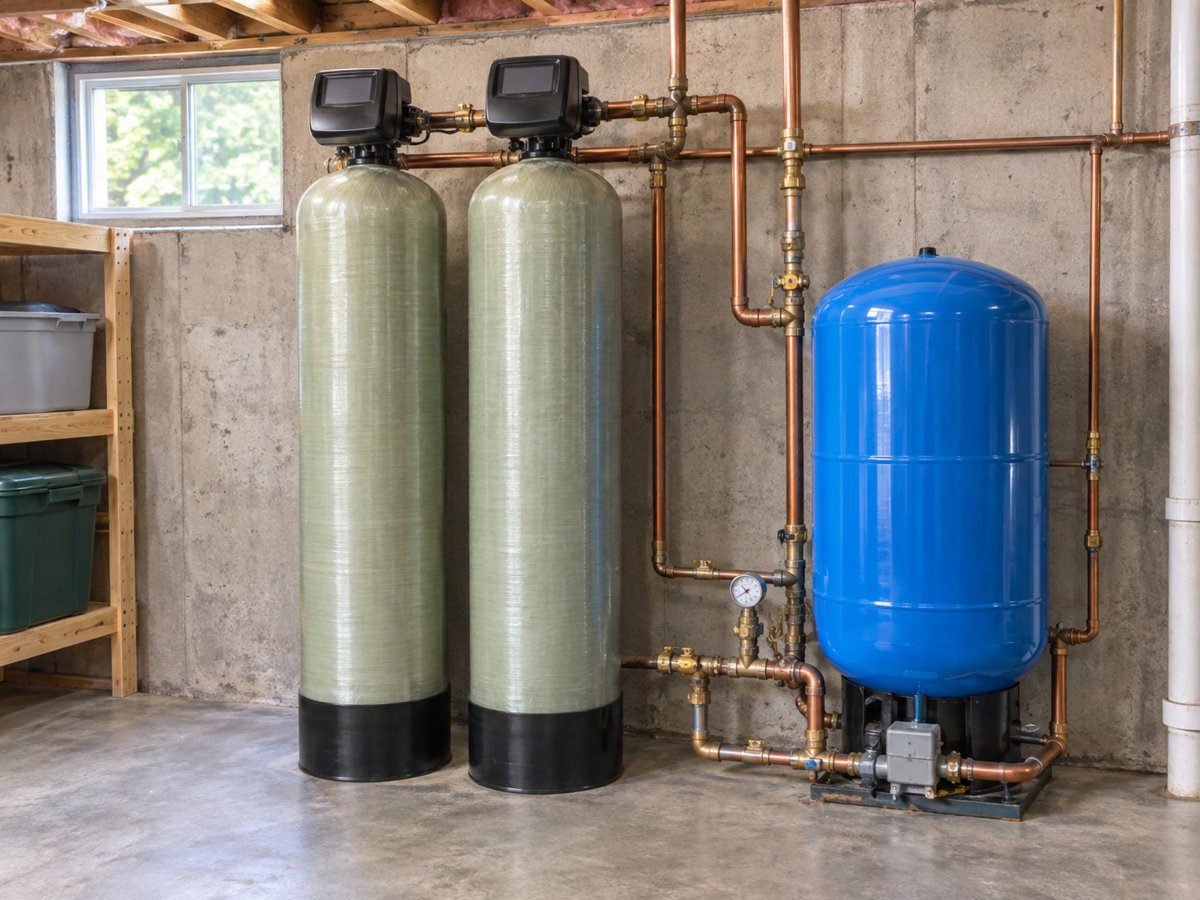
Many fixes are routine: an acid neutralizer for low pH, a softener or iron filter for iron and hardness, a UV system for bacteria, and reverse osmosis at the kitchen sink for things like nitrate, arsenic or PFAS. See our water treatment options.
Timing the Test Around Your Closing
Lab work takes time, and a retest takes more. Schedule the PWTA sample as early as your contract allows so there is room to confirm a result or get a treatment plan before the closing date. Make sure the house has been lived in or the water has been run normally before sampling. A well that has sat unused for months can give results that do not match day-to-day use.
Winter adds a wrinkle. A vacant house may have had its plumbing drained to prevent freezing, and the water has to be restored before a sample can be taken. If the house was winterized, ask your agent to have the seller turn the water back on and run it a few days ahead of the lab visit.
Keep copies of everything: the lab report, any retest and any treatment invoices. A future buyer will ask for them, and so will your own lender or insurer.
Questions to Ask the Seller
- How old is the well, and is the well record available?
- When was the pump last replaced?
- What treatment equipment is in the house, how old is it and when was it last serviced?
- Are there past water test reports?
- Has the well ever run low or had a bacteria problem?
Service records for existing equipment are worth asking for. A softener or filter that has not been serviced in years may need work right away.
After You Move In
The sale test is a snapshot. Plan to test the well again on a regular schedule, and any time the water changes in taste, smell or color. Keep every report in one folder. If you inherited treatment equipment, have it checked and set up for your household’s water use, since the previous owner’s settings may not fit.
Burlington County Homes We Serve
We work with well owners across Burlington County, including Tabernacle, Shamong, Medford, Medford Lakes, Southampton, Pemberton, Woodland, Springfield, Chesterfield, North Hanover and Mansfield. Visit our Burlington County service area page for more on local water.
When to Call A Clear Alternative
Call us when you get the PWTA report, whether the water passed or not. A Clear Alternative is a family-run company that has been treating New Jersey water since 1991, from 9230 Collins Ave in Pennsauken. We will go over the report with you, test what we can in the home for free and explain what the house needs before you close. Call 1-888-577-8088.
Frequently Asked Questions
Is well testing required when buying a house in Burlington County?
Yes. The Private Well Testing Act requires a certified lab test of the untreated well water before closing, and both buyer and seller must review the results.
Can a house be sold if the well fails?
Yes. The law does not prohibit a sale or require treatment, though a lender or local health department may require treatment in some cases.
Who pays for the well test?
The NJDEP says testing costs are negotiated between the buyer and seller.
Does the test include PFAS and mercury?
Yes. PFOA, PFOS and PFNA have been required statewide since December 2021, and mercury is required in Burlington and other southern counties.
How long are test results good for?
One year from sample collection, except coliform bacteria results, which are good for six months.
Questions about your water? Talk to A Clear Alternative.
Call 1-888-577-8088 for a free in-home water analysis.
Email Liz@aclear.com · Website aclear.com
Family-run since 1991 · 9230 Collins Ave, Pennsauken NJ 08110