
Mercury in Atlantic County Well Water: Testing and Treatment
Mercury turns up in some private wells in Atlantic County, and you cannot see, smell or taste it. The drinking water limit is 2 micrograms per liter (2 parts per billion). Atlantic County is one of the South Jersey counties where the Private Well Testing Act requires a mercury test when a home is sold, and state health data show it is one of the counties where results over the limit are most common. Most wells test well below the limit, but the only way to know about yours is a test from a certified lab. If your well is over the limit, whole-house treatment with granular activated carbon, or reverse osmosis for drinking water, can remove it. A Clear Alternative offers a free in-home water analysis across Atlantic County. Call 1-888-577-8088.
Why Mercury Shows Up in South Jersey Wells
Most Atlantic County homes on wells draw from the Kirkwood-Cohansey aquifer, the large, shallow sand aquifer under the Pinelands and much of South Jersey. The U.S. Geological Survey has found mercury above the drinking water limit in more than 700 domestic wells tapping this aquifer, mostly where the water is acidic. Natural background levels in the aquifer are very low.

A state Mercury Task Force report concluded that the contamination is confined to the Kirkwood-Cohansey and is unlikely to come from natural sources. Older uses of mercury, such as pesticides once used on farms and orchards, are among the suspected causes. The same report notes that most of the mercury in these wells is dissolved mercury salts, but small amounts of a volatile form have also been detected, raising concern about breathing it in during showers.
How Common It Is in Atlantic County
Since 2002, every home sale in Atlantic County with a private well has required a mercury test. The NJDEP Private Well Testing Act report shows that from September 2002 to April 2007, 38 of 2,857 Atlantic County wells tested (1.3%) were over the mercury limit, one of the higher rates among the counties required to test.
Over a longer period, New Jersey Department of Health data show that less than 1% of the 69,358 wells tested statewide from 2002 to 2023 exceeded the limit, and that exceedances were most common in Atlantic, Camden and Gloucester counties, among others. In other words, mercury is not in most wells, but Atlantic County is one of the places where it is worth checking.
The Limit and What It Means
The drinking water limit (maximum contaminant level) for mercury is 2 micrograms per liter, set by the EPA and adopted by New Jersey. The New Jersey Department of Health notes that public water systems in New Jersey rarely have mercury problems, but private wells in the southern part of the state have. Mercury affects the nervous system and kidneys, which is why the limit is so low. If you have health questions about a result, talk with your doctor or local health department.
Who Should Test and When
- Anyone on a private well in Atlantic County who has not tested for mercury, or whose last test was at the home purchase. The NJDEP suggests private well owners in southern and central New Jersey consider testing for mercury every year.
- Homes with acidic water, such as blue-green stains on fixtures or pinhole leaks in copper. Mercury is most often found where well water is acidic. See our acid neutralizer guide.
- Homes near current or former farms and orchards, or in neighborhoods where neighbors have found mercury.
- Anyone buying a home. The sale test includes mercury in Atlantic County, so read the full report, not just the summary.
How to Test
Use a New Jersey certified lab and ask for mercury along with a full panel: bacteria, nitrate, pH, iron, manganese, lead, arsenic and gross alpha. The Atlantic County Division of Public Health also offers well testing for county residents. Take the sample from a tap before any filter or softener so you know what the well itself is producing. If a result is near or over the limit, retest to confirm before you choose treatment.
Treatment Options for Mercury
According to the New Jersey Department of Health, the EPA lists granular activated carbon, reverse osmosis, coagulation and filtration, and lime softening as effective ways to remove mercury. For a home well, the practical choices are:
Whole-House Granular Activated Carbon
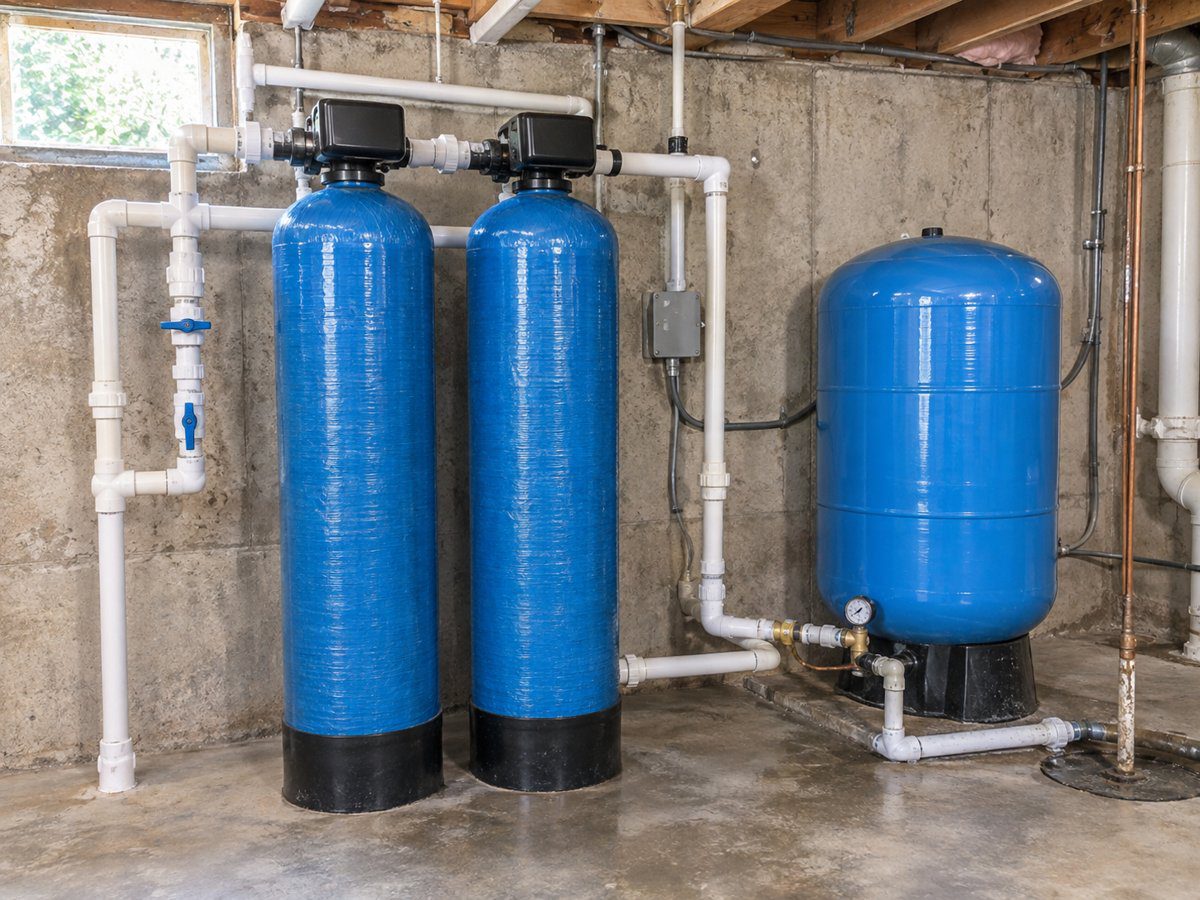
A whole-house (point-of-entry) carbon system treats every tap, including showers. That matters with mercury because of the concern about breathing in the volatile form while bathing. The system is sized to your home’s water use and mercury level, and the carbon is replaced on a schedule based on follow-up testing.
Reverse Osmosis for Drinking Water
An under-sink reverse osmosis system removes mercury from water used for drinking and cooking. It is a good choice when levels are low and the main concern is drinking water, or as a second layer after whole-house carbon.
Fix the pH Too
Because mercury and acidic water often go together, many Atlantic County wells also need pH correction to protect plumbing and keep other treatment working well. We look at the whole lab report before recommending anything. If your water is also brown or tea-colored, see our guide to tannins in Atlantic County well water.
After Treatment: Keep Testing
Treatment only works if it is maintained. Test the treated water after installation, then on a regular schedule, so you know when carbon or filters need changing. Keep copies of every lab report in one place. They help size the system, show when it is wearing out, and are useful records when you sell the house.

Atlantic County Wells We Serve
We test and treat private wells across Atlantic County, including Hamilton Township, Galloway, Egg Harbor Township, Mullica, Hammonton, Buena Vista, Folsom, Estell Manor, Weymouth and Egg Harbor City. Many of these homes draw from the same shallow sand aquifer, with acidic water that can carry iron, tannins and sometimes mercury. Visit our Atlantic County service area page for more on local water.
Mercury Results and Selling a Home
If you are selling a home with a well in Atlantic County, the buyer’s or seller’s lab will test for mercury along with the other required items. A result over the limit does not have to stop a sale, but it does need a plan. Buyers usually want to see treatment installed and a clean follow-up test from the treated tap. Sellers who test early, before listing, have time to install treatment and gather paperwork without a deadline hanging over them.
If you are buying, ask for the full lab report and the sample location, so you know whether the sample came before or after any existing filter. If the home already has treatment, ask for maintenance records and the date the carbon or filters were last changed. A free in-home water analysis from A Clear Alternative can help you understand what the house will need before closing.
When to Call A Clear Alternative
Call us if a home sale or annual test showed mercury, if your well has never been tested for it, or if you have acidic water and want to know what else might be in it. A Clear Alternative is a family-run company that has been treating New Jersey water since 1991, working from 9230 Collins Ave in Pennsauken. We will review your lab report, test what we can in your home for free, and design treatment around your results. See all our options on the water treatment page, or call 1-888-577-8088.
Frequently Asked Questions
What is the safe limit for mercury in well water?
The drinking water limit is 2 micrograms per liter (2 parts per billion), set by the EPA and adopted by New Jersey.
Is mercury testing required in Atlantic County?
Yes. Under the Private Well Testing Act, a mercury test is required when a home with a private well is sold in Atlantic County and several other South Jersey counties.
Where does mercury in South Jersey wells come from?
A state task force concluded it is confined to the Kirkwood-Cohansey aquifer and unlikely to be natural. Older uses of mercury, including some farm pesticides, are among the suspected sources.
What removes mercury from well water?
Granular activated carbon and reverse osmosis are both effective, according to the New Jersey Department of Health. A whole-house carbon system treats every tap; reverse osmosis treats drinking water at one faucet.
How often should I test my well for mercury?
The NJDEP suggests well owners in southern and central New Jersey consider testing for mercury every year.
Questions about your water? Talk to A Clear Alternative.
Call 1-888-577-8088 for a free in-home water analysis.
Email Liz@aclear.com · Website aclear.com
Family-run since 1991 · 9230 Collins Ave, Pennsauken NJ 08110