
Cost of Well Water Treatment System: What Drives the Price?
What if the right well water treatment system isn’t the biggest one, but the one that targets what’s actually in your water? The cost of well water treatment system recommendations can vary, so it’s reasonable to want to know whether a quote includes equipment your household needs.
The key is matching treatment to your water and your home. Different water concerns call for different solutions, while household water use, installation needs, and ongoing upkeep can all shape the project’s total cost.
In this guide, you’ll learn what drives the cost of a well water treatment system, why water testing is a useful first step, and what to consider when comparing system options. A Clear Alternative provides free water analysis to help connect recommendations to your water instead of relying on guesswork.
We’ll also look at how equipment, installation, and future maintenance fit into the bigger picture, so you can plan with more confidence and focus on treatment your household needs.
Key Takeaways
- The cost of well water treatment system projects depends on the equipment, installation scope, and ongoing upkeep, so costs can differ from home to home.
- Water test results help identify which concerns need attention and narrow down suitable treatment options.
- Compare proposals by treatment purpose, system capacity, installation work, and future maintenance, not just by the equipment listed.
- Start planning with a water analysis and a clear treatment goal, then account for installation and upkeep in your household budget.
- A Clear Alternative offers free water analysis to help homeowners in South Jersey, including Tabernacle, Shamong, and Medford Lakes, understand their water before considering treatment.
What determines the cost of a well water treatment system?
System recommendations and proposals can differ from home to home. One well may need treatment for a single water-quality concern, while another may need multiple stages to address different findings. The cost of well water treatment system projects depends on the equipment selected, professional installation, and upkeep over time. To understand a proposal, look at the full project scope, not just the equipment name.
There’s no single system cost that fits every well because each home’s water, daily demand, and installation needs are different. Start with the water itself. A water well draws from groundwater, and local conditions can influence what’s present. Test findings help connect a treatment goal to equipment and a project scope that make sense for your home.
Why well water treatment does not have one standard cost
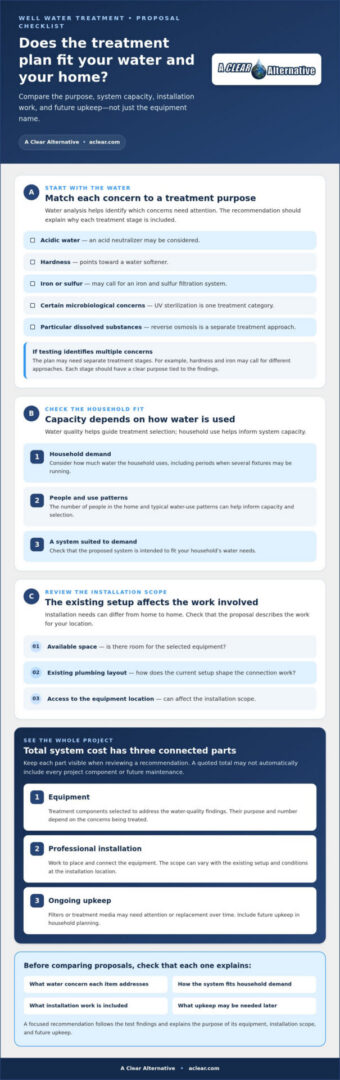
A single water concern may call for one treatment approach. For example, a homeowner addressing acidic water may consider an acid neutralizer, while iron or sulfur concerns may point toward an iron and sulfur filtration system. If testing identifies more than one issue, the plan may need separate treatment stages. The goal is to address the findings, not add equipment without a clear purpose.
Household demand matters, too. A system needs to suit how much water your household uses, including periods when several fixtures may be running. The number of people in the home and typical water-use patterns can help inform capacity and selection. If a system doesn’t match demand, it may not fit your household’s needs.
Installation conditions also shape the project. Available space, the existing plumbing layout, and access to the equipment location can affect the work involved. These details help define the installation scope; they don’t mean every home needs the same setup.
What homeowners mean by total system cost
Think of total project cost as three connected parts: equipment, professional installation, and ongoing upkeep. Keeping them distinct makes it easier to see what a recommendation is designed to address and what to plan for after installation.
- Equipment: The treatment components selected to address the water-quality findings. Their purpose and number depend on the concerns being treated.
- Installation: The work to place and connect the selected equipment in your home. The scope can vary with the existing setup and conditions at the installation location.
- Ongoing upkeep: Filters or treatment media may need attention or replacement over time. Include those future needs in your household planning instead of viewing installation as the only cost to consider.
Don’t assume a quoted total automatically includes every part of the project or future maintenance. Review how the equipment, installation work, and upkeep are described, then connect each item to the treatment goal. This breakdown gives you a clearer basis for comparing recommendations and deciding whether the proposed scope fits your home.
How water test results shape a well treatment system
A treatment recommendation should start with information about your water, not a guess based on taste, smell, or a neighbor’s setup. Water analysis helps identify concerns, so equipment can be selected to address relevant findings instead of being added as a precaution without a clear purpose. The EPA Private Drinking Water Wells resource also explains why private well owners need to understand their own water quality.
Let your water test results guide treatment selection. They help identify concerns to address before you choose equipment. Findings can narrow the options, but they don’t answer every sizing question. Water quality and household demand are related planning steps, but they serve different purposes: analysis informs treatment selection, while household use helps determine system capacity.
Match the treatment category to the water concern
Each treatment category has a distinct role. If the analysis identifies acidic water, an acid neutralizer may be considered. Hardness points toward a water softener, while iron or sulfur concerns call for treatment designed for those issues. These categories aren’t interchangeable, so identifying the specific concern is a practical first step toward a focused recommendation.
Other findings may lead to different options. UV sterilization is a treatment category used for certain microbiological concerns, while reverse osmosis is a separate approach for particular dissolved substances. Neither is a universal fix for every water-quality issue. The appropriate choice depends on what the analysis shows and your treatment goal.
If results point to more than one concern, the system may need more than one treatment stage. For instance, a household could have both hardness and iron concerns, which may call for separate approaches. The recommendation should follow the findings and explain the purpose of each stage, rather than treating every possible issue as if it were present.
Why a water analysis is a useful first step
A water analysis gives you a clearer starting point before you consider equipment. It helps distinguish concerns and focus on treatment categories that fit the results. A Clear Alternative offers free water analysis to help connect recommendations to your home’s water. You can use our free water analysis to begin understanding which concerns may need attention.
As you review results, keep these questions in view:
- What did the analysis identify? Tie each recommended treatment to a specific water concern.
- What is the treatment meant to address? A clear goal makes it easier to understand why a treatment category is being considered.
- How will household use affect selection? Capacity must reflect expected water demand, which a water-quality test alone doesn’t establish.
This distinction helps prevent a common mix-up: a test can inform what needs treatment, but it doesn’t determine the right capacity for your household. For a clearer view of the cost of well water treatment system options, consider both the water findings and your home’s usage needs before settling on a system.
How to compare well water treatment quotes by project scope
Two proposals can show different totals because they may describe different projects. One might address a single water concern; another could include several treatment stages, a different system capacity, or more installation work. Instead of comparing the bottom line alone, check whether each proposal is based on the same water findings and household needs. A proposal makes sense in context, alongside your water results and project details.
Use the questions below to compare the scope. Clear answers help you understand what each recommendation is intended to do and what to plan for beyond installation.
| Scope category | Homeowner questions | Why it matters |
|---|---|---|
| Treatment purpose | Which water concerns is the proposed system intended to address? How does each treatment stage relate to the analysis? | Connects the equipment to specific findings and helps distinguish relevant treatment from unrelated additions. |
| System capacity | How does the proposed capacity account for household use and periods of higher demand? | Capacity should suit the home’s water-use needs, not just the water-quality findings. |
| Installation work | What installation work and system components does the proposal describe? Does it account for the existing plumbing and equipment location? | Homes differ. Installation scope may depend on the property’s layout and conditions. |
| Ongoing upkeep | What routine maintenance, filter changes, or treatment-media replacement may be needed? | Future upkeep is part of ownership, even when it isn’t part of the initial installation scope. |
Questions that clarify what a quote covers
Start by matching each proposed treatment to a water concern identified in your analysis. Then review the components and installation tasks described. Finally, ask what routine care the system may need, including filter or treatment-media replacement. This gives you a fuller picture of the project and helps avoid comparing one proposal’s installation scope with another’s equipment-only description.
Why system sizing and installation details matter
Household water use helps inform capacity. A home’s needs may differ based on the number of people and fixtures, as well as times when water is being used simultaneously. Installation conditions are specific to the property, so don’t assume every whole-house water filtration system requires identical work. Reviewing the proposed system, capacity, and installation scope together makes comparisons more meaningful.
When proposals differ, look for the reason before drawing conclusions. One may cover more water concerns or a broader scope of work, while another may focus on a narrower treatment goal. Compare similar scopes wherever possible, and tie each recommendation back to your water results. That’s a more useful way to evaluate the cost of well water treatment system options than judging a proposal by one number alone.
How to plan for well water treatment costs over time
A useful plan looks beyond the initial equipment decision. Start with what your water analysis identifies, define what you want treatment to address, then consider installation and upkeep as separate parts of ownership. This gives you a practical framework for evaluating the cost of well water treatment system options without assuming every household needs a large or multi-stage setup.
Plan around identified water needs, not a collection of unnecessary features. More components don’t automatically make a system a better fit. Each proposed treatment stage should have a clear purpose tied to your water and household needs.
A practical sequence for evaluating your project
Move through the planning process in order. Equipment choices can then follow a defined treatment goal, and installation and maintenance discussions have a clear context.
- Identify concerns through water analysis. Don’t rely on appearance, taste, or odor alone to determine what may be in your well water. Some water-quality concerns aren’t visible, so use analysis to establish what needs attention.
- Connect each identified concern to a treatment purpose. For example, an acid neutralizer may be considered for acidic water. A recommendation should explain which concern each component is meant to address.
- Review project scope and ongoing needs. Consider the selected equipment, the installation work required in your home, and any future filter or treatment-media upkeep as distinct planning items.
This sequence also helps make the next discussion more focused. You can describe the result you want, understand why a treatment category is being considered, and assess how the proposed work fits your home. Household demand remains a separate part of system selection, so consider how much water your household uses as the treatment plan takes shape.
Avoiding unnecessary treatment and surprise expectations
A broad system package can sound comprehensive, but don’t assume every listed component is needed for your well. Ask what each stage is intended to treat and how that purpose relates to the analysis. If a recommendation includes an acid neutralizer, for example, its role should connect to an identified acidity concern. You can explore acid neutralizer systems in that context, as one treatment category rather than a default addition.
Also plan for ownership beyond installation. Depending on the equipment selected, routine care may involve attention to filters or treatment media. Understanding what upkeep applies to your proposed system helps you account for future needs instead of focusing only on installation day. Keep these questions together: What does the water analysis show? What is each treatment stage for? What installation work is planned? What maintenance should you expect?
For a home-specific starting point, request a free water analysis from A Clear Alternative. The results can help you define a treatment goal before considering equipment and planning the project scope.
Well water treatment in South Jersey: start with a free water analysis
If you’re trying to understand the cost of well water treatment system options for your home, start with the water itself. A Clear Alternative is a family-owned, NJ-licensed water treatment business serving customers since 1991. Its free water analysis helps identify concerns before you consider treatment, giving you a more informed starting point than choosing equipment based on assumptions.
A Clear Alternative serves eight New Jersey counties: Atlantic, Burlington, Camden, Cape May, Gloucester, Mercer, Monmouth, and Salem. The company also serves Tabernacle, Shamong, and Medford Lakes. A water analysis helps connect findings with relevant treatment options, so you can consider a solution based on your home’s needs.
What to expect when beginning with water analysis
The water analysis is provided at no cost. It helps identify concerns that may need attention before treatment is selected. Depending on the findings, relevant options may include filtration, water softening, or iron and sulfur removal. The analysis informs the discussion, but it doesn’t mean every household needs every treatment category.
Results can help focus the next steps: which concern needs attention, what treatment purpose fits, and what project details to consider. The water analysis is a first step. Recommendations should reflect the water and the home, rather than assuming one system fits every household.
A local team for water treatment and installation
A Clear Alternative has served 9,000+ customers. The company has a 4.6-star Google rating with 98+ reviews, and most installations are completed within 24 hours. These details offer context about the business, while your water analysis brings the focus back to your property’s needs.
As you consider a recommendation, use the analysis to understand which water concerns are relevant and what treatment purpose is proposed. Then consider installation scope and future upkeep as part of the plan. This helps you evaluate a system as a complete project rather than focusing on equipment alone.
To begin, request your free water analysis and identify your well water concerns and treatment options.
Make your next step a clearer one
The best treatment plan isn’t the one with the most equipment. It’s the one that addresses the water concerns that matter in your home and fits how your household uses water. With your treatment goal defined, you can consider the full project with greater confidence, including the work involved and the upkeep to plan for over time.
That’s what makes the cost of well water treatment system easier to evaluate: you’re comparing a solution to your needs, not trying to make sense of equipment in the abstract. Start by getting useful information about your water. From there, the options and next decisions can become clearer.
Start with a free water analysis from A Clear Alternative and take a practical first step toward a treatment plan for your home.
Frequently Asked Questions
How much does a well water treatment system cost?
There isn’t one standard price for every home. The cost of well water treatment system installation depends on the equipment needed for your water, the work involved in fitting it, and the upkeep it may require. A system addressing one issue can have a different scope from a setup treating several concerns. To compare proposals, look for the same water findings and clearly described project work.
What affects the cost of a well water treatment system?
The main factors are the water concerns being treated, how many treatment stages are needed, the system capacity suited to household demand, and the installation conditions. For example, a home with several simultaneous water-use needs may require a different capacity than a smaller household. Existing plumbing and available equipment space can also affect the work. Reviewing these details together helps explain why recommendations vary.
Does every well need a whole-house water treatment system?
No. The right scope depends on what your water analysis identifies and what you want treatment to address. Some households may need a targeted solution, while others may have multiple concerns that call for more than one treatment stage. Don’t assume that a larger package is automatically more appropriate. Connect each proposed component to a specific need, and consider whether treatment is intended for the whole home.
Can water testing help me avoid buying the wrong treatment system?
Yes. Testing can reveal water concerns that aren’t obvious from appearance or taste, helping you avoid choosing equipment based on symptoms alone. For example, an unpleasant odor may prompt questions about water quality, but it doesn’t identify the cause by itself. Use the analysis findings to guide the treatment goal, then check that each recommended component addresses an identified concern rather than relying on guesswork.
How much does it cost to maintain a well water treatment system?
Maintenance costs depend on the system type, how it’s used, and which parts require routine attention. Depending on the equipment, upkeep may include replacing filters or treatment media. Review the system’s care instructions and include recurring supplies in your household planning. Keeping track of maintenance needs helps you plan for ongoing care instead of focusing only on the initial installation.
Should I install a well water treatment system myself?
It depends on the equipment and your plumbing experience, but a whole-house system can involve more than placing a unit in position. Connections, system capacity, and the arrangement of treatment stages all affect how equipment fits into your home. A Clear Alternative provides professional water treatment system installation and labor for residential and commercial projects. A clear installation scope helps you understand what the project involves.
How do I get free well water testing in South Jersey?
A Clear Alternative provides free water analysis. If you’re in Tabernacle, Shamong, or Medford Lakes, you can request your free water analysis online or call 1-888-577-8088. Share any concerns you’ve noticed and information about treatment equipment already in your home, if applicable. The analysis offers a starting point for understanding your water before considering treatment options.