
Essential Water Softener Maintenance Tips: The 2026 Homeowner’s Guide
Imagine waking up to find stubborn, chalky white stains creeping back onto your pristine chrome faucets, even though you invested in a high-end filtration system. It’s frustrating to feel like your equipment is failing when the solution is often just a few minutes of expert attention. You deserve the luxury of soft water without the constant technical headache or the back-breaking chore of lugging heavy salt bags every weekend. Mastering a few essential water softener maintenance tips is the secret to ensuring your home stays protected and your skin stays soft for years to come.
We agree that home maintenance should feel like an empowering lifestyle choice, not a confusing technical burden. That’s why we’ve streamlined the process for 2026. This guide promises to transform you from a frustrated homeowner into a confident system manager by providing clear, actionable steps to extend your equipment’s lifespan. We’ll cover everything from a simple monthly checklist and choosing the right salt type to identifying the specific signs that it’s time to call in a professional expert.
Key Takeaways
- Move beyond the “set it and forget it” myth to protect your home’s plumbing and extend your system’s lifespan.
- Master essential water softener maintenance tips like the “Golden Rule” of salt levels and how to break through system-stopping salt bridges.
- Prevent “resin fouling” and iron buildup by implementing a simple deep-cleaning schedule for your brine tank every 6 to 12 months.
- Identify and troubleshoot common South Jersey water issues, including the “rotten egg” sulfur smell and slippery water textures.
- Discover how professional salt delivery and expert servicing can eliminate heavy lifting while ensuring peak system efficiency.
Understanding Your Water Softener’s Maintenance Needs
Your water softener is one of the hardest-working appliances in your home. It operates silently in the background, protecting your skin, hair, and expensive plumbing from the harsh effects of mineral buildup. However, many people fall into the “set it and forget it” trap. This myth suggests that once a system is installed, it never needs a second thought. In reality, ignoring your system leads to premature failure and a return of those dreaded white stains on your designer fixtures. True water softener maintenance is the proactive care of resin beads and salt levels.
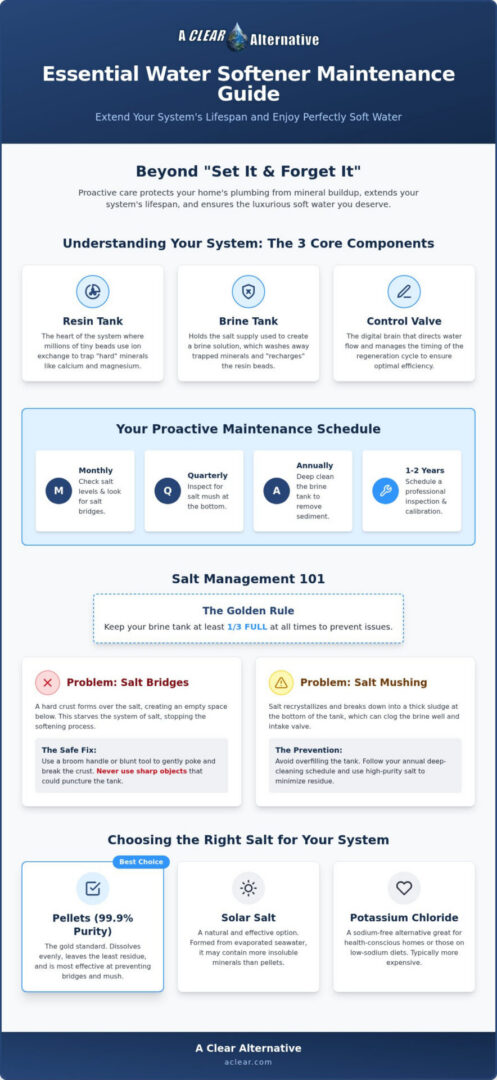
To master your system, you only need to understand three core components. The resin tank is where the actual softening occurs. The brine tank holds your salt supply. Finally, the control valve acts as the digital brain, directing the flow and timing of the entire process. Keeping these three elements in harmony is the foundation of effective water softener maintenance tips.
The Role of Ion Exchange in Your Home
Softening water isn’t magic; it’s chemistry. Inside the resin tank, millions of tiny resin beads act like magnets to trap calcium and magnesium. This process, known as ion exchange, is what gives you that luxurious, clean feeling. The regeneration cycle is the heartbeat of the system. It uses a salt brine to wash away the trapped minerals and recharge the beads. In South Jersey, local well water often contains high levels of iron. If you don’t manage your system correctly, this iron can foul the resin, coating the beads in a rusty film that prevents them from working entirely.
Creating a Maintenance Schedule
Consistency creates the best results. You don’t need to be a technician to keep things running smoothly, but you do need a rhythm. Checking your salt levels every 2 to 4 weeks is the most important habit you can form. Letting the tank run empty stops the softening process immediately. For the best performance, follow this simple timeline:
- Monthly: Check salt levels and look for hard crusts or bridges.
- Quarterly: Inspect the brine tank for salt mush at the bottom.
- Annually: Schedule a deep cleaning of the brine tank to remove sediment.
While DIY care is essential, a professional inspection every 1 to 2 years is vital for the health of your control valve. These digital components require precise calibration to ensure your system isn’t wasting water or salt. Proactive care today prevents an expensive replacement tomorrow. It’s about maintaining that premium water quality you’ve come to expect without the stress of unexpected repairs.
Managing Your Salt: Bridges, Mush, and Levels
Maintaining your system shouldn’t feel like a chore. The Golden Rule of salt management is simple: keep your brine tank at least one-third full at all times. While it’s tempting to fill it to the brim to save time, this often backfires. Overfilling is a primary cause of salt bridging, where a hard crust forms across the tank. This crust creates an empty pocket underneath, so your system thinks it has salt when it’s actually starving for brine.
Another common headache is salt mushing. This happens when salt breaks down into a thick sludge at the bottom of the tank. It clogs the intake and prevents the regeneration cycle from working. Following consistent water softener maintenance tips ensures you catch these issues before they ruin your weekend and your water quality.
How to Break a Salt Bridge Safely
If you notice your water feels hard but the tank still looks full, you likely have a bridge. You don’t need a heavy toolbox for this fix. Grab a broom handle or another blunt tool; never use sharp objects that could puncture the tank liner. Carefully push the handle into the salt to find the hollow spot. Apply steady pressure until the crust collapses into the water below. If you find yourself doing this every month, it’s a clear sign you should switch to a higher-quality salt brand.
Choosing the Best Salt for Your System
Not all salt is created equal. While solar salt and evaporated salt are popular, high-purity pellets (99.9%) are generally the best choice for resin longevity. They dissolve more evenly and leave less residue behind. If you’re on a low-sodium diet, potassium chloride is a fantastic alternative, though it’s typically more expensive than traditional sodium chloride.
- Pellets: The gold standard for preventing bridges and mush.
- Solar Salt: Natural and effective, but may contain more insoluble minerals.
- Potassium Chloride: Great for health-conscious homes, but requires a slight adjustment to your softener’s settings.
If the thought of hauling 40-pound bags down to the basement sounds exhausting, you can always simplify your life with a professional salt delivery service that handles the heavy lifting for you.
Cleaning and Resin Care: The Deep Maintenance
While keeping salt levels consistent is vital, even the best salt leaves behind trace impurities over time. These sediments settle at the bottom of your brine tank, forming a layer of muck that can lead to salt clogs or even bacterial growth. A clean brine tank prevents bacterial growth and salt clogs, ensuring your water stays as fresh as it looks. You should aim for a full clean-out every 6 to 12 months to maintain peak performance and avoid the return of those frustrating sink stains.
Beyond the tank, your resin beads are the real workhorses of the system. In South Jersey, iron and sediment are common culprits that cause resin fouling. This happens when minerals coat the beads, preventing the ion exchange process from occurring. If your water starts feeling less soft despite having plenty of salt, your resin likely needs a restorative boost. Implementing these water softener maintenance tips keeps the internal chemistry of your system balanced and effective.
Step-by-Step Brine Tank Cleaning
Don’t let a deep clean intimidate you. It’s a straightforward process that usually takes less than an hour. Start by putting your control valve into bypass mode to stop the water flow. You’ll need to empty any remaining salt and siphon out the standing water. Use mild soap and warm water to scrub the interior walls. Avoid harsh bleach unless you see visible mold; a gentle touch preserves the tank’s integrity. Rinse the tank thoroughly, refill it with high-purity salt, and restart a manual regeneration cycle to reset the system.
Using Resin Cleaners and Iron Out
Sometimes, soap and water aren’t enough to tackle mineral buildup. Specialized resin bed cleaners, such as Iron Out, are essential for restoring efficiency to an aging system. You simply pour the recommended amount of cleaner directly into the brine well. This is the small tube inside your tank that houses the float assembly. Homeowners in Tabernacle or Shamong often deal with high iron levels that can turn resin beads orange and sluggish. In these specific areas, adding a resin cleaner every few months is a non-negotiable part of effective water softener maintenance tips. It strips away the iron coating, allowing the beads to work at 100% capacity again.
Troubleshooting Common Softener Issues in South Jersey
Even with the best water softener maintenance tips, South Jersey homeowners often face unique environmental challenges. One of the most frequent complaints is a “rotten egg” smell. This sulfur odor isn’t usually a sign that your softener is broken; rather, it indicates that your water chemistry has changed. A standard softener isn’t designed to remove sulfur, so if this scent appears, you likely need a targeted filtration solution. Similarly, if your water starts to feel “slippery” or “too soft,” your system might be over-processing. You can often fix this by slightly adjusting the hardness settings on your control valve to match your actual water usage.
Another critical issue in our region is the combination of hard water and low pH levels. While your softener removes minerals, it doesn’t address acidity. Acidic water can eat away at your copper pipes, leading to pinhole leaks and blue-green stains. If you notice these signs, you may need to pair your softener with Acid Neutralizer Systems to fully protect your home’s infrastructure. Finally, keep an eye on your control valve. If the digital timer isn’t triggering a regeneration cycle, your resin will quickly become saturated, leaving you with hard water despite a full salt tank.
Signs Your Softener Needs Professional Repair
Sometimes, DIY fixes aren’t enough to restore your water quality. Knowing when to call a professional can save you from a complete system replacement. Watch for these red flags:
- Persistent Hardness: Your water remains hard even after breaking salt bridges or adding resin cleaner.
- Non-Stop Running: The system gets “stuck” in a regeneration cycle, wasting hundreds of gallons of water.
- Visible Leaks: Any water pooling around the bypass valve or the base of the tank requires immediate attention.
If you encounter these issues and are located in the United Kingdom, you can visit We are a trusted plumbing & heating company providing reliable, high-quality services across London and Kent.
Similarly, for readers in Australia seeking expert property care, you can learn more about Synergy Trades Group and their specialized plumbing and electrical maintenance services.
The Impact of Local Water Chemistry
South Jersey well water is significantly different from the treated city water found in urban areas. High iron levels and varying mineral concentrations mean that a “standard” factory setting won’t work for long. Comprehensive Well Water Testing is the only way to calibrate your softener correctly. By matching your “Grains per Gallon” (GPG) setting to your actual test results, you ensure the system only runs when necessary. This precision saves you money on salt and reduces wear on your equipment. If you haven’t tested your water in the last year, it’s time to verify your settings are still accurate. Reach out to our team to schedule a professional water analysis and keep your system running at peak efficiency.
The A Clear Alternative Solution: Professional Care
While the DIY water softener maintenance tips we’ve discussed are powerful, there’s no substitute for the trained eye of an expert. A Clear Alternative has been a family-owned pillar of the South Jersey community since 1991. We don’t just fix equipment; we understand the specific, complex chemistry of our local groundwater. Investing in professional care isn’t just about convenience. It’s a smart financial strategy. Our experts optimize your salt consumption and catch minor valve wear before it turns into a costly midnight emergency. We ensure your system hits peak 2026 performance levels, protecting your home’s value and your family’s comfort.
Choosing a specialist over a general handyman is vital for your system’s health. Generalists often lack the deep chemistry knowledge required to calibrate a digital control valve correctly. We’ve spent decades studying the unique mineral profiles of our region. This local expertise allows us to provide a level of precision that “big box” services simply can’t match. We treat your water treatment system as a vital part of your home’s aesthetic and functional life, not just another mechanical appliance.
Never Carry a Heavy Bag Again
The most physical and exhausting part of owning a softener is the constant lifting. A 40-pound bag is awkward, heavy, and a strain on your back. Our specialized Salt Delivery Service removes this burden from your life entirely. We deliver high-purity salt directly to your basement or garage. We don’t just drop it off; we fill your tank and stack the rest neatly.
The real value lies in the “delivery-plus” approach. During every visit, our technicians perform a visual health check on your equipment. We proactively look for salt mushing, verify your digital timer settings, and ensure your brine levels are perfect. We even customize your delivery schedule based on your family’s actual water usage, so you never run out or over-order.
Comprehensive Water Treatment Support
Your water softener is often the first line of defense in a broader home wellness strategy. For the ultimate experience, many South Jersey neighbors are now integrating their softeners with Whole House Filtration. This combination ensures every drop in your home is free of minerals, chlorine, and sediment. It’s the gold standard for protecting your skin and your plumbing.
We also understand that water issues don’t follow a 9-to-5 schedule. That’s why we provide 24/7 emergency support for families in the Medford Lakes and Shamong areas. Whether it’s a sudden leak or a total system failure, our team is always ready to restore your home’s luxury. Don’t leave your water quality to chance. Schedule your professional water softener maintenance today! and enjoy the freedom of perfect water without the heavy lifting.
Secure Your Home’s Future with Superior Water Quality
Your home deserves the lasting protection and comfort of high-quality water. By mastering these water softener maintenance tips, you’ve taken the first step toward extending your system’s life and preserving your home’s aesthetic appeal. Remember that consistent salt levels and periodic deep cleanings are the foundation of a reliable system. Whether you’re breaking a salt bridge or scheduling a professional resin check, your commitment today prevents costly repairs tomorrow. It’s about maintaining a lifestyle of comfort and confidence.
Since 1991, our family-owned team has helped South Jersey homeowners navigate the complexities of local water chemistry. With over 30 years of expertise and 24/7 emergency service available, we’re here to ensure your water treatment remains effortless and effective. You don’t have to manage it alone. Let us handle the technical details and the heavy lifting. You can focus on the lifestyle benefits of soft, clean water. Your journey to a stress-free home environment starts with a simple choice for quality and professional care.
Get Expert Water Softener Maintenance & Salt Delivery
Frequently Asked Questions
How often should I add salt to my water softener?
You should check your salt levels every two to four weeks to ensure consistent performance. For most families in Shamong, adding a bag or two once a month is standard. The golden rule is to keep the tank at least one-third full at all times. If you let it run dry, the resin beads won’t regenerate, and hard water will return to your home almost immediately. Consistent checks are one of the most vital water softener maintenance tips.
Why is there standing water in my brine tank?
It’s normal to see about six to twelve inches of water at the bottom of your brine tank. However, if the tank is half-full of water, you likely have a clog in the brine well or a malfunctioning float valve. This often happens in Tabernacle homes when sediment or salt mush blocks the intake. If the water level doesn’t drop after a regeneration cycle, it’s time to inspect the drain line for kinks or debris.
Can I use any type of salt in my water softener?
You should stick to high-purity salt pellets, ideally 99.9 percent pure, to prevent system clogs. While rock salt is cheaper, it contains high levels of insoluble minerals that create a muddy mess in your tank. Homeowners in Medford Lakes should avoid using block salt unless their specific system is designed for it. High-quality pellets dissolve evenly and significantly reduce the risk of salt bridging or mushing, keeping your maintenance routine simple and effective.
How do I know if my water softener is actually working?
The easiest way to tell is by the slippery feel of the water on your skin and the lack of chalky buildup on your fixtures. If your soap lathers easily and your towels feel soft after drying, the ion exchange process is functioning correctly. You can also verify this by checking the salt level in your brine tank. If the level hasn’t moved in several weeks, your system isn’t regenerating properly and needs a professional check-up.
What is a salt bridge and how do I fix it?
A salt bridge is a hard crust that forms over the water in your brine tank, preventing the salt from dissolving. You can fix this by carefully pushing a broom handle or another blunt tool through the crust until it collapses into the water below. Never use a sharp object, as it could puncture the tank walls. Bridging is common in humid areas like South Jersey, so keeping your salt level lower can help prevent it from recurring.
Should I turn off my water softener when I go on vacation?
You don’t need to turn off your system for a short vacation, but using the bypass valve is a smart move if you’ll be gone for more than two weeks. This prevents the system from running unnecessary regeneration cycles while no water is being used. If your softener has a vacation mode on the digital control valve, simply activate that setting. This keeps the resin moist without wasting salt or water while you’re away from your Medford Lakes home.
How long does a typical water softener last with proper maintenance?
A high-quality water softener typically lasts between ten and fifteen years when you follow proper water softener maintenance tips. The lifespan depends heavily on the quality of your local water and how often the system regenerates. In Shamong, where iron levels can be high, using a resin cleaner annually can help your system reach that fifteen-year mark. Regular professional inspections every two years will also help catch small mechanical issues before they lead to a total failure.
Why does my water still feel hard even though the tank has salt?
This usually happens because of a salt bridge or resin fouling. Even if the tank looks full, a bridge might be preventing the salt from actually reaching the water to create brine. If you’ve cleared any bridges and the water still feels hard, your resin beads might be coated in iron or sediment. Homeowners in Tabernacle often face this issue due to local mineral concentrations. A deep cleaning of the brine tank is usually the solution.