
Water Softener Leaking from the Top? 5 Common Causes & Easy Fixes
You walk into your utility room and hear that unmistakable, rhythmic drip. Your heart sinks as you spot a pool of water gathering around the base of your system. A water softener leaking from top isn’t just a messy inconvenience; it’s a signal that your home’s first line of defense against hard water is under pressure. We understand the anxiety of scanning pipes and feeling overwhelmed by bypass valves or digital displays. You want to protect your home from water damage without immediately fearing a massive, unexpected plumbing bill.
The good news is that most top-side leaks come down to a few common culprits that are easier to manage than you might think. This guide will help you identify exactly why your system is failing and show you how to stop the flow before it worsens. We’ll walk through five frequent causes, from simple O-ring replacements to cracked valve heads. You’ll learn when a quick DIY adjustment can save the day and when it’s time to call in a South Jersey expert to restore your peace of mind and your home’s water quality.
Key Takeaways
- Learn how to stop an active leak instantly by locating and engaging your system’s bypass valve.
- Identify the exact source of a water softener leaking from top, whether it’s a simple worn O-ring or a more complex cracked valve head.
- Discover how specific South Jersey well water conditions, like high iron or acidity, can silently degrade your system’s internal components.
- Determine if your unit is worth a professional repair or if it’s time for a modern upgrade based on the 10-12 year lifespan rule.
Immediate Triage: How to Stop a Water Softener Leak Right Now
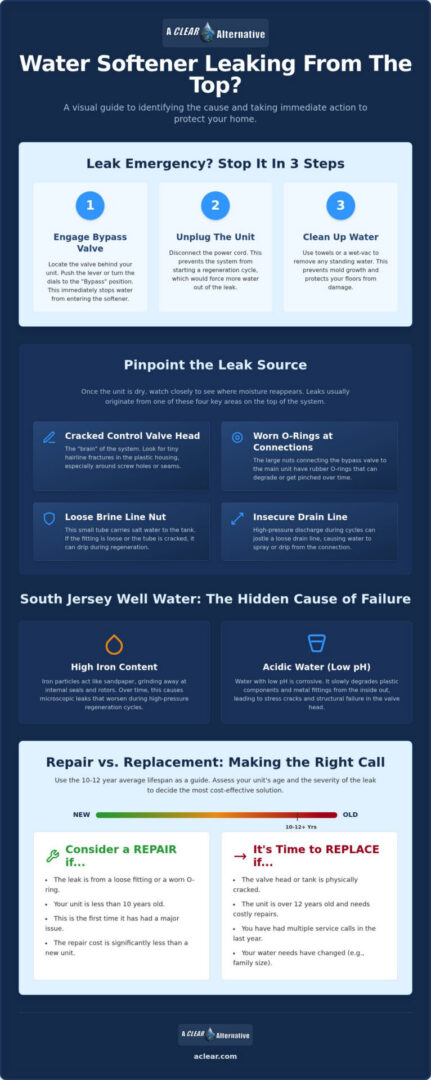
Don’t panic. If you see your water softener leaking from top, your priority is containment. Go to the back of the unit immediately. You’ll find the bypass valve, which acts as a detour for your water supply. Engage it by pushing the plunger or turning the dial to the “Bypass” position. This stops water from entering the tank while keeping the rest of your home’s faucets functional. It’s the fastest way to gain control over the situation.
Next, unplug the unit. A system in the middle of a regeneration cycle will continue to pump water through the valves, even if you’ve engaged the bypass. Stopping the electrical flow ensures the internal motors stay still and prevents more water from being forced out of the top. Finally, grab some towels. Standing water is an invitation for mold and structural damage. Clear the area quickly to see exactly what you’re dealing with.
Understanding Your Bypass Valve
Most modern systems use a single-lever bypass, but many homes in South Jersey still feature a three-valve configuration. In a three-valve setup, you must close the inlet and outlet valves and open the center bypass valve. This keeps your household water running without passing through the softener. Understanding how water softening works helps you realize that bypassing simply skips the mineral removal stage. You’ll have hard water for a few days, but your floors will stay dry. You’ll know it’s working when the leak slows to a stop or the pressure inside the tank drops.
When to Turn Off the Main Water Line
Sometimes the bypass valve itself is the problem. If you see water spraying from the connections behind the unit, the bypass won’t help. You need the main shut-off valve. For those on South Jersey well systems, this is usually located near your pressure tank in the basement or utility closet. Turn it clockwise until it’s tight. If your water softener leaking from top is caused by a crack in the main plumbing line before the unit, the main shut-off is your only solution. Once the water is off, you can breathe. The immediate danger is over, and you can focus on the fix.
- Single-lever bypass: Push or pull the handle to stop flow to the tank.
- Three-valve bypass: Close the outer two valves, open the middle one.
- Power: Always disconnect the electrical cord to stop the motor.
- Cleanup: Use a wet-vac or heavy towels to prevent floor rot.
Diagnosing the Source: Why Water Pools at the Top of the Tank
Once you’ve stopped the immediate flow, wipe the entire unit dry with a clean towel and wait. A water softener leaking from top usually leaves a trail if you watch closely. It’s often a case of internal pressure meeting a microscopic external weakness. You’re looking for the exact point where the moisture begins, not just where the puddle forms. Most leaks at the top originate from either the control valve itself or the plumbing connections feeding into it.
The Control Valve Head: The Brain of the System
The control valve head is your system’s command center. While it’s made of durable, high-grade plastic, it isn’t invincible. Stress points around the screw holes or the seam where the motor housing meets the valve body are prime spots for hairline fractures. In communities like Medford Lakes, high water pressure can put constant, invisible strain on these components. If you notice water weeping directly through the plastic housing, the head itself may have a structural failure.
Internal components like the rotor disc or seal plate can also wear down. These mechanical issues from hard water are common when mineral grit grinds against the rubber seals over several years. When these internal seals fail, water is often forced upward through the valve cover during the regeneration cycle, making it look like the tank itself is leaking. It’s a subtle but destructive process that eventually requires more than just a quick tightening.
External Fittings and Connections
Before you assume the system is broken, check the external connections. The large nuts connecting the bypass valve to the softener head rely on thick O-rings to maintain a seal. Over time, temperature fluctuations in your utility room cause the plastic components to expand and contract, which can slowly loosen these fittings. It’s a frequent cause of top-side puddling that doesn’t require a full system replacement.
Check these specific connection points for moisture:
- The Brine Line Nut: This small connection carries salt water. If it’s loose or the tubing is kinked, it will drip during the brine draw.
- The Drain Line Elbow: Ensure the clip holding the drain line is secure. High-pressure discharge can knock a loose line out of place.
- Bypass O-Rings: These are the most common culprits. If the leak is between the bypass and the valve head, the O-rings likely need lubrication or replacement.
If you’ve checked the fittings and the leak persists, the issue might be deeper in the valve’s architecture. If the diagnosis feels a bit too technical, it’s always a good idea to seek professional water system support to ensure your home stays dry and your water stays soft.
The Most Common Mechanical Culprits for Top-Side Leaks
Identifying a water softener leaking from top often feels like solving a puzzle. Most of the time, the solution lies in a small, inexpensive mechanical part that has finally reached its limit. These components work under constant pressure, and while they’re built for longevity, the chemistry of your water eventually takes its toll. Understanding which part is failing helps you decide if you’re looking at a five-minute fix or a more involved repair.
Why O-Rings Fail
O-rings are the unsung heroes of your water system. These small rubber loops create the airtight seals between your bypass valve and the main control head. Over time, high levels of chlorine or harsh minerals can cause the rubber to become brittle or “flat.” If an O-ring wasn’t properly lubricated with silicone during its last service, it can pinch or tear during a pressure surge. O-ring failure is the #1 cause of minor water softener leaks. According to the U.S. Geological Survey on hard water, the high concentrations of calcium and magnesium that define hard water can also lead to abrasive buildup around these seals, accelerating their wear and causing them to lose their elasticity.
The Rotor Disc and Seal Plate Interaction
Inside the control head, the rotor disc and seal plate act as gatekeepers for water flow. As the system moves through different stages of regeneration, the rotor disc spins to open or close specific ports. If you hear a grinding noise followed by water pooling at the top, you might have a scratched rotor disc. In South Jersey, especially for homes on private wells in Tabernacle or Shamong, fine sand or sediment can bypass initial filters. This grit gets trapped between the disc and the seal plate, acting like sandpaper. Once a deep enough groove is worn into the disc, water will bypass the seal and leak out through the top of the valve housing.
Finally, don’t overlook the bypass valve itself. Constant vibrations from your home’s plumbing or an improper initial installation can cause the connection nuts to back off slightly. This creates a gap just large enough for a slow, steady drip. If the seal plate is warped or the bypass is loose, the valve won’t seat correctly during its high-pressure rinse cycles. Keeping these mechanical parts in top shape isn’t just about stopping a water softener leaking from top; it’s about maintaining the long-term health and efficiency of your entire water treatment system.
South Jersey Well Water: The Hidden Cause of System Failure
Homeowners in South Jersey face challenges that generic DIY guides simply don’t account for. If you’re seeing your water softener leaking from top, the culprit might not be the machine itself but the raw water entering it. In areas like Tabernacle and Shamong, the high iron content and naturally acidic soil create a hostile environment for standard plumbing. These local conditions accelerate the wear on internal components, turning a minor issue into a messy failure. Understanding your local water chemistry is the first step toward a permanent fix.
Iron and Sulfur: The Silent Gasket Killers
Iron isn’t just about orange stains in your bathtub. It often manifests as “iron slime,” a bacterial byproduct that coats the internal gaskets of your softener. When this slime builds up, it prevents the control valve from closing completely during the rinse cycle. This backpressure can force water out of the top of the unit. Additionally, the sulfur common in Medford Lakes reacts chemically with rubber seals, making them brittle and prone to cracking. To prevent this, installing an acid neutralizer is a critical step in shielding your softener from the corrosive effects of low-pH water.
The Role of Sediment
Well water often carries fine sand and sediment that acts like liquid sandpaper inside your control valve. As the system cycles, these abrasive particles grind against the rotor disc and seal plate. This friction creates microscopic grooves that eventually lead to a water softener leaking from top. Without a dedicated pre-filter to catch these solids, even the most expensive system will fail prematurely. The sediment bypasses the resin tank and heads straight for the delicate moving parts of the head, causing leaks that appear suddenly and worsen with every regeneration cycle.
Identifying these invisible enemies starts with professional well water testing. By understanding your water’s specific profile, you can treat the root cause rather than just replacing parts every few years. If you’re tired of dealing with recurring leaks and orange stains, schedule a comprehensive water analysis to ensure your treatment system is actually designed for the water it’s trying to clean.
Professional Repair vs. Replacement: Making the Right Call
You’re standing in front of your system, towels in hand, wondering if this is the end. When you discover a water softener leaking from top, the first instinct is often to fear the worst. However, the decision to repair or replace shouldn’t be based on panic. It’s a calculation of age, efficiency, and long-term value. Most water softeners have a functional lifespan of 10 to 12 years. If your system was installed before 2016, it’s likely approaching its natural expiration date. At this stage, a leak at the top is often just the first domino to fall.
Modern technology has changed the game for home water treatment. Newer systems are designed with high-efficiency, demand-initiated regeneration, which can reduce salt consumption by up to 25%. When you weigh the cost of a major valve head repair against a new whole house filtration system, the investment in new technology often pays for itself in salt savings and reliability. A professional diagnostic from a family-owned local business ensures you aren’t just patching a sinking ship, but making a choice that improves your home’s value and your daily life.
When a Simple Repair is Sufficient
Don’t rush to replace a system that still has plenty of life left. If your unit is under five years old and the leak is isolated to external O-rings or bypass fittings, a repair is almost always the smarter choice. These are minor mechanical issues that don’t reflect the health of the resin or the main tank. If the internal resin is still effectively removing minerals and the leak is just a steady drip from a loose nut, a quick service call can restore your peace of mind without the cost of a full installation.
Signs It’s Time for a System Upgrade
Some leaks are more than just a nuisance; they’re symptoms of structural failure. If you see a water softener leaking from top because the main plastic valve body has a hairline fracture, a permanent patch is rarely possible. High-pressure water will eventually find its way through any temporary fix. Other red flags include:
- Multiple leaks appearing simultaneously in different parts of the valve.
- Significant resin degradation, often noticed as a loss of water pressure or “orange” water.
- A control head that no longer responds to programming or skips regeneration cycles.
If you’re tired of second-guessing your system’s reliability, it’s time to get a definitive answer. Schedule your water softener repair in South Jersey today and let a specialist help you decide if a fix or a fresh start is the best path forward for your home.
Restore Your Confidence and Your Home’s Safety
Finding your water softener leaking from top is stressful, but you now have the tools to handle it with precision. You’ve learned how to bypass the unit instantly and identified the local South Jersey well water factors, like iron and acidity, that often trigger these failures. Whether you need a simple mechanical fix or a modern upgrade to a more efficient system, the path forward is clear. You can protect your floors and your peace of mind by acting quickly.
Our family-owned team has been serving South Jersey families since 1991. We’re licensed specialists who understand the specific well water challenges in Tabernacle and Shamong. We believe water treatment should be a seamless part of your lifestyle, not a technical burden. If you need an expert eye to diagnose a stubborn drip, get 24/7 Emergency Leak Support from A Clear Alternative. We’re ready to help you get back to enjoying perfectly soft water without the mess.
Frequently Asked Questions
Is it safe to use water while the softener is leaking from the top?
Yes, it’s safe to use your water once you’ve engaged the bypass valve. Bypassing the system ensures that water stops flowing into the softener but continues to reach your kitchen and bathroom faucets. If you don’t bypass the unit, an active leak can lead to significant basement damage or electrical hazards. For homeowners in Medford Lakes, keeping the bypass engaged until a specialist arrives is the best way to prevent a minor drip from becoming a flood.
Can I use plumbing tape to fix a leak on my water softener?
Plumbing tape is usually not the right solution for a water softener leaking from top. Most top-side connections on modern systems rely on O-rings and gaskets to create a watertight seal. Adding tape to these specialized fittings can actually prevent the components from seating correctly, which often makes the leak worse. Instead of reaching for the tape, focus on inspecting the O-rings for cracks or debris that might be breaking the seal.
How much does it usually cost to fix a water softener leak in South Jersey?
Repair costs vary significantly depending on whether you’re replacing a simple ten-cent O-ring or a complex control valve head. While minor maintenance is relatively affordable, major structural repairs or resin replacements can be more involved. We recommend a professional diagnostic to get an accurate assessment for your specific system. Our family-owned team has provided transparent troubleshooting for Shamong residents since 1991, ensuring you only pay for the repairs your system actually needs.
Why does my water softener only leak during the regeneration cycle?
Leaks that only appear during regeneration are usually caused by internal pressure changes or worn seal plates. During this cycle, the system redirects water at higher pressures to flush the resin tank. If the rotor disc is scratched or a gasket is slightly out of alignment, the extra force will push water through the weakest point. This is a common sign that the internal mechanics of your control head require professional attention or lubrication.
Can high water pressure cause my softener to leak from the top?
Yes, excessive water pressure is a leading cause of top-side leaks in South Jersey homes. High pressure puts constant stress on the plastic valve housing and can eventually cause hairline fractures. If your home’s pressure exceeds 70 or 80 psi, it can also force water past even healthy O-rings. We often recommend installing a pressure-reducing valve to protect your softener and other appliances from the strain of aggressive well water systems.
Does a leaking water softener affect the quality of my drinking water?
A leak itself doesn’t typically contaminate your water, but it’s a symptom of a system that isn’t working correctly. If your softener is failing, you’ll likely notice hard water symptoms like spotting on dishes or dry skin. In Tabernacle and Shamong, a failing valve might also stop removing iron effectively. This leads to orange staining in your sinks and tubs, even if the drinking water technically remains safe to consume according to local standards.
How often should I have my water softener serviced to prevent leaks?
You should have your water treatment system professionally serviced every one to two years. This is especially critical for South Jersey well water, where iron and sediment can clog internal valves much faster than municipal water. Regular maintenance includes cleaning the brine tank, checking the valve seals, and ensuring your bypass is functional. This proactive approach helps you catch minor wear before it results in a messy failure or expensive emergency repair.
What happens if I ignore a small drip at the top of the tank?
Ignoring a small drip is a recipe for long-term property damage. Even a slow leak can lead to mold growth, rotted subfloors, and rusted electrical components. Over time, a microscopic crack in the valve head will widen under the constant pressure of your well system, eventually leading to a full-scale burst. Addressing a water softener leaking from top early is the most cost-effective way to protect your home’s infrastructure and your peace of mind.