
UV Water Purification for Well Water: The 2026 Homeowner’s Guide
Did you know that nearly 23% of private wells contain contaminants that exceed health-based guidelines? For homeowners in New Jersey and Pennsylvania, the dream of independent living shouldn’t come with a side of anxiety every time you turn on the kitchen tap. If you’re tired of worrying about bacteria or the latest groundwater quality reports, uv water purification for well water offers a sophisticated, modern solution. It’s not just about passing the New Jersey Private Well Testing Act requirements; it’s about reclaiming the simple joy of a clean, cold glass of water.
We understand that you want a home that runs itself without forcing you to learn complex plumbing jargon or deal with the harsh smell of chlorine. You deserve total peace of mind and water that tastes exactly like it should: nothing. This 2026 homeowner’s guide reveals how a UV system provides a chemical-free firewall against pathogens while working quietly behind the scenes. We’ll explore the latest NSF standards, maintenance realities, and how this technology integrates into a seamless, high-quality lifestyle for your family.
Key Takeaways
- Discover why private wells in NJ and PA require a personal biological firewall to replace the missing municipal protection.
- Learn how uv water purification for well water neutralizes bacteria DNA using light rather than harsh, foul-smelling chemicals.
- Compare the set and forget convenience of UV sterilization against the constant monitoring and chemical aftertaste of traditional chlorine systems.
- Understand the vital role of pre-filtration in preventing shadowing, ensuring that every drop of water is fully exposed to the germicidal light.
- Get a clear roadmap for professional installation and the simple annual maintenance needed to keep your system working invisibly behind the scenes.
What is UV Water Purification and Why Do Well Owners Need It?
Imagine an invisible shield protecting every faucet in your home. That’s essentially what uv water purification for well water offers. Unlike traditional filters that simply trap sand or grit, UV is a sophisticated purification process. It uses specific wavelengths of light to penetrate the cells of microorganisms. By targeting their genetic core, it effectively scrambles their DNA. This makes it impossible for them to reproduce or cause illness. It’s a physical process rather than a chemical one, which is exactly why health-conscious families prefer it. You aren’t adding anything to your water; you’re simply removing the threat of life.
It’s vital to distinguish between “filtering” and “purifying.” Filters are like a screen door. They keep the visible debris out but let the microscopic world pass through. Purification is the next level. While a sediment filter removes the particles you can see, UV light neutralizes the biological threats you can’t. This technology provides a clean, crisp experience without the need for salt or harsh additives. It’s a modern lifestyle choice that prioritizes both safety and taste.
Tri-State area residents who rely on municipal water often forget that their safety is managed by city engineers using chlorine. If you own a private well, you’re the lead engineer of your own utility. Your well is a direct line to the local aquifer, which means you’re responsible for every drop. The Science of Bacteria-Free Water confirms that UV is one of the most effective ways to ensure your private supply meets the highest safety standards. It gives you the same level of protection as a city plant without the “swimming pool” scent in your morning coffee.
Common Well Water Pathogens in the Tri-State Area
Groundwater in communities like Tabernacle and Shamong is generally excellent, but it’s never immune to nature. Heavy rain or spring runoff can wash surface contaminants into the soil and eventually into your well. Total Coliform and E. coli are the most frequent red flags we see in local laboratory tests. Beyond these common bacteria, there are parasites like Cryptosporidium and Giardia. These are particularly stubborn because they can survive standard chlorine treatments. UV light handles them with ease. It ensures your water remains safe regardless of local weather patterns or agricultural runoff.
The ‘Boil Water’ Alternative
We’ve all experienced that spike of anxiety when a local alert tells us to boil our water. It’s a massive disruption to your daily routine. Installing a UV system creates a permanent biological firewall for your home. This provides 24/7 protection that doesn’t rely on you checking the morning news or scrolling through social media alerts. You gain the freedom to drink straight from any tap in the house, from the kitchen island to the master bath, with total confidence. It’s about upgrading your quality of life to a standard where safety is an effortless, invisible constant.
How Ultraviolet Sterilization Works: The Science of Bacteria-Free Water
Think of the UV chamber as a high-tech tunnel of light. Inside this stainless steel cylinder, a specialized lamp emits light in the UV-C spectrum. This specific wavelength is known as the “germicidal” range because it’s perfectly tuned to target the biological core of pathogens. When uv water purification for well water is active, it doesn’t use chemicals to poison bacteria. Instead, it uses light energy to scramble their DNA. Once their genetic code is disrupted, these microorganisms can’t reproduce. A pathogen that can’t replicate is effectively harmless, meaning it can’t make your family sick. Because the UV-C light is completely contained within a stainless steel chamber, it poses zero risk to you or your family while it works.
The lamp itself is housed inside a quartz sleeve. This is a crucial component because standard glass actually blocks UV light. High-purity quartz allows the maximum amount of energy to reach the water while protecting the delicate lamp from the water itself. For this process to be successful, flow rate is everything. System sizing is measured in Gallons Per Minute (GPM). If your water moves too fast, it won’t receive enough light exposure to ensure safety. This is why we always size systems based on your home’s peak usage, like when the shower and dishwasher are running at the same time. If you’re unsure about your current flow requirements, a quick consultation with a water specialist can help you find the perfect fit for your home’s layout.
Understanding UV Dosage
Dosage is the mathematical proof of your water’s safety. It’s measured in millijoules per square centimeter (mJ/cm²). You can think of this as the intensity of the light multiplied by how long the water stays in the chamber. In our UV vs. Chlorine Disinfection comparison, UV stands out because it provides a consistent, high dosage without the need for manual chemical mixing. To meet modern safety standards, a system must deliver enough energy to neutralize even the most resilient parasites, ensuring every drop is treated before it reaches your glass.
Continuous Monitoring Technology
Modern UV systems are far from “blind.” They feature sophisticated sensors that constantly monitor the light intensity inside the chamber. If the lamp begins to dim or if the quartz sleeve gets too dirty to let light through, the system will alert you immediately. For the ultimate peace of mind, we often integrate a fail-safe solenoid valve. If the power goes out or the system detects a drop in UV intensity, this valve automatically snaps shut. This prevents any untreated water from entering your pipes, acting as a final, physical gatekeeper for your home’s safety.
UV vs. Chlorine Disinfection: Which is Best for Your Home?
Choosing uv water purification for well water over a traditional chlorine system is often a decision about lifestyle as much as safety. Chlorine injection has been the industry standard for decades, but it comes with a heavy workload. You have to buy, store, and mix chemicals. You have to monitor a pump. Most importantly, you have to tolerate the taste. UV purification, by contrast, is a “set and forget” technology. It works silently in the background, requiring only an annual lamp change to keep your home protected. It’s a modern, elegant solution for families who want safety without the chores.
The sensory difference is immediate. Chlorine leaves a lingering, pool-like scent that can ruin the taste of your cooking or coffee. UV adds absolutely nothing to your water. It is a zero-waste, chemical-free process that respects the environment and your plumbing. While uv water purification for well water provides a chemical-free shield, it works differently than old-school methods. Chlorine provides a residual that stays in the water as it travels through your pipes. UV is a point-of-entry treatment. It neutralizes everything at the gate, ensuring that the water entering your home is biologically safe without altering its natural character.
When Chlorine is Still Necessary
There are times when light alone isn’t enough. If a laboratory test shows a major bacterial bloom, we often recommend “well shocking” with chlorine. This one-time treatment sanitizes the well casing and the internal plumbing. Once the pipes are clean, the UV system takes over to maintain that safety 24/7. In rare cases where a well is severely compromised, the two systems can even work together to provide a multi-layered defense.
| Feature | UV Purification | Chlorine Injection |
|---|---|---|
| Maintenance | Annual lamp change | Monthly chemical refills |
| Water Taste | Natural and crisp | Chemical/Pool-like |
| Effectiveness | Kills 99.9% of bacteria | Varies by dosage/time |
The Cost-Benefit Analysis
The long-term savings of UV are significant. You won’t spend money on monthly chemical supplies or replacement pump parts. From an energy perspective, running a UV system is incredibly efficient. A standard residential unit uses about the same amount of electricity as a single 40-watt lightbulb. When integrated into whole house water filtration systems, UV provides the ultimate peace of mind for pennies a day. It’s an investment in your home’s infrastructure that pays dividends in health and convenience.
The ‘Clean Slate’ Requirement: Why UV Needs Pre-Treatment
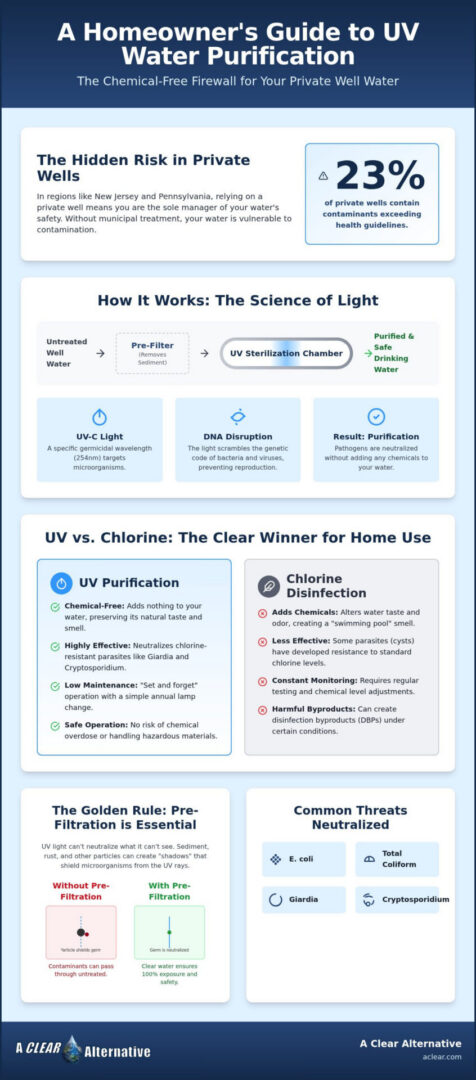
UV light is a master of disinfection, but it isn’t a magician. For uv water purification for well water to work effectively, the germicidal light must actually reach the bacteria. If your water contains sediment, tiny particles of dirt or sand can create a phenomenon called “shadowing.” This is when a microbe literally hides behind a piece of debris, passing through the light chamber untouched. To ensure a total biological firewall, your water must be crystal clear before it ever enters the UV system.
Minerals like iron and manganese are equally problematic for your system’s performance. They don’t just cloud the water; they physically stain the quartz sleeve that houses the lamp. Imagine trying to use a flashlight with a muddy lens. Similarly, hard water scale builds up on the sleeve like a layer of sunscreen. This white, chalky film blocks the UV-C rays, rendering the system ineffective even if the lamp is brand new. Achieving high “transmittance,” which is the ability of light to pass through water, is the secret to a high-performing system that lasts for years.
Addressing the Pinelands Problem: Low pH and Iron
In South Jersey, especially around the Pinelands, well owners face unique challenges with naturally acidic water. Low pH doesn’t just taste metallic; it aggressively corrodes your plumbing and interferes with the longevity of your purification equipment. Installing an acid neutralizer is often the first step in protecting your home’s infrastructure. It’s a fundamental rule of water design that UV should always be the LAST stage of a filtration train. This ensures the water is perfectly conditioned before the final disinfection step.
The 5-Micron Standard
To prevent shadowing, a dedicated 5-micron sediment pre-filter is non-negotiable. This filter acts as the vanguard, catching the fine silt and grit that larger filters might miss. Additionally, water softeners play a vital role by protecting the UV quartz sleeve from “scaling” over. By removing calcium and magnesium, you keep the quartz clear and the UV intensity at its peak. Every well is different, so we always recommend starting with professional well water testing to determine your specific pre-treatment needs.
If you’re ready to build a “clean slate” for your home’s water supply, contact our expert team today to design a system tailored to your local groundwater profile.
Professional UV Installation and Maintenance in South Jersey
While the technology behind uv water purification for well water is incredibly advanced, its success depends entirely on how it’s integrated into your home’s plumbing. Many homeowners are tempted by DIY kits, but professional installation is about more than just turning a wrench. A common pitfall in amateur setups is the creation of “dead legs”—sections of pipe where water sits stagnant. These areas become breeding grounds for bacteria that can bypass the UV light entirely. Professional integration ensures your biological firewall is airtight, with every drop of water directed through the germicidal chamber before it reaches your family’s glasses.
A Clear Alternative brings more than 30 years of family-owned expertise to every local water challenge, ensuring your home stays safe and your systems stay efficient. We don’t just sell equipment; we design a “Whole House” solution that respects the unique groundwater chemistry of the Tri-State area. This professional approach guarantees that your system is sized correctly for your peak flow rates, preventing the “bacteria bypass” that occurs when water moves too quickly for the light to do its job.
The Annual Maintenance Checklist
Maintaining your UV system is straightforward, but it’s non-negotiable. The most important rule is the 9,000-hour lamp replacement. Even if the bulb still emits a blue glow after a year, it has likely lost the specific germicidal intensity required to scramble pathogen DNA. Think of it like a battery that’s too weak to start a car but still strong enough to light a small bulb. Along with the lamp, the quartz sleeve must be cleaned to maintain the transmittance we discussed earlier. If you’d rather not track the calendar yourself, scheduling recurring care with a water treatment company near you ensures your protection never lapses.
- Lamp Replacement: Every 12 months to maintain germicidal strength.
- Sleeve Cleaning: Removal of iron staining or hard water scale.
- O-Ring Inspection: Preventing leaks during the annual service.
- Sensor Calibration: Ensuring your “fail-safe” alerts are accurate.
Emergency Support and Water Hauling
Living with a private well means being prepared for the unexpected. If your UV system sounds an alarm or you lose power during a storm, your biological shield is down. Because we provide 24/7 emergency support, you’re never left to figure it out alone. In cases of total well failure, our potable water hauling service can provide the bulk water you need to keep your household running while repairs are made. We’re a licensed hauler dedicated to the South Jersey community, offering a level of security that goes far beyond a simple hardware sale. To verify your system is still working effectively, we always recommend an annual laboratory bacteria test to confirm your water remains pure and safe.
Secure Your Home’s Biological Firewall
Modern living is about making smart, invisible choices that improve your quality of life. By choosing uv water purification for well water, you’ve moved beyond the era of chemical smells and “boil water” alerts. You now understand that a clean slate, free from sediment and iron, is the foundation for this technology to thrive. Disinfection isn’t just a technical step; it’s a commitment to your family’s daily comfort and long-term health. It’s about ensuring that every tap in your house provides the same high standard of safety.
Since 1991, A Clear Alternative has helped Tri-State families reclaim their confidence in their private wells. We’re a family-owned business and a licensed potable water hauler, providing the security of 24/7 emergency support when you need it most. It’s time to stop guessing about your water quality and start enjoying the crisp, safe results of a professionally managed system. Schedule your professional well water analysis and UV consultation today and take the first step toward total peace of mind. Your home deserves nothing less than the clearest alternative.
Frequently Asked Questions
Does a UV water system remove lead or chemicals from well water?
No, a UV system is designed strictly for biological disinfection and doesn’t remove lead, arsenic, or chemical pollutants. It specifically targets the DNA of living organisms like bacteria, viruses, and parasites. If your well test shows heavy metals or “forever chemicals” like PFAS, you’ll need to pair your UV unit with a carbon filtration system or a Reverse Osmosis system to ensure total safety for your family.
How much electricity does a whole-house UV water purifier use?
A whole-house UV water purifier is incredibly energy efficient, typically using about the same amount of electricity as a standard 40-watt lightbulb. It runs continuously to provide 24/7 protection without a significant impact on your monthly utility bill. This low power consumption makes it a sustainable, “set and forget” addition to your home’s modern infrastructure.
What happens to the UV system if the power goes out?
If the power goes out, the UV lamp turns off and your water is no longer protected from bacteria. We highly recommend installing a fail-safe solenoid valve that automatically shuts off the water supply during power failures. This simple addition prevents any untreated water from entering your home’s pipes until the system is back online and fully functional.
Can I install a UV water purifier myself on a private well?
While DIY kits are available, professional installation for uv water purification for well water is the best way to ensure your family’s safety. Professionals prevent “dead legs” where bacteria can bypass the light and verify that your home’s flow rate doesn’t exceed the system’s capacity. A professional setup guarantees that your biological firewall is correctly integrated as the final stage of your water treatment process.
How do I know if my UV bulb is actually killing bacteria?
Modern UV systems include intensity sensors and audible alarms that alert you if the light output drops below a safe level. However, the only definitive proof is through professional laboratory testing. We recommend a bacteria test once a year to confirm that your lamp is effectively neutralizing pathogens and that your quartz sleeve remains clear enough for maximum light transmittance.
Do I need a water softener if I have a UV purification system?
You often need a water softener to protect the UV quartz sleeve from mineral buildup. Hard water causes calcium and magnesium to “scale” onto the sleeve, which acts like a blindfold for the UV lamp. By softening the water first, you ensure the light remains powerful enough to penetrate every drop of water that passes through the chamber.
How often should I test my well water after installing a UV system?
You should test your well water at least once a year to ensure your uv water purification for well water is still performing at its peak. While the system provides constant protection, environmental factors like heavy storms or local runoff in South Jersey can change your well’s baseline quality. Regular testing confirms that your pre-filtration and UV dosage are still perfectly matched to your water’s needs.
Why is my UV system making my water feel warm when I first turn on the tap?
The water feels warm because the UV lamp stays on 24/7 and generates a small amount of thermal energy. When water sits in the stainless steel chamber for several hours, it absorbs that heat. This is completely normal and doesn’t affect the safety of your supply. Simply let the tap run for a few seconds to flush the warmed water out of the line.