
Signs of Iron in Water: How to Identify and Fix Stained Well Water in 2026
Imagine pulling your favorite white linen shirt from the wash only to find it mottled with stubborn, rusty streaks that won’t budge. It’s frustrating when your morning coffee tastes like a handful of loose change, and those persistent orange rings in the guest bathroom make you feel like your home is working against you. You’ve likely noticed these common signs of iron in water and felt the mounting anxiety about what this mineral buildup is doing to your expensive appliances. You aren’t alone in wanting a home that looks and feels pristine.
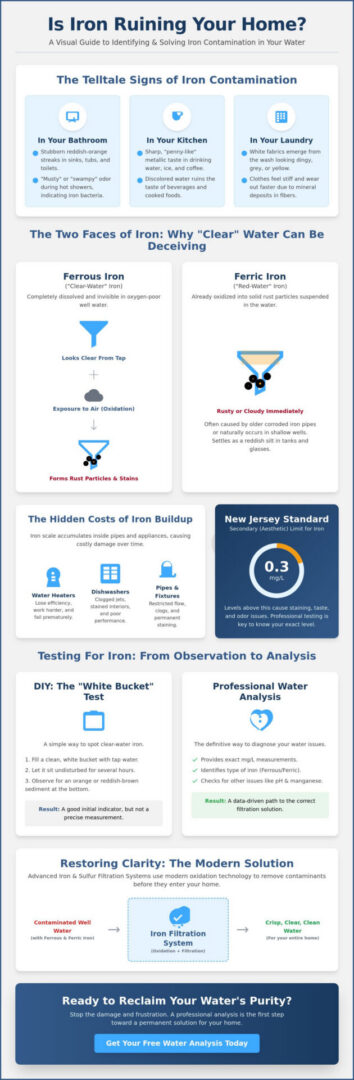
You deserve a living space that feels like a sanctuary, not a constant maintenance project. This guide will empower you to reclaim your water’s clarity and your home’s aesthetic brilliance by identifying the subtle and obvious signs of contamination. We’ll break down the difference between clear-water and red-water iron, explain the New Jersey secondary standard of 0.3 mg/L, and explore the modern filtration technologies that turn metallic well water into a crisp, refreshing experience. It’s time to stop worrying about your plumbing and start enjoying the lifestyle you’ve worked so hard to build.
Key Takeaways
- Identify the early signs of iron in water, such as metallic-tasting ice or the subtle orange staining that compromises your home’s pristine aesthetic.
- Understand why “clear-water” iron is often invisible until it hits the air, allowing you to catch contamination before it ruins your laundry or fixtures.
- Save your high-end dishwashers and water heaters from premature failure by recognizing how iron scale buildup impacts appliance longevity and efficiency.
- Transition from simple DIY observations like the “White Bucket” test to professional analysis for a clear, data-driven path to better water quality.
- Discover how advanced Iron and Sulfur Filtration Systems use modern oxidation technology to effortlessly reclaim your water’s natural clarity and taste.
The Sensory Warning Signs of Iron in Your Water
Your home should be a sanctuary of clean lines and fresh scents. When iron begins to infiltrate your well water, that sense of luxury and comfort quickly fades. One of the most immediate signs of iron in water is the visual toll it takes on your environment. It often starts as a faint yellow tint in your glass or a slight discoloration in the bathtub. Before long, these subtle hints evolve into stubborn, reddish-orange streaks that seem to defy every cleaning product in your cabinet. These marks aren’t just cosmetic nuisances. They’re the visible result of the chemical properties of iron reacting with oxygen the moment the water leaves your tap and hits the air.
Visual Clues in Sinks, Tubs, and Toilets
High-end porcelain sinks and designer tiles are particularly vulnerable to mineral damage. As iron-rich water sits on these surfaces, it oxidizes and leaves behind permanent streaks that ruin the aesthetic of your bathroom. You might find yourself scrubbing for hours, but the marks return almost instantly because the underlying mineral problem hasn’t been addressed. It’s helpful to distinguish these from other contaminants. If you see black, soot-like flecks, you’re likely looking at manganese. Blue or green stains usually indicate copper corrosion caused by low pH levels. Iron, however, is responsible for that classic “rusty” look that makes even a brand-new home feel neglected.
Taste and Odor: The Metallic Intrusion
The intrusion isn’t limited to what you see. It fundamentally changes the way you experience your home’s water. If your drinking water or ice cubes have a sharp, “penny-like” metallic taste, it’s a clear indicator of high iron content. This metallic profile can ruin a high-quality cup of coffee, turning a morning ritual into a disappointing chore. Beyond the taste, you may notice a “musty” or “swampy” odor during a hot shower. This often signals the presence of iron bacteria. These microorganisms feed on the iron in your pipes, creating a thick, slimy biofilm that carries a foul scent and can eventually restrict your water flow. Recognizing these signs of iron in water early is the first step toward restoring the crisp, clean water you deserve.
Don’t overlook the laundry room. White fabrics are often the first victims of iron contamination. Your favorite linens and clothes might emerge from the wash looking dingy, grey, or yellowed. Over time, these mineral deposits become trapped in the fabric fibers, making them feel stiff and causing them to wear out much faster than they should. Protecting your wardrobe and your home’s aesthetic requires moving beyond temporary cleaning fixes to a modern, technology-driven solution.
Ferrous vs. Ferric: Why ‘Clear’ Water Can Still Contain Iron
You fill a glass with crystal-clear water, feeling confident in its purity. An hour later, you notice a distinct yellow tint or a faint orange residue at the bottom. This is the great iron paradox. Water that looks perfect at the tap can still be heavily contaminated. Understanding the two primary forms of this mineral is essential because the treatment for one often fails for the other. Recognizing these hidden signs of iron in water requires looking past the initial clarity and observing how your water behaves once it’s exposed to your home’s environment.
The Invisible Threat: Dissolved Ferrous Iron
Ferrous iron is often called “clear-water iron” because it’s completely dissolved. In deep wells where oxygen is scarce, iron remains in a liquid state, invisible to the naked eye. The moment this water leaves your faucet and hits the air, a chemical reaction begins. Oxygen triggers a transformation, turning the invisible liquid iron into solid, orange particles. This is why your water looks great during a bath but leaves your tub covered in rust stains by the next morning. Standard sediment filters are often useless here. They are designed to catch physical particles, but they can’t trap iron that is still in a dissolved, liquid state.
The Visible Nuisance: Oxidized Ferric Iron
Ferric iron, or “red-water iron,” has already finished its chemical transformation before it even reaches your sink. This type of iron consists of actual physical particles suspended in the water, giving it a characteristic rusty or cloudy appearance immediately. It often settles at the bottom of a glass or toilet tank as a gritty, reddish silt. While it can occur naturally in some shallow wells, it’s frequently caused by the internal corrosion of older iron pipes. This particulate iron is more than just an eyesore; it acts like sandpaper inside your plumbing, slowly wearing down seals and valves.
If you aren’t sure which type you’re dealing with, try the simple “Bottle Test” at home:
- Fill a clear plastic bottle halfway with fresh tap water.
- Cap the bottle and shake it vigorously for thirty seconds to introduce oxygen.
- Let the bottle sit undisturbed on a counter for 24 hours.
- If the water was clear but is now yellow or cloudy, you have ferrous iron. If it was cloudy from the start and now has red sediment at the bottom, it’s ferric iron.
Identifying these signs of iron in water is the first step toward a permanent solution. Because different types of iron require different filtration methods, a professional water analysis is the most reliable way to determine exactly what’s in your well. This data allows you to choose a system that actually works, rather than guessing with hardware store filters that weren’t built for South Jersey’s unique geology.
The Hidden Costs: How Iron Damage Affects Your NJ Home
Iron contamination is more than a visual annoyance. It’s a financial drain on your New Jersey household. While the orange stains are the most obvious signs of iron in water, the real damage happens where you can’t see it. Inside your walls and deep within your expensive appliances, iron is quietly shortening lifespans and driving up monthly utility bills. Ignoring these symptoms doesn’t just cost you peace of mind; it costs you thousands in premature replacements and wasted energy. You’ve worked hard for your home. Protecting it means looking beyond the surface of your sinks and understanding the impact on your infrastructure.
Appliance Longevity and Efficiency
Modern smart appliances are marvels of engineering, but they’re incredibly sensitive to mineral buildup. When iron-rich water enters your dishwasher or washing machine, it leaves behind a gritty residue that clogs delicate internal valves and sensors. This silent clogging often leads to mysterious error codes or complete mechanical failure long before the manufacturer’s expected end-of-life. If you’ve replaced a relatively new appliance recently, iron might be the hidden culprit.
Your water heater bears the brunt of this mineral assault. As water is heated, iron precipitates out and forms a thick layer of scale on the heating elements. This scale acts as an insulator. Your heater has to work twice as hard to push heat through the mineral crust, which skyrockets your energy consumption. You’ll also notice a “laundry tax” hitting your wallet. Iron interferes with the chemical reaction of soaps and detergents. You’ll often find yourself using up to three times more detergent just to get a decent lather, yet your clothes still emerge looking dingy and feeling stiff. Over time, the cost of ruined linens and extra cleaning supplies adds up to a significant yearly expense.
Plumbing and Fixture Preservation
The interior of your plumbing system is just as vulnerable. Whether you have traditional copper pipes or modern PEX tubing, iron scale builds up over time. This narrows the internal diameter of your pipes, which is why you might notice a steady decline in house-wide water pressure. It isn’t just about flow; it’s about the integrity of your home. These deposits can also cause “pinhole” leaks in metal pipes as the minerals react with the pipe walls.
Designer faucets and high-end fixtures are often the first things guests notice. Unfortunately, abrasive iron deposits can permanently etch the finish of these expensive pieces. Once the protective coating is compromised, the “new home” feel is gone for good. Protecting these investments requires a proactive approach. By addressing the signs of iron in water at the source, you preserve the aesthetic brilliance of your home while ensuring your plumbing stays as efficient as the day it was installed. Reclaiming your home’s quality starts with stopping the damage before it becomes a permanent fixture of your life.
Testing for Iron: DIY Observations vs. Professional Analysis
You’ve seen the stains and tasted the metal. Now, it’s time to move from suspicion to certainty. While the visible signs of iron in water are often enough to tell you a problem exists, they don’t tell you the concentration or the specific type of iron you’re battling. A simple at-home observation can provide a quick baseline. The “White Bucket Test” is a classic for a reason. Fill a clean, white five-gallon bucket with cold water and let it sit for 24 hours. If the water remains clear but develops a yellow or orange tint after sitting, you’re dealing with dissolved ferrous iron. If it’s cloudy immediately, it’s ferric iron. If you notice a slimy, thread-like substance at the bottom, iron-bacteria are likely present.
Because of the unique geology in South Jersey, particularly in the Pine Barrens, professional well water testing is essential for homeowners. The iron content in this region can be exceptionally high compared to other areas. Laboratory analysis doesn’t just confirm the presence of iron; it identifies the exact milligrams per liter (mg/L), giving you the data needed to choose the right technology for your home. This process also screens for iron-bacteria through specialized cultures, ensuring that a foul “swampy” smell isn’t ignored during the filtration design.
What Your Water Test Results Actually Mean
Interpreting a lab report can feel overwhelming, but a few key numbers define your water’s character. Results are typically measured in Parts Per Million (PPM) or mg/L, which are essentially the same. The EPA and New Jersey state standards set 0.3 PPM as the limit for secondary contaminants. This isn’t a health safety limit, but rather the tipping point where aesthetic issues like staining and metallic taste become unavoidable. Keep in mind that these levels aren’t static. Heavy seasonal rainfall in NJ can cause iron levels to fluctuate as groundwater levels change, making a professional baseline even more important for long-term consistency.
The Importance of Comprehensive Testing
Iron rarely travels alone. A high-quality analysis looks at the entire chemistry of your well. We specifically check pH levels because acidic water makes iron much harder to remove. If your pH is below 7.0, you may need acid neutralizers to balance the water before an iron filter can do its job effectively. We also screen for sulfur, which causes that unmistakable “rotten egg” smell. By understanding how these elements interact, you can develop a custom-tailored strategy that addresses every issue at once. Stop guessing about your water quality and schedule a comprehensive water test to reclaim the clarity your home deserves.
Restoring Clarity: Iron Filtration and Water Conditioning
Identifying the signs of iron in water is the first step toward reclaiming your home’s aesthetic brilliance. Once you’ve confirmed the presence of mineral contamination, the focus shifts to a permanent, technology-driven solution. You don’t have to settle for orange-stained fixtures or metallic-tasting beverages. Modern water conditioning technology has evolved to provide clear, refreshing water that protects your lifestyle and your investments. While some “big box” retail filters claim to solve every problem with a single tank, South Jersey’s unique well water chemistry often requires a more sophisticated, targeted approach.
Dedicated Iron and Sulfur Filtration Systems are the gold standard for high-performance homes. Unlike standard filters, these systems are engineered to handle the heavy mineral loads found in local aquifers. You might wonder if a high-capacity water softener is enough. While softeners can remove small amounts of dissolved iron, they often struggle when levels exceed 1.0 PPM. They can also become “iron-fouled,” where the mineral coats the resin beads and destroys the system’s efficiency. For total peace of mind and long-term protection, integrating a whole house water filtration system ensures every tap in your home delivers pristine quality.
Advanced Oxidation Systems (AIO)
Air Induction Oxidation (AIO) is a breakthrough for homeowners seeking a “green” and chemical-free solution. This technology works by creating a pocket of compressed air at the top of the filtration tank. As your well water passes through this air pocket, invisible ferrous iron is instantly oxidized into solid particles. These particles are then trapped by a specialized filter media. It’s a natural process that effectively eliminates the signs of iron in water without the need for harsh additives or salt. This is especially beneficial for wells in Tabernacle and Shamong, where natural water quality can vary. The best part is the freedom of automated backwashing. The system cleans itself on a schedule, providing maintenance-free operation that fits your busy schedule.
The A Clear Alternative Difference
Choosing the right partner for your water health is just as important as the technology itself. We bring over 30 years of family-owned expertise specifically focused on South Jersey’s challenging water conditions. We don’t believe in one-size-fits-all filters. Instead, we provide custom-engineered solutions based on your specific lab results. This ensures your system is powerful enough to handle your iron levels without being over-engineered for your needs. Our commitment to your home goes beyond the installation. We offer the promise of 24/7 support to ensure your water remains crisp and clear year-round. You’ve seen the damage iron can do. Now, it’s time to experience the confidence that comes with a professionally managed water system.
Take Control of Your Home’s Water Quality
You’ve seen how mineral contamination can quietly erode your home’s aesthetic and efficiency. From the stubborn orange rings in your guest bathroom to the sharp metallic taste in your morning coffee, the signs of iron in water are clear indicators that your well needs a modern solution. By understanding the difference between dissolved and particulate iron, you’re already ahead of the curve. You now have the knowledge to move past temporary fixes and embrace technology that actually works for your specific South Jersey geology.
Your home is your most significant investment. Protecting it shouldn’t be a source of daily anxiety. Since 1991, our family-owned and operated team has served the Tri-State area with a focus on premium quality and individual care. We even offer 24/7 emergency water support to keep your household running smoothly at all times. Schedule your professional water analysis with A Clear Alternative today and start your journey toward pristine, stain-free water. You deserve a home that feels as clean as it looks. It’s time to reclaim your water’s clarity and your own peace of mind.
Frequently Asked Questions
Is iron in my drinking water harmful to my health?
Iron is primarily an aesthetic concern rather than a direct health risk for most people. The EPA and New Jersey categorize it as a secondary contaminant because it affects taste, odor, and color rather than causing illness. However, individuals with hemochromatosis should be cautious and consult a professional. For most households, the real danger is the damage it does to your plumbing and the way it ruins your home’s aesthetic brilliance.
Can a standard water softener remove iron?
A standard water softener can only remove very low levels of dissolved iron, typically under 1.0 PPM. If your water contains higher concentrations or ferric iron, the mineral will quickly coat the softener’s resin beads. This leads to “iron-fouling,” which destroys the system’s efficiency and shortens its lifespan. For a permanent fix, a dedicated Iron and Sulfur Filtration System is usually necessary to protect your home’s infrastructure.
Why does my water only turn orange after it sits for a while?
This happens because you have ferrous iron, also known as “clear-water iron.” It remains invisible while it’s underground and under pressure in your well. Once you pour a glass and it sits, oxygen reacts with the dissolved mineral. This chemical process turns the invisible iron into solid, orange particles. It’s one of the most common signs of iron in water that homeowners overlook until the staining becomes permanent.
How do I get rid of orange stains in my dishwasher and shower?
You can use specialized cleaners containing citric or phosphoric acid to dissolve existing orange scale on porcelain and plastic surfaces. These products are effective for immediate cleanup, but they’re only temporary fixes. Without a professional filtration system, the minerals will continue to deposit on your fixtures every time you run the water. True aesthetic freedom comes from stopping the iron before it ever enters your pipes.
What is the difference between iron and iron-bacteria?
Iron is a naturally occurring mineral found in the earth’s crust. Iron-bacteria are living microorganisms that use that mineral as a food source. While iron causes staining and metallic tastes, iron-bacteria create a thick, rusty slime that can clog your plumbing and fixtures. They also produce a foul, swampy odor that ruins the freshness of your home and requires specialized treatment to eliminate.
How often should I test my well water for iron in New Jersey?
You should test your well water at least once every year to monitor for changes in mineral content. In New Jersey, the Private Well Testing Act (PWTA) requires comprehensive testing during any real estate transaction. Landlords are also legally required to test every five years and share results with tenants. Regular testing ensures your filtration strategy remains perfectly tailored to your current water chemistry as groundwater levels shift.
Will boiling water remove the iron content?
Boiling water won’t remove iron. It actually does the opposite. As water evaporates during the boiling process, the concentration of iron in the remaining liquid increases. This makes the metallic taste even more pronounced and causes faster staining in your pots and pans. Effective removal requires physical filtration or modern oxidation technology to pull the minerals out of the water entirely.
Does iron in water cause skin or hair problems?
High iron levels can significantly impact your personal care routine and self-image. The minerals can deposit on your hair, making it feel brittle and dry, or even giving it an unwanted orange tint over time. On your skin, iron can clog pores and lead to persistent dryness or irritation. Removing these minerals is an essential step toward improving your daily comfort and maintaining your natural glow.