
How to Sanitize a Water Softener: The 2026 Step-by-Step Guide
What if that lingering rotten egg smell in your morning shower isn’t a plumbing issue, but a cry for help from your water system? It’s a common frustration: you invested in a softener for better skin and cleaner dishes, yet now you’re worried about bacterial growth hiding in the resin bed. Learning how to sanitize a water softener is the key to reclaiming that premium water quality you deserve. You shouldn’t have to choose between soft water and peace of mind.
We understand that DIY maintenance can feel overwhelming, especially with so much conflicting advice floating around. This 2026 guide simplifies the process, showing you the safest and most effective ways to refresh your system while adhering to modern NSF/ANSI 44 standards. You’ll learn how to eliminate odors, protect your resin longevity, and gain the confidence to keep your home’s water crystal clear. We’ll walk you through everything from choosing the right cleaners to the final rinse cycle, ensuring your path to a bacteria-free system is simple and completely obstacle-free.
Key Takeaways
- Identify the subtle “red flags” of bacterial growth, such as musty odors or slime in the brine tank, before they affect your water quality.
- Compare the effectiveness of household bleach against specialized NSF-60 certified cleaners to choose the safest option for your resin bed.
- Master the manual brine well technique to learn exactly how to sanitize a water softener without disrupting your daily routine.
- Prevent future issues by learning how to spot and break up salt bridges that compromise your system’s efficiency.
- Gain the confidence to perform DIY maintenance while knowing when to seek professional expertise for complex valve and system health.
Why and When to Sanitize Your Water Softener
Sanitization isn’t just a routine chore; it’s a total reset for your home’s water quality. Most homeowners focus on keeping the salt tank full, but the internal environment of your system is what truly determines the feel and smell of your water. Sanitization is the specific process of neutralizing bacterial colonies and biofilm that take up residence in the resin bed. This ensures the water softening process remains hygienic and efficient. While your system works hard to remove minerals, it can also act as a breeding ground for microorganisms if left unattended. Even if you’re on treated municipal water, you aren’t immune. Chlorine levels often drop by the time water reaches your pipes, and the dark, damp resin bed provides the perfect habitat for remaining bacteria to multiply. It’s about maintaining a premium experience. Clean water shouldn’t just be soft; it should be fresh and scent-free.
Identifying Bacteria and Biofilm Growth
Biofilm is a sticky, protective layer that microorganisms create to shield themselves from standard water flow. These colonies attach to the tiny ion-exchange resin beads, effectively reducing their surface area and overall performance. In South Jersey areas like Tabernacle and Shamong, well water often carries iron-related bacteria. These aren’t necessarily harmful to your health, but they create a thick, orange slime that clogs the system and ruins the aesthetic of your fixtures. A standard regeneration cycle only flushes out minerals; it doesn’t kill these resilient microorganisms. Learning how to sanitize a water softener is a non-negotiable part of modern home ownership if you want to protect your investment.
Key Signs Your Softener Needs Immediate Attention
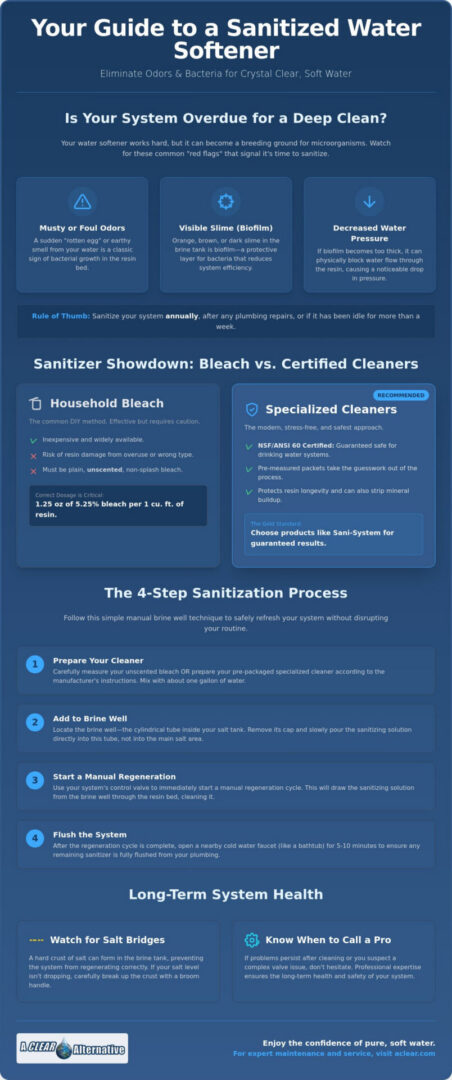
Your water speaks to you. If you notice a sudden earthy or musty smell, your resin bed is likely overdue for a deep clean. A visible drop in water pressure can also signal biological fouling, where the biofilm has become so thick it’s physically blocking the flow. Don’t ignore these signs. If your system has been sitting idle for more than a week, such as during a vacation, bacteria can flourish in the stagnant water. We’ll show you exactly how to sanitize a water softener to keep your system in peak condition. We recommend a full sanitization once a year or immediately following any plumbing repairs that might have introduced air or contaminants into your pipes. This proactive approach keeps your water quality high and your maintenance costs manageable.
Comparing Sanitization Methods: Bleach vs. Specialized Cleaners
Choosing the right chemical is the first step in learning how to sanitize a water softener effectively. You want a clean system, but you don’t want to degrade your high-quality resin. The debate usually settles between household bleach and professional-grade specialized cleaners. Both have their merits, but the right choice depends on your comfort level with DIY maintenance and the specific needs of your water profile. Bleach is highly accessible and inexpensive. Specialized cleaners, however, offer a level of precision and resin protection that standard household chemicals simply cannot match. Regardless of your choice, the goal is a bacteria-free environment that supports your home’s aesthetic and health standards.
Using Household Bleach Safely
Household bleach is the most common DIY choice. It’s effective at killing microorganisms, but it requires extreme precision. The standard ratio is 1.25 ounces of 5.25% unscented bleach for every cubic foot of resin. Using too much can be counterproductive. High chlorine concentrations can actually damage the cross-linking in the resin beads, which shortens the lifespan of your system. You must avoid “Splash-Less” or scented bleaches. These versions contain thickeners, surfactants, and perfumes that can foul your resin bed and create a soapy mess that is difficult to flush. Following Water Quality Association best practices ensures you eliminate bacteria while preserving the integrity of your equipment.
Commercial Sanitizers and Resin Cleaners
If you prefer a more modern, stress-free approach, specialized cleaners like Sani-System are the gold standard. These are NSF-60 certified, meaning they are specifically approved for use in potable water systems. Unlike bleach, which only targets bacteria, some specialized phosphoric acid cleaners also strip away mineral buildup that accumulates over time. These often come in pre-measured packets. This prevents chemical overdose and takes the guesswork out of the process. If your water has high iron levels, which is common in many local wells, a heavy-duty iron out solution might be a better choice than a standard sanitizer alone. These products restore the bright, clean performance you expect from a premium water system.
Safety is paramount when handling these solutions. Never mix different cleaning chemicals in the brine tank. Mixing bleach with acid-based resin cleaners can create toxic chlorine gas, which is extremely dangerous in enclosed spaces. Stick to one method and follow the instructions carefully. If you feel uncertain about which chemical suits your specific system, a comprehensive water test can provide the clarity you need to move forward with confidence. Learning how to sanitize a water softener is about more than just cleanliness; it’s about the peace of mind that comes from knowing your home’s water is handled with professional care.
You’ve chosen your sanitizer. Now it’s time to put it to work. Learning how to sanitize a water softener manually is a straightforward process that puts you back in control of your home’s water quality. It isn’t just about pouring chemicals; it’s about understanding the rhythm of your system. By following a logical, step-by-step sequence, you can transform your water experience from “just okay” to truly premium. Let’s get started with the preparation.
Preparation and Safety Precautions
First, you need to isolate your system. Locate the bypass valve on the plumbing behind the control head. Turn it to the “Bypass” position to ensure no water flows through the softener while you work. This simple step prevents the sanitizer from entering your home’s pipes prematurely. While the system is offline, take a moment to wipe down the exterior and the brine tank lid. This prevents dust or debris from falling into your clean water source when you open the tank. The brine well is the small, vertical cylinder located inside the salt tank that houses the float assembly. This component is a key part of the Penn State Extension on water softening infrastructure, as it acts as the direct conduit for your sanitizing solution.
The Sanitization Sequence
Once your system is prepped, follow these three simple steps. First, pour your pre-measured bleach or specialized cleaner directly into the brine well. Avoid pouring it directly onto the salt, as the solution needs to reach the brine water at the bottom to be effective. Second, return your bypass valve to the “Service” position and initiate a manual regeneration cycle. On most modern digital heads, you simply hold the “Regen” or “Cycle” button for a few seconds until you hear the motor engage. This draws the sanitizer through the resin bed, neutralizing any biofilm or bacteria. Third, after the cycle finishes, run the cold water at your kitchen tap or a nearby utility sink for five to ten minutes. This final flush ensures no chemical residue remains in your drinking water. You’ll know you’ve successfully learned how to sanitize a water softener when the water smells fresh and the “earthy” odors are gone.
This manual process is efficient and effective. It removes the mystery from water maintenance and replaces it with a clear, actionable plan. With your system refreshed, you can return to enjoying the benefits of soft, clean water without any lingering concerns about what’s growing inside your tank.
Beyond Sanitization: Maintaining Brine Tank and Resin Health
Sanitization is essential, but it’s only half the battle for perfect water. Physical maintenance of your salt tank is the other vital component that keeps your system running at peak performance. While you now know how to sanitize a water softener, you also need to ensure the brine solution can actually reach the resin. If your salt isn’t dissolving correctly, even the most thorough sanitization won’t prevent hard water from creeping back into your home. A proactive approach to tank health ensures your system remains a discreet, high-performing part of your modern lifestyle.
Dealing with Salt Bridges and Mush
Salt bridges occur when a hard crust forms across the top of your tank, creating an empty pocket of air between the salt and the water. This is often caused by high humidity, which is common in South Jersey, or using the wrong type of salt. If you notice your water feels hard despite a full tank, you likely have a bridge. You can safely break this crust by using a broom handle to gently push down on the salt. Be careful not to puncture the tank walls or damage the internal components. Salt “mushing” is a more serious issue where the salt dissolves into a thick sludge at the bottom. This sludge blocks the intake and requires a complete tank clean-out and fresh salt to restore flow.
Protecting Resin from Mineral Build-up
In areas like Medford Lakes, high iron levels can be particularly aggressive toward your system. Iron fouling often mimics bacterial growth by creating orange stains and reduced flow. While learning how to sanitize a water softener helps manage biological issues, you may also need specialized resin cleaners to strip away deep-seated iron. Ion-exchange resin typically lasts 10 to 15 years, but it can fail in as little as 5 years if it’s constantly battling heavy mineral loads without proper care. Installing whole house water filtration systems can act as a shield, removing iron before it ever reaches your softener and significantly extending the life of your resin beads.
The easiest way to stay ahead of these issues is to integrate a quick inspection into your routine. Many homeowners find that our water softener salt delivery service is the perfect opportunity to have a professional eye on their system. We don’t just drop off bags; we ensure your tank is clear of bridges and ready for the next cycle. If you’re tired of lugging heavy bags and want to ensure your system’s longevity, schedule your premium salt delivery today and let us handle the heavy lifting.
Professional Water Softener Maintenance in South Jersey
While knowing how to sanitize a water softener is a powerful skill for any homeowner, there are moments when the problem runs deeper than a simple resin flush. Sometimes, the aesthetic of your water doesn’t return to that premium, crystal-clear state despite your best efforts. In South Jersey, our unique water chemistry presents challenges that standard DIY guides don’t always address. Professional intervention makes the difference between a temporary fix and a long-term solution. It’s about more than just a clean tank; it’s about the total health of your home’s water ecosystem.
A Clear Alternative brings over 30 years of local expertise to your doorstep. We understand the specific nuances of the Tri-State area’s water, from the high sulfur content in Shamong to the acidic profiles often found in Tabernacle. We don’t just look at the machine; we look at the source. This is why every professional service begins with a well water testing session. We build a foundation of data before applying a custom solution, ensuring your system handles the specific mineral and pH challenges of your local area with ease.
When to Call the Experts at A Clear Alternative
If you’ve followed every step on how to sanitize a water softener but that lingering “rotten egg” smell persists after two cycles, the issue isn’t just surface bacteria. You might be dealing with a deeper well contamination or a mechanical failure within the unit itself. Internal seals or spacers within the control valve can wear down over time. This leads to internal leaks that bypass the softening process entirely, leaving you with hard water despite a clean tank. For residents in Tabernacle, Shamong, and Medford Lakes, we provide emergency 24/7 support to ensure your home’s most vital resource is never compromised by mechanical failure.
The Benefits of a Professional System Tune-Up
A professional tune-up is a total reset for your water system’s efficiency. We go beyond the resin bed to perform a deep cleaning of the injector and venturi assembly. These small components are critical for proper suction during regeneration but are often missed by homeowners during DIY sessions. We also optimize your salt usage and regeneration timing based on your specific water hardness, which saves you money and reduces environmental impact. It’s a modern, data-driven approach to maintenance that prioritizes your comfort and peace of mind. Ready to elevate your water quality? Schedule your professional water softener service with A Clear Alternative today.
Enjoy the Confidence of Pure, Soft Water
You’ve now mastered the essentials of how to sanitize a water softener, moving from identifying biofilm to executing a manual flush. Consistency is your system’s best friend. Keeping the brine tank clear of salt bridges and refreshing the resin bed annually protects your investment. It ensures your water remains a premium part of your daily life, leading to better skin and brighter laundry. It’s a simple choice that transforms your home’s aesthetic and quality of life.
If you prefer the absolute certainty of a professional touch, we’re here to help. A Clear Alternative has been family-owned since 1991, bringing decades of South Jersey expertise to every home we serve. As a licensed potable water hauler with 24/7 emergency support, we understand that water quality is a lifestyle choice, not just a technicality. Request a Professional Water Softener Tune-Up today to keep your system in peak condition. Your journey to crystal-clear water starts with these small, proactive steps. Take control of your home’s water quality today and feel the difference in every drop.
Frequently Asked Questions
Can I use bleach to sanitize my water softener?
Yes, unscented household bleach is safe for most systems if you dilute it properly. You must avoid scented or splash-less varieties because their additives can foul the resin beads and create a soapy mess. Always check your manufacturer’s manual first, as some high-end resins are more sensitive to chlorine than others. Using the right product ensures your water stays fresh and your system remains under warranty.
How much bleach should I put in my water softener brine tank?
The standard ratio is 1.25 ounces of 5.25% unscented bleach per cubic foot of resin. For a typical residential unit, this usually equals about one cup of solution. Pouring too much can degrade the cross-linking of the resin, which shortens its lifespan. Precision is vital when learning how to sanitize a water softener with household chemicals to avoid damaging the internal components.
How often should a water softener be sanitized?
You should sanitize your system once a year to maintain peak performance and high water quality. It’s also a smart move to perform a clean-out after any plumbing repairs or if the system has been idle for more than a week. Regular maintenance prevents the buildup of biofilm and keeps your water smelling fresh. This simple annual habit preserves your resin and ensures a premium experience at every tap.
What happens if I don’t sanitize my water softener?
Failing to sanitize allows bacterial colonies and biofilm to grow on the resin beads. Over time, this leads to unpleasant musty odors, rotten egg smells, and a noticeable drop in water pressure. It also forces your system to work harder, which can shorten the lifespan of the resin and increase your salt costs. Neglecting this step eventually turns your water softener into a source of contamination rather than a solution.
Is it safe to drink the water immediately after sanitizing the softener?
You should wait until the manual regeneration cycle and final flush are completely finished. Run a cold water tap for about ten minutes to clear any remaining chlorine scent from your pipes. Once the water smells clean and neutral, it’s perfectly safe for your family to drink and use for cooking. This final step ensures that no chemical residue lingers in your home’s plumbing system.
Can I use vinegar instead of bleach to sanitize my water softener?
Vinegar is not an effective substitute for bleach or NSF-certified sanitizers. While it’s great for cleaning household surfaces, it isn’t strong enough to kill the resilient bacteria or biofilm that attach to ion-exchange resin. Stick to proven methods to ensure your home’s water quality remains high and your system stays hygienic. Using the wrong cleaner can leave your system vulnerable to biological growth.
Why does my water softener smell like rotten eggs even after cleaning?
If the smell persists, you might have a deeper issue with your well water or a failing magnesium anode rod in your water heater. Sometimes, iron-related bacteria require a more aggressive treatment than a standard sanitization cycle. A professional water test can help identify if you need a specialized iron filter or a deeper system tune-up. Addressing the root cause is the only way to restore your water’s aesthetic.
Will sanitizing my water softener help with low water pressure?
Yes, if the pressure drop is caused by biological fouling or biofilm buildup on the resin beads. Learning how to sanitize a water softener clears these obstructions and restores proper flow through the tank. However, if the pressure issue is due to a mechanical valve failure or a clogged injector, you may need a professional technician. Sanitization is a great first step in troubleshooting any flow issues.