
How to Remove Sediment from Well Water in Tabernacle: The 2026 Homeowner’s Guide
In Tabernacle, the very ground your home sits on is quietly waging a war against your plumbing. The local sandy terrain means that sediment isn’t just a minor nuisance; it’s a constant threat to your daily comfort. Learning how to remove sediment from well water Tabernacle homeowners encounter is the essential first step toward reclaiming your home’s efficiency. You didn’t invest in a beautiful property just to deal with grit at the bottom of your glass or a laundry machine that struggles to stay clean.
It is exhausting to watch your water pressure fade while your high-end appliances take a beating from invisible abrasives. We believe your water should reflect the quality of your lifestyle. This guide reveals the most effective ways to eliminate sand, silt, and grit to protect your investment and restore your peace of mind. We will walk through the precision filtration steps and well-head protections that turn cloudy water into a crystal clear experience. It’s time to ensure your plumbing stays as reliable and modern as the rest of your home.
Key Takeaways
- Understand how Tabernacle’s unique sandy terrain and fluctuating water tables pull fine particulates into your home’s plumbing system.
- Learn exactly how to remove sediment from well water Tabernacle homeowners deal with by comparing modern filtration systems to in-well repairs.
- Identify the subtle visual and physical signs of grit, from cloudy water in the bath to a persistent gritty feeling on your dishes.
- Protect your expensive appliances and restore water pressure with a simple maintenance checklist that includes regular filter inspections and water heater flushing.
- Discover how professional, lab-grade testing leads to custom-engineered filtration solutions that provide the crystal clear water your lifestyle demands.
Understanding the ‘Tabernacle Silt’: Why Your Well Has Sediment
Tabernacle is a Pinelands gem built on a foundation of sand. When we discuss sediment here, we aren’t just talking about generic dirt. We’re talking about fine particulates from the coastal plain soil that find their way into your home’s ecosystem. Understanding how to remove sediment from well water Tabernacle families experience starts with knowing your local geology. It’s the byproduct of living in a high-permeability zone where the earth is constantly shifting beneath the surface. You deserve water that feels as clean and modern as your home, but the local terrain often has other plans.
If your well is a recent installation, you might see residual silt or drilling debris. This is often temporary but needs management to prevent early appliance wear. On the other hand, if your well has served you for decades, visible grit could signal a structural failure. A breached well screen or a cracked casing allows the surrounding earth to pour directly into your supply. Ignoring these signs leads to pipe scouring and the slow destruction of your dishwasher and laundry components. It’s a technical problem that impacts your daily quality of life, turning a simple shower into a gritty, frustrating experience.
The Kirkwood-Cohansey Aquifer Factor
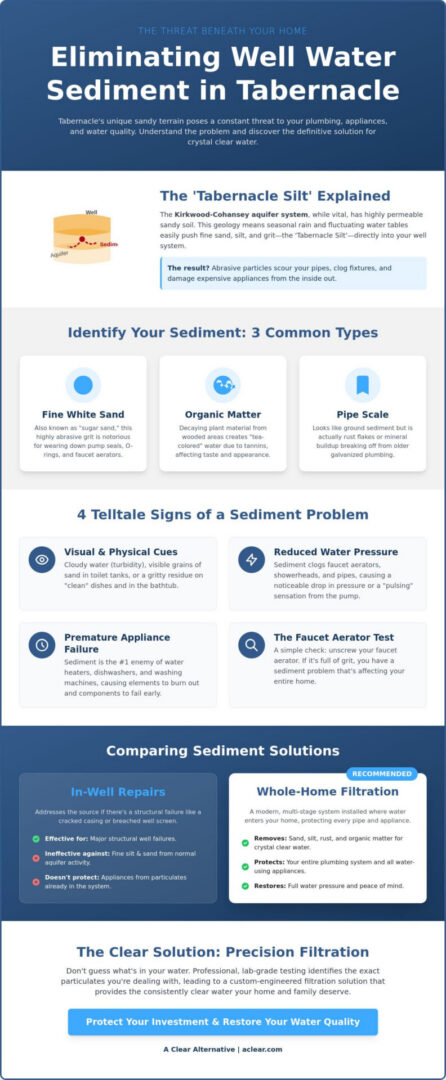
The Kirkwood-Cohansey aquifer system is the lifeblood of South Jersey, but its high permeability is a double-edged sword. Because the soil is so sandy, it moves particulates with ease. Tabernacle wells are particularly prone to “sand pumping” because the local water table fluctuates significantly throughout the year. When heavy rain hits the Pinelands, the sudden surge in groundwater can trigger turbidity. This isn’t just a seasonal quirk; it’s a geological reality that requires a sophisticated water treatment strategy to manage effectively. Modern filtration isn’t just a luxury here; it’s a necessity for protecting your plumbing.
Common Types of Sediment Found Locally
Identifying your specific sediment type is key to choosing the right solution. You might notice different textures depending on your specific lot in Tabernacle:
- Fine White Sand: Typical of the Kirkwood formation, this “sugar sand” is highly abrasive to pump seals and faucet aerators.
- Organic Matter: Wooded Tabernacle lots often see “tea-colored” water caused by tannins and decaying plant material from the surrounding forest.
- Pipe Scale: Sometimes, what looks like ground sediment is actually rust flakes or mineral buildup breaking off from older galvanized pipes.
Each type tells a story about your well’s health. Whether you’re dealing with heavy grit or fine silt, the goal remains the same: restoring the clarity and pressure you deserve. We focus on the desired outcome of crystal clear water, moving away from the old, clunky methods of the past toward precision filtration that works silently in the background.
Signs Your Tabernacle Well Needs Professional Sediment Removal
Sediment rarely stays invisible for long. It eventually announces itself through your faucets, your appliances, and even your morning coffee. Understanding how to remove sediment from well water Tabernacle residents deal with begins with recognizing these early warning signs. You might notice a persistent cloudiness in a glass of water, often called turbidity, or find actual grains of sand settled at the bottom of your toilet tank. These aren’t just aesthetic issues. They are clear signals that your well is pulling in more than just water.
Physical cues are often the most frustrating. You might feel a gritty residue on your “clean” dishes or see a layer of fine sand in the bottom of the tub after a bath. Mechanically, sediment causes your well pump to cycle more frequently or creates a pulsing sensation in your water pressure. One of the most expensive “hidden” signs is the premature failure of your hot water heater. Sediment settles at the bottom of the tank, burying the heating elements and causing them to burn out long before they should. Proper well maintenance involves spotting these symptoms early to avoid a total system shutdown.
The Faucet Aerator Test
Checking your home’s health is often as simple as unscrewing a faucet aerator. These small screens act as the first line of defense, catching larger debris before it leaves the tap. If you find a collection of grit there, take a close look at the texture. Silt feels like fine flour when rubbed between your fingers, while sand has a distinct, sugar-like grain. If multiple faucets are clogged, you aren’t looking at a localized plumbing leak. You’re facing a whole-house sediment issue that requires a professional approach to resolve.
Sediment and Your Water Treatment System
In Tabernacle, sediment often works in tandem with low pH levels to damage your home. Heavy grit can quickly foul and destroy the media inside an acid neutralizer, rendering it useless. It also wreaks havoc on water softener resin beds and delicate control valves by acting like sandpaper on internal seals. This is why you should always perform comprehensive well water testing before investing in new equipment. Don’t guess about your water quality. You can start with professional water analysis to see exactly what is in your supply and how to fix it for good.
Comparing Solutions: In-Well Repairs vs. Home Filtration Systems
When you’re deciding how to remove sediment from well water Tabernacle homeowners often face a choice between fixing the well itself or installing a modern filtration system. It’s a balance between stopping the problem at the source and ensuring your taps only deliver pure, clear water. If your well is physically compromised, no filter can keep up forever. However, for the fine silt and sand typical of our local Kirkwood-Cohansey aquifer, a precision filtration setup is often the most reliable way to protect your lifestyle and your home’s value.
For homes dealing with heavy grit, centrifugal sand separators are a game changer. These systems use the water’s own velocity to spin out heavy particles without the need for replaceable cartridges. If you’re dealing with finer clouds of silt, multi-gradient cartridge filters offer a “polishing” effect that makes your water sparkle. When your volume needs are high, a self-cleaning backwashing filter provides a low maintenance solution that handles the heavy lifting for you without constant manual intervention.
In-Well Solutions: Fixing the Source
Sometimes the issue is structural rather than chemical. Well screen replacement or professional well surging can clear away decades of buildup that limits flow and introduces grit. We often find that simply adjusting the pump height can solve a sand problem; raising it just a few feet avoids the “silt zone” at the bottom of the casing. If surface dirt is entering through a cracked well casing, a physical repair is non-negotiable. These source-side fixes are essential when the earth itself is invading your plumbing system.
Whole-House Filtration: The Ultimate Defense
Installing whole house water filtration systems offers a comprehensive shield for your entire property. Sediment filtration systems are often categorized by their micron rating, which determines how small of a particle they can catch. While a coarse spin-down filter catches the big stuff, a 5-micron filter is generally considered the “sweet spot” for home use. It’s fine enough to stop visible silt but won’t cripple your water pressure. This modern approach gives you the freedom to enjoy your home without worrying about what’s hiding in your pipes. It’s about moving away from the gritty reality of the past and embracing the crystal clear future of your water.
Maintenance Checklist for a Sediment-Free Well System
Consistent care is the secret to a home that feels effortless. Once you have learned how to remove sediment from well water Tabernacle systems often require, the next step is staying ahead of the grit. A proactive maintenance schedule ensures your high-end appliances remain protected and your water pressure stays strong. It’s about preserving that crystal clear quality you’ve worked hard to achieve. By following a simple, structured checklist, you can prevent small particulates from becoming a major plumbing headache.
- Step 1: Monthly Filter Inspections. Take a quick look at your transparent filter housings. If the media looks dark or caked with silt, it’s time for a change. Visibility is your best tool for early detection.
- Step 2: Quarterly Water Heater Flushing. Sediment naturally settles at the bottom of your tank. Draining a few gallons every three months removes this abrasive grit before it can damage your heating elements.
- Step 3: Annual Well Cap Review. Ensure your well cap and seal are airtight. A loose seal allows insects and surface debris to bypass your natural filtration, leading to sudden turbidity.
- Step 4: Bi-annual Pressure Testing. Monitor your pressure gauge while running several taps. A significant drop often signals a clogged filter or a failing well pump screen that needs professional attention.
Managing Your Filtration Media
Your filtration system is only as good as the media inside it. Many homeowners wait for a noticeable drop in water pressure before changing cartridges, but this puts unnecessary strain on your pump. We recommend a time-based schedule to keep everything running smoothly. If you use reusable mesh screens, clean them gently with a soft brush; damaging the weave allows sand to slip through. For ultimate convenience, ensure your water softener salt delivery service includes a brief system check to verify everything is performing at peak efficiency.
When DIY Isn’t Enough
There are moments when a simple filter change won’t cut it. If your water suddenly turns brown or “chocolatey,” you’re facing a “sudden sand” emergency. This usually indicates a structural failure deep underground, such as a collapsed liner or a breached screen. Never attempt to “shock” or bleach a well to fix a sediment issue; this won’t solve the physical intrusion of dirt and can damage your equipment. Recurring grit, despite frequent filter changes, is a clear sign that it’s time for a deeper technical intervention. You can schedule a professional system audit to identify the root cause and restore your home’s water quality once and for all.
Expert Sediment Solutions with A Clear Alternative
We’ve explored the “sugar sand” of the Kirkwood-Cohansey aquifer and the mechanical signs of a failing well. Now, it’s about the solution. Our team brings over 30 years of South Jersey expertise directly to your doorstep. We don’t just guess about how to remove sediment from well water Tabernacle homeowners struggle with; we use a data-driven approach. It starts with comprehensive water testing to identify exactly what is clouding your supply. This isn’t a generic fix. It’s a precision-engineered response to your home’s unique geological needs. You deserve a system that works silently and effectively in the background of your life.
Tabernacle families trust us because we understand that water quality is an essential part of your home’s value and your daily comfort. Our process moves you away from the clunky, high-maintenance filters of the past. We focus on modern, lab-grade analysis to design a filtration strategy that protects your high-end appliances and restores your peace of mind. If your well system fails unexpectedly, having a reliable partner to check for emergency support is vital. We are committed to ensuring your transition from gritty water to crystal clarity is as smooth and professional as possible.
Customized Filtration for Tabernacle Homes
A “one size fits all” filter is a relic of the past. If you’re dealing with ultra-fine silt, a coarse mesh screen simply won’t help. We match the specific micron rating of our systems to the actual particulates found in your well. Our modern solutions integrate seamlessly with your existing acid neutralizers or water softeners. This ensures a streamlined, aesthetic setup that doesn’t clutter your utility space or ruin your home’s design. Professional installation is key to maintaining the high flow rates and consistent pressure that a modern household demands. It’s about combining technical excellence with a focus on your user experience.
Start Your Journey to Clearer Water
Your home should be a place of renewal, not a source of gritty frustration. Reclaiming your water quality is a straightforward, obstacle-free process when you have the right expertise on your side. We offer flexible maintenance plans to keep your filters performing at their peak, so you never have to worry about your plumbing health again. It’s time to move toward a future of crystal clear water and renewed confidence in your home’s most vital resource. Take the first step toward a more comfortable, sediment-free lifestyle today. Contact A Clear Alternative for your Tabernacle water solution and discover the difference that professional filtration can make.
Reclaim Your Clear Water Lifestyle
Your home is your sanctuary, and you shouldn’t have to settle for gritty water or failing appliances. We’ve seen how Tabernacle’s unique sandy terrain can impact your plumbing. By matching the right filtration technology to your specific well conditions and staying consistent with maintenance, you can ensure your water remains crystal clear. Learning how to remove sediment from well water Tabernacle homeowners encounter is about more than just plumbing. It’s about the confidence that comes with a high-quality home environment.
As a family-owned business since 1991 and a Licensed NJ Potable Water Hauler, we are here to support your journey. Whether you need a system check or 24/7 emergency support, our team provides the modern, professional care your property deserves. Don’t wait for your water pressure to fade or your dishwasher to struggle. Take the next step toward a grit-free home and a renewed sense of comfort today.
Get Your Tabernacle Well Water Tested & Clear Today
You deserve water that is as pure and refreshing as the Pinelands themselves. We are ready to help you achieve the perfect flow for your modern lifestyle.
Frequently Asked Questions
Is sediment in well water dangerous to drink?
Sediment itself is typically a physical nuisance rather than a direct health hazard, but it shouldn’t be ignored. While sand and silt are inert, they can sometimes carry bacteria or shield microorganisms from effective UV sterilization. The primary danger is to your home’s infrastructure. Grit destroys seals and clogs pipes, which eventually leads to costly plumbing repairs. Testing your water is the only way to ensure your supply is truly safe and clear.
Why is there suddenly sand in my well water after a heavy rain in Tabernacle?
Heavy Pinelands rain causes the local water table to rise rapidly, which often shifts the sandy soil around your well casing. This movement pulls fine particulates into the system through the well screen. Because Tabernacle sits on high permeability ground, these fluctuations are more common here than in other regions. It’s a natural geological response that requires a robust filtration strategy to keep your indoor water pristine and grit-free.
How much does a whole-house sediment filter cost to install?
The investment for a whole-house system varies based on the specific type of particulates found in your supply and the required flow rate for your home. Factors like the micron rating of the filter and whether you choose a self-cleaning backwashing unit or a manual cartridge system influence the final setup. We focus on custom engineered solutions that provide the best long-term protection for your plumbing without unnecessary overhead or maintenance stress.
Can a sediment filter improve my home’s water pressure?
Yes, a properly installed filter can significantly restore your water pressure by preventing grit from clogging your faucet aerators and showerheads. When you learn how to remove sediment from well water Tabernacle homes often have, you stop the slow fade of pressure caused by internal buildup. By catching the debris at the entry point, your entire internal plumbing system stays clear and performs at its intended capacity.
How often should I change my well water sediment filter?
Most homeowners find that changing their sediment filter every three to six months is the ideal rhythm for maintaining peak performance. However, if you notice a sudden drop in water pressure or see visible discoloration in the filter housing, you should swap it sooner. Your specific water usage and the amount of silt in your local aquifer will ultimately determine the best schedule for your unique household needs.
What is the difference between turbidity and sediment?
Sediment refers to the actual physical particles, like sand or grit, that settle at the bottom of a container. Turbidity is the measure of relative clarity, or the cloudiness caused by suspended solids that are too light to settle quickly. While they are related, they often require different filtration approaches. We use lab-grade testing to determine which issue is affecting your water so we can apply the right technology for your home.
Can sediment damage my water softener or acid neutralizer?
Abrasive grit is one of the leading causes of premature failure for water softeners and acid neutralizers. The sand acts like sandpaper on internal control valves and can foul the expensive resin or media beds inside the tanks. This leads to reduced efficiency and eventually requires a full system rebuild. Protecting these investments with a dedicated sediment pre-filter is a smart, modern choice for any Tabernacle property owner.
Do I need to drill a new well if I have a sand problem?
Drilling a new well is usually a last resort rather than a first step. Many sand problems are solved through professional well surging, pump height adjustments, or the installation of a high capacity centrifugal sand separator. Before considering the expense of a new well, it’s essential to have a technical audit of your current system. Most sediment issues in our area can be managed effectively with the right modern filtration technology.