
How to Prevent Scale Buildup in Your Water Heater: The 2026 Homeowner’s Guide
Did you know that approximately 85% of households in the United States are currently fighting a silent, mineral-rich battle inside their plumbing? If you’ve noticed unsettling rumbling noises or energy bills that keep climbing, your appliance is likely struggling against a thickening layer of rock. Learning how to prevent scale buildup in water heater systems isn’t just a basic maintenance chore. It’s a vital step to reclaim your home’s efficiency and ensure your daily rituals remain uninterrupted.
It’s frustrating to feel like your modern appliances are failing long before their time, especially when you’ve invested in a quality lifestyle. We promise to show you the most effective methods to stop mineral scale from destroying your heater and sky-rocketing your monthly expenses. This 2026 guide provides a clear plan for long-term prevention, moving beyond temporary fixes to focus on sophisticated water treatment. We’ll explore how modern softeners and filtration systems can give you consistent water pressure and lower maintenance costs, letting you enjoy the premium comfort you deserve.
Key Takeaways
- Understand how calcium and magnesium deposits create an invisible “insulation effect” that forces your heater to work harder and drives up energy costs.
- Master the essential steps for a safe annual flush to clear out loose sediment and maintain your system’s immediate heating efficiency.
- Discover why a high-quality water softener is the ultimate solution for how to prevent scale buildup in water heater tanks by removing minerals at the source.
- Compare the long-term performance of ion exchange technology against scale inhibitors to choose the right level of protection for your lifestyle.
- Learn how custom-sized water treatment solutions tailored to local water chemistry can safeguard your appliances and improve your daily quality of life.
What Is Water Heater Scale and Why Is It Dangerous for Your Home?
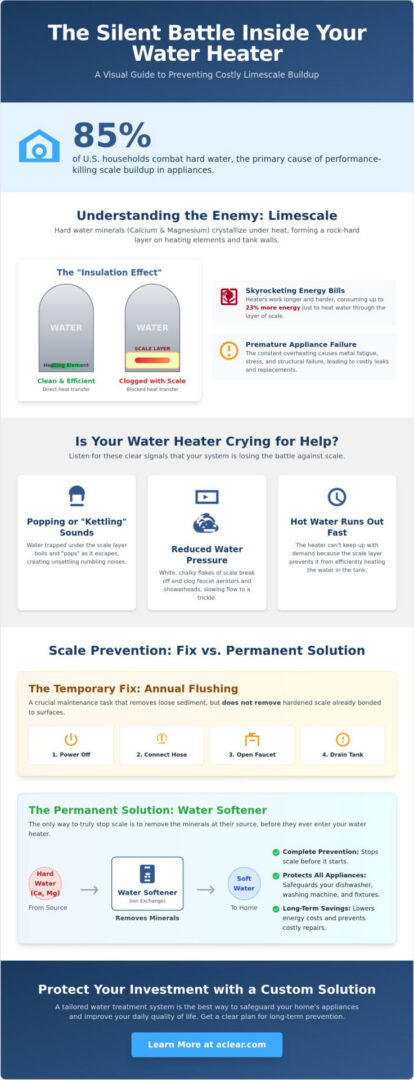
Imagine a layer of solid rock forming inside your most essential home appliance. That is exactly what happens when calcium and magnesium minerals crystallize under heat. This chalky deposit, scientifically known as What Is Limescale, creates a stubborn crust on heating elements and tank walls. Since approximately 85% of U.S. households deal with hard water, this isn’t a rare occurrence; it’s a daily reality for most. Understanding how to prevent scale buildup in water heater units is the first step toward protecting your home’s comfort and your wallet.
Scale acts as a thermal insulator. This is bad news for your efficiency. Instead of the heating element warming the water directly, it has to heat through a layer of stone first. This “insulation effect” forces your system to run longer and hotter. Industry data suggests that gas tank water heaters can consume up to 23% more energy when forced to fight through scale. Over time, this inefficiency doesn’t just raise your bills. It causes the tank’s metal to overheat and fatigue, eventually leading to structural failure and costly leaks that can flood your basement.
The Science of Mineral Precipitation
When you heat water, you trigger a specific chemical reaction. High temperatures cause dissolved calcium bicarbonate to break down into solid calcium carbonate. In South Jersey, our water often comes from aquifers rich in these minerals, alongside iron and other sediments. Initially, this might look like a “soft” slushy sediment at the bottom of the tank. However, as it “bakes” against the heating element, it hardens into a porcelain-like scale. This hard scale is far more damaging than soft sediment because it’s nearly impossible to remove without professional intervention.
Signs Your Heater Is Already Struggling with Scale
Your water heater will usually tell you when it’s in trouble. Listen for a “kettling” or popping sound during a heating cycle. This happens when water gets trapped beneath the scale layer, turns to steam, and “pops” through the crust. You might also notice white, chalky flakes clogging your faucet aerators or a shower that goes cold much faster than it used to. These are clear signals that your system is losing the battle. Learning how to prevent scale buildup in water heater tanks early can save you from an emergency replacement later this year.
The Annual Maintenance Route: How to Flush Your Water Heater
Maintaining your home’s luxury and efficiency requires more than just high-end finishes; it demands care for the systems working behind the scenes. One of the most common DIY tasks for homeowners is learning how to flush your water heater. This process clears out the loose sediment that settles at the bottom of the tank over time. In the South Jersey and Tri-State area, where mineral-heavy aquifers are common, performing this task at least once a year is a standard recommendation to keep your system breathing and your energy bills predictable.
Safety is your priority before you touch a single valve. If you have an electric unit, flip the breaker. For gas heaters, turn the control knob to the “Pilot” setting. You must allow the water to cool for several hours or run a hot faucet until the tank temperature drops to a safe level. Scalding water under pressure is dangerous. Once the system is cool and powered down, you’re ready to start the drainage process. While this is a great start for how to prevent scale buildup in water heater tanks from becoming a total disaster, it is only part of the story.
Step-by-Step Flushing Instructions
- Connect and Direct: Attach a standard garden hose to the drain valve at the base of the tank. Run the other end to a floor drain or safely outside.
- Break the Vacuum: Open a hot water faucet in a nearby sink or bathtub. This allows air into the system so the water can flow out freely without creating a vacuum.
- The Main Flush: Open the drain valve. Let the water flow until it runs perfectly clear of any visible sediment or flakes.
- The Power Flush: Briefly turn the cold water inlet valve back on while the drain is still open. This creates turbulence that helps kick up stubborn silt from the bottom of the tank.
Why Flushing Isn’t a Permanent Solution
While a flush is helpful, it’s important to realize its limits. Flushing is a reactive maintenance step, not a complete answer for how to prevent scale buildup in water heater elements. It effectively removes loose, sandy silt, but it cannot touch the “baked-on” scale that has already fused to the heating elements or the tank walls. That rock-hard layer stays put, continuing to waste energy and strain the metal despite your best efforts.
There is also a physical risk to consider. On older units, the drain valve might be brittle. Once you open it, it may not seal perfectly again, leading to a persistent drip. If you want to stop the cycle of maintenance and truly protect your investment, a professional water analysis can reveal exactly which minerals are causing the crust in the first place.
Why a Water Softener Is the Only Permanent Way to Stop Scale Buildup
Flushing your tank is a helpful habit, but it’s ultimately a reactive game of catch-up. To truly win the battle against mineral deposits, you need a proactive strategy. Treating your water at the point of entry before it ever touches your plumbing is the most effective way to protect your home. A professional water softener acts as a gatekeeper, ensuring that the liquid flowing into your appliances is already stripped of its destructive properties. This shift from maintenance to prevention is the gold standard for how to prevent scale buildup in water heater systems.
The magic happens through a process called ion exchange. Inside the softener, hard minerals like calcium and magnesium are swapped for harmless sodium or potassium ions. This fundamentally changes the water’s chemistry. Because these minerals are physically removed, the crusty deposits simply cannot form. According to the U.S. Department of Energy, this technology effectively prevents… scale buildup in your pipes and appliances. By investing in this modern solution, you can actually double the lifespan of your water heater, whether you use a traditional tank or a high-end tankless model.
If you’re looking for a comprehensive approach to your home’s health, our Whole House Water Filtration Systems offer the ultimate peace of mind. They combine softening with advanced filtration to ensure every drop in your home is pure, soft, and safe for your expensive equipment.
How Ion Exchange Protects Your Plumbing
Tankless Water Heaters and Hard Water
Modern tankless units are incredibly efficient, but they’re also very sensitive. They use narrow heat exchanger passages that can clog with scale in just a few months of hard water use. In fact, many manufacturers will void your warranty if you don’t have a water softener installed in areas with high mineral content. For South Jersey homeowners, a softener isn’t just a luxury. It’s a technical necessity to keep these high-efficiency systems running. Without soft water, your “forever” heater might only last a fraction of its intended life. Choosing the right how to prevent scale buildup in water heater strategy is the best way to safeguard that investment.
Comparing Scale Prevention Methods: Softeners vs. Scale Inhibitors
Choosing the right technology for your home is about more than just hardware. It is about how you want your daily life to feel. When researching how to prevent scale buildup in water heater systems, you will likely encounter two main contenders: water softeners and scale inhibitors. While they both aim to protect your plumbing, they use very different methods to get the job done. Understanding these differences is the key to making a modern, informed decision for your household’s long-term comfort.
Water softeners remain the gold standard for appliance protection. They use the ion exchange process we discussed earlier to physically remove calcium and magnesium from your water supply. This is a total solution. By the time the water reaches your heater, the elements that cause rock-hard scale are simply gone. On the other hand, scale inhibitors or “descalers” take a different approach. They use chemical or physical sequestration to prevent minerals from sticking to surfaces. The minerals stay in the water, but they are “wrapped” in a way that makes them less likely to form a crust. While this can help your heater, it does not provide the other lifestyle benefits of truly soft water.
You might also see magnetic or electronic descalers marketed as a maintenance-free miracle. It is important to be cautious here. There is currently a lack of broad scientific consensus on their effectiveness across different water chemistry profiles. For homeowners who value certainty and premium performance, a proven filtration or softening system is usually the more reliable choice. Your decision should ultimately be based on your specific mineral load and your goals for your home’s water quality.
Understanding Scale Inhibitors
Scale inhibitors typically use polyphosphates or citric acid-based cartridges to treat the water. These systems are often smaller and easier to install than a full softener. However, the major downside is that the minerals are still present in your home. You may still deal with spotted glassware, dry skin, and soap scum in your showers. Maintenance involves replacing cartridges every few months, whereas a softener simply requires the occasional addition of salt. It is a trade-off between a lower initial cost and a less comprehensive result.
The Verdict on DIY Descaling Solutions
Many homeowners turn to vinegar soaks to clean their tankless units. While this is a fine temporary fix to remove existing buildup, it is not a strategy for how to prevent scale buildup in water heater units in the future. It is a reactive “band-aid” for a systemic problem. Furthermore, using harsh DIY chemicals in your potable water system without expert guidance can be risky for your plumbing and your health. The most effective way to start is by understanding exactly what is in your water. A professional well water testing session will give you the data you need to choose the right protection level. If you are ready to stop guessing and start protecting your home, you should schedule a comprehensive water analysis today.
Professional Water Treatment Solutions in Tabernacle and South Jersey
South Jersey is famous for its beautiful landscapes, but our groundwater is notoriously complex. Living in Tabernacle, Shamong, or Medford Lakes means your plumbing is constantly exposed to the unique mineral profile of the NJ/PA/DE aquifer system. If you’re serious about learning how to prevent scale buildup in water heater units, you need more than a generic manual. You need a solution designed for the specific chemistry of your neighborhood. We don’t believe in one-size-fits-all hardware. Instead, we focus on the intersection of modern technology and your home’s aesthetic and functional needs.
A Clear Alternative has been a family-owned pillar of the community since 1991. We treat your home’s water as if it were our own, prioritizing the longevity of your appliances and the quality of your daily life. Our approach is built on precision. We size every system based on your actual household usage and the specific contaminants found in your water. This ensures your heater remains protected without wasting resources. We also provide 24/7 emergency support. If your heater fails due to sudden scale-related issues, we’re the neighbors you can call to get your home back to its peak performance.
Our Comprehensive Water Analysis
Every successful project begins with clarity. We start by performing a professional laboratory water test to see exactly what we’re up against. Scale is often just one part of the puzzle. Our analysis identifies hardness, but we also look for iron, sulfur, and fluctuating pH levels that can corrode your pipes from the inside out. For homes dealing with both low pH and high mineral content, our Acid Neutralizer Systems provide a dual layer of protection. This scientific foundation is the only way to truly master how to prevent scale buildup in water heater tanks for the long haul.
Hassle-Free Maintenance and Salt Delivery
We believe your water treatment system should be invisible and effortless. You shouldn’t have to worry about lugging heavy bags of salt or remembering service dates. We take the work out of scale prevention with our specialized Water Softener Salt Delivery Service. Our team ensures your brine tank is always full and your system is operating at peak efficiency through scheduled check-ups. This proactive care keeps your water soft, your skin glowing, and your energy bills low. If you’re ready to upgrade your home’s water experience, you can contact A Clear Alternative today for a water consultation and start your journey toward a scale-free home.
Take Control of Your Home’s Water Health Today
Your water heater is the heart of your home’s daily comfort. Don’t let hidden mineral deposits dictate your energy costs or shorten the life of your expensive appliances. We’ve seen how reactive flushing only addresses the symptoms, while professional water softening provides a permanent cure. Learning how to prevent scale buildup in water heater tanks is the smartest way to ensure consistent pressure and temperature for years to come.
Since 1991, our family-owned team has helped South Jersey homeowners achieve the perfect balance of technology and lifestyle. As a licensed potable water hauler with 24/7 emergency support, we bring a level of expertise that goes beyond simple repairs. We focus on the aesthetic and functional benefits of pure, soft water. It’s time to stop worrying about your plumbing and start enjoying the freedom of a high-performance home. Protect your appliances with a custom water treatment plan from A Clear Alternative and experience the difference that local expertise makes. Your home deserves nothing less than the gold standard.
Frequently Asked Questions
How often should I flush my water heater if I have hard water?
You should flush your water heater every six months if you live in an area with high mineral content. While an annual service is standard for many, the heavy mineral load in South Jersey aquifers often requires more frequent attention. This prevents soft sediment from “baking” into the hard, permanent crust that eventually destroys your heating elements and lowers your home’s efficiency.
Can a water softener remove existing scale from my pipes and heater?
Yes, soft water has a natural “hungry” quality that can slowly dissolve existing minor scale deposits over time. It won’t fix a completely clogged system overnight, but it gradually cleanses the interior of your plumbing. By preventing new minerals from bonding, the soft water slowly erodes current buildup, helping your system return to a more efficient state without harsh chemical interventions.
Will a water softener make my water heater last longer?
A water softener can effectively double the lifespan of your heater by eliminating the primary cause of tank failure. When you remove calcium and magnesium, you stop the overheating and metal fatigue caused by the insulation effect of scale. This proactive approach is the most reliable strategy for how to prevent scale buildup in water heater units and protect your long-term investment.
What is the difference between a water softener and a water descaler?
A water softener physically removes minerals through ion exchange, while a descaler or inhibitor only changes the minerals’ structure so they don’t stick to surfaces. Softeners provide a total solution for your laundry, skin, and every appliance in your home. Descalers offer a more limited benefit because the minerals remain in your water, which can still lead to spotting and soap scum.
Does a tankless water heater need a water softener?
Yes, tankless heaters are incredibly sensitive to scale because their narrow heat exchanger passages clog very quickly. Most manufacturers actually require a water softener to keep your warranty valid in hard water regions. Without a softener, a high-efficiency tankless unit can lose its effectiveness or fail entirely within just a few years, leading to a very expensive and avoidable replacement.
How do I know if my water heater has scale buildup?
Listen for popping or “kettling” noises during a heating cycle, which indicate water is trapped beneath a layer of scale. You might also notice a drop in hot water temperature or white, chalky flakes clogging your faucet aerators. If your energy bills are rising despite normal usage, it’s a clear sign that scale is forcing your system to work harder than it should.
Is it worth descaling an old water heater, or should I replace it?
If your heater is over ten years old and making heavy rumbling noises, replacement is usually the wiser choice. Descaling an older, heavily compromised tank can sometimes reveal existing leaks that were previously “plugged” by the scale itself. Starting fresh with a modern, high-efficiency unit and a proper softening system ensures your new investment stays protected from day one.
What happens if I never flush my water heater?
If you never flush your tank, sediment will fill the bottom and eventually bury the lower heating element or burner. This causes the tank floor to overheat and the metal to weaken, leading to a catastrophic leak. You’ll also experience a significant drop in hot water capacity and pay much higher energy bills as the system struggles to heat through a thick layer of rock.