
How to Backwash a Water Filter: A Homeowner’s 2026 Maintenance Guide
What if that frustrating drop in your shower’s water pressure isn’t a plumbing disaster, but actually a cry for help from your filtration system? It’s a common worry for modern homeowners who see cloudy water and immediately fear a costly repair. You’ve invested in your home’s water quality to elevate your daily life, so it’s natural to feel a bit hesitant when learning how to backwash a water filter for the first time. We believe maintenance should feel like a simple lifestyle choice, not a technical burden.
The good news is that backwashing is the ultimate “reset button” for your home’s health. We’ll show you exactly how to clear out trapped sediment and restore your system to its peak performance, ensuring a lifetime of crystal-clear water. This guide walks you through the simple steps to manually trigger a cycle, explains how to avoid common mistakes, and helps you gain the confidence to manage your hardware with ease. Let’s turn that technical uncertainty into total peace of mind.
Key Takeaways
- Backwashing is a strategic three-stage cycle consisting of Backwash, Rinse, and Service that reverses flow to refresh your system’s filter media.
- Identify the critical warning signs of a clogged system, including sudden pressure drops and the return of unwanted metallic tastes or odors.
- Master the essential steps of how to backwash a water filter based on your specific valve type to maintain peak performance without damaging your hardware.
- Distinguish between simple maintenance and permanent media fouling to protect your long term investment in home water quality.
- Learn when to transition from DIY care to a professional 12-point system inspection to ensure your filtration remains effortless and effective.
What is Backwashing and Why is it Critical for Your Water Filter?
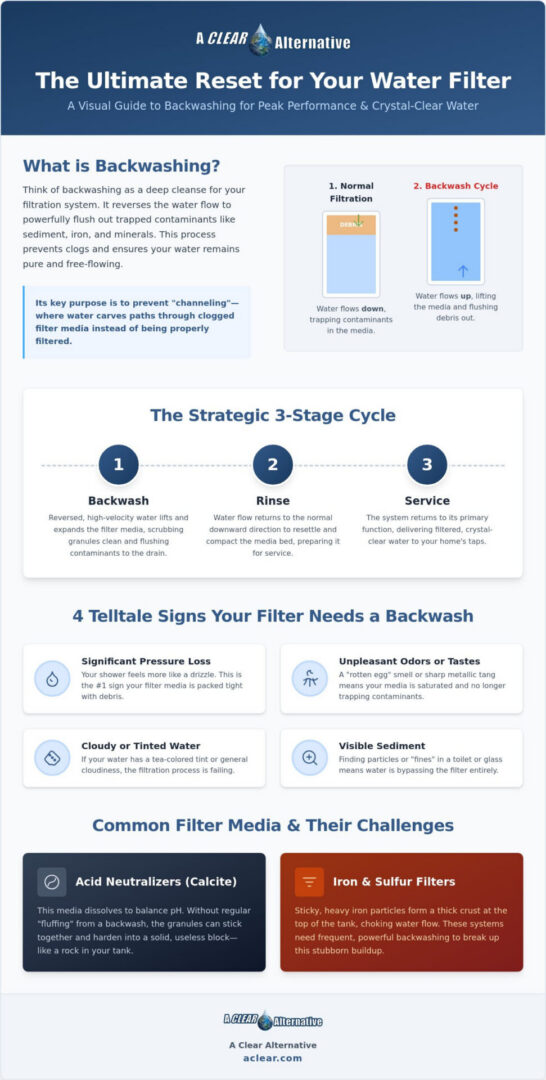
Backwashing is the process of flushing out accumulated contaminants to prevent system “channeling” and ensure your home’s water remains pure. Think of it as a deep cleanse for your filtration system. Over time, your filter media acts like a sponge, trapping iron, sediment, and minerals. If you don’t clear these out, the media becomes a solid, compacted block. Water then forces its way through small cracks or “channels” instead of being filtered. Learning how to backwash a water filter is the simplest way to prevent this hardware failure and keep your water flowing freely.
In a professional setting, Backwashing (water treatment) involves a strategic reversal of water flow. Instead of water traveling down through the media, it’s pushed upward at a high velocity. This upward force lifts and expands the media bed, causing the individual granules to collide and scrub each other clean. This process removes the debris that has been trapped in the upper layers and sends it down the drain. It’s a modern, efficient way to reset your system’s capacity without manual scrubbing.
Most whole-house systems move through three distinct stages during this cycle:
- Backwash: The flow reverses to lift the media and flush out contaminants.
- Rinse: Water flows in the normal direction to settle the media bed back into place.
- Service: The system returns to its primary job of providing clean water to your taps.
Without this regular “reset,” your water quality will inevitably suffer. Compaction leads to a massive drop in water pressure. It can even allow bacteria to grow within the stagnant, trapped debris. Master the cycle. Protect your investment.
The Role of Filter Media in Your System
The media inside your tank is the heart of the operation. For homes dealing with low pH, acid neutralizers typically use Calcite. This media slowly dissolves to balance your water, but it requires regular “fluffing” through backwashing to keep the granules from sticking together. If the Calcite isn’t moved, it can turn into a literal rock inside your tank.
Other systems, like those designed for iron and sulfur, face even tougher challenges. Iron particles are sticky and heavy. They tend to accumulate in the very top layers of the tank, forming a thick crust that chokes your water flow. Because these contaminants are so resilient, these systems often require more frequent backwashing than a standard sediment filter. Understanding how to backwash a water filter specifically for these heavy metals ensures that your water stays clear and your appliances remain free from stains. It’s about maintaining that effortless, high-quality lifestyle you expect from your home.
4 Signs Your Whole House Filter Needs a Backwash Cycle
Your home has a way of telling you when its internal systems are struggling. You don’t need to be a water treatment expert to notice the subtle shifts in your water quality. If you’ve been wondering how to backwash a water filter, it’s likely because you’ve already spotted one of these common red flags. Ignoring these signals doesn’t just result in poor water; it puts unnecessary strain on your entire plumbing infrastructure.
Keep an eye out for these four unmistakable indicators:
- Significant Pressure Loss: This is usually the first sign. If your morning shower feels more like a drizzle than a waterfall, your filter media is likely packed tight with debris.
- Unpleasant Odors or Tastes: That “rotten egg” smell or a sharp metallic tang means your media bed is saturated. It can no longer trap the sulfur or iron effectively.
- Cloudy or Tinted Water: Crystal-clear water is the goal. If you notice a slight tea-colored tint or general cloudiness at the tap, the filtration process is failing.
- Visible Sediment: When you see small particles or “fines” in your toilet tank or at the bottom of a glass, the water is finding “channels” to bypass the media entirely.
Recognizing these signs early is the first step in Optimizing Backwash Procedures for your specific home environment. A timely reset prevents these minor annoyances from turning into a permanent hardware failure.
South Jersey Specific Water Indicators
In our local communities like Shamong and Tabernacle, we face unique challenges. The high iron content in South Jersey’s Cohansey Aquifer can “slug” a filter much faster than standard municipal water. If you live in these areas, you might notice your system needing a cycle more frequently during periods of heavy rain or high water usage. Iron doesn’t just affect the taste; it creates a sticky sludge that chokes your system’s performance.
For those using an acid neutralizer, keep a close watch on your fixtures. Blue-green staining on your white porcelain sinks or tubs is a clear cry for help. This means your pH balance has shifted, and your media needs a vigorous backwash to refresh the Calcite granules. We always recommend starting with well water testing to establish a baseline. Knowing exactly what is in your water makes it much easier to master how to backwash a water filter on a schedule that actually fits your needs. If your water still feels “off” after a manual cycle, it might be time to consult with a local specialist to ensure your settings are dialed in for the local South Jersey terrain.
How to Backwash Your Water Filter: Step-by-Step Instructions
Taking control of your home’s water quality starts with understanding the equipment in your utility room. Most modern systems use a control valve from industry leaders like Fleck or Clack. These valves are the “brains” of your filtration, and identifying which one you have is the first step in mastering how to backwash a water filter. While these systems are designed for durability, a manual reset ensures the media bed stays loose and effective. You don’t need a toolbox for this task; you just need a few minutes and a clear plan.
Before you begin, check if your system requires a manual bypass. Most high-end, modern valves automatically bypass the filter during a cycle, meaning you’ll still have water in the house, it just won’t be filtered for those few minutes. If your setup has a three-valve bypass, you can turn the handles to isolate the unit. Once you’ve confirmed your water path, you’re ready to initiate the sequence. Keep an eye on your drain line throughout the process. Watching the water transition from murky and sediment-heavy to crystal clear is incredibly satisfying; it’s the visual proof that your system is renewed.
Operating Digital Control Valves
Digital valves make maintenance effortless. To start a manual cycle, simply press and hold the “Regen” or “Extra Cycle” button for five seconds. You’ll hear the motor engage as it moves into the first position. The display will flash codes like “BW” for Backwash, “R” for Rinse, or “S” for Service. These codes tell you exactly where the system is in its journey. Always ensure your system’s clock is set correctly. Most automatic cycles are programmed for 2 AM to avoid interrupting your daily routine. If the time is wrong, your filter might decide to clean itself right in the middle of your morning shower.
Operating Mechanical/Manual Valves
If your system features a mechanical dial, the process is more hands-on but equally simple. Slowly turn the large center dial clockwise until it clicks into the “Backwash” position. You’ll immediately hear the rush of water heading to the drain. Let the system run in this position for 10 to 15 minutes. This duration is critical to fully lift the media bed and scrub away stubborn iron or sediment. Once the time is up, rotate the dial to “Rapid Rinse” for another 5 minutes. This final step is vital because it settles the media back into a tight, effective filter bed. Finally, return the dial to “Service” and check the area for any drips or leaks to ensure a perfect reset.
Manual vs. Automatic Backwashing: Troubleshooting Common Issues
Even after mastering how to backwash a water filter, you might occasionally face a situation where the water doesn’t return to its crystal-clear state immediately. Don’t panic. This is often a sign of a specific mechanical or chemical hurdle rather than a broken system. The most common objection we hear from homeowners is: “What if the water stays dirty after the cycle?” If you see persistent discoloration, you might be dealing with media fouling. This happens when high levels of iron or manganese create a permanent coating on the media granules. Once fouled, no amount of backwashing can scrub them clean. It’s a signal that your system’s “internal engine” needs a professional refresh to restore your water’s aesthetic quality.
Air-bound systems are another frequent headache, especially after local power outages or well pump service. When the pump restarts, air can get sucked into the lines and trapped inside your filter tank. This creates pockets that prevent water from passing through the media evenly, leading to “burping” faucets and inconsistent pressure. To resolve this, you’ll need to slowly bleed the air through the highest faucet in your home while the system is in service mode. It’s a simple step that restores the quiet, smooth flow you expect. Additionally, always perform a quick visual check of your drain line. A simple kink or a small clog in that flexible tubing can restrict the flow, preventing the vigorous flush needed to lift and clean the media bed effectively.
When the Media Bed is Exhausted
Sometimes, the issue isn’t the process, but the material itself. If you’ve noticed a gradual return of blue-green staining or a drop in water quality despite regular cycles, your media bed might simply be exhausted. Systems like acid neutralizers use Calcite, which is a sacrificial media. It literally dissolves as it works to protect your plumbing. Backwashing is essential to keep it from clumping, but it can’t replace media that has already been consumed. You’ll know it’s time for a top-off when the tank level looks low or the water fails to reach the proper pH balance during testing.
For those running a combination system, staying on top of your water softener salt delivery service is equally vital. Without the proper brine concentration, the regeneration cycle lacks the chemistry needed to succeed. Keeping your system fed with high-quality salt ensures that your home remains a sanctuary of soft, clean water. If troubleshooting these common issues feels overwhelming, reach out for a professional system evaluation to restore your home’s water to its peak performance and clarity.
When to Call A Clear Alternative for Professional System Service
Mastering the basics of how to backwash a water filter gives you a great sense of control over your home’s environment. It’s the first step in ensuring your family enjoys the highest quality water possible. However, even the most diligent homeowner will eventually encounter a mechanical hurdle that requires a specialist’s touch. If your valve head is making unusual grinding noises or the digital display shows a persistent error code that won’t clear, it’s usually a sign of internal wear. These precision instruments are the heart of your water quality. Trying to force a stuck gear or dismantle a pressurized valve without the right tools can lead to a much more expensive replacement.
We provide dedicated, expert support to our neighbors throughout the Tabernacle, Shamong, and Medford Lakes area. Our goal is to ensure your filtration system remains a silent, efficient part of your modern lifestyle. Our annual 12-point system inspection goes far beyond a simple visual check. We analyze every moving part, from the seals to the drive motor, to catch minor issues before they turn into midnight emergencies. When a total filtration failure happens at the worst possible time, our 24/7 emergency support is there to restore your peace of mind and your water flow immediately. You shouldn’t have to compromise on your home’s comfort.
Professional Maintenance vs. DIY
While you can easily handle the routine task of learning how to backwash a water filter, a professional once-a-year deep clean is essential for longevity. We focus on critical internal components like the injector and screen. These tiny parts often clog with fine silt or sticky iron that a standard backwash cycle simply can’t reach. During a professional visit, we also perform side-by-side testing of your “raw” well water versus your “treated” tap water. This data doesn’t just show if the system is working; it proves exactly how efficiently it is performing. It is the ultimate way to verify that your investment is still delivering the crystal-clear results you expect. Don’t leave your water quality to chance.
Schedule a professional water system check-up with A Clear Alternative today to keep your home’s filtration running flawlessly and your confidence high.
Secure a Lifetime of Pure Water
You now have the confidence to manage the basics of how to backwash a water filter, ensuring your system stays responsive and your water remains pristine. By recognizing the early signs of pressure loss and mastering the manual reset cycle, you’re taking proactive steps to protect your home’s most vital resource. Remember that while routine backwashing is essential, it’s just one part of a comprehensive care plan for your filtration hardware. Consistency is the secret to an effortless, high-quality lifestyle.
A Clear Alternative has been family-owned and operated since 1991, bringing deep local expertise to the unique challenges of South Jersey well water. Whether you need a routine 12-point inspection or 24/7 emergency service across the Tri-State area, we’re here to support your modern home. Don’t let technical worries stand in the way of your peace of mind. Schedule Your 2026 Water System Maintenance Today and enjoy the lasting confidence of perfectly filtered water. You’ve built a beautiful life; let’s ensure your water is just as perfect.
Common Questions About Water Filter Maintenance
How often should I backwash my whole house water filter?
Most whole house systems are programmed to cycle every three to seven days depending on your household’s water consumption and the specific contaminants in your supply. If you’re dealing with the heavy iron levels common in South Jersey, you might need a more aggressive schedule of every one to three days. Establishing the right frequency ensures the media remains loose and prevents the bed from becoming a solid block.
Can I use water in the house while the filter is backwashing?
You can still use water in your home during the cycle, but it won’t be filtered. Modern control valves feature an internal bypass that sends raw water to your taps to ensure you’re never without a supply. You’ll likely notice a significant drop in water pressure at the faucet until the system completes its stages and returns to service mode.
Why is my water filter backwashing every night?
A nightly cycle is typically reserved for extreme cases of iron or sulfur contamination where the media bed becomes saturated very quickly. If your water quality doesn’t justify this frequency, it’s possible your digital controller has a programming error or the internal clock was reset during a power outage. Mastering how to backwash a water filter involves checking these settings to ensure you aren’t wasting water or salt unnecessarily.
How much water does a backwash cycle use?
A typical residential backwash cycle uses between 50 and 100 gallons of water. This volume is necessary to properly lift the media bed and provide the scrubbing action needed to flush out trapped debris. While this might sound like a lot, it’s a strategic investment that prevents the need for premature and expensive media replacement due to fouling.
What happens if my water filter stops backwashing automatically?
If the automatic trigger fails, your filter media will eventually “plate over” with sediment, leading to a total loss of water pressure throughout the home. This mechanical failure can strain your well pump and potentially damage the internal components of the valve head. We recommend performing a manual reset immediately while you wait for a professional diagnostic to prevent long term hardware fatigue.
Is it normal for the water to be discolored immediately after a backwash?
It’s perfectly normal to see a brief burst of discolored water or tiny particles immediately after the system resets. This happens because the vigorous cleaning process can stir up fine sediment that didn’t quite make it to the drain line during the rinse stage. Simply run your cold water at a high-flow tap for two to three minutes to clear the lines and restore your crystal-clear quality.