
How to Protect Plumbing from Acidic Water: A Homeowner’s Guide
What if the water quietly wearing down your pipes is also changing what reaches your tap? If you’re wondering how to protect plumbing from acidic water, start by finding out what’s in the water and whether corrosion has already begun. Stains or a metallic taste can be clues, but they can’t confirm the cause.
Low-pH water can contribute to corrosion, and corroding plumbing may release metals such as copper or lead. But a neutralizer isn’t a one-size-fits-all fix. Water-test results and an inspection of affected plumbing can help you distinguish water chemistry concerns from existing pipe damage and choose the right next steps.
This guide explains how acidic water may affect pipes and fixtures, which tests can clarify pH and related water conditions, and what signs may warrant an inspection. You’ll also learn how acid neutralizers work, when other treatment may be relevant, and why addressing existing damage matters alongside correcting water chemistry. For well-water homeowners in Tabernacle, Shamong, and Medford Lakes, the right plan starts with reliable testing, not assumptions.
Key Takeaways
- Use water-test results to guide treatment choices, since pH alone may not explain the full water chemistry.
- Pair water testing with a plumbing inspection to understand both the water conditions and any existing damage.
- Compare neutralization, filtration, and repairs by their purpose, then match the approach to your home’s needs.
- Learn how to protect plumbing from acidic water with a clear plan: document symptoms, test, address the findings, and monitor results.
- For well-water homes in Tabernacle, Shamong, and Medford Lakes, comprehensive testing and an appropriate neutralizer can support long-term plumbing protection.
How acidic water can damage plumbing, and what protection can prevent
Acidic water can affect more than taste or appearance. Depending on its chemistry and the materials in your plumbing, corrosive water may gradually wear on pipes and fixtures, contribute to leaks, and change what reaches your tap. Understanding the risk is a useful first step in how to protect plumbing from acidic water, but symptoms alone can’t identify the cause.
What does acidic water mean for household plumbing?
pH describes how acidic or alkaline water is. It’s one measure of water chemistry, not a complete verdict on whether water is safe or suitable for your home. Other chemical characteristics and the materials in your plumbing can influence whether water is corrosive and how it behaves. A single pH reading can’t explain every water-quality concern. For a broader overview of the chemical and physical characteristics used to describe water, see water quality.
Depending on the water chemistry and plumbing materials, corrosive water may wear on pipes, joints, and fixtures over time. Corrosion can contribute to leaks or discoloration, and metals from susceptible plumbing components may enter household water. These outcomes aren’t inevitable, and their likelihood can’t be determined from pH alone. Private well owners should understand their water quality through appropriate testing rather than relying on appearance or taste.
Which warning signs deserve a closer look?
Blue-green stains around faucets or drains, a metallic taste, recurring fixture damage, or small pinhole leaks are clues worth investigating. They don’t prove acidic water is responsible. Stains and tastes can have other causes, while leaks may result from plumbing age, wear, or local damage. Note where and when symptoms appear and whether they recur. Then assess the water and affected plumbing before choosing treatment.
Testing helps connect the clues to the water’s chemistry; an inspection helps show whether pipes or fixtures have already been affected. These are related but distinct questions. Neutralizing water may help address acidity, but it won’t repair existing leaks or prove that a particular symptom came from corrosion. A sensible protection plan considers both test results and the condition of the plumbing.
If you’re in South Jersey and use well water, the acid neutralizer systems guide explains neutralization for local homeowners. The key point is simple: acidic water may have corrosion potential, but testing is needed to understand the water, and an inspection can reveal whether plumbing needs attention.
Test the water and inspect plumbing before choosing a treatment
A water test can show whether the chemistry points to acidity, while an inspection can reveal whether pipes or fixtures are already damaged. Each answers a different question. For a clear plan on how to protect plumbing from acidic water, follow the evidence in order: test the water, review the results, inspect affected plumbing, then choose protection that fits your home.
What should homeowners test in well water?
Choose testing that fits your water source and concern. For corrosion questions, pH is a key result, but it may need to be considered alongside other chemistry, such as alkalinity, and any additional factors indicated by your symptoms or water source. A qualified testing professional can help determine what to measure and interpret the results. A pH reading by itself doesn’t establish whether water is unsafe to drink or explain every corrosion risk. For more on testing your well, see this well water testing guide.
Let water-test results guide treatment, not symptoms alone. A metallic taste or stain can prompt an investigation, but it can’t tell you which treatment your water needs. Testing provides information about the water itself and helps replace guesswork with evidence.
Use the findings to guide the next step. If results show acidity or another relevant condition, treatment can be selected to address those findings instead of relying on a general-purpose solution. A Clear Alternative’s comprehensive water testing helps connect water findings to an appropriate treatment approach.
How do you tell corrosion risk from existing pipe damage?
Keep a simple record before an inspection. Note which fixtures are affected, where stains appear, whether you’ve noticed leaks, and when symptoms occur. Photos and dates can help show whether the issue is isolated or recurring. Water testing assesses the water; a physical inspection assesses the plumbing. Neither replaces the other, and a treatment system won’t repair a damaged pipe.
If you find a leak or suspect metals may be entering your water, arrange a prompt plumbing assessment. Share the water-test results and your notes so the water chemistry and plumbing condition can be considered together. To understand your results and explore treatment options, learn about comprehensive water testing with A Clear Alternative.
Compare plumbing protection options: neutralization, filtration, and repairs
Choosing how to protect plumbing from acidic water starts with matching the solution to the problem. Neutralization addresses water acidity, filtration targets particular substances, and plumbing repairs deal with physical damage. These approaches can work alongside one another, but they aren’t interchangeable.
| Approach | Purpose | When it may be relevant |
|---|---|---|
| Acid neutralizer | Raises water pH by passing water through neutralizing media or another treatment method. | Testing indicates acidic water and neutralization is an appropriate response to the water chemistry. |
| Filtration | Reduces specific substances the system is designed to address. | Testing identifies a separate concern, such as a particular contaminant, that calls for targeted filtration. |
| Plumbing repair or replacement | Addresses leaking, corroded, or otherwise damaged pipes and components. | An inspection finds existing damage. Water treatment alone can’t fix a pipe that’s already failing. |
When might an acid neutralizer help protect plumbing?
An acid neutralizer is designed to reduce water acidity. Some systems use calcite, a calcium-based media, while other treatment methods may suit different water conditions. The right choice depends on test results and household needs, so don’t assume that one media or system works for every home. Explore the acid neutralizer systems guide for more information about neutralization.
When are filtration or plumbing repairs also needed?
Filtration serves a different purpose. A filter selected for a specific substance may improve that aspect of water quality, but it won’t automatically correct acidity. Likewise, a water softener addresses hardness, not acidic water, unless a separate treatment is also selected to manage acidity.
Keep the distinction clear: treatment can address a water condition, while an inspection identifies damage that may already exist. Leaks, damaged pipes, or recurring corrosion concerns need a plumbing assessment and, where needed, repair or replacement. If severe corrosion means replacing degraded faucets, showers, or sanitary ware, resources like akron.my showcase a broad range of bathroom fixtures. A complete protection plan may involve suitable water treatment and plumbing work, guided by test results and the condition of your system.
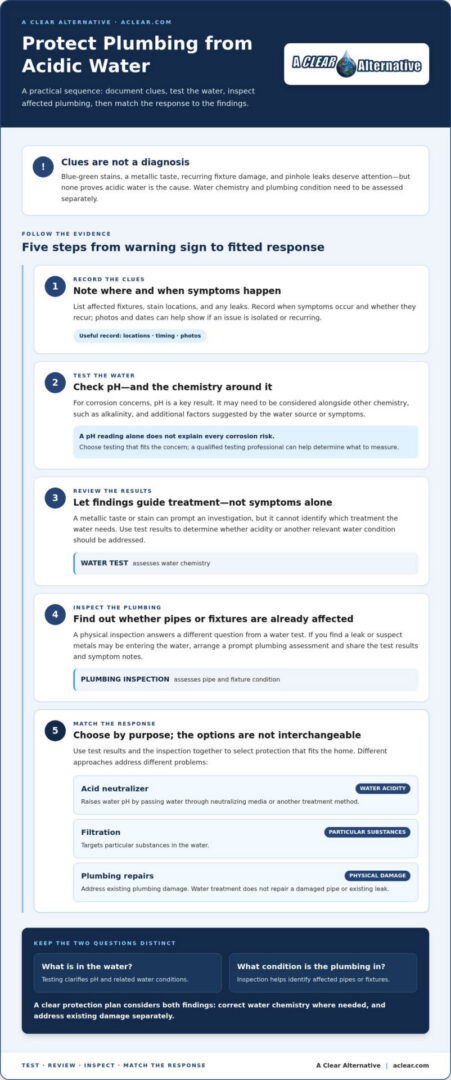
How to protect your plumbing from acidic water, step by step
A clear plan turns a concern into manageable next steps. Start with what you observe, find out what your water and plumbing need, then keep track of results after treatment.
What should you do first, next, and after treatment?
- Document what you notice. Record affected fixtures, visible stains, unusual tastes, leaks, and when each symptom occurs. Photos and dates can help show the pattern. Don’t treat these clues as proof of acidic water.
- Arrange suitable water testing. Choose testing that fits your water source and concern. Share any symptoms with the testing professional so the results can be interpreted in context.
- Review the findings and plumbing condition. Discuss what the test results indicate with a qualified water-treatment professional. If there are leaks, recurring damage, or concerns about metals in household water, arrange a plumbing assessment too. Water treatment and physical inspection answer different questions.
- Match protection to your home. Use the test results and plumbing details to select an appropriate treatment approach. An acid neutralizer may be suitable when the findings support neutralization, while existing pipe damage may require separate plumbing work.
- Follow up after installation. Follow the system’s maintenance guidance and retest when recommended by the treating professional. Keep test reports and service notes together so you can track changes over time.
How can South Jersey well owners make the plan practical?
Private wells can differ from home to home, so don’t assume that a well in Tabernacle, Shamong, or Medford Lakes has acidic water based on location alone. Base decisions on your own test results. Include well details and any plumbing symptoms when reviewing the findings. A water-treatment assessment can connect the results to a suitable system, while a plumbing inspection can identify damage that treatment won’t fix.
For homeowners in these South Jersey communities, A Clear Alternative provides comprehensive water testing, acid neutralizers, and water-treatment system installation. Explore water treatment support and use your test results to take a practical next step for your home.
Protect plumbing long term with testing, treatment, and local support
Long-term protection is a process, not a single piece of equipment. Start with water-test findings, understand the condition of your pipes and fixtures, address confirmed acidity with a suitable treatment plan, and keep track of results over time. This sequence helps you make decisions based on your home’s needs instead of relying on symptoms alone.
What should homeowners expect from a tailored water-treatment plan?
A practical recommendation should reflect your water analysis, household needs, and plumbing conditions. Test findings can help guide acid neutralizer selection and identify other water concerns that may need attention. Include any leaks or damaged pipes identified during an inspection. Treatment can address water chemistry, but it can’t repair existing plumbing damage.
Once a system is installed, follow its maintenance guidance and keep records of service and follow-up testing. Retesting when recommended by your water-treatment professional can help you understand whether water conditions have changed. Regular attention supports informed decisions, though no treatment can guarantee that plumbing will never need repair.
When should you seek professional help?
Get professional input if you’re seeing repeated leaks, visible corrosion, unusual changes in your water, or test results that raise concern. Share your test report, plumbing details, and notes about when symptoms occur. Water-treatment and plumbing assessments address separate but connected parts of the problem: the water and the physical condition of your system.
For South Jersey homeowners on private wells, don’t assume nearby homes have the same water chemistry. Your own results should guide the plan. A Clear Alternative is a family-owned business serving the Tri-State area since 1991, with comprehensive water testing, acid neutralizers, and water-treatment system installation. These services and products can support an approach tailored to your home.
If you’re concerned about acidic well water, take the next step with your test results and plumbing observations in hand. Get help protecting your plumbing.
Take the next step toward plumbing protection
The smartest way to protect your home is to act on evidence, not guesswork. Test the water, consider the condition of your pipes, and choose treatment that fits the results. If testing points to acidic water, an acid neutralizer may help address the water chemistry, while existing leaks or damage need separate attention.
That’s the practical approach to how to protect plumbing from acidic water: understand the water, address the cause, and keep up with recommended system maintenance and follow-up testing. A Clear Alternative provides water testing, acid neutralizers, and installation to support a plan tailored to your home. The family-owned business has served the Tri-State area since 1991.
If you’re concerned about acidic well water, start with a clear picture of your water and plumbing. Get help protecting your plumbing and take a confident next step toward caring for your home’s water and pipes.
Frequently Asked Questions
Can acidic water damage plumbing?
Yes, acidic water can contribute to corrosion in susceptible plumbing, depending on the water chemistry and pipe materials. Over time, corrosion may damage pipes, joints, or fixtures and contribute to leaks. Metals from plumbing components may also enter household water. These effects aren’t guaranteed, and signs like staining or a metallic taste don’t prove acidity is the cause. Water testing and, if damage is suspected, a plumbing inspection can help clarify what’s happening.
How do I know if my well water is acidic?
Have your well water tested, including its pH. A pH below 6.5 is generally considered acidic, but that result alone doesn’t describe overall water quality or fully explain corrosion potential. A qualified testing professional can help interpret pH alongside other relevant findings. If you live in Tabernacle, Shamong, or Medford Lakes, don’t assume your well has the same chemistry as a neighbor’s. Base decisions on your own test results.
What is the best way to protect pipes from acidic water?
The best plan depends on your water-test results and the condition of your plumbing. If testing indicates acidity, an acid neutralizer may be appropriate to address the water chemistry. A separate plumbing inspection can identify leaks or damage that treatment won’t fix. That’s the practical approach to how to protect plumbing from acidic water: understand the water, choose treatment to match the findings, and address existing pipe problems separately.
Will a water filter stop acidic water from corroding pipes?
Not necessarily. Many filters are designed to reduce specific substances, and a filter that targets one contaminant won’t automatically correct acidity. A water softener is also intended to address hardness, not serve as a substitute for acid neutralization. Start with test results to identify the concern, then select treatment for that purpose. If acidity is confirmed, have a qualified water-treatment professional interpret the findings and discuss suitable neutralization options.
Can an acid neutralizer repair pipes that are already corroded?
No. An acid neutralizer treats water acidity; it can’t mend a corroded pipe, seal a leak, or replace a damaged fixture. If you see recurring leaks or visible pipe damage, arrange a plumbing assessment and repair as needed. Treating confirmed water acidity may help address ongoing exposure, but it should be considered alongside the condition of your plumbing. Water treatment and pipe repair solve different parts of the problem.
Should I test my well water before installing an acid neutralizer?
Yes. Testing before selecting a neutralizer helps determine whether acidity is present and gives a professional information to use when recommending treatment. Other water findings may also affect the plan, so don’t choose a system based on stains, taste, or a single symptom alone. A Clear Alternative provides comprehensive water testing, acid neutralizers, and water-treatment system installation for homeowners in Tabernacle, Shamong, and Medford Lakes.
Does acidic water mean my drinking water is unsafe?
Not by itself. pH describes acidity, not whether water is safe in every respect. Acidic water can contribute to corrosion, and corrosion may allow metals such as copper or lead from plumbing components to enter household water. A pH result alone can’t confirm whether those metals are present or assess other concerns. If you’re worried about drinking-water safety, arrange appropriate testing and have the results interpreted by a qualified professional.