
Emergency Water During a Power Outage in Tabernacle: A Homeowner Checklist
What if the tap still runs after the power cuts, but you’re not sure the water is safe to drink? If your Tabernacle home relies on a private well, a power outage can stop the electric pump. Water that continues to flow does not necessarily mean your treatment system is working. Planning for emergency water for power outage Tabernacle households may need starts with securing safe drinking water.
It’s understandable to wonder how much water you have left, whether it’s safe, and what to do next. Federal and state preparedness guidance recommends storing at least a three-day supply, with one gallon per person per day for drinking and sanitation.
This checklist covers immediate steps, estimating household needs, and comparing backup options. It also explains when bulk potable water delivery may help bridge a well outage, while keeping water supply separate from restoring your pump or checking your well system.
Key Takeaways
- A well may stop supplying water when the power fails. Any remaining flow or pressure varies by system.
- Compare stored, bottled, and delivered water based on how soon you need it, what you’ll use it for, and how long the outage lasts.
- Use the emergency water for power outage Tabernacle checklist to track household needs for drinking, cooking, hygiene, sanitation, and pets.
- If your reserves may not last, A Clear Alternative’s emergency water hauling and bulk potable water delivery can help bridge a well outage.
Emergency Water for Tabernacle Power Outages: First Steps
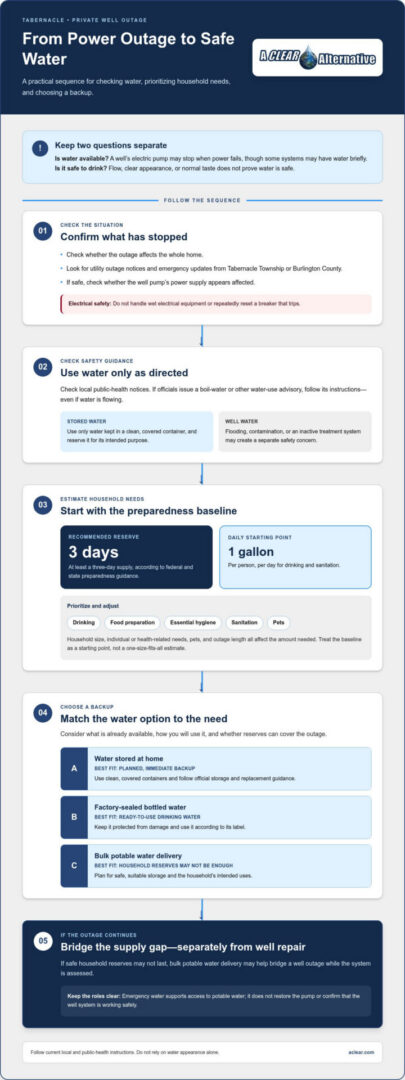
A sudden outage can disrupt more than lights. If your home uses a private well, its electric pump may stop when household power fails, leaving taps dry or reducing water access. Start with a few safety checks, then work out what your household needs.
Water availability and water safety are separate questions. A tap that still runs does not prove the water is safe to drink. Keep this distinction in mind as you decide what to use and whether you need emergency water for power outage Tabernacle households may rely on.
First checks when the lights and water stop
Check whether the outage affects the whole home, then look for local utility outage notices and emergency updates from Tabernacle Township or Burlington County. If the area is dry and it’s safe to do so, check whether the well pump’s power supply appears affected. Don’t handle wet electrical equipment or repeatedly reset a breaker that trips.
Use water you already stored only if it’s in a clean, covered container, and reserve it for its intended purpose. Check local public-health notices as well. If officials issue a boil-water or other water-use advisory, follow its instructions even if water is flowing. Boiling and filtration are among the water purification methods, but no single approach replaces official advice for your situation.
Which water needs should come first?
Make a quick inventory rather than treating every use as equally urgent. Set aside safe water for drinking and food preparation first. Then account for essential hygiene, sanitation, and pets. Include anyone in your household who may need additional support or have specific health-related needs.
Federal and state preparedness guidance recommends keeping at least a three-day supply, with one gallon per person per day for drinking and sanitation. Use that as a starting point, not a one-size-fits-all estimate. Household size, individual needs, pets, and outage length all affect how much water you’ll need. Check current official guidance and adjust your reserve to fit your household.
Once you know what water you can safely use and which needs remain, you can choose a backup more confidently. Don’t assume water left in pipes or a pressure tank will last, or that it’s safe to drink simply because it looks clear.
Why a Tabernacle Well May Stop Delivering Water During a Power Outage
A private well draws household water from an underground source, but getting that water to your tap often depends on electrical equipment. In many homes, a powered pump moves water from the well into the plumbing system. If the power fails, the pump may stop even if the well itself hasn’t changed.
A power outage can interrupt access to well water without changing the quality of the water at its source. That does not confirm that the water in your plumbing is safe to drink. Flooding, contamination, or an inactive treatment system may create a separate safety concern.
What happens to a private well when power fails?
Some systems may have water available briefly after the pump stops, while others may lose flow quickly. The result depends on the well setup and how much water is held under pressure in the system. Don’t count on a remaining supply until you know what your system can provide, and don’t open pump equipment or attempt electrical repairs yourself.
When electricity returns, that’s only one part of the picture. Restored power doesn’t automatically confirm that the pump, plumbing, or powered treatment equipment is operating correctly. Follow relevant public-health instructions, and arrange appropriate system checks if the well was affected by flooding or another local emergency.
When should you treat well water cautiously?
Take extra care if floodwater reached the well area or officials warn of possible contamination. Follow local and public-health directions about whether to avoid drinking the water, boil it, or take other steps. Clear water and normal taste aren’t proof that it’s safe. Don’t rely on appearance alone when deciding whether to drink it.
For ongoing concerns or follow-up after an emergency, use the local guide to well water testing in Tabernacle, Shamong, and Medford Lakes to learn about testing your supply. You can also review the CDC’s emergency water storage guidelines when planning household reserves for future disruptions.
If the outage continues and your household’s safe reserves are running low, emergency water hauling may help bridge the interruption while the well system is assessed. Learn about emergency water delivery as an option for maintaining access to potable water in Tabernacle, Shamong, and Medford Lakes.
Stored, Bottled, or Delivered: Comparing Emergency Water Options in Tabernacle
The right backup depends on what you already have, how you’ll use the water, and whether your reserves can cover the outage. Stored or factory-sealed bottled water is useful right away if it’s on hand. If a well outage lasts longer than your household supply, bulk potable water delivery may help fill the gap.
| Option | Best fit | What to consider |
|---|---|---|
| Water stored at home | Planned, immediate backup | Use clean, covered containers and follow official storage and replacement guidance. |
| Factory-sealed bottled water | Ready-to-use drinking water | Keep it protected from damage and use it according to its label. |
| Bulk potable water delivery | When household reserves may not be enough | Plan for safe, suitable storage and the household’s intended uses. |
When stored or bottled water is the simplest backup
Home storage lets you prepare before an outage, but the container and handling matter. Choose clean containers intended for water, keep them tightly covered, and follow current official instructions for safe storage and replacement. Ready.gov’s emergency water supply guidelines offer advice for building a household plan.
Factory-sealed bottled water is ready to use, while water stored at home depends on the cleanliness of the container and how it has been handled. Keep either option accessible. Reserve drinking-quality water for drinking and food preparation rather than using it for lower-priority tasks.
When emergency potable water delivery may help
If your stored supply is running low or you expect the outage to outlast your reserves, bulk potable water delivery may help maintain household access to water. A Clear Alternative provides emergency water hauling and bulk potable water delivery in Tabernacle, Shamong, and Medford Lakes. As a licensed potable water hauler, the company provides a local supply option during a well outage.
Delivery supports your water supply. It doesn’t restore electrical service, restart a pump, or repair well equipment. Follow any applicable public-health instructions, and plan how you’ll safely store and use the water at home. For emergency water for power outage Tabernacle households may need, match the backup to the likely duration of the outage and the water’s intended use.
Power-Outage Water Checklist for Tabernacle Homeowners
A simple plan makes it easier to respond without guessing. Keep this checklist somewhere accessible if your phone loses power or internet access, and tailor it to everyone in your household, including pets.
Prepare before an outage
- Build a safe-water reserve. Use current official guidance to estimate how much water your household needs. Ready.gov recommends at least one gallon per person per day for drinking and sanitation. Account for your household’s specific needs when planning.
- Store supplies thoughtfully. Keep water in clean, covered containers or retain factory-sealed bottled water. Store it where it’s protected and easy to access, and follow official guidance for handling and replacing supplies.
- Make a household water inventory. List needs for drinking, food preparation, essential hygiene, sanitation, and pets. Include household members who may need extra support so you can prioritize supplies if the outage lasts.
- Gather practical essentials. Keep clean containers, a manual can opener, and printed contact details for household members and relevant local services with your emergency supplies.
- Know your system, safely. Learn where the well equipment is located and which household members depend on the well. Don’t open electrical equipment or attempt repairs.
During and after the outage
- Check notices first. Follow local outage updates and any boil-water or other water-use instructions from public-health officials. Keep a written note of the instructions in case you need to refer to them later.
- Use reserves deliberately. Separate water for drinking and food preparation from water intended for other necessary uses. Record what you use and what remains, including supplies for pets.
- Reassess before you run low. If the outage continues and reserves may not cover your household’s needs, consider a safe backup before supplies are depleted.
- After power returns, check the result. Confirm that the household system appears to be operating normally, but don’t assume restored electricity proves the well or treatment equipment is safe. Continue following applicable advisories and safety guidance.
A checklist turns emergency water for power outage Tabernacle planning into clear steps: prepare supplies, track needs, follow official instructions, and reassess as conditions change. Explore emergency water support if your household may need potable water delivery during a well outage.
Getting Emergency Water Delivered in Tabernacle and Planning Beyond the Outage
If your stored supply is dwindling and the well still isn’t providing water, emergency potable water delivery may help bridge the disruption. It can be useful when your daily household needs exceed what your reserves can cover. Delivery addresses the supply gap, not the cause of the outage. It won’t restore electrical service, repair the well pump, or treat your well system.
A Clear Alternative provides emergency water hauling and bulk potable water delivery in Tabernacle, Shamong, and Medford Lakes. The company is a licensed potable water hauler and offers 24/7 emergency support for urgent water-supply disruptions. Sharing clear details about your property and water needs helps define a practical delivery plan.
What to consider when arranging emergency water
Be ready to describe your location, whether your home relies on a private well, what has happened to the water supply, and which household needs are most urgent. Note whether water is available at all and how much reserve remains. Include drinking, cooking, hygiene, sanitation, and pet-water needs in your estimate. These details help shape a practical delivery plan without assuming a specific quantity or arrival time.
Restore normal water access safely
When power returns, don’t assume the well and any treatment equipment are automatically operating safely. Avoid handling electrical equipment or attempting repairs without appropriate expertise. If flooding, visible damage, or possible contamination affected the well, follow applicable public-health instructions before using its water. Testing may be appropriate after an incident. A Clear Alternative’s well-water testing guide can help you understand that next step.
Keep emergency water delivery separate from well recovery. Delivered potable water can support household needs while electrical service and the well system are addressed, but it doesn’t repair or validate either one. Once conditions are safe, confirm normal system operation and follow any official water-use advisories before returning to regular use.
For emergency water for power outage Tabernacle households may need, a clear picture of your location, remaining supply, and household priorities can make planning more straightforward. Contact A Clear Alternative for emergency water support.
Plan Ahead for Reliable Water Access
A power outage can interrupt a private well even when the water source itself hasn’t changed. Keep safe water available, follow public-health advisories, and track household needs so you can act before reserves run low. For emergency water for power outage Tabernacle households, bulk potable water delivery can help bridge a supply gap while the well and electrical system are addressed separately.
A Clear Alternative is a family-owned water services business serving Tabernacle, Shamong, and Medford Lakes. As a licensed potable water hauler, it provides emergency water hauling and 24/7 emergency support. Delivery can support your household’s water needs, but it doesn’t restore power or repair well equipment.
If your reserves may not last, take the next step with local emergency water support. Contact A Clear Alternative for emergency water support. Preparation and a clear plan can help you manage an outage with greater confidence.
Frequently Asked Questions
What should I do first if my well stops working during a power outage?
First, check whether the outage has affected your well pump, but don’t open electrical equipment or attempt repairs. Use safe water already stored in clean containers, and check utility updates and local water-use advisories. If your reserves are running low, consider factory-sealed bottled water or emergency potable water delivery. This first-step plan applies to well-dependent households in Tabernacle, Shamong, and Medford Lakes.
Can I drink water from my well during a power outage?
A power outage alone doesn’t confirm that well water is either safe or unsafe to drink. The pump may stop supplying water, while flooding, equipment damage, or another contamination concern can create a separate safety issue. Follow local public-health instructions and any water advisories. If contamination is suspected, don’t rely on clear appearance or normal taste. Use a known safe water source instead.
How much emergency water should I store for my household?
The right reserve depends on household size, pets, individual or medical needs, how long an outage lasts, and whether you’re planning for drinking, cooking, or hygiene. Check current official emergency-preparedness guidance for recommended quantities, then tailor your plan to your household in Tabernacle, Shamong, or Medford Lakes. Store water in clean, suitable containers and keep it accessible if the power or internet goes out.
What happens if my well pump loses power?
Many household well pumps need electricity to move water from the well into the home, so a power failure can interrupt water delivery. Some systems may have water or pressure remaining temporarily, but the amount varies by setup and water use. Don’t assume the supply will continue, and don’t try electrical repairs yourself. When power returns, check that the system operates normally and follow relevant safety instructions.
Can emergency water delivery help during a Tabernacle power outage?
Yes. Emergency potable water delivery may help if a well outage interrupts your supply and household reserves aren’t enough. Delivery is a supply option, not well repair. It won’t restore electricity, fix a pump, or confirm that your well water is safe.
Should I boil well water after a power outage?
Don’t assume boiling is necessary just because the power went out. Follow any boil-water notice or other direction from the relevant public-health authority. If flooding, well damage, or contamination is possible, boiling may not address every kind of contaminant. Use a known safe water source while following local guidance for your situation in Tabernacle, Shamong, or Medford Lakes.
When can I use my well water again after power returns?
Restored power doesn’t by itself confirm that your well or its water is safe, especially if flooding, damage, or a public advisory was involved. Follow official instructions, confirm the system is operating normally, and seek appropriate testing or guidance if contamination is a concern. For local testing information, consult a well-water testing guide for Tabernacle, Shamong, and Medford Lakes before resuming normal use.