
How to Prevent Hard Water Stains on Glass Shower Doors
What if the key to clear shower glass isn’t scrubbing harder, but stopping mineral deposits before they settle? If cloudy white spots return soon after cleaning, you’re not alone. Learning how to prevent hard water stains starts with understanding why they form, then choosing a gentle routine that won’t risk scratching the glass or damaging nearby finishes.
You can remove light buildup without turning shower cleaning into a battle. Use a glass-safe method, dry the door after each shower, and avoid abrasive tools that can leave lasting marks. When deposits keep coming back, wiping alone may not address the underlying issue.
This guide covers how to clean mineral spots carefully, habits that help keep shower glass clear, and ways to reduce future deposits. You’ll also learn when recurring buildup may point to hard water and how testing can help you understand your household supply. For homeowners in Tabernacle, Shamong, and Medford Lakes, the right steps can make a clearer-looking shower door easier to maintain.
Key Takeaways
- Hard-water spots form when mineral-rich water evaporates, while soap film can add to the cloudy appearance.
- Use a careful cleaning sequence, follow the cleaner’s label, and test it on a small, inconspicuous area first.
- To learn how to prevent hard water stains, dry the glass after showers and reduce lingering moisture with good ventilation.
- If spots keep returning despite regular upkeep, water testing can help reveal whether hardness minerals may be contributing.
- Cleaning removes deposits from the glass; a water softener addresses hardness minerals in treated household water.
How to Prevent Hard Water Stains on Glass Shower Doors: What Causes Them?
Your shower glass can look spotless while it’s wet, then show pale spots or a cloudy haze as it dries. Those marks often come from minerals left behind by water, not from dirt that simply needs more scrubbing. Understanding the difference helps you choose a safer cleaning method and figure out how to prevent hard water stains from returning.
What makes hard-water stains appear on shower glass?
Hard-water stains are mineral deposits left on a surface after water evaporates; soap scum is a separate film formed when soap combines with minerals. Hard water commonly contains dissolved calcium and magnesium. As droplets dry on the door, these minerals remain on the glass and can build into visible spots or haze. The Hard water overview explains how calcium and magnesium contribute to limescale formation.
Mineral deposits aren’t the same as ordinary dirt, body oils, or soap residue. These can all collect on shower glass, and soap film may mix with mineral buildup to create a thicker, cloudier layer. Check the door’s edges, too. Water can linger around seals, corners, and hardware, leaving deposits in places that are easy to miss during a quick wipe.
Are hard-water stains permanent?
Not always. Mineral residue sitting on the glass may come away with a suitable cleaning method. But prolonged buildup can sometimes damage the glass surface, leaving etching that won’t lift like a surface deposit. Persistent cloudiness or a rough feel is a reason to stop and reassess, not a signal to scrub harder.
Appearance alone can’t confirm whether glass is etched or still has removable residue. Start cautiously: follow the cleaner’s label and test it on a small, inconspicuous area. Avoid aggressive scrubbing, which could scratch or further damage the glass. If the test area doesn’t improve, don’t assume extra pressure is the answer. Identifying what’s on the surface first can help protect the door and guide your next step.
Why Hard Water Stains Return: Deposits, Soap Film, and Glass Damage
A clean shower door can develop fresh spots after only a few uses. Each time water splashes onto the glass and evaporates, dissolved minerals can remain behind. Untreated hard water can leave mineral deposits on glass each time its droplets dry. Cleaning removes residue that’s already there, but it doesn’t change the water that reaches the door next time.
Soap can make the haze more noticeable. In hard water, soap may combine with minerals to form a sticky film. That layer can collect on glass alongside mineral deposits, body oils, and everyday grime. The result is often a cloudy surface that looks like one stubborn stain, even though several kinds of residue may be involved. Preventing new deposits and cleaning existing buildup are different jobs.
How to tell mineral deposits from soap scum
Mineral spots may appear where droplets dry, including across the glass and around edges or hardware where moisture lingers. Soap film often gathers in areas that receive regular contact with suds and body oils, and may feel slick or tacky. These clues can help, but mixed buildup makes visual identification uncertain. Start with a gentle, glass-safe cleaning method and a soft cloth. Don’t scrape the surface to test what the residue is.
When stains may have etched the glass
Surface deposits may lift with careful cleaning, but long-standing buildup can sometimes alter or damage glass. Etching is different from residue: it affects the surface itself, so repeated cleaning may not make the cloudy area disappear. You can’t confirm the cause by appearance alone, so test a suitable cleaner on a small, inconspicuous spot and follow its label.
Be patient, but don’t escalate to harsher scrubbing if a mark remains. Abrasive pads, scraping, or repeated forceful rubbing can scratch glass or make existing marks more noticeable. If the area stays cloudy after careful cleaning, the remaining haze may not be removable mineral film. When permanent damage occurs, homeowners often consider upgrading their shower enclosure, where specialized renovators like remarkableinstallations.com showcase modern wet-space solutions. A cautious approach protects the door and helps you decide whether prevention or further assessment is the next useful step.
If deposits return quickly across your home, understanding your water can help clarify the pattern. Household water testing can provide insight into water characteristics and help inform whether treatment may be appropriate.
How to Remove Hard Water Stains from Glass Shower Doors Safely
Clear the glass without risking scratches or damage to nearby finishes. A careful sequence matters more than extra pressure: loosen residue first, give a suitable cleaner time to work, then rinse and dry the surface thoroughly.
A gentle step-by-step method for mineral spots
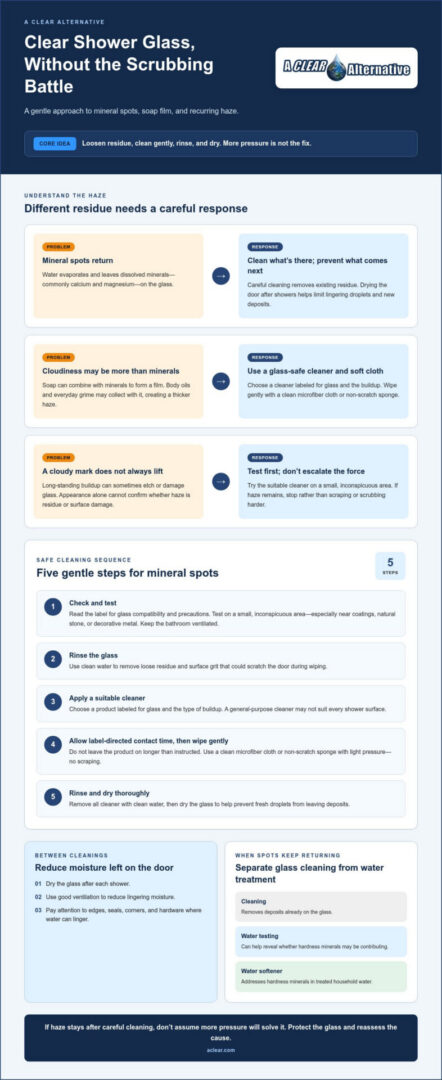
Before you begin, check the cleaner’s label for glass compatibility and precautions. Test it on a small, inconspicuous area, especially if the door has a coating or sits beside materials such as natural stone or decorative metal. Keep the bathroom ventilated while cleaning.
- Rinse the glass. Use clean water to wash away loose residue and surface grit that could scratch the door during wiping.
- Apply a suitable cleaner. Choose a product labeled for glass and the type of buildup you’re addressing. Don’t assume a general-purpose cleaner is appropriate for every shower surface.
- Allow contact time. Follow the label’s directions rather than letting the product sit longer than instructed.
- Wipe gently. Use a clean microfiber cloth or non-scratch sponge with light pressure. Work over the affected area without scraping.
- Rinse and dry. Remove all cleaner with clean water, then dry the glass with a soft cloth to limit fresh spots as droplets evaporate.
If haze remains, don’t immediately repeat the process with a stronger product or more force. Persistent marks may need a different approach, and aggressive scrubbing can scratch glass or worsen existing damage. For homeowners who prefer professional assistance with regular home upkeep, residential cleaning services like Super Clean 360 demonstrate how proper surface-safe techniques keep bathrooms pristine without risking wear on glass fixtures.
Which cleaners and tools should you avoid?
Skip abrasive powders, rough pads, steel wool, and sharp tools such as metal scrapers. They can scratch glass, damage coatings, or leave marks on nearby hardware and finishes. Avoid unverified homemade mixtures, too. A recipe that seems harmless on glass may be unsuitable for surrounding surfaces.
Acidic cleaners can harm natural stone, including some stone tiles or countertops, and may affect certain metal or decorative finishes. Protect nearby surfaces from splashes and follow product-label directions for application, contact time, rinsing, and any required protective equipment.
Safety reminder: Ventilate the bathroom, follow the cleaner label, and never mix cleaning products. In particular, don’t combine bleach with acidic cleaners or ammonia-based products, as dangerous fumes can result. A measured, label-led process is a safer way to clean and helps prevent damage to the shower around the glass.
How to Prevent Hard Water Stains Between Shower Cleanings
You don’t need to deep-clean the shower after every use. The most useful habit is removing water from the glass before it dries, so fewer droplets are left behind to form visible spots. Pair that quick step with regular light upkeep and good ventilation. These habits help keep the enclosure drier, but they don’t change the mineral content of your water.
A quick after-shower routine that limits water spots
Keep a squeegee and a clean, dry microfiber cloth within easy reach. After showering, use overlapping passes from the top of the glass down, guiding water toward the bottom edge. Then wipe droplets from door edges, corners, and nearby hardware, where moisture can linger. If the cloth becomes damp or visibly soiled, replace it with a clean one rather than spreading residue back across the glass.
Make the routine easy to repeat. Squeegee after each shower, then set aside a regular time to check the door edges and hardware. Use the bathroom’s exhaust fan, if available, and allow moist air to clear after bathing. Better airflow helps the enclosure dry, though it won’t remove minerals from the water itself. A small, consistent effort is usually easier than waiting until visible buildup calls for a longer cleaning.
Do water-repellent treatments prevent hard-water stains?
Some products made for glass leave a water-repellent surface that may help droplets run off or make them easier to wipe away. Results depend on the treatment and the shower door, so read the maker’s instructions and surface-compatibility guidance before applying it. Test as directed, and follow any preparation and reapplication instructions on the label.
A coating is an aid, not a substitute for care. It doesn’t remove hardness minerals from household water or guarantee that deposits won’t form. Keep up the wipe-down routine and clean the glass as needed. If spots keep appearing throughout your home, understanding your water may help identify the underlying issue.
For a clearer picture of your household water, explore comprehensive water testing. Test results can help you understand its characteristics and consider whether a source-level treatment, such as water softening, may be appropriate.
When Recurring Hard Water Stains Call for a Water Softener
If mineral deposits return quickly despite wiping the glass after showers, the cause may be the water itself. Cleaning clears buildup from a surface; it doesn’t change the minerals in water that will splash onto the glass again. A water softener addresses hardness minerals in treated household water, offering a source-level approach to recurring deposits. It isn’t a glass cleaner, and it can’t repair glass that has already been etched.
Cleaning habits versus treating hard water at the source
Keep drying the shower door as part of your routine. Even with water softening, drying droplets helps limit spots and keeps glass easier to maintain. A softener doesn’t guarantee stain-free glass, but it can reduce the hardness minerals that contribute to new deposits. For a broader look at treatment approaches, explore this whole-house water filtration guide.
How water testing can inform the next step
Before choosing treatment, learn more about your household water. Testing can help characterize its properties and inform whether water softening may be appropriate. Homes in Tabernacle, Shamong, and Medford Lakes shouldn’t be assumed to have identical water conditions; results from one home don’t necessarily describe another.
If your home relies on a well, a well water testing guide can help you understand what testing involves and why household-specific information matters. Pair that insight with your cleaning routine to make a more informed decision about preventing hard water stains beyond the shower glass.
A Clear Alternative provides comprehensive water testing and water-softening solutions for local households. Explore A Clear Alternative’s water-treatment services.
Keep Your Shower Glass Clear With a Routine That Works
Lasting results start with two simple steps: clean mineral deposits gently, then dry the glass after each shower so droplets don’t evaporate on the door. If spots keep returning despite consistent care, the source may be hard water. Knowing how to prevent hard water stains means recognizing when a daily habit is enough and when water testing can help guide a source-level solution.
A water softener can address hardness minerals in treated household water, while comprehensive water testing helps you understand your home’s water characteristics before choosing treatment. A Clear Alternative is a family-owned business providing water softening and testing options for local customers in and around Tabernacle, Shamong, and Medford Lakes.
Ready to take a practical next step for your home? Explore water-treatment options for your home with A Clear Alternative. Testing can help you understand your water, and a manageable glass-care routine can help keep the shower easier to maintain.
Frequently Asked Questions
How do you remove hard water stains from glass shower doors?
Rinse the glass to remove loose grit, then apply a cleaner labeled as suitable for shower glass and the residue you’re treating. Follow its directions for contact time, and test it on a small, inconspicuous area first. Wipe gently with a soft microfiber cloth or non-scratch sponge, rinse thoroughly, and dry the glass. Avoid abrasive pads and sharp tools, which can scratch the surface or damage nearby finishes.
What is the fastest way to prevent hard water spots on shower glass?
Squeegee the glass right after each shower, before droplets dry and leave mineral residue. Make overlapping passes from top to bottom, then dry edges and hardware where water can collect. Keep the squeegee nearby so the habit is easy to repeat. This quick routine helps limit spots, but it doesn’t change the mineral content of your water. Good ventilation can also help the enclosure dry sooner.
Does vinegar remove hard water stains from shower doors?
Vinegar may help with light mineral residue, but it isn’t right for every shower surface or glass treatment. Check the door and cleaner guidance, and test cautiously in a small, inconspicuous area. Acidic products can harm natural stone and some metal or decorative finishes nearby. Keep vinegar away from other cleaning products, rinse surfaces thoroughly, and don’t use it if the manufacturer’s care instructions advise against it.
Can hard water permanently damage or etch shower glass?
Long-standing deposits may be associated with changes to the glass surface, and etching can remain even after residue is cleaned away. Cloudiness alone can’t confirm whether glass is etched or still has buildup. Try a suitable cleaner cautiously on a small area, following its label. If the mark remains, avoid harder scrubbing, abrasive pads, and scraping. More force can scratch the glass without removing damage to the surface.
Will a water softener prevent hard water stains on glass?
A water softener treats hardness minerals in household water, which may reduce the minerals contributing to new deposits. It won’t clean existing marks, repair etched glass, or guarantee spotless shower doors, so drying the glass still matters. If deposits keep returning, water testing can help inform treatment decisions. For households in Tabernacle, Shamong, and Medford Lakes, testing is useful because water characteristics can vary from home to home.
How often should you squeegee glass shower doors?
Squeegee the door after each shower to remove droplets before they evaporate. Use overlapping strokes from top to bottom, then wipe lingering water from edges and hardware with a clean, dry microfiber cloth. If you miss a shower, simply resume the routine next time. Consistency helps reduce fresh spots and makes upkeep easier, though it won’t remove hardness minerals from the water or replace cleaning when residue builds up.
Are hard water stains and soap scum the same thing?
No. Hard water stains are mineral deposits left behind as water evaporates. Soap scum is a separate residue that forms when soap reacts with minerals in hard water. The two can collect together, along with body oils and dirt, creating a cloudy film that’s difficult to identify by sight alone. Start with a gentle, glass-safe cleaning method rather than scraping, and follow product directions to protect the door.