
How Often Should You Test Your Well Water? The 2026 Homeowner’s Guide
What if the clearest glass of water in your kitchen is hiding secrets that a simple DIY kit can’t catch? It’s a question that keeps many homeowners in Tabernacle, Shamong, and Medford Lakes up at night. You likely already know that your well is the heart of your home’s health, but the uncertainty of invisible contaminants can feel overwhelming. Whether you’re staring at blue-green stains on your porcelain or wondering about that sudden metallic taste, you shouldn’t have to guess about your family’s safety. This guide answers the vital question: how often should you test your well water to ensure a modern, healthy lifestyle with total peace of mind?
You likely agree that your home should be a sanctuary where quality is never in doubt. This 2026 guide provides a clear, actionable testing schedule tailored to the specific environmental risks found across New Jersey and Pennsylvania. You’ll discover the essential lab-certified tests you need, the environmental triggers that demand immediate action, and how to keep your filtration systems running perfectly. Let’s replace that worry with the confidence of a professionally managed home.
Key Takeaways
- Establish annual testing as your baseline health checkup since private wells aren’t government regulated.
- Discover how often should you test your well water based on environmental triggers like flooding or recent pump repairs.
- Learn to decode sensory warning signs, from rotten egg smells to blue-green stains, before they damage your home.
- Identify local risks specific to Tabernacle and Shamong, such as acidic groundwater and agricultural runoff.
- Understand the critical accuracy gap between basic DIY kits and state-certified laboratory analysis.
Standard Frequency: Why Annual Well Water Testing is the Baseline
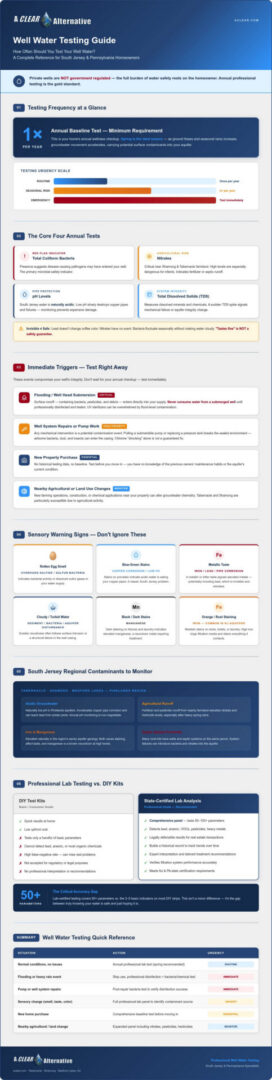
Living in the Pinelands or the surrounding South Jersey suburbs offers a unique connection to nature. This lifestyle comes with a specific responsibility that city dwellers never have to consider. While municipal water systems are strictly monitored by the EPA, your private well is unregulated. The burden of safety rests entirely on your shoulders. You might wonder how often should you test your well water to maintain a healthy home environment. The gold standard is a comprehensive professional test at least once every twelve months.
Think of this annual test as a wellness checkup for your home’s most vital resource. Spring is the ideal season for this ritual. As the ground thaws and seasonal rains increase, groundwater movement accelerates. This surge in runoff can shift the chemical balance of your aquifer or carry surface contaminants into your system. Consistent annual data points are also the only way to accurately track the performance of your whole house water filtration system. Without these benchmarks, it’s impossible to know if your equipment is still providing the protection you expect.
The Core Four: What Every Annual Test Includes
A professional annual screen focuses on the primary indicators of water health. These four parameters provide a snapshot of your current safety levels and long-term plumbing health:
- Total Coliform Bacteria: These are the “red flag” microbes. Their presence suggests that disease-causing pathogens may have found a way into your well.
- Nitrates: This is a critical check for homes near the agricultural fields of Shamong or Tabernacle. High nitrate levels are particularly dangerous for infants and can indicate runoff from fertilizers or septic systems.
- pH Levels: South Jersey water is naturally acidic. Monitoring your pH helps you prevent the slow, expensive destruction of your copper pipes and fixtures.
- Total Dissolved Solids (TDS): This measures the concentration of dissolved minerals and chemicals. A sudden spike in TDS often signals a mechanical failure or a change in the aquifer’s integrity.
Why ‘Tastes Fine’ Isn’t a Safety Guarantee
Relying on your senses to judge water quality is a dangerous gamble. Many of the most concerning contaminants are invisible, odorless, and tasteless. Lead doesn’t change the color of your coffee. Nitrates don’t have a scent. Bacteria can fluctuate seasonally without making the water look cloudy. Professional lab testing takes the guesswork out of the equation. It builds a historical record of your water’s health, giving you the confidence to enjoy your home without second-guessing every glass of water you pour.
Immediate Triggers: When to Test Your Well Water Right Away
While the annual schedule is your foundation, your environment doesn’t always follow a calendar. Sometimes, the answer to how often should you test your well water is “right now.” Certain events compromise the integrity of your well head or the aquifer itself, making immediate analysis a necessity rather than a lifestyle choice. Waiting for your next scheduled checkup during these moments puts your family’s health and your home’s plumbing at unnecessary risk.
Post-Flood Safety Protocols
Heavy rainfall or localized flooding in low-lying areas of Medford Lakes can submerge your well head. This allows surface runoff, which often contains bacteria, pesticides, and debris, to seep directly into your drinking supply. You should never consume water from a submerged well until it’s been professionally disinfected and tested. While UV water sterilizers are exceptional at neutralizing daily bacterial risks, they can be overwhelmed by the sheer volume of contaminants introduced during a flood. If your well is compromised, relying on professional emergency water hauling ensures your family has access to safe, potable water while your system recovers.
Testing After Well System Repairs
Any mechanical intervention is a potential contamination event. When a technician pulls a submersible pump or replaces a pressure tank, the sealed environment of your well is broken. Airborne bacteria, dust, and even small insects can enter the casing during the process. Standard procedure involves “shocking” the well with chlorine, but this isn’t a guaranteed fix. Testing is the only way to verify that the disinfection was successful. These repairs also frequently stir up heavy sediment or iron deposits. This grit can bypass or clog your existing filters, leading to a sudden drop in water pressure or clarity that requires professional attention.
Beyond your own property, keep an eye on the neighborhood. If your neighbors in Shamong or Tabernacle report a change in their water quality, pay attention. You likely share the same aquifer; their problem is often a preview of yours. Similarly, nearby construction or new industrial activity can shift the ground or introduce new chemicals into the groundwater. A proactive test during these local shifts protects your investment and ensures your filtration systems are still configured for the current reality of your water.
Warning Signs: Sensory Changes That Demand Professional Analysis
Your senses are your first line of defense against groundwater changes. While we established that an annual checkup is the baseline, a sudden shift in your water’s appearance, smell, or taste resets the clock. If you notice new stains on your fixtures or a lingering scent in the air, the answer to how often should you test your well water is immediately. These physical signs are direct manifestations of chemical imbalances that can damage your appliances and degrade your home’s aesthetic appeal. Don’t wait for your next scheduled appointment when your water is clearly trying to tell you something is wrong.
Sudden changes in clarity or the presence of visible sediment are equally concerning. If your water looks cloudy or you find grit at the bottom of a glass, it often indicates a mechanical failure in your well casing or a shift in the aquifer itself. This grit doesn’t just look unpleasant; it acts like sandpaper on your plumbing valves and filtration media. Professional analysis identifies whether you’re dealing with harmless silt or a more complex chemical precipitation that requires a specific technological solution.
Decoding Stains and Scale
The colors left behind in your sinks and tubs are like a diagnostic report for your water chemistry. Understanding these visual cues helps you make informed decisions about your home maintenance:
- Blue-green stains: This is a classic sign of low pH. The acidic water is literally dissolving your copper pipes, which eventually leads to pinhole leaks and expensive water damage.
- Orange or rust-colored stains: These are highly common across South Jersey. They indicate high iron levels that can ruin laundry and discolor hair.
- White, chalky buildup: This scale is the result of hard water. It chokes showerheads and reduces the efficiency of your water heater, leading to higher energy bills.
Addressing the ‘Rotten Egg’ Smell
A persistent “rotten egg” odor is one of the most common complaints for well owners. This smell is caused by hydrogen sulfide gas or sulfur bacteria. It’s vital to determine the source: sometimes the issue is localized to your water heater, but often it originates deep within the well. A professional test is the only way to distinguish between harmless minerals and conditions that could signal a deeper bacterial problem. Comprehensive testing leads to the right filtration choice, such as specialized iron and sulfur filtration systems. By matching the technology to your specific lab results, you ensure that the odor is eliminated at the source rather than just masked, restoring the fresh, clean environment your family deserves.
The South Jersey Checklist: Regional Contaminants to Monitor
South Jersey well owners face unique geological challenges that generic national guides simply don’t address. The sandy soil and distinctive ecosystem of the Pinelands influence your water’s chemistry in ways that require a localized strategy. When you’re determining how often should you test your well water, you must account for the specific mineral profile of the Tri-State aquifer. In areas like Tabernacle and Shamong, the environment is beautiful, but the groundwater requires consistent monitoring to protect both your health and your home’s infrastructure.
Beyond the natural geology, our region’s history plays a role in your current water quality. The agricultural heritage of Tabernacle and Shamong means that nitrate runoff from fertilizers remains a persistent concern. These contaminants move through sandy soil quickly, especially after heavy seasonal rains. This makes regional awareness just as important as your annual calendar. By understanding what lies beneath your property, you can tailor your testing to catch the issues most likely to affect your specific neighborhood.
Managing Low pH in Tabernacle and Shamong
Acidic water is the most common issue for homeowners in the Pinelands. The groundwater here is naturally low in pH, which makes it aggressive toward your plumbing. This “hungry” water slowly eats through copper pipes and brass fittings, eventually leading to thin walls and pinhole leaks. If you currently use acid neutralizer systems, your testing schedule needs to be more frequent. It’s best to check your pH levels every six months to ensure your neutralizer media hasn’t been depleted. Ignoring acidity is an expensive mistake; the cost of a simple test is a fraction of what you’ll spend replacing a whole-house plumbing system or a ruined water heater.
Iron and Manganese in Medford Lakes
Medford Lakes and surrounding communities often deal with “heavy” water packed with iron and manganese. These minerals don’t just cause those frustrating orange or black stains; they also take a heavy toll on your appliances. Dishwashers, washing machines, and coffee makers all suffer from internal scaling that shortens their lifespan. Because iron levels can shift as the water table rises and falls, seasonal testing helps you stay ahead of the curve. You can use these specific test results to calibrate your water softener or filtration settings, ensuring you aren’t wasting salt or electricity on an outdated configuration. Consistent data allows you to maintain that premium, soft-water feel without the guesswork.
Protect your home’s value and your family’s comfort by staying proactive with your regional water health. Schedule a comprehensive professional water test to get a clear picture of your well’s current performance.
Professional Lab Testing vs. DIY Kits: Making the Right Choice
You have identified the signs and established your schedule. Now, you face a critical choice: the perceived convenience of a store-bought kit or the precision of a professional analyst. When considering your family’s health, the difference between these two paths is massive. Professional well water testing provides a level of detail that a DIY strip simply can’t reach. State-certified laboratories follow strict EPA protocols, ensuring that detection limits are low enough to catch invisible threats before they impact your daily lifestyle.
A professional water analyst doesn’t just provide a list of numbers. They provide a roadmap for your home’s health. This expert analysis is the essential first step in ensuring your filtration equipment is actually doing its job. Without the precision of a lab, you’re essentially guessing about the chemistry of your most vital resource. In a modern home, guessing isn’t an option.
The Limits of At-Home Testing
At-home kits often provide a false sense of security. They usually monitor a few basic parameters but ignore complex heavy metals or the specific bacterial strains common in South Jersey. User error is another significant risk that many homeowners overlook. If you accidentally touch the inside of a sample vial or the rim of a collection bottle, you can trigger a false positive for bacteria that causes unnecessary panic. Additionally, mail-in kits are frequently compromised by temperature changes during shipping. A sample sitting in a hot delivery truck for two days won’t yield the same accuracy as a professionally handled specimen. These kits lack the calibration needed for the high-stakes environment of private well ownership.
The Value of Local Expertise
A lab report is just data until an expert adds context. Working with a local company like A Clear Alternative ensures your analysis covers regional risks specific to Tabernacle, Shamong, and Medford Lakes. We don’t just hand over a document; we help you interpret what those numbers mean for your copper pipes, your appliances, and your family’s wellbeing. If a test reveals a sudden, alarming spike in contaminants, our 24/7 emergency support acts as your immediate safety net. We help you transition from a concerning result to a customized treatment plan, whether that involves an acid neutralizer or a UV sterilizer.
Ultimately, the question of how often should you test your well water is tied to your desire for certainty. Choosing a professional partner for that test is what truly guarantees your peace of mind. Professional testing is a modern lifestyle choice that prioritizes quality, safety, and long-term confidence in your home’s water supply.
Secure Your Home’s Purest Potential
Your well water is more than just a utility; it’s the foundation of your family’s health and your home’s longevity. While an annual checkup serves as your essential baseline, staying attuned to environmental triggers and sensory changes ensures your protection never wavers. By moving beyond basic DIY kits and embracing professional, lab-certified analysis, you replace uncertainty with the confidence of a perfectly managed system. Understanding how often should you test your well water allows you to stay ahead of regional risks like acidity and iron before they impact your modern lifestyle.
Since 1991, our family-owned team has served the Tri-State area with a focus on quality and aesthetic excellence. We provide the local expertise you need to interpret complex results and the 24/7 emergency support you deserve if your well ever fails. You don’t have to navigate these technical waters alone. Schedule Your Professional Well Water Test with A Clear Alternative Today and take the first step toward a clearer, safer future. Your journey to pristine water is simple, supported, and completely within reach.
Frequently Asked Questions
Is it really necessary to test my well water every single year?
Annual testing is essential because groundwater is dynamic. Even if your water looks clear today, seasonal shifts in the Tabernacle area can introduce invisible contaminants like nitrates or bacteria. While you might wonder how often should you test your well water, the one year mark is the safe standard. It builds a historical record of your well’s health, allowing you to spot subtle trends in mineral levels before they become expensive problems for your plumbing.
How do I know if my well water has bacteria without a test?
You cannot reliably detect bacteria using your senses alone. Most harmful microorganisms don’t change the flavor, color, or scent of your drinking water. Some homeowners mistakenly wait for a rotten egg smell, but that usually indicates sulfur, not necessarily dangerous bacteria. The only way to confirm your family’s safety is through a state certified laboratory analysis. Professional testing eliminates the dangerous guesswork and provides the peace of mind that a visual check simply cannot offer.
Should I test my water more often if someone in my house is pregnant?
Increased testing frequency is highly recommended for households with pregnant women or infants. These groups are more vulnerable to specific contaminants like nitrates, which can interfere with oxygen levels in the blood. In agricultural areas like Shamong, runoff can cause these levels to spike unexpectedly. Testing every six months during this period ensures your water remains safe. It’s a proactive lifestyle choice that prioritizes the health of your most vulnerable family members.
Can I test my own well water with a kit from the hardware store?
DIY kits are available, but they lack the precision and scope of professional lab analysis. These retail strips often provide vague color coded results that are difficult to interpret accurately. They also miss many regional contaminants specific to South Jersey, such as heavy metals or low level acidity. For a modern home, relying on a basic kit is a gamble. Professional testing ensures your results follow strict EPA protocols and provides a clear path toward effective treatment solutions.
What should I do if my well water test comes back positive for coliform bacteria?
If your test is positive for coliform, stop using the water for drinking or cooking immediately. You’ll need to perform a shock chlorination of the well and inspect the well cap for physical damage. After the disinfection process, a follow up test is mandatory to confirm the bacteria are gone. If problems persist, a UV sterilizer provides a permanent, chemical free layer of protection. Our 24/7 emergency support is available to help you navigate these sudden quality failures.
Do I need to test my water if I already have a whole-house filtration system?
Testing is actually more important when you have a filtration system in place. You need to know how often should you test your well water to ensure your filters are still performing at peak efficiency. Over time, filter media can become saturated or mechanical components like acid neutralizers may need replenishment. Regular testing on both the raw and treated water confirms that your investment is still protecting your home’s aesthetic and health standards.
How much water do I need to collect for a professional well test?
A standard professional analysis typically requires two to three small, sterilized collection bottles provided by the lab. The exact volume depends on the specific contaminants you’re monitoring. For example, a bacteria test requires a different container than a lead or nitrate screen. It’s vital to follow the specific collection instructions provided by your analyst. This ensures the sample isn’t contaminated by your hands or the faucet itself, maintaining the integrity of your results.
Does the state of New Jersey require well water testing for homeowners?
New Jersey law only mandates well testing during a real estate transaction under the Private Well Testing Act. For existing homeowners in Medford Lakes or Tabernacle, annual testing is a personal responsibility rather than a legal requirement. However, relying solely on the state’s minimum requirements isn’t enough to guarantee long term safety. Taking ownership of your water quality is a vital part of maintaining your property value and ensuring a healthy environment for your family.