
Common Well Water Problems and Solutions: The 2026 Homeowner’s Guide
Imagine hosting a dinner party only to have your guests met with a sudden, embarrassing rotten egg odor the moment you turn on the tap. It’s a frustrating reality for many homeowners. Roughly 85% of the country deals with hard water issues that ruin high-end appliances and leave stubborn orange stains in showers. Learning about common well water problems and solutions shouldn’t feel like an endless chore. It’s about upgrading your lifestyle. It’s about ensuring your home remains the clean, safe sanctuary it was meant to be.
You likely already know the headache of scrubbing scale off fixtures or worrying if your water is truly safe for drinking. This 2026 guide helps you identify the hidden contaminants in your well. Discover the professional filtration solutions that restore your water quality and your family’s health. As a family-owned expert in the field, we’ll preview the latest in smart technology, from acid neutralizers to reverse osmosis systems. Gain the confidence to enjoy clear, odorless water while lowering your long-term maintenance costs. It’s time to reclaim your peace of mind.
Key Takeaways
- Learn to decode visual and olfactory warning signs, like “rotten egg” odors or stubborn orange stains, to pinpoint issues before they damage your appliances.
- Discover the most common well water problems and solutions specifically affecting Tri-State homes, including the “silent destruction” caused by low pH levels.
- Understand why professional, state-certified laboratory testing is the only way to move beyond DIY guesswork and ensure your drinking water is truly safe.
- Explore how modern filtration technology, such as acid neutralizers and water softeners, can restore your water’s balance and improve your skin and hair health.
- Find out how local, family-owned expertise and 24/7 emergency support provide a level of security and reliability that big-box brands simply can’t match.
Identifying the Warning Signs: What Is Your Well Water Telling You?
Your home should feel like a sanctuary. When you understand what a water well is and how it functions, you realize it’s a direct window into the local environment. Sometimes, that environment sends signals through your taps. Recognizing these warning signs is the first step in mastering common well water problems and solutions. Clear water isn’t always clean water. While some issues are purely aesthetic, others hide silent threats like nitrates or bacteria that you can’t see, smell, or taste. Paying attention to these signals protects your family and your home’s value.
Sensory Issues: Smell and Taste
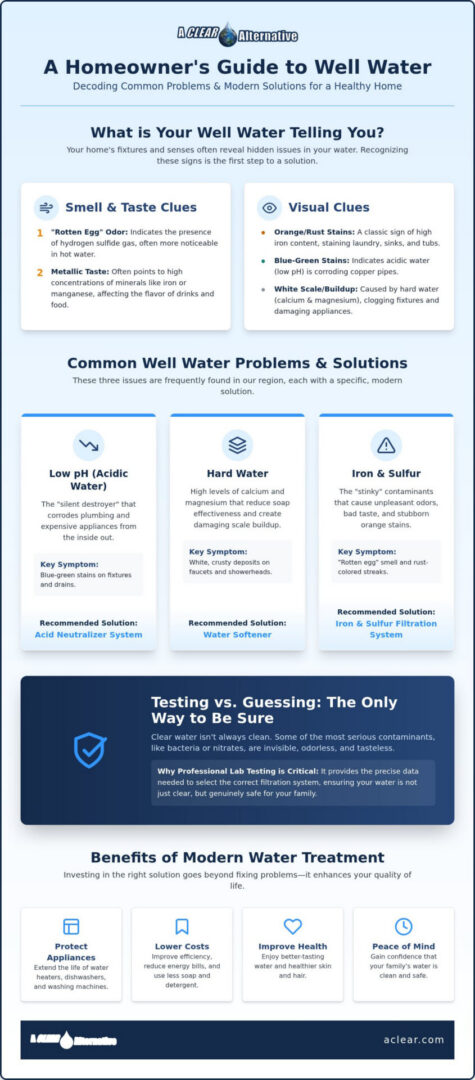
Sulfur is a frequent culprit. If you notice a “rotten egg” odor, you’re likely dealing with hydrogen sulfide gas. This smell often intensifies in hot water because the heat forces the gas out of solution. It’s unpleasant, but it’s usually not a direct health risk. Taste provides other clues. A sharp metallic tang often points to high iron or manganese levels. These minerals affect the flavor of your coffee and your cooking. While mineral-rich water might seem harmless, it’s vital to distinguish between these aesthetic nuisances and dangerous contaminants like coliform bacteria that require immediate professional attention. Identifying these sensory changes helps you choose the right path for common well water problems and solutions.
Visual Clues in Your Sinks and Tubs
Your fixtures tell a story. If you see rust-colored streaks on your laundry or orange staining in the tub, iron is the likely cause. These stains are stubborn. They ruin the aesthetic of a modern bathroom and are difficult to remove with standard cleaners. Alternatively, blue-green stains at the drain indicate copper pipe corrosion. This happens because the water’s pH is too low. Acidic water literally eats away at your home’s internal plumbing over time, leading to pinhole leaks and expensive repairs.
Then there’s the hidden cost of hard water. About 85% of homes face magnesium and calcium buildup. You’ll see it as white, crusty scale on showerheads. Inside your water heater and dishwasher, this scale acts as an insulator. It forces appliances to work harder, which leads to higher energy bills and premature equipment failure. Protecting your home’s infrastructure starts with identifying these symptoms early. Don’t wait for a leak to tell you there’s a problem. Look for these visual markers to stay ahead of potential damage.
The 4 Most Common Well Water Problems in the Tri-State Area
Living in the Tri-State area means enjoying beautiful, diverse landscapes. Those same geological features also shape the water flowing beneath your property. Finding the right common well water problems and solutions starts with local knowledge. The EPA identifies several common well water contaminants that frequently impact private wells, and in our region, four specific issues stand out. These aren’t just technical glitches. They affect your home’s infrastructure, your skin, and your overall quality of life.
Low pH and the South Jersey Pine Barrens
South Jersey homeowners face a unique challenge. The sandy soil of the Pine Barrens lacks the natural minerals needed to buffer acidity, leading to naturally low pH water. It’s a silent destroyer. You won’t smell or taste the acidity at first. Instead, it slowly corrodes your copper pipes and eats through the internal lining of expensive water heaters. Installing acid neutralizer systems is often the most critical upgrade for residents in Tabernacle or Shamong. It balances the water and protects your home’s long-term value.
Iron and Sulfur: The ‘Stinky’ Contaminants
Few things are as frustrating as the “rotten egg” smell of sulfur. This odor often fluctuates with seasonal rainfall, as changing water tables move organic matter through the aquifer. It’s important to distinguish between dissolved iron, which causes orange streaks, and iron bacteria. Iron bacteria create a thick, rusty sludge in toilet tanks that standard cleaners can’t touch. Professional sulfur filtration does more than just clear the water. It restores your home’s air quality. You can finally host guests without worrying about embarrassing smells the moment a faucet turns on.
Hard water is another frequent guest in NJ and PA wells. High levels of dissolved calcium and magnesium interfere with your soap’s ability to lather. This leaves a sticky film on your skin and makes hair feel brittle and dull. It’s an aesthetic issue that impacts your daily self-care routine. Beyond the bathroom, this hardness creates scale buildup that chokes your dishwasher and laundry machine, leading to higher energy bills and frequent repairs.
Understanding your specific water profile is the key to a healthy home. A comprehensive water testing session can reveal exactly what’s happening beneath your property and which solution fits your lifestyle. Don’t let your well dictate your comfort level.
Testing vs. Guessing: Why Professional Water Analysis Matters
Guessing about your family’s health is never a trend we support. While store-bought “color match” DIY kits offer a quick look, they often lack the precision needed to master common well water problems and solutions. These strips might show you have iron, but they won’t tell you the exact concentration required to calibrate a filtration system. A professional water analysis goes deeper. It identifies invisible threats like nitrates or specific VOCs that basic home kits simply miss. Relying on vague results leads to purchasing the wrong equipment, which wastes your time and money.
Accuracy is everything when it comes to your peace of mind. State-certified lab tests provide a definitive baseline that DIY kits can’t match. We recommend testing your well annually for bacteria and nitrates. You should also request a test if you notice a sudden change in taste, odor, or clarity. Understanding results like “Total Coliform” and “E. coli” is vital. Coliform bacteria are an indicator that your well might be vulnerable to contamination, while E. coli presence signals a direct health risk that requires immediate action.
What to Expect from a Professional Water Test
The process is simple and non-invasive. A technician collects a sterile sample directly from your tap, ensuring no outside contaminants interfere with the results. This sample is then analyzed for key parameters including pH levels, hardness, iron, manganese, and nitrates. For a deeper look at the process, our well water testing guide explains exactly how these results shape your home’s water strategy. It’s the first step toward a customized solution that fits your specific lifestyle.
Interpreting Your Results
Reading a lab report can feel overwhelming, but it helps to divide findings into two categories. Primary standards cover health-related contaminants like lead or bacteria. Secondary standards focus on aesthetic issues like staining, taste, and odor. A “pass” on a bacteria test is great for safety, but it doesn’t mean your water is optimal for your skin or your plumbing. Precise mineral ratios are the foundation of accurate system sizing, ensuring your equipment performs efficiently without wasting media or water. This data-driven approach allows us to design a system that delivers the high-quality experience you deserve.
Modern Solutions: Restoring Your Water Quality
Restoring your home’s water isn’t just about plumbing. It’s about how you feel every morning. When you address common well water problems and solutions, you’re investing in your long-term comfort. Modern technology allows us to target specific issues with surgical precision. From balancing the acidic soil of the Pine Barrens to removing that persistent sulfur smell, the right system transforms your daily routine into a premium experience. You don’t have to settle for “good enough” when professional-grade purity is available.
Acid neutralizers are the first line of defense for many local homes. They raise the pH level of your water, effectively stopping the corrosion that destroys your fixtures and copper pipes. Water softeners take it a step further by eliminating the minerals that cause hard scale. This doesn’t just save your appliances. It makes your hair softer and your skin feel rejuvenated after every shower. For those dealing with discoloration, advanced iron and sulfur filtration systems use specialized catalytic media to provide clear, odorless water throughout the entire house without the need for harsh chemicals.
Whole House vs. Point-of-Use Filtration
Deciding where to treat your water is a strategic choice. Whole house water filtration systems protect every faucet, showerhead, and appliance in your home. This is essential for preventing pipe damage and ensuring your laundry stays bright and fresh. In contrast, Reverse Osmosis (RO) systems are the gold standard for pure drinking water. Usually installed under the kitchen sink, RO provides “bottled water” quality directly from a dedicated tap. It removes the tiny impurities that larger systems might miss, giving you total confidence in every glass you pour for your family.
UV Sterilizers: The Chemical-Free Bacteria Fix
Safety shouldn’t require complex chemical injections. UV sterilizers offer a sophisticated, chemical-free way to handle bacteria and viruses. By using specific wavelengths of ultraviolet light to deactivate microorganisms, these systems ensure your water is biologically safe without changing its taste or smell. It’s a preferred choice for well owners who want to avoid the maintenance and lingering odor of chlorination. To keep this protection consistent, you only need to replace the UV lamp once a year. It’s a simple, set-and-forget solution for modern living that prioritizes health and convenience.
Ready to upgrade your home’s water and protect your investment? Explore our range of comprehensive water treatment options and see how easy it is to achieve perfect water quality today.
The A Clear Alternative Difference: Local Expertise Since 1991
Trust is the foundation of every healthy home. When you face common well water problems and solutions, you aren’t just looking for a filter; you’re looking for a partner. As a family-owned and operated business since 1991, we understand that your water quality is personal. National big-box brands often offer generic, one-size-fits-all hardware that fails to address the unique chemistry of our region. We take a different approach. We combine premium technology with a deep, multi-generational understanding of Tri-State geology to ensure your water is always crisp, clear, and safe.
Our commitment to your family goes beyond the initial installation. We provide 24/7 emergency support because water crises don’t follow a 9-to-5 schedule. Whether it’s a sudden system failure or a need for emergency water hauling, we’re ready to respond. We are also a licensed potable water hauler, meaning we can deliver bulk water for pools or emergency supplies when your well can’t keep up. This level of comprehensive care is why families in NJ, PA, NY, and DE have relied on us for over three decades.
Customized Treatment for Local Water
Designing an effective system requires local insight. The sandy, acidic soil of the Pine Barrens creates different challenges than the limestone-heavy areas of Pennsylvania. We don’t guess; we engineer. By choosing expert water treatment companies near me, you ensure your system is calibrated for your specific zip code. Professional installation is the only way to guarantee long-term reliability and peak performance. It’s the difference between a temporary fix and a lifetime of high-quality water.
Ongoing Support and Maintenance
We believe your water system should enhance your life, not add to your chores. You can stop the heavy lifting with our convenient salt delivery service. We bring the supplies directly to your unit, so you never have to worry about running out or straining your back. Regular annual check-ups keep your filtration media fresh and your sensors accurate. If a problem ever arises, our 24/7 emergency line is your direct link to a local expert who understands your home’s setup. We handle the technical details so you can focus on enjoying the renewed confidence that comes with perfect water.
Your journey to better water starts with a simple conversation. Schedule your professional consultation today and discover how we can transform your home’s water quality and your peace of mind.
Reclaim Your Home’s Purity and Peace of Mind
Your well is more than just a utility; it’s the lifeblood of your home. We’ve explored how identifying sensory warning signs and choosing state-certified testing are the first steps toward a better lifestyle. Understanding common well water problems and solutions empowers you to protect your appliances and your family’s health. From balancing the unique acidity of South Jersey soil to enjoying the “bottled water” quality of a reverse osmosis system, the path to perfect water is clear and accessible.
Since 1991, our family-owned team has helped homeowners across the Tri-State area achieve lasting water quality. We stand by you with 24/7 emergency service and the expertise of a licensed potable water hauler. You don’t have to settle for stains or odors when modern technology offers such seamless, discrete protection. Take the final step toward a home that feels as clean as it looks. Schedule Your Professional Water Analysis with A Clear Alternative Today and start enjoying the water you deserve. Your journey to renewed confidence and a healthier home starts now.
Frequently Asked Questions
How do I know if my well water is safe to drink?
Professional water analysis is the only way to confirm safety. While clarity and taste are indicators, invisible threats like bacteria or nitrates require lab verification. We recommend annual testing for bacteria and nitrates to ensure your home’s water meets safety standards. This is especially important in local areas like Tabernacle where geology affects water quality. Relying on lab results gives you total confidence that your water is safe for drinking and bathing.
What is the most common problem with well water?
Hardness and acidity are the most frequent issues we see in the Tri-State region. High mineral content affects 85% of homes, leading to scale buildup. In South Jersey, low pH is a major concern as it corrodes plumbing. Addressing these common well water problems and solutions early prevents expensive damage to your appliances and pipes. It’s about upgrading your home’s infrastructure for long-term reliability and better skin health.
How much does it cost to fix smelly well water?
The investment depends on the specific cause of the odor, such as sulfur gas or iron bacteria. A professional analysis determines if you need a specialized iron and sulfur filtration system or a carbon filter. While we don’t provide flat pricing without a test, the right solution eliminates the need for repetitive plumbing repairs. It restores your home’s air quality and ensures you can host guests without any embarrassing smells.
Can I fix acidic well water myself?
DIY fixes for acidic water are often temporary and can lead to unbalanced chemistry. Professional installation of an acid neutralizer is the most reliable way to protect your home’s infrastructure. These systems require precise calibration based on your specific pH levels. In Shamong and Medford Lakes, professional setup ensures your copper pipes don’t suffer from pinhole leaks over time. It’s a modern lifestyle decision that prioritizes your home’s long-term value.
Why does my well water suddenly smell like rotten eggs?
This smell usually indicates the presence of hydrogen sulfide gas. It often occurs when the water table shifts or after heavy seasonal rainfall. The odor is typically more noticeable in hot water. A professional filtration system targets this gas, restoring your home’s air quality and making your morning shower a refreshing, odorless experience. You’ll feel a sense of freedom once your water is finally clear of these persistent organic odors.
How often should a well water filtration system be serviced?
Most systems require an annual professional check-up to maintain peak performance. During these visits, we check mineral levels, replace filters, and ensure sensors are accurate. For water softeners, regular salt delivery keeps the system running without any heavy lifting on your part. Consistent maintenance ensures your investment continues to provide clear, safe water for years. It’s a simple way to maintain the high-quality life you’ve built in your home.
Is hard water dangerous to my health?
Hard water isn’t typically a health hazard, but it significantly impacts your quality of life. It makes skin feel dry and hair look brittle by leaving a mineral film behind. Beyond aesthetics, it’s a silent destroyer of appliances. Scale buildup chokes your water heater and dishwasher. This leads to higher energy bills and premature failure of your equipment. Softening your water is an investment in your self-care and your home’s efficiency.
What happens if I don’t treat my high-iron well water?
Untreated iron leads to permanent staining and plumbing clogs. You’ll see stubborn orange streaks in sinks and tubs that ruin the aesthetic of your bathroom. Over time, iron bacteria can create a thick sludge that restricts water flow and damages your well pump. Professional filtration stops this damage, keeping your fixtures pristine and your plumbing system efficient. It’s a proactive step that ensures your home remains a clean, beautiful sanctuary for your family.