
Whole House Carbon Water Filter: 2026 South Jersey Guide
Your morning shower shouldn’t feel like a dip in a public swimming pool. For many South Jersey families in towns like Tabernacle and Shamong, that sharp scent of chlorine is a daily reality that leaves skin itchy and hair brittle. We agree that your home should be a sanctuary where a whole house carbon water filter provides the crisp, clean experience you deserve. You should be able to trust every drop that comes out of your faucet without worrying about what’s lingering in the local groundwater.
In this 2026 guide, you’ll discover how this filtration technology transforms your household experience by stripping away harsh odors and neutralizing the “forever chemicals” (PFAS) that triggered strict new NJDEP remediation standards this June. We promise to show you how modern systems restore your peace of mind while protecting your plumbing and appliances from chemical wear. We’ll preview the latest filtration trends, explain the difference between GAC and catalytic carbon, and map out the path to achieving great-tasting water from every tap in your home.
Key Takeaways
- Learn how a whole house carbon water filter acts as a comprehensive barrier, removing the “swimming pool” scent of chlorine from every tap in your home simultaneously.
- Understand the critical difference between GAC and Catalytic Carbon systems to ensure you are effectively neutralizing modern contaminants like PFAS.
- Compare the longevity of self-cleaning backwashing tanks against the simplicity of cartridge systems to find the perfect fit for your household’s flow rate.
- Discover why the unique geography of South Jersey and the Pine Barrens requires a specialized filtration approach to handle high acidity and mineral interference.
- See why professional installation and 24/7 support are the keys to maintaining crystal-clear water and protecting your home appliances for years to come.
What is a Whole House Carbon Water Filter and Why Does Your Home Need One?
Imagine your home as a sanctuary where every tap provides pristine water. A whole house carbon water filter is a centralized system installed at the point where water enters your property. Unlike small filters that only treat the kitchen sink, this system acts as a comprehensive shield for your entire residence. It ensures that the water you use for cooking, bathing, and even laundry is free from harsh chemical additives. Investing in a high-quality whole house carbon water filter is about more than just plumbing; it’s an investment in your family’s daily comfort and long-term health. You deserve that clarity.
Most municipal supplies in South Jersey use chlorine to kill bacteria. While necessary for transport, it often leaves your tap water smelling like a public pool. This chemical oxidation doesn’t just affect taste; it’s tough on your skin, hair, and clothing fibers. It can lead to dry, itchy skin and faded fabrics over time. Switching to a whole-house system means you can finally ditch the heavy cases of bottled water and embrace a true “tap-to-table” lifestyle. It’s a total transformation of your daily routine.
The Difference Between Carbon and Standard Filtration
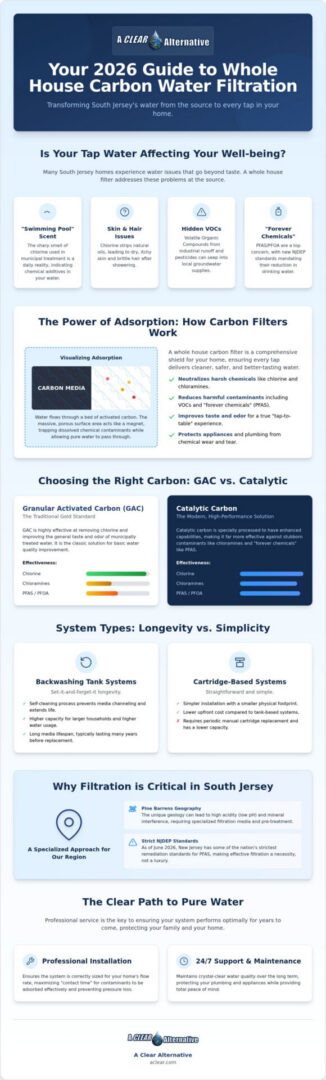
Standard sediment filters work like a sieve, catching dirt and rust. Carbon is different. Adsorption is the primary mechanism of carbon filtration, where contaminants stick to the surface of the carbon media like a magnet. To understand the deep science of how carbon filtering works, you have to look at the massive surface area created by “activating” the carbon media. This process creates millions of microscopic pores that trap chemicals that a standard mesh filter would miss. It’s a significant upgrade over simple fridge filters or pitchers that lack the contact time needed for true purification.
Common Contaminants Removed by Carbon
Carbon systems are designed to target specific issues that affect the aesthetics and safety of your water. They’re particularly effective against:
- Chlorine and Chloramines: These are the heavy hitters responsible for that chemical odor and dry skin after a shower.
- VOCs (Volatile Organic Compounds): These include industrial runoff and pesticides that can seep into local groundwater in agricultural areas.
- PFAS/PFOA: With the June 2026 NJDEP remediation standards now in full effect, addressing these “forever chemicals” is a top priority for New Jersey homeowners. Carbon is one of the few technologies proven to reduce these persistent substances effectively.
By removing these elements at the source, you protect your home’s infrastructure. Chemical-free water is gentler on your water heater, dishwasher, and washing machine, preventing the premature wear caused by harsh oxidizers. It’s a smart, modern choice for any South Jersey household.
How Carbon Filtration Works: GAC vs. Catalytic Carbon Systems
Understanding the science behind your water quality shouldn’t feel like a chemistry lecture. At its core, a whole house carbon water filter relies on a process called activation to create an incredibly porous surface. Imagine a single gram of activated carbon having the surface area of several football fields. This massive network of microscopic tunnels is what allows the media to capture contaminants before they reach your shower or kitchen tap. It’s a highly efficient way to restore the natural purity of your water without using harsh chemicals.
Understanding the Adsorption Process
Adsorption is the magic word here. Think of the carbon media as a high-tech chemical sponge. While a standard filter might strain out sand or dirt, the carbon acts as a magnet for dissolved chemicals. The effectiveness of this process depends heavily on ‘contact time’ or Empty Bed Contact Time (EBCT). If water flows through the tank too fast, the chemicals don’t have enough time to ‘stick’ to the carbon. We ensure your system has the right volume of media to handle your home’s peak flow without sacrificing purity. High-quality media lasts longer and performs better under high flow, while water temperature also plays a role; cooler water typically allows for more efficient adsorption of organic compounds.
Not all carbon is created equal. Granular Activated Carbon (GAC) is the traditional gold standard for removing chlorine and basic odors. It works beautifully for most municipal water. However, many modern treatment plants now use chloramines, which are a mix of chlorine and ammonia. These are much harder to remove. Catalytic carbon is specifically engineered to break down chloramine bonds. It’s also the superior choice if you’re dealing with that frustrating ‘rotten egg’ smell caused by hydrogen sulfide. For those concerned about the latest environmental data, the EPA highlights the effectiveness of removing PFAS with activated carbon, making it a critical line of defense for South Jersey homes.
Choosing the Right Media for Your Water Profile
Choosing the right media depends on your specific water profile. If you’re on a private well in Tabernacle or Shamong, you might need to combine your whole house carbon water filter with specialized iron and sulfur filtration systems to handle the unique mineral content of the Pine Barrens. This layered approach ensures your water isn’t just safe, but aesthetically perfect. If you’re unsure which media fits your needs, our team can help you analyze your local water quality to design a system that delivers the crystal-clear results you’ve been looking for.
Selecting the Best System: Backwashing vs. Cartridge Filters
Choosing the right hardware is the next step in reclaiming your water quality. You’ll generally choose between two primary designs: backwashing tanks and cartridge based units. A backwashing whole house carbon water filter uses a large mineral tank and an automatic control valve. Every few days, the system reverses the water flow to rinse away trapped sediment and “fluff” the carbon media. This self cleaning cycle prevents the carbon from packing down, which maintains high flow rates and extends the media’s life for up to five years. It’s the ultimate premium choice for busy households.
Cartridge systems offer a more compact, budget friendly entry point. These use replaceable filters housed in large plastic casings. While they don’t self clean, they are excellent for smaller homes or as a targeted point of entry solution. The trade off is maintenance. You’ll need to swap these cartridges every three to six months, depending on your usage. If you prefer a lower upfront cost and don’t mind a bit of DIY upkeep, this is a solid path to odor free water.
Sizing Your System for Gallons Per Minute (GPM)
Don’t let the fear of low water pressure stop you. The “pressure drop” people complain about usually happens because their system was undersized. We calculate your home’s peak demand by looking at your total number of showers, high efficiency appliances, and even irrigation needs. In Medford Lakes, where 2026 home designs often feature luxury multi head showers, a high GPM rating is essential. Sizing your whole house carbon water filter correctly ensures that your morning routine remains invigorating while every drop is purified. It’s about matching the technology to your specific lifestyle.
Operating Costs and Longevity
Longevity is where backwashing systems really shine. The carbon media inside typically lasts three to five years before it needs a professional refresh. To get the most out of your investment, we often recommend pre filtration. This simple step catches heavy sediment before it can “blind” or clog the microscopic pores of your carbon. For many South Jersey residents on well water, the best approach is a multi stage solution. Integrating your carbon filter with an acid neutralizer provides a comprehensive defense against both chemical odors and the corrosive low pH levels common in our local geography. It’s about building a system that works for your specific home and provides lasting peace of mind.
Why South Jersey Homeowners Prioritize Carbon Filtration in 2026
Living in South Jersey means your water has a unique personality. The sandy soil and deep aquifers of the Pine Barrens create a specific mineral profile that national filter brands often overlook. In towns like Tabernacle and Shamong, homeowners frequently deal with high acidity and trace organic compounds that can affect both taste and health. A whole house carbon water filter provides the specialized defense needed for our regional conditions, acting as a final polisher for every drop that enters your home.
New Jersey’s environmental standards are among the toughest in the country. Following the June 2026 NJDEP remediation updates, there’s a heightened focus on removing PFAS from local supplies. While municipal plants work hard to meet legal limits, many families prefer the extra security of an at-home barrier. Additionally, those on city lines often experience “chlorine spikes” during seasonal maintenance. A carbon system ensures your water never smells like a swimming pool, even during heavy municipal flushing periods. It’s about taking control of your home’s environment.
Protecting Your Home from Local Contaminants
If you’re one of the many residents using a private well, you’ve likely encountered the frustrating “rotten egg” smell. This is often caused by hydrogen sulfide gas or specific types of bacteria. Carbon filtration is exceptionally effective at neutralizing these odors, transforming swampy water into a crisp, refreshing resource. South Jersey groundwater often contains trace organic compounds that carbon effectively neutralizes, providing a level of purity that standard sediment filters simply can’t match. To get the most out of your system, we always recommend starting with a professional well water testing session to identify exactly what’s hiding in your supply.
The Aesthetic Benefits for NJ Homes
You’ve worked hard to design a beautiful home, and your water should reflect that quality. Harsh chemicals like chlorine don’t just smell bad; they cause physical wear. Over time, chemical oxidation leads to pitting on expensive matte black or brushed gold plumbing fixtures. It also takes a toll on your wardrobe, causing colors to fade and fabrics to feel scratchy. With a whole house carbon water filter, your laundry comes out brighter and your towels stay soft without that lingering “bleach” scent. At A Clear Alternative, we’ve brought this level of local family expertise to the Tri-State area since 1991. We understand the specific needs of Medford Lakes and the surrounding communities because we live here too. If you’re ready to experience the difference that professional filtration makes, schedule your professional water analysis with our team today.
Professional Installation and Maintenance: The Clear Path to Pure Water
Investing in your home’s water quality is a major lifestyle decision. To ensure your whole house carbon water filter performs exactly as intended, professional installation is the only way forward. Unlike “one-size-fits-all” units from big-box retailers, a professional system uses complex backwashing control valves that need precise calibration. We program these valves to match your household’s specific water usage patterns, ensuring the media stays fresh without wasting water. Expert installation also protects your plumbing warranties and prevents the messy leaks often associated with DIY attempts. You deserve a system that works silently and effectively in the background of your modern life.
What to Expect During Installation
The process begins with a detailed site assessment. We evaluate your main water line and drain access to find a placement that is both efficient and aesthetically discreet. Integration is key to a high-performing home. If your property requires water softeners or UV sterilizers, we’ll align your new carbon filter into the perfect sequence for total purification. Typically, the carbon unit serves as the final polishing stage. Once the installation is complete, we conduct on-site testing to verify the reduction of chlorine and other chemicals. This immediate verification gives you the confidence that your water is as pure as it looks.
Long-Term Care and Peace of Mind
Maintenance is the secret to long-term satisfaction and consistent water quality. Carbon media eventually becomes saturated and requires “re-bedding” every three to five years to maintain its adsorption power. We take the guesswork out of this by providing scheduled health checks and maintenance reminders. You won’t have to track dates or worry about declining water quality. Being a family-owned business since 1991, we offer a level of personal care that national call centers simply can’t match. Our 24/7 emergency support ensures that your home sanctuary is always protected. It’s time to stop settling for average water and start enjoying the premium experience you’ve been dreaming of. Schedule your professional water analysis with A Clear Alternative today!
Embrace the Freedom of Pure Water
Choosing a whole house carbon water filter is a decisive step toward a more comfortable, worry-free lifestyle. By selecting the right media for our unique South Jersey geography and ensuring your system is sized for your home’s peak demand, you’re doing more than just removing odors. You’re protecting your family’s health, preserving your expensive plumbing fixtures, and reclaiming the simple joy of a refreshing shower. The days of smelling like a swimming pool or worrying about local groundwater contaminants are over.
At A Clear Alternative, we’ve been the trusted South Jersey water experts since 1991. Our family-owned team understands the specific challenges of our local aquifers and provides 24/7 emergency service to keep your home running smoothly. We don’t just sell equipment; we deliver peace of mind and lasting quality. You deserve water that matches the high standards of your home. Get Your Custom Carbon Filtration Quote from A Clear Alternative and start your journey toward crystal-clear water today. It’s time to feel confident in every drop.
Frequently Asked Questions
Is a whole house carbon filter the same as a water softener?
No, these systems serve two different purposes. A whole house carbon water filter targets chemical contaminants like chlorine and PFAS to improve taste and odor. A water softener focuses on removing hard minerals like calcium that cause scale buildup. Many South Jersey homes benefit from using both systems in tandem to achieve the ultimate level of water quality and appliance protection.
Will a carbon filter remove lead from my water?
Standard carbon filters are not specifically designed to remove lead. While some specialized carbon blocks have lead reduction ratings, we typically recommend a Reverse Osmosis system for targeted heavy metal removal. If you are concerned about lead in an older home, professional water testing is the best first step to determine the right filtration technology for your specific needs.
How often do I need to replace the carbon media in a backwashing system?
You can typically expect your carbon media to last between three and five years in a backwashing system. This longevity depends on your household’s water consumption and the level of contaminants in your local supply. Because these systems self-clean by rinsing away trapped sediment, the media stays effective much longer than simple cartridge filters that require quarterly swaps.
Can a carbon filter fix the rotten egg smell in my well water?
Yes, a catalytic carbon filter is highly effective at neutralizing the hydrogen sulfide gas responsible for that “rotten egg” odor. While standard carbon handles basic smells, the catalytic version is specifically engineered to break down the chemical bonds of sulfur. For heavy sulfur issues common in South Jersey wells, we might combine this with one of our specialized iron and sulfur filtration systems.
Do I need a plumber to install a whole house carbon filter?
Professional installation is strongly recommended to ensure your system is integrated correctly with your main water line. A certified technician handles the complex programming of the backwashing valve and ensures all connections are leak-free. This approach protects your equipment warranty and gives you the peace of mind that your home’s water pressure will remain consistent and strong. For those seeking expert plumbing help in Central Florida, visit Alberto Pro Plumbing to learn about their residential and commercial services.
Will a carbon filter affect my home’s water pressure?
A correctly sized whole house carbon water filter will not cause a noticeable drop in your water pressure. We calculate your home’s peak demand in gallons per minute to ensure the tank is large enough to handle multiple showers and appliances simultaneously. Issues with pressure usually only occur when a system is undersized for the household’s actual needs or when a filter is past its service life.
Does a carbon filter remove fluoride from municipal water?
Standard carbon filtration does not remove fluoride from your water supply. Fluoride is a dissolved mineral that requires specialized bone char carbon or a Reverse Osmosis system for effective reduction. If removing fluoride is a priority for your family, we can design a multi-stage solution that combines carbon filtration with the specific technology needed to target those minerals.
How do I know if my carbon filter is still working?
The most immediate sign that your filter is working is the absence of chemical tastes and odors. If you notice the “swimming pool” scent of chlorine returning to your shower or kitchen tap, it is likely time for a media refresh. We also recommend periodic water testing to verify that your system is still effectively neutralizing contaminants like PFAS and VOCs at the source.