
Water Testing for Real Estate Transactions in Tabernacle: The 2026 PWTA Guide
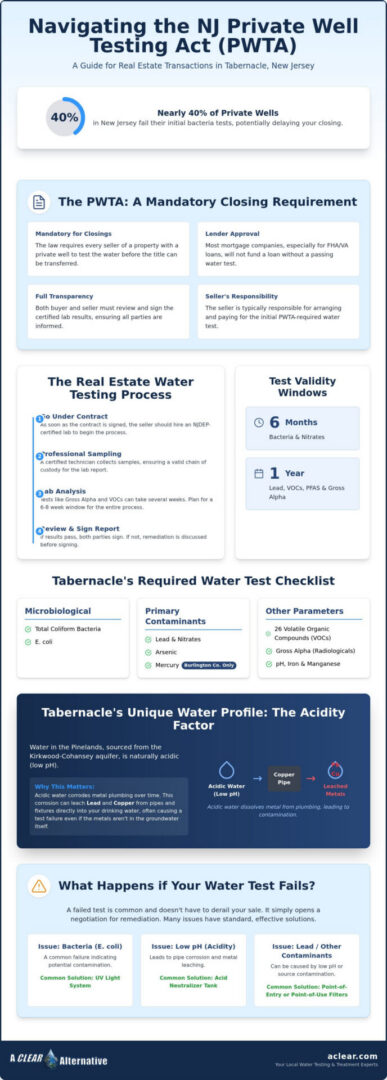
Did you know that nearly 40% of private wells in New Jersey fail their initial bacteria tests? In the sandy soil of the Pinelands, a failed report can feel like a sudden roadblock to your moving day. You’ve likely spent weeks prepping your home for sale, and the thought of a complex state regulation delaying your closing is enough to cause anyone anxiety. We understand that you want a smooth, predictable transition to your next chapter without the fear of hidden costs or legal delays.
This guide makes water testing for real estate transactions Tabernacle sellers and buyers encounter in 2026 completely manageable. We’ll show you how to navigate the NJ Private Well Testing Act (PWTA) with total confidence and keep your closing on schedule. You’ll discover exactly which contaminants are being screened in our local Kirkwood-Cohansey aquifer, why our naturally acidic water requires specific attention, and how to find a local expert who provides both the lab results and the solutions to fix any issues found. Let’s turn a stressful requirement into a simple, checked box on your way to the closing table.
Key Takeaways
- Understand why the New Jersey Private Well Testing Act is a mandatory step for your closing and how to ensure both parties sign off on time.
- Learn how to streamline water testing for real estate transactions Tabernacle families rely on by identifying the specific contaminants common in Pinelands soil.
- Discover why Tabernacle’s naturally acidic water is a primary concern for your plumbing and how it directly impacts your lead and copper results.
- Master the professional sampling process to ensure your chain of custody remains intact and your lab report is legally valid for the state.
- Prepare for potential test failures with a clear roadmap for remediation, turning a stressful inspection report into a manageable part of your contract.
Understanding the NJ Private Well Testing Act (PWTA) in Tabernacle
Selling a home in Tabernacle involves more than just a fresh coat of paint and a manicured lawn. If your property relies on private water wells, the New Jersey Private Well Testing Act (PWTA) is your most important legal hurdle. This law is a mandatory safety measure. It requires sellers to test their well water before any real estate closing can proceed. It isn’t just a suggestion; it’s a closing requirement that applies to every residential contract in Tabernacle, Shamong, and Medford Lakes.
Why does this matter so much? The law ensures transparency. Both the buyer and the seller must review and sign the certified lab results before the title can transfer. This document becomes part of the permanent record of the sale. Beyond the legal mandate, your mortgage company has a vested interest. Most lenders, particularly those handling FHA or VA loans, won’t fund a mortgage if the water doesn’t meet New Jersey’s safe drinking water standards.
Who is Responsible for the Water Test?
In the standard New Jersey real estate contract, the seller is responsible for arranging and paying for the initial PWTA test. You’ll need to hire a NJDEP-certified laboratory to collect the samples. While the seller covers the basics, buyers often choose to order discretionary tests. This might include screening for a broader range of PFAS “forever chemicals” or specific minerals for peace of mind. Your real estate agent plays a vital role here too. They must ensure the lab data is submitted to the NJDEP correctly to prevent any last-minute paperwork snags.
When Should You Schedule Your Testing?
Timing is everything for the water testing for real estate transactions Tabernacle requires. You should schedule your test as soon as the house goes under contract. Some tests, like those for Gross Alpha or PFAS, require specialized lab work that can take several weeks. Waiting until the week before closing is a recipe for disaster.
Keep these validity windows in mind to stay compliant:
- Bacteria and Nitrates: Results are valid for only six months.
- Lead and VOCs: Results remain valid for one year.
- PFAS and Gross Alpha: These also carry a one-year validity period.
If your closing gets delayed, you might need to re-test the fast-expiring parameters. Planning for a 6-8 week window for the entire process ensures that even if you need a quick fix, your moving truck stays on schedule.
Required Testing Parameters for South Jersey Properties
In Tabernacle, your well water isn’t just H2O; it’s a complex chemistry profile that the NJDEP monitors closely to protect your health. When you initiate water testing for real estate transactions Tabernacle, the lab doesn’t just look for “dirt.” They follow a rigorous checklist tailored to Burlington County’s specific geology. This includes a primary screen for Total Coliform bacteria and E. coli, nitrates, and lead. An academic analysis of the PWTA highlights how these mandates protect public health by identifying hidden risks like lead or nitrates before they become a buyer’s problem.
Beyond the basics, the state requires a deep dive into 26 different Volatile Organic Compounds (VOCs). These are synthetic chemicals that can linger in groundwater for decades. Because Tabernacle sits in Burlington County, your test also must include a screen for Mercury, a requirement that doesn’t apply to every county in the state. We also look for radiologicals like Gross Alpha particle activity, which occurs naturally in New Jersey’s soil and bedrock. If you’re concerned about what’s in your tap, getting a comprehensive water test is the first step toward total peace of mind.
The ‘Short List’ vs. Comprehensive Real Estate Testing
The standard PWTA list covers the essentials like pH, iron, manganese, and arsenic, but don’t be surprised if your lender asks for more. Many mortgage companies, especially those backing rural properties, require additional parameters to ensure the home’s infrastructure is sound. For example, while the state might only require a specific set of tests, a lender might want to see a passing result for iron or manganese to ensure the water won’t ruin the home’s appliances. You must ensure your chosen lab is NJDEP certified for every single one of these parameters, or the state won’t accept the report.
Emerging Contaminants: PFAS and 1,4-Dioxane
New Jersey currently maintains some of the strictest standards for PFAS, often called “forever chemicals,” in the United States. As of December 1, 2021, testing for PFOA, PFOS, and PFNA became mandatory under the PWTA. These chemicals can enter groundwater in rural areas through various sources, including historical local manufacturing or even certain firefighting foams. If your well exceeds the Maximum Contaminant Levels (MCLs) for these substances, it doesn’t mean the deal is dead. It simply means you’ll need a targeted filtration strategy to bring the water back into compliance before the keys change hands.
Tabernacle Water Profile: The Pinelands Acidity Factor
Tabernacle is defined by the beauty of the Pinelands, but that same environment dictates the unique chemistry of your well water. The water here is sourced from the Kirkwood-Cohansey aquifer, which is naturally low in pH. This means your water is acidic. While it might taste crisp, “hungry” water is aggressive toward your home’s infrastructure. It acts as a solvent, slowly wearing away at everything it touches. This is why local knowledge is so critical when you begin the process of water testing for real estate transactions Tabernacle requires.
During the inspection phase, buyers often discover that while the well is deep and the water is clear, the chemistry is corrosive. This acidity is the primary driver behind most local test failures. It doesn’t just stay in the pipes; it changes the very nature of what comes out of your tap. A passing PWTA report is the ultimate goal, but you should understand that the state’s minimum standards don’t always equate to the high-quality, aesthetic water a new homeowner expects. Passing the test is just the first step toward true water confidence.
The Danger of Low pH in Real Estate Sales
Low pH is a liability for any property listing. If left untreated, acidic water can cause microscopic pinhole leaks in copper pipes, sometimes manifesting just as a house goes under contract. These leaks are expensive to fix and can lead to mold or structural issues that complicate an inspection. Installing acid neutralizer systems effectively balances the water, protecting your plumbing and your sale. In older Tabernacle homes, low pH water often causes lead to leach from solder and brass fixtures, resulting in a failed PWTA test even if the well itself is clean.
Managing Iron and Sulfur Stains
Iron and sulfur are the two most common aesthetic complaints in South Jersey. Iron doesn’t usually cause a health failure on a PWTA report, but it certainly ruins the “curb appeal” of your home’s interior. Orange staining in sinks and toilets sends a message of neglect to potential buyers. Similarly, the “rotten egg” smell of sulfur can make a beautiful kitchen feel uninviting. Modern iron and sulfur filtration systems remove these issues entirely, protecting the buyer’s new appliances and ensuring the home feels as premium as it looks. Addressing these aesthetic concerns early prevents buyers from getting nervous about the underlying health of the well.
The Testing Process: From Sampling to Certified Report
The journey from a kitchen faucet to a certified lab report is a highly structured process designed to protect every party in a home sale. When you initiate water testing for real estate transactions Tabernacle, you aren’t just buying a data point; you’re securing a legal document that validates the safety of your home’s most vital resource. This process is divided into four critical stages that ensure the integrity of your results from start to finish.
First, a certified sampler must visit the property. This professional collection is mandatory. They verify the well’s location and ensure the water source hasn’t been bypassed or tampered with. Second, the “chain of custody” begins. This is a rigorous paper trail that documents exactly who handled the samples from your sink to the laboratory door. Third is the analysis phase. In 2026, while bacteria results often arrive within a few days, radiological parameters like Gross Alpha still require a 14 to 21 day turnaround due to NJDEP-mandated incubation periods. Finally, the lab submits the results directly to the state’s database and provides you with the final certified report.
Why You Can’t ‘DIY’ a Real Estate Water Test
You might be tempted to grab a testing kit from a local hardware store, but those results won’t help you at the closing table. New Jersey law requires an independent, certified third party to collect every sample for PWTA compliance. This sampler acts as a neutral witness. They ensure the water is representative of what the buyer will actually be drinking. Self-collected samples are not legally admissible for real estate transactions because they lack the verified chain of custody that lenders and the state demand. It’s a layer of protection that ensures the data is beyond reproach.
Interpreting Your Results
Reading a multi-page lab report can feel like learning a new language. We help you cut through the technical jargon to understand what really matters. A “Fail” typically refers to health-based contaminants like E. coli, Nitrates, or Lead. These must be addressed to satisfy the law and your lender. On the other hand, you might see exceedances for “Recommended” limits, such as pH or Iron. These are aesthetic standards. While they don’t legally block a sale, they often become points of negotiation between buyers and sellers. We bridge the gap by explaining these results clearly to both parties, keeping the deal moving forward without unnecessary panic. If you’re ready to get your closing on track, schedule your certified water test with our expert team today.
What Happens if Your Water Test Fails?
Receiving a failed lab report feels like a punch to the gut. You’ve worked hard to get your home under contract, and now a “fail” for bacteria or pH seems like it might derail everything. Don’t panic. In Tabernacle, most water quality issues are completely treatable. A failed result isn’t a deal-breaker; it’s a technical hurdle that requires a professional solution. We see these issues every day, and we know exactly how to resolve them without compromising your timeline.
When water testing for real estate transactions Tabernacle results come back with an exceedance, the focus shifts to remediation. Typically, the seller is responsible for providing a potable water source by installing the necessary equipment. This becomes a key part of your contract negotiations. Lenders will require a “post-remediation” test to prove the water now meets NJDEP standards before they release the mortgage funds. It’s a standard part of the process that ensures the buyer is moving into a safe environment.
We use modern, efficient technology to address local water issues. Ultraviolet (UV) sterilizers neutralize bacteria without the use of harsh chemicals. Reverse Osmosis (RO) systems are the gold standard for targeting nitrates. Acid neutralizers effectively balance the low pH levels that are so common in our Kirkwood-Cohansey aquifer. Once the system is installed, we perform a follow-up test to certify the fix, providing the buyer and the lender with the documented proof they need to proceed to the closing table.
Fast-Track Remediation for Real Estate Closings
Time is your most valuable asset during a real estate transaction. We prioritize installations related to pending sales to ensure you don’t miss your moving day. As one of the leading water treatment companies near Tabernacle, we provide all the necessary documentation your lender needs the moment the system is active. We handle the technical details so you can focus on packing, keeping the entire transition seamless and stress-free.
The A Clear Alternative Advantage
Our family-owned business has specialized in the unique water profiles of the South Jersey Pinelands since 1991. We don’t just hand you a “fail” report; we provide the expert solution that gets you to the finish line. Our team understands the local soil and the specific contaminants that affect our community. We offer 24/7 support for emergency water issues during your move-in process, ensuring your new home has the premium water quality you deserve from day one. We believe that clean water should be a source of confidence, not a source of stress.
Secure Your Move with Confidence
Your journey to a new home in Tabernacle shouldn’t be stalled by paperwork or technical hurdles. By understanding that the PWTA is a protective measure rather than a roadblock, you can approach your closing with total peace of mind. Remember that Tabernacle’s unique Pinelands water profile often requires specific attention to acidity and iron, but these are common, treatable issues that don’t have to end a deal. Choosing a partner who understands both the lab requirements and the necessary filtration solutions ensures your transition remains seamless.
Beyond water safety, ensuring your home’s air quality is handled by professionals like certifiedhomessolution.com for air duct and dryer vent cleaning is another way to guarantee a healthy start in your new space.
Since 1991, we’ve helped South Jersey families navigate water testing for real estate transactions Tabernacle with ease. As NJDEP Certified Testing Partners, we provide the accurate data you need and the 24/7 emergency support you deserve during your move. We don’t just identify problems; we deliver the premium water quality that turns a house into a home. Don’t let a “fail” report slow you down. Schedule Your Tabernacle PWTA Water Test Today and take the next step toward your new beginning with absolute certainty.
Frequently Asked Questions
How long does it take to get PWTA water test results in Tabernacle?
Lab results for water testing for real estate transactions Tabernacle usually take about two weeks to process. However, you should plan for a six to eight week window for the entire process from scheduling to closing. This accounts for the longer incubation periods required for Gross Alpha radiological results and gives you time for remediation if any issues arise.
Is water testing required for all home sales in New Jersey?
Yes, the Private Well Testing Act applies to all real estate transfers where the water is supplied by a private well. This is a mandatory law in New Jersey that cannot be waived by either party. Both the buyer and seller must acknowledge the certified results in writing before the title can change hands, ensuring transparency for everyone involved.
What is the most common reason for a failed water test in Tabernacle?
Low pH is the most frequent reason for a failed report in our local area. Because Tabernacle sits in the Pinelands, the groundwater is naturally acidic. This acidity often causes lead or copper to leach from your home’s internal plumbing fixtures; this leads to a health based failure. Total Coliform bacteria is the second most common issue, affecting many wells in Burlington County.
Can a buyer back out of a contract if the water test fails?
A buyer can often terminate the contract if the water test fails and the seller refuses to remediate the issue. Most standard New Jersey real estate contracts include a specific contingency for the PWTA. While the law doesn’t force a seller to fix the well, most lenders won’t approve the mortgage until the water meets safe drinking water standards.
How much does a NJ PWTA water test typically cost?
Standard PWTA testing from a certified lab in Burlington County typically ranges between $972 and $1,189. These fees are paid directly to the lab and include the certified sampler’s visit, the comprehensive analysis, and the mandatory reporting to the NJDEP. It’s a necessary investment to ensure the safety of your family and the legality of your home sale.
Do I need to test for PFAS in Tabernacle for a real estate transaction?
Yes, testing for three specific PFAS compounds is mandatory for all water testing for real estate transactions Tabernacle requires. Since December 2021, PFOA, PFOS, and PFNA have been required parameters under the PWTA. These “forever chemicals” are strictly regulated in New Jersey, and a passing result is necessary to satisfy both state law and most mortgage company requirements.
What happens if bacteria is found in the well water during the sale?
If bacteria is detected, the well must be remediated and re-tested before the sale can proceed. This usually involves treating the well or installing an Ultraviolet (UV) sterilizer to ensure long term safety. Once the treatment is in place, a certified sampler must take a new sample to prove the water is now potable. We prioritize these re-tests to keep your closing moving.
How long is a NJ water test valid for a real estate closing?
Results for bacteria and nitrates are valid for only six months from the date of collection. All other parameters, including lead, VOCs, and PFAS, remain valid for one year. If your closing is delayed beyond these windows, you’ll need to re-test the expired parameters to remain compliant with the PWTA and your lender’s requirements. Keeping track of these dates is vital for a smooth closing.