
How to Choose a Water Treatment Company: A 2026 South Jersey Homeowner’s Guide
Your water treatment system shouldn’t be just another piece of hardware hidden in the basement. It’s actually the most vital health investment you’ll make for your South Jersey home this year. Learning how to choose a water treatment company is about more than just comparing quotes; it’s about finding a partner who understands why the acidic Kirkwood-Cohansey Aquifer requires a different approach than standard city water. You’ve probably felt the frustration of high-pressure sales tactics or felt lost in a sea of confusing filtration technology. It’s exhausting to worry about whether a system will actually last or if you’ll be left stranded during a midnight pump failure.
We’re here to change that experience. You deserve a solution that feels like a modern lifestyle upgrade rather than a technical chore. This guide reveals the essential criteria for selecting a specialist who ensures your water is pristine and your system is built for decades of performance. We’ll walk through the 2026 NJ regulatory landscape, including new PFAS standards and the importance of 24/7 emergency support. By the end, you’ll have a clear roadmap to finding a local expert who values your peace of mind as much as your water quality.
Key Takeaways
- Learn why South Jersey’s unique water chemistry requires a local specialist who understands the specific acidic challenges of the Pine Barrens.
- Master how to choose a water treatment company by identifying the red flags of commission-based salesmen versus certified water specialists.
- Discover the non-negotiable credentials and insurance requirements that protect your home and investment during the installation of advanced filtration systems.
- Understand the full-service advantage, ensuring you have access to 24/7 emergency support and licensed water hauling when you need it most.
Why Choosing the Right Water Treatment Partner in South Jersey Matters
Selecting a water treatment partner isn’t just a simple transaction. It’s a long-term commitment to your home’s infrastructure and your family’s daily comfort. Many homeowners start searching for how to choose a water treatment company when they notice orange stains in the shower or a metallic taste in their coffee. A professional company does much more than sell hardware. They act as stewards of your home’s health, analyzing your specific water chemistry to design a system that integrates seamlessly into your life. True specialists focus on the ultimate outcome: pristine water that protects your plumbing while enhancing your quality of life.
You’ll likely encounter “water salesmen” who use high-pressure tactics to push expensive reverse osmosis systems regardless of your actual needs. Contrast this with a certified specialist who uses lab-grade data to recommend only what’s necessary. This distinction is critical because untreated water quality directly impacts the longevity of your home. Acidic water can pinhole copper pipes in just a few years, leading to devastating leaks and thousands of dollars in repair costs. A specialist ensures your system works for decades, not just until the warranty expires. Much like how you would trust a reputable team like Caribbean Heating & Cooling to maintain your home’s HVAC system, finding the right water specialist is about protecting your home’s vital infrastructure.
The South Jersey Water Landscape
The Pine Barrens region, including Tabernacle and Shamong, presents unique geological challenges that national franchises often overlook. The Kirkwood-Cohansey Aquifer is naturally low in pH, meaning the water is highly acidic. Without acid neutralizers, this “hungry” water leaches metals from your plumbing and fixtures. Local residents also frequently struggle with the “rotten egg” smell caused by hydrogen sulfide gas in their wells. A local expert understands these specific regional patterns, whereas a generic service provider might treat your well like a standard municipal line.
Health vs. Aesthetics: What Are You Treating?
It’s easy to focus on aesthetics like iron staining or hard water spots. However, a professional looks deeper at health concerns like bacteria, lead, or emerging PFAS standards. In the context of New Jersey health standards, potable water is defined as water that’s safe for human consumption and meets all state primary drinking water regulations. While generic point-of-use water treatment technologies found at big-box stores might improve taste, they often fail in Medford Lakes. These systems aren’t designed for the heavy mineral loads found in South Jersey wells. They clog quickly, leaving you with a maintenance headache and a system that fails to deliver on its promises.
Essential Credentials: What Every NJ Homeowner Should Demand
Vetting a potential partner requires looking beyond a friendly smile and a firm handshake. When you’re researching how to choose a water treatment company, you must demand proof of technical expertise and legal compliance. It’s not just about getting a filter installed; it’s about the security of knowing your home is protected by professionals who follow rigorous industry standards. Don’t settle for a salesman with a suitcase full of color-changing reagents. Real expertise is backed by certifications and insurance that shield you from liability and subpar performance.
Certifications and Industry Standards
The gold standard in this industry is the Water Quality Association (WQA) Gold Seal. This certification tells you that a system has been tested for structural integrity and that its claims about contaminant removal are verified. You should also insist on components that meet NSF/ANSI standards. This CDC guide to home water treatment systems explains how different technologies target specific risks, and certified components ensure those technologies actually work as promised. Beyond technical badges, look for a company with deep roots in the community. A business that has thrived since the early 90s has a reputation to uphold, which is your best guarantee of long-term support.
NJ Specific Regulatory Knowledge
New Jersey has some of the strictest water quality laws in the country. Your chosen expert must be intimately familiar with the NJ Private Well Testing Act (PWTA). This is especially critical if you’re planning a real estate transaction in Tabernacle or Shamong. A qualified company provides the detailed, laboratory-backed reporting required by the DEP, ensuring your closing isn’t delayed by paperwork errors. They should understand local groundwater trends and the specific contaminants that trigger state alerts.
Reputation and reliability go hand-in-hand with proper coverage. A reputable company carries comprehensive professional liability insurance. This protects your property during the installation of heavy equipment like acid neutralizers or whole-house softeners. Additionally, check if the company is a licensed potable water hauler. This rare credential indicates a higher level of state oversight and means they can provide emergency bulk water delivery if your well ever fails. It’s this level of full-service capability that separates a true water specialist from a simple equipment vendor.
National Franchises vs. Local Family-Owned Businesses
Deciding between a global brand and a neighborhood expert is a pivotal step in how to choose a water treatment company. National franchises often rely on high-volume, “cookie-cutter” solutions designed to fit as many homes as possible with minimal customization. While their marketing is polished, their technicians might only have a few months of experience. They follow a corporate script that often ignores the subtle nuances of South Jersey’s geological variations. Choosing a local partner means you’re investing in decades of specialized knowledge rather than a brand name.
One common pitfall with large franchises is the “commission trap.” Sales representatives are frequently incentivized to push high-margin equipment, such as complex reverse osmosis systems, even when a simpler solution would suffice. This leads to unnecessary costs and higher maintenance requirements for the homeowner. A local specialist focuses on what actually works for your specific water chemistry. They prioritize your long-term satisfaction because their business thrives on local referrals, not national advertising budgets.
The Advantage of Local Roots
The most successful family-owned businesses in our area have been operating since 1991. This longevity creates a “neighborhood effect” that national brands simply can’t replicate. An experienced local owner likely knows which streets in Shamong struggle with heavy iron and which parts of Tabernacle have exceptionally deep wells. This granular data allows for personalized maintenance schedules and systems calibrated to your specific water usage patterns. It’s the difference between a generic prescription and a custom-tailored wellness plan for your home.
Accountability and Long-Term Support
Response time is where the contrast becomes most apparent. If your neutralizer starts leaking at 2 AM, a national call center might put you on a three-day waiting list. Local experts provide 24/7 emergency support because they understand that a water failure isn’t just an inconvenience; it’s a household crisis. You’ll also benefit from seeing the same familiar face for your annual water softener salt delivery. This continuity builds trust and ensures that the person servicing your equipment knows its entire history. You get direct access to decision-makers who can authorize custom solutions on the spot, providing a level of agility that corporate hierarchies can’t match.
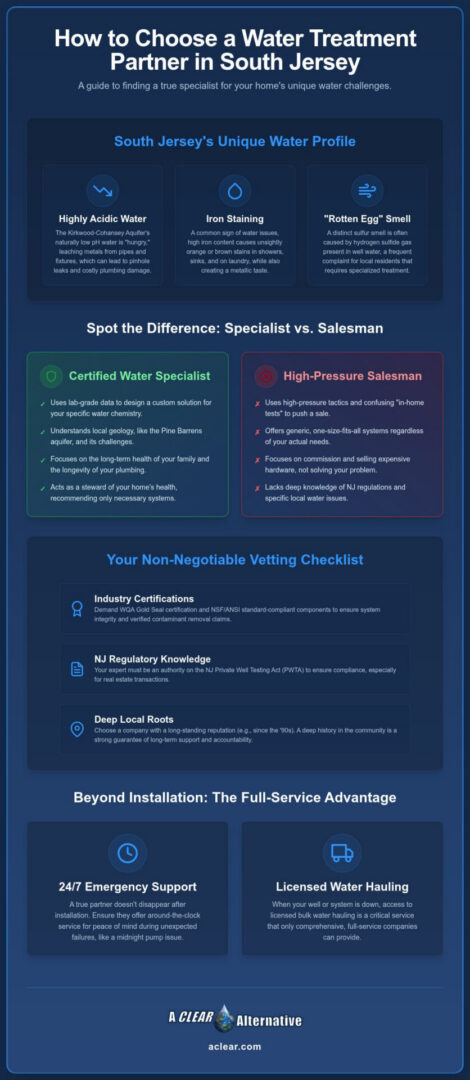
The Red Flag Checklist: How to Spot a “Salesman” vs. a Specialist
Walking into an in-home consultation shouldn’t feel like a high-stakes negotiation. When you’re deciding how to choose a water treatment company, pay close attention to the narrative the representative builds. Are they using data to empower you? Or are they using fear to rush your decision? One of the biggest red flags is the “scare tactic” approach. If a salesperson claims your municipal or well water is “toxic” without providing a state-certified lab report to back it up, they’re likely prioritizing a commission over your safety. Your home’s water system should be a source of confidence, not a constant worry fueled by vague threats.
A legitimate specialist will always be transparent with their findings. If they perform an on-site test but refuse to send a sample to a third-party laboratory for a more detailed analysis, you should reconsider the partnership. You also deserve a written, itemized quote. Vague estimates that lack detail about labor fees or installation specifics often lead to unpleasant surprises once the work begins. Demand clarity from the start to ensure you’re investing in a long-term solution rather than a quick fix.
Evaluating the In-Home Consultation
A true specialist doesn’t just look at your kitchen sink; they inspect your entire plumbing infrastructure. They’ll examine your well tank, pressure switch, and main shut-off valve to ensure a whole house water filtration system can be integrated safely. This multi-point inspection should include testing for iron, sulfur, and hardness at the source. If they skip these steps, they aren’t designing a solution for your home; they’re just selling a box. A professional approach considers the unique layout of your property in Tabernacle or Shamong to ensure the system performs beautifully for years.
Transparency in Maintenance and Costs
Ask about the long-term maintenance schedule before you sign anything. You need to know exactly when filter replacements or media re-bedding will be required. Be wary of companies that use “proprietary” parts. These unique components lock you into a single service provider, making it impossible to get parts from anyone else. A transparent quote should also reflect that annual maintenance for a whole-house system typically ranges from $150 to $400. Always ask for the total cost of ownership over a 5-year period to avoid hidden financial drains.
If you’re ready for an honest assessment without the sales gimmicks, connect with a local specialist who prioritizes your home’s health over high-pressure tactics.
Making the Final Decision: Why 24/7 Support and Hauling Matter
The final step in how to choose a water treatment company isn’t just about picking the lowest bid. It’s about selecting a partner who provides a total safety net for your home, mirroring the expert residential support provided by Christensen Heating and Cooling. A full-service provider doesn’t just walk away once the installation is complete; they remain available for every scenario, from routine maintenance to midnight emergencies. Ask yourself which company has the infrastructure to support you if your well pump fails or your filtration media needs an urgent refresh. True peace of mind comes from knowing your water security is in the hands of experts who understand the Tri-State area’s unique demands.
Experience across New Jersey, Pennsylvania, and Delaware adds layers of expertise that a single-town plumber simply can’t match. This regional knowledge means your specialist has seen every possible water chemistry challenge and knows exactly how to solve it. Before you sign a contract, check local Medford Lakes references. A company with a strong local reputation will be proud to share stories of how they’ve helped your neighbors achieve better water quality. This final due diligence ensures your investment leads to a system that works perfectly for decades.
Emergency Preparedness: Beyond the Filter
For well owners in South Jersey, water security isn’t just about filtration; it’s about availability. A licensed potable water hauler provides an essential service that most filtration companies lack. If your well runs dry or a component fails, having a partner who offers bulk water delivery for cisterns is a lifesaver. This expertise also extends to lifestyle upgrades like professional pool water delivery. When you have 24/7 emergency support, you never have to worry about a Saturday night system failure ruining your weekend. You get a fix when you need it, not just when it’s convenient for a corporate schedule.
The A Clear Alternative Commitment
Our family-owned mission has remained the same since 1991: providing modern, aesthetic water solutions that improve your life. We don’t just sell equipment; we deliver a renewed sense of confidence in your home’s most vital resource. From initial well water testing to the installation of industrial-grade filtration, we handle every detail with precision. We invite you to experience a higher standard of local water care where technology meets human-centered service. Let’s build a solution that gives you the freedom and quality of life you deserve.
Secure Your Home’s Future with Pure Water
You now have the tools to navigate the complex process of how to choose a water treatment company. The best partner combines deep local knowledge of the Pine Barrens with the technical credentials to back up every claim. Look for specialists who offer more than just hardware. They should provide a comprehensive safety net that includes 24/7 emergency support and licensed water hauling. By avoiding high-pressure sales and insisting on lab-backed data, you’re protecting your home’s infrastructure and your family’s health for decades.
Since 1991, A Clear Alternative has served homeowners across NJ, PA, NY, and DE with a commitment to excellence. As Licensed Potable Water Hauler #2680, we don’t just fix filters; we ensure your water security through every season. Ready to transform your water quality? Get a Professional Water Analysis from A Clear Alternative today. You deserve the peace of mind that comes with a perfectly tailored solution. Your journey to pristine water and a more confident lifestyle starts with a single, expert conversation.
Frequently Asked Questions
How do I know if a water treatment company is licensed in New Jersey?
You can verify a company’s standing by checking the NJDEP database for licensed water system operators. Professionals should hold specific licenses for treatment and distribution. If they provide water hauling, they must display a state license number on their equipment. Don’t hesitate to ask for copies of their insurance and certifications during your first meeting. This transparency ensures you’re working with a legitimate business that follows New Jersey’s strict environmental standards.
Is it better to hire a plumber or a water treatment specialist for a filtration system?
A water treatment specialist is the superior choice for complex filtration needs. Plumbers excel at moving water through pipes, but specialists understand the chemistry inside the water itself. They have the laboratory training needed to calibrate systems for specific pH imbalances and mineral loads. Choosing a specialist ensures your equipment is designed for your home’s unique water profile, which prevents premature system failure and protects your expensive appliances.
What should be included in a professional water test report?
A comprehensive report should include detailed readings for pH, hardness, iron, sulfur, and manganese. For New Jersey well owners, it’s also critical to see results for bacteria and nitrates. A professional specialist provides a written document from a certified laboratory rather than just a verbal estimate. This data serves as the blueprint for your system design, ensuring you aren’t paying for filtration technology that your specific water doesn’t actually require.
How often should a water treatment company perform maintenance on my system?
You should schedule a professional maintenance visit at least once every twelve months. This annual service includes testing your water quality to ensure the filtration media is still performing correctly. Technicians will also clean mechanical parts, replace UV lamps, and check the structural integrity of your tanks. Consistent upkeep is the best way to avoid emergency repairs and ensures your water remains pristine while maximizing the lifespan of your entire plumbing system.
Do water treatment companies offer emergency services for well pump failures?
High-quality firms offer 24/7 emergency support for well pump and pressure switch failures. When you’re learning how to choose a water treatment company, always check their after-hours availability. A reliable partner understands that losing water is a household crisis that can’t wait until Monday. Having a specialist on call ensures that professional help is available whenever a mechanical issue threatens your home’s water supply, providing you with essential peace of mind.
Can a water treatment company help me if my well runs dry in the summer?
A licensed potable water hauler can provide emergency bulk water delivery if your well runs dry. This service is a critical safety net during the hot South Jersey summers when groundwater levels can drop. These specialists use dedicated, state-inspected trucks to refill your storage tanks with safe drinking water. It’s a specialized credential that most standard filtration companies don’t have, making it a key factor to consider for total water security.
What is the difference between a national franchise and a local water company?
Local companies provide tailored solutions based on decades of experience with South Jersey’s unique geology. Unlike national franchises that push generic, high-commission equipment, local businesses rely on their reputation within the community. They understand the specific acidity levels in the Pine Barrens and can calibrate your system for local conditions. This direct accountability and neighborhood-specific knowledge result in a more reliable system that truly meets your home’s aesthetic and health needs.
Should I get multiple quotes for a whole-house water softener?
Comparing multiple quotes is an essential part of how to choose a water treatment company that offers real value. Look beyond the initial price and evaluate the specific components, warranty terms, and the thoroughness of the initial water analysis. A professional quote should be transparent and free of hidden labor fees. This comparison helps you spot high-pressure sales tactics and ensures you’re investing in a system built for decades of high-performance service.