
Is a Whole House Water Filter Needed? South Jersey 2026
What if the water flowing through your South Jersey home is silently aging your plumbing and stealing the glow from your skin? You’ve likely noticed those stubborn blue-green stains in the sink or the faint scent of rotten eggs every time you turn on the tap. It’s frustrating to feel like your own home is working against you. Many local homeowners find themselves wondering: is a whole house water filter necessary or is a simple countertop pitcher enough for a modern lifestyle?
We understand that you want more than just “okay” water; you want the confidence that every tap in your house delivers absolute purity. In this guide, you’ll discover how a professional filtration system acts as a foundational layer of home wellness, protecting your expensive appliances and your family’s health. We’ll explore the specific water quality challenges facing our neighbors in Medford Lakes and Tabernacle as we move into 2026, giving you the clarity to make the best choice for your home’s longevity and your own peace of mind.
Key Takeaways
- Understand the difference between filtering for basic taste and protecting your entire home infrastructure with a Point-of-Entry system.
- Learn how to evaluate your specific water source to determine if a whole house water filter is necessary for your lifestyle and property.
- Identify the five critical warning signs, from metallic odors to hidden pipe corrosion, that signal a need for immediate filtration.
- Discover how professional water testing eliminates the guesswork of DIY kits by targeting specific South Jersey contaminants like iron and sulfur.
- Upgrade your daily wellness routine by seeing how purified water preserves your skin’s natural hydration and extends the life of your appliances.
What is a Whole House Water Filter and How Does It Work?
Think of a whole house water filter as a high-tech security system for your home’s plumbing. Technically known as a Point-of-Entry (POE) system, it’s installed at the main water line where the supply first enters your property. This means every single drop of water that flows through your pipes, whether it’s for your morning shower or your dishwasher’s rinse cycle, has already been treated. It isn’t just about making your coffee taste better. It’s about ensuring the water touching your skin and your expensive appliances meets a higher standard of purity.
Many South Jersey homeowners wonder: is a whole house water filter necessary when a simple pitcher filter costs so much less? The difference lies in the scope of protection. A pitcher only addresses the water you drink. A POE system acts as a gatekeeper for your entire infrastructure. By 2026 standards, integrated water treatment is no longer a luxury. It’s a foundational element of home wellness and property value. Modern buyers look for homes that offer “smart” water, much like they look for smart thermostats or energy-efficient windows.
The Core Components of a POE System
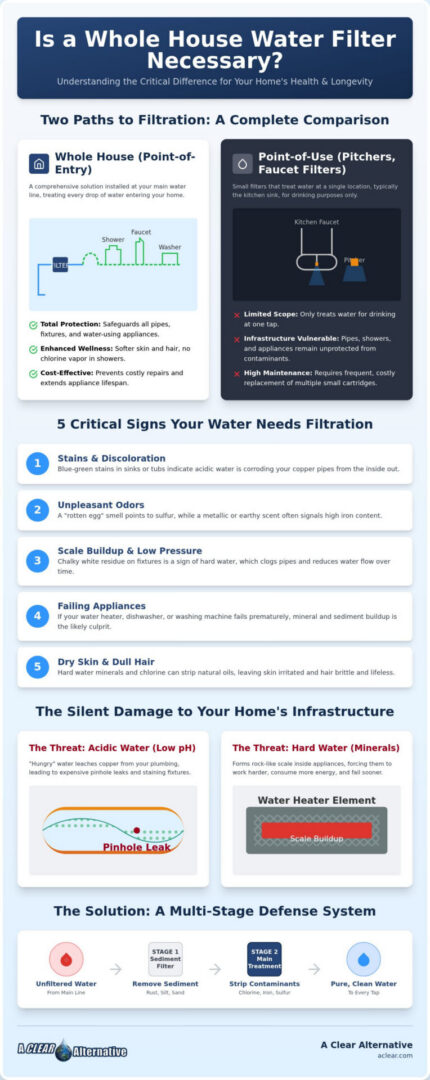
To truly grasp what water filters do, you have to look at the process as a multi-stage defense system. First, a pre-filtration stage catches heavy sediment, silt, and rust. This is vital for protecting your pipes from clogging. Next comes the main treatment stage. Depending on your needs, this uses carbon filtration or specialized media to strip away chemicals like chlorine or heavy metals. Finally, a post-filtration stage ensures the finest microscopic particles are trapped before the water travels to your tap. It’s a seamless, automatic process that happens behind the scenes.
Whole House vs. Point-of-Use: Making the Choice
You might already have a Reverse Osmosis (RO) system under your kitchen sink. While RO systems are incredible for drinking water, they leave the rest of your home vulnerable. They won’t stop acidic water from eating away at your copper pipes or prevent iron from staining your white laundry. If you only use point-of-use filters, you’ll find yourself constantly replacing small, expensive cartridges in multiple locations.
A whole house system simplifies your life. It provides a consistent, spa-like experience in every bathroom. Your hair feels softer, your skin stays hydrated, and you don’t have to worry about breathing in chlorine vapors during a hot shower. It’s a one-time investment in your lifestyle that offers a level of comfort a simple pitcher can’t match. When you consider the long-term health of your plumbing and your family, the answer to whether a whole house water filter is necessary becomes much clearer.
Why a Whole Home System is Necessary for Your Health and Home
Your home is a complex ecosystem. Every pipe, faucet, and high-end appliance relies on the quality of the water flowing through it. When you view your property as a long-term investment, the question of whether is a whole house water filter necessary shifts from a technical curiosity to a vital lifestyle decision. It’s about more than just removing a few contaminants. It’s about creating a sanctuary where every drop of water supports your health and protects your infrastructure.
In South Jersey, we face unique geological challenges. From the acidic runoff in the Pine Barrens to the mineral-heavy aquifers in Medford Lakes, our water works hard against our homes. A whole house system acts as a shield. It ensures that the water heating your tea or washing your designer linens isn’t carrying hidden “thieves” that steal the lifespan of your property.
Infrastructure Protection: Saving Your Plumbing
Acidic water is a silent, expensive problem. If your water has a low pH, it’s effectively “hungry” for minerals. It will eat the copper from your pipes from the inside out to satisfy that hunger. This process leads to those frustrating blue-green stains in your tubs and, eventually, costly pinhole leaks behind your walls. Installing acid neutralizers is the most effective way to balance your water’s chemistry and stop this corrosion before it starts.
Hard water is another hidden drain on your finances. When minerals like calcium and magnesium build up inside your water heater, they form a thick layer of scale. This scale acts as an insulator. Your heater has to work twice as hard to push heat through that stone-like barrier, which sends your monthly energy bills climbing. Keeping your water soft and filtered preserves your plumbing’s integrity and keeps your utility costs predictable.
The Wellness Factor: Skin, Hair, and Health
Your shower should be a restorative experience, not a chemical bath. When you bathe in chlorinated city water, the heat turns that chlorine into a vapor you inhale. For those with eczema or sensitive skin, these chemicals strip away natural oils, leaving you itchy and dry. Professional testing well water or city supplies is the first step toward reclaiming your skin’s natural glow. Filtered water allows your soaps and shampoos to lather properly, meaning you use less product and see better results.
Water quality is the foundation of dermatological health because it determines how effectively your skin can maintain its protective moisture barrier. Beyond skin deep, filtered water preserves the vibrancy of hair color and the natural shine that hard minerals often dull. Your high-end appliances, like that Miele dishwasher or built-in coffee system, also benefit. They’ll run smoother and last longer without mineral buildup. If you’re ready to see the difference for yourself, exploring our carbon filtration systems can be your first step toward a more refined home experience.
Well Water vs. City Water: Determining Your Specific Needs
Your water source dictates your entire treatment strategy. Living in Medford Lakes often means dealing with a completely different set of minerals than someone connected to a municipal supply in a neighboring township. To decide if is a whole house water filter necessary for your specific property, you first need to look at where your water originates. Generic systems from big-box stores often fail because they aren’t calibrated for the unique geological makeup of South Jersey. They offer a “one size fits all” approach to a problem that requires a custom fit.
South Jersey Well Water Challenges
If you rely on a private well in Shamong or Tabernacle, you’re likely familiar with “Pinelands Pink” or those stubborn orange iron stains that ruin white laundry. These aren’t just aesthetic annoyances. They’re signs of high mineral content that can eventually clog your fixtures and damage your dishwasher. For local well owners, iron and sulfur filtration is often a non-negotiable requirement for a functional home.
Sulfur is another common culprit in our area, bringing that unmistakable “rotten egg” odor into your kitchen and bathrooms. This smell indicates the presence of hydrogen sulfide gas, which can be corrosive to the metal components in your plumbing. Before you invest in any equipment, comprehensive well water testing is the only way to ensure you’re solving the right problem. It’s the difference between guessing and knowing exactly what your home needs.
Municipal Water Concerns in the Tri-State Area
Even if you’re on a city line, your water isn’t necessarily perfect. Many residents notice a distinct “swimming pool” smell when they turn on the tap. This is the result of heavy chlorine or chloramine use during the municipal treatment process. While these chemicals are essential for keeping water safe from bacteria during transit, you don’t necessarily want to drink or bathe in them once they reach your house. You can consult this CDC guide on home water treatment systems to see how carbon filtration effectively strips these additives away.
Aging infrastructure is another factor to consider. Even if the city’s water is clean at the treatment plant, older pipes in some NJ townships can leach lead or other sediment into the supply before it reaches your faucet. A secondary whole-house barrier provides that extra layer of security. It allows you to take the “safe enough” water from the city and elevate it to a premium, spa-quality standard for your family. This proactive approach ensures your home remains a sanctuary of purity regardless of the condition of the city’s pipes.
5 Signs Your Home Needs a Whole House Filter Immediately
Your home often sends clear signals when its water quality is failing. These aren’t just minor inconveniences; they’re urgent warnings that your property’s wellness is at risk. If you’ve been asking yourself whether is a whole house water filter necessary, the answer is often written right on your fixtures. Recognizing these five signs early can save you from expensive repairs and improve your daily quality of life.
The most immediate red flag is a foul odor. If your water smells like rotten eggs, you’re dealing with hydrogen sulfide. A metallic tang suggests high iron levels, while a heavy bleach scent indicates your city’s chlorine treatment is too aggressive for your home. Beyond the smell, pay attention to your physical symptoms. Unusually dry skin, brittle hair, or laundry that feels stiff and scratchy are all signs that minerals and chemicals are stripping away your comfort. When your water flow begins to drop in the shower, it’s likely that scale buildup is restricting your pipes, acting as a physical barrier to the lifestyle you deserve.
The Visual Red Flags
Take a close look at your sinks, tubs, and toilets. The color of the stains you see tells a specific story about your water’s chemistry. Orange or rust-colored streaks are a classic sign of iron, common in Shamong and Tabernacle wells. White, chalky residues indicate hard water scale that’s likely also coating the inside of your tea kettle and water heater. A blue-green stain is a sign of copper pipe corrosion, which means your water is acidic and actively eating away at your plumbing infrastructure. If your water appears cloudy or milky, it may be carrying fine sediment or air bubbles that a professional system can easily resolve.
The ‘Invisible’ Problems
Some of the most significant threats to your home’s safety don’t leave a visible trace. Your water might look crystal clear while still harboring high levels of nitrates or invisible pathogens. This is where modern technology provides the ultimate peace of mind. High-tech ultraviolet (UV) sterilizers work silently to neutralize bacteria and viruses without adding any chemicals to your supply. You can also use a TDS (Total Dissolved Solids) meter to measure the concentration of dissolved minerals that the naked eye simply cannot see.
Don’t wait for a major plumbing failure to take action. If you’re noticing any of these red flags, it’s time to move toward a more refined, secure water strategy. Our experts can help you decode these signs and restore your home’s purity. Take the first step toward a safer home by booking a comprehensive water test today to see exactly what’s happening behind your walls.
The Clear Alternative: Customizing Your Water Strategy
Choosing the right path for your home’s water isn’t about buying a box off a shelf. It’s about designing a system that respects your property’s unique needs. After seeing the signs of corrosion or smelling those sulfur odors mentioned earlier, the question of whether is a whole house water filter necessary usually turns into “how do I get started?” The answer lies in a tailored strategy from a local water treatment company that understands South Jersey’s specific geological quirks.
At A Clear Alternative, we don’t believe in guesswork. We’ve been family-owned and operated since 1991. This means we’ve spent decades solving the exact water challenges Medford Lakes and Tabernacle homeowners face every day. Our process always starts with a comprehensive analysis. We test your water first, then build a solution that targets your specific contaminants. This professional approach ensures you aren’t paying for filtration you don’t need while guaranteeing your family gets the absolute purity they deserve.
Professional Installation vs. Big Box DIY
A generic DIY kit might seem tempting, but it often leads to long-term frustration. These systems are frequently undersized for modern homes with multiple high-flow bathrooms. If your system is too small, your water pressure will drop significantly, and the filter media will wear out months before it should. Our team ensures your system is correctly sized for your peak usage. We also include essential features like professional bypass loops. These loops allow for easy maintenance without ever cutting off your home’s water supply. You get the security of working with licensed, insured experts who understand the local plumbing codes.
Long-term Maintenance: Keeping the Clear Flow
A whole house system is an investment in your lifestyle. Like any premium home technology, it requires consistent care to perform at its peak. Regular filter changes and media replenishment are vital to keep your water tasting crisp and your high-end appliances protected from mineral buildup. We take the stress out of this by managing your maintenance schedule for you. You don’t have to track dates or remember filter types.
If an unexpected issue ever arises, our 24/7 emergency support means we’re always available to help our neighbors. You deserve a home where the water is always perfect and the service is always personal. It’s time to stop settling for “okay” water and start enjoying the confidence of a professionally managed system. Get your water tested today by the South Jersey experts!
Elevate Your Home’s Wellness and Infrastructure
Your home should be a place of absolute comfort and security. By now, you’ve seen how the right filtration strategy does more than just clear up a cloudy glass of water. It preserves your expensive plumbing, extends the life of your appliances, and transforms your daily shower into a spa-like experience that respects your skin and hair. Determining whether is a whole house water filter necessary for your specific property comes down to understanding your unique water chemistry and the geological challenges of our South Jersey landscape.
Since 1991, A Clear Alternative has been the family-owned choice for homeowners throughout NJ, PA, and DE who refuse to settle for anything less than excellence. We provide the 24/7 emergency support and deep local expertise you need to feel completely confident in every tap. Don’t let hidden contaminants or acidic water dictate the lifespan of your home. Take the first step toward a more refined lifestyle and Schedule Your Professional Water Test with A Clear Alternative today. You deserve water that feels as good as it looks.
Frequently Asked Questions
Is a whole house water filter worth the investment in New Jersey?
Yes, investing in a whole house system is a proactive decision that protects both your home’s infrastructure and your family’s wellness. In South Jersey, where acidic water and iron are prevalent, a professional system prevents thousands of dollars in potential plumbing repairs and premature appliance failure. It’s a foundational upgrade that elevates your daily lifestyle while securing your property’s long-term value.
How long do whole house water filtration systems typically last?
Most high-quality systems are engineered to last between 10 and 15 years with proper care. The actual lifespan depends on the quality of your incoming water and how consistently you maintain the media and filter components. Regular professional check-ups ensure the system continues to perform at peak efficiency, providing pure water for over a decade.
Can I install a whole house water filter myself or do I need a pro?
Professional installation is highly recommended to ensure the system is correctly sized for your home’s peak water demand. A professional handles the complex plumbing, including necessary bypass loops and drainage requirements, which prevents future leaks. This expertise ensures your system functions as intended and keeps your manufacturer warranty fully intact.
Will a whole house filter reduce my water pressure?
A properly sized and installed system will not cause a noticeable drop in your water pressure. Pressure issues typically only occur when a homeowner installs a generic, undersized unit that can’t keep up with the household’s flow requirements. We customize every installation to match the specific needs of your high-end fixtures and multiple bathrooms.
Does a whole house filter also soften the water?
Filtration and softening are two distinct technologies that solve different problems. A filter removes contaminants like chlorine, iron, or sulfur, while a water softener specifically targets hard minerals like calcium and magnesium. Many homeowners in our area choose to integrate both systems to achieve total water purity and maximum protection for their plumbing.
How often do I need to change the filters in a whole house system?
Maintenance schedules vary, but most sediment pre-filters require changing every six to twelve months to maintain optimal flow. The main treatment media inside the tanks can last much longer, often several years, before it needs replenishment. We manage these schedules for our clients so your water quality remains perfect without you ever having to track a date.
What is the average cost of a whole house water filter in South Jersey?
The cost varies significantly based on the complexity of your water issues and the specific technology required to address them. A system designed for heavy iron removal on a well requires different components than a carbon system intended for city water. A professional water analysis is the only way to determine the right solution and provide an accurate estimate for your home.
Can a whole house filter remove lead and PFOAs from city water?
Specific systems, such as advanced carbon filtration, are highly effective at reducing lead and PFOAs from municipal supplies. Even when city water is treated at the source, aging pipes in older townships can introduce lead before the water reaches your faucet. Deciding if a whole house water filter is necessary for these specific contaminants starts with a targeted test of your home’s tap water.