
South Jersey Water Problems: The 2026 Homeowner’s Guide to Clean Water
Imagine stepping into your beautifully renovated bathroom only to find a stubborn, rusty ring around the drain of your new porcelain tub. It’s a frustrating sight for many local homeowners, as iron in well water south jersey is a persistent reality dictated by our unique coastal geology. You’ve worked hard to create a home that feels like a sanctuary, yet metallic odors and stained laundry make your daily routine feel like a constant battle against your own plumbing.
We understand that you want a home that functions as beautifully as it looks. This guide will show you how to restore your water quality with modern, stress-free solutions that prioritize both your lifestyle and your home’s longevity. We’ll explore the specific causes behind local water issues, explain the latest 2026 testing requirements, and reveal how a customized filtration strategy can protect your appliances while giving you the crystal-clear, odor-free water you deserve.
Key Takeaways
- Learn how the unique Kirkwood-Cohansey Aquifer and sandy Pine Barrens soil create the specific water chemistry challenges found in your South Jersey home.
- Discover the modern filtration methods that permanently eliminate the orange stains and metallic odors caused by iron in well water south jersey.
- Understand how proactive water treatment prevents expensive pinhole leaks in copper pipes and extends the life of your high-end appliances.
- See why professional water testing is the essential first step to designing a customized, aesthetic system that fits your home’s specific needs.
- Find out how partnering with a local expert ensures long-term water quality and provides 24/7 emergency support for your well system.
The Unique Geology Behind South Jersey Water Problems
South Jersey’s landscape is iconic, but underneath the surface, a complex geological process is constantly affecting your home’s water quality. Most residents in areas like Tabernacle, Shamong, and Medford Lakes draw their water from The Kirkwood-Cohansey aquifer system. This massive underground reservoir provides an abundant supply, yet it also carries the chemical signature of the region’s sandy, porous soil. Because this soil is so efficient at moving rainwater downward, it allows the water to pick up high concentrations of minerals along the way. This interaction is the primary reason why iron in well water south jersey is such a widespread frustration for local homeowners.
When minerals like iron and manganese dissolve into the groundwater, they don’t just stay in the pipes. They manifest as the metallic tastes and stubborn orange stains that disrupt your home’s aesthetic. Understanding that your water issues are a result of local geology, rather than a failure of your well itself, is the first step toward reclaiming your water quality.
The Pine Barrens Effect on pH Levels
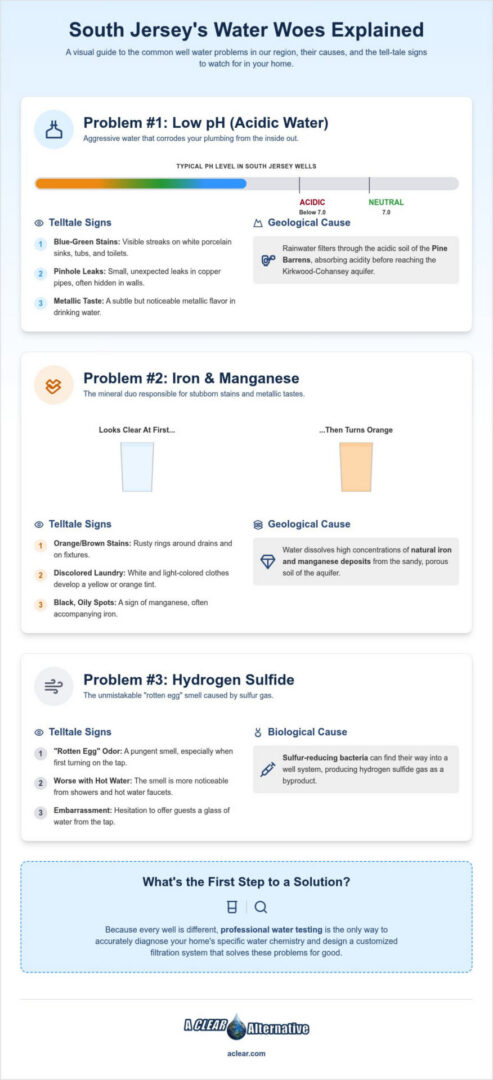
Our local ecosystem, particularly the Pine Barrens, plays a significant role in your water’s acidity. As rainwater filters through cedar swamps and thick layers of pine needles, it becomes naturally acidic. This results in a low pH level, often falling well below the neutral 7.0 mark. While the state might classify this water as technically safe to drink, it’s incredibly “aggressive” toward your home’s infrastructure. Acidic water acts as a solvent, slowly dissolving the copper from your pipes and the metal components in your water heater. If you notice blue-green stains on your fixtures, your water is likely damaging your plumbing from the inside out.
Private Well vs. City Water Challenges
If you live in a rural or semi-rural part of South Jersey, you’re essentially your own “water utility manager.” Unlike municipal systems that undergo rigorous daily monitoring, private residential wells have no federal oversight. This means the responsibility for testing and treatment falls entirely on you. Groundwater isn’t uniform; it moves through different layers of sediment and mineral pockets. You might have clear water while your neighbor struggles with heavy iron in well water south jersey, simply because their well is deeper or sits on a different vein of iron-rich sand. This variability makes professional, localized testing essential for every property owner.
Identifying the ‘Big Three’ South Jersey Water Issues
Living in South Jersey often means dealing with a specific trio of water quality challenges. These aren’t just minor inconveniences; they are symptoms of your home’s ecosystem being out of balance. While your neighbors might struggle with one, you could be facing all three simultaneously. Recognizing these signs early can save you from expensive repairs and restore the comfort of your daily routine. From ruined white linens to the metallic taste in your morning coffee, these issues leave a clear trail of evidence across your fixtures and appliances.
Low pH and the Blue-Green Stain Mystery
If you notice vibrant blue or teal streaks on your white porcelain sinks, your water is likely too acidic. This happens because low pH water acts like a solvent, slowly eating away at the copper pipes inside your walls. This process, known as leaching, doesn’t just stain your tub; it thins the metal of your plumbing. Eventually, this leads to costly pinhole leaks that can cause hidden water damage. Any pH level below 7.0 is considered acidic and requires a neutralizer to stop the corrosion and protect your home’s infrastructure.
Iron and Manganese: The Staining Duo
The most visible struggle for local homeowners is iron in well water south jersey. You might see “clear water iron,” which looks fine at first but turns orange after sitting in a glass, or “red water iron,” which comes out of the tap already discolored. Manganese often accompanies iron, leaving behind black, oily spots and a bitter, metallic taste. Standard water softeners often fail to handle these heavy mineral loads effectively. For those looking into professional methods for treating iron and manganese, it’s clear that specialized filtration is necessary to keep your laundry bright and your fixtures pristine.
Sulfur: Dealing with the Rotten Egg Odor
Few things ruin a relaxing shower faster than the pungent smell of rotten eggs. This odor is caused by hydrogen sulfide gas, often produced by sulfur-reducing bacteria that find their way into your well system. The emotional toll is significant; it makes you hesitant to offer guests a glass of water or feel truly clean after a bath. You’ll likely notice the smell is much stronger in the hot water line. This is because the magnesium anode rod in your water heater reacts with the sulfur, intensifying the gas. It’s a frustrating problem, but modern filtration can make your home smell fresh again. If you’re tired of managing these symptoms alone, a professional water quality assessment is the first step toward a permanent solution.
The Hidden Costs of Ignoring Poor Water Quality
Ignoring the quality of your water is an expensive gamble. While the visible stains are a nuisance, the invisible damage happening inside your walls and appliances is where the real financial burden lies. High mineral content and acidity act like sandpaper on the internal components of your home. If you’re dealing with iron in well water south jersey, you aren’t just losing the battle against orange sinks; you’re likely cutting the lifespan of your water heater and dishwasher in half. Modern, high-efficiency appliances are designed with delicate sensors and narrow water lines that clog easily when mineral scale or iron sludge begins to build up.
In communities like Medford Lakes, water quality is also a significant factor in real estate. The New Jersey Private Well Testing Act mandates comprehensive testing during any property transfer. A failed test or evidence of long-term plumbing corrosion can stall a sale or force a seller to provide steep credits at closing. Investing in a professional filtration system isn’t just a home improvement; it’s a proactive strategy to protect your home’s equity and ensure a smooth transition when it’s time to move.
Infrastructure Damage and Pinhole Leaks
Aesthetic and Personal Impacts
Your quality of life depends on the water you use every day. Hard water and iron in well water south jersey can make your skin feel perpetually itchy and leave your hair feeling brittle or straw-like. To compensate, you likely find yourself buying more expensive shampoos and harsher chemicals—and for your four-legged family members, using clean grooming products like Essencera becomes just as vital. This “hidden tax” on your grocery bill adds up quickly. Transitioning to filtered water allows you to use up to 50% less soap and detergent while enjoying the soft, hydrated feeling that defines a modern, aesthetic lifestyle. It’s about more than just plumbing; it’s about the freedom to enjoy your home without the constant scrub-and-repair cycle.
Modern Solutions for South Jersey Water Treatment
Restoring your home’s water quality isn’t about installing a bulky, industrial eyesore in your basement. It’s about integrating modern technology that works silently to enhance your lifestyle. Because every well in the Kirkwood-Cohansey aquifer has its own mineral profile, the process must begin with professional well water testing. Guessing at a solution often leads to wasted money on equipment that can’t handle the specific concentration of iron in well water south jersey. Once we have a clear digital map of your water chemistry, we can design a system that targets your specific pains, whether that’s blue stains on your tile or a metallic taste in your glass.
The Role of Acid Neutralizers and Softeners
To stop the corrosive cycle described earlier, we must balance your water’s pH. An acid neutralizer is a sacrificial media tank that balances water chemistry by slowly dissolving natural minerals like calcite or magnesium oxide into the flow. This raises the pH to a neutral level, effectively “disarming” the water before it hits your copper pipes. For homes with high mineral hardness, modern high-efficiency water softeners provide a sleek solution. These newer systems are remarkably intelligent; they use significantly less salt and water than older models while ensuring your skin feels soft and your glassware stays spot-free.
Advanced Filtration: Iron, Sulfur, and UV
Dealing with heavy iron in well water south jersey or that pervasive rotten egg smell requires a more specialized touch. Today’s whole house water filtration systems often utilize chemical-free air injection technology. This process oxidizes iron and sulfur on contact, allowing the system to trap the particles and flush them away without the need for harsh additives. If you’re concerned about microbiological safety, UV sterilization offers a high-tech shield. It uses ultraviolet light to deactivate bacteria and viruses, providing total peace of mind without changing the taste or smell of your water. Combining these technologies creates a “set it and forget it” experience, giving you the freedom to enjoy your home without a second thought about what’s coming out of the tap.
For the ultimate upgrade in kitchen aesthetics and health, Reverse Osmosis (RO) remains the gold standard. These compact systems fit discreetly under your sink, removing up to 99% of remaining impurities to provide bottled-water quality directly from a dedicated designer faucet. It’s the final step in creating a home where every drop of water supports your well-being.
If you’re ready to stop managing symptoms and start enjoying pure water, schedule your comprehensive water analysis today.
Why Local Expertise Matters for Your NJ Water
Since 1991, A Clear Alternative has been the trusted partner for families navigating the unique challenges of the Tri-State area’s groundwater. National franchises often rely on generic, one-size-fits-all settings that fail to account for the specific mineral concentrations in our local aquifers. Effectively managing iron in well water south jersey requires more than just a piece of equipment; it demands a deep understanding of the Kirkwood-Cohansey system and how it reacts to seasonal changes. Because we live and work in the same communities we serve, we know exactly how to calibrate your system for the aggressive nature of Pine Barrens soil, ensuring your water remains clear and your pipes stay protected.
Choosing a local expert also means you have a safety net when the unexpected happens. Well pumps and filtration systems don’t always wait for convenient business hours to malfunction. Our 24/7 emergency support provides the security of knowing that a professional neighbor is only a phone call away. Whether it’s a sudden loss of water pressure or a filtration failure, we prioritize restoring your home’s comfort and your family’s peace of mind without the delays of a distant corporate call center.
The Family-Owned Difference
We believe that high-quality water should be effortless for the homeowner. Being family-owned allows us to build long-term relationships based on transparent analysis and personalized care. We don’t just install a system and disappear; we offer customized maintenance plans to keep your water at peak quality year-round. This includes our convenient water softener salt delivery service, which removes the heavy lifting from your routine. By handling the logistics of your water treatment, we give you the freedom to simply enjoy the benefits of a modern, aesthetic home environment.
Comprehensive Water Services
Our commitment to your home extends beyond the filtration tank. We provide a full spectrum of water solutions, from state-certified laboratory testing to professional system design. If you are building a new home or dealing with a dry well, our licensed potable water hauling service can deliver bulk water for pools or emergency storage. We see ourselves as your total water partner, dedicated to ensuring every drop in your home meets the highest standards of clarity and safety. Your journey to better living starts with a clear understanding of your current water chemistry. Ready for clear water? Schedule your professional water test today and experience the difference that local expertise makes.
Take Control of Your Home’s Water Quality Today
You’ve seen how the unique geology of the Kirkwood-Cohansey aquifer impacts your daily life and why ignoring these signs can lead to expensive plumbing repairs. Addressing iron in well water south jersey is the most effective way to preserve your home’s aesthetic and protect your high-end appliances from long-term damage. By choosing a solution tailored to our local soil, you’re investing in the longevity of your property and the quality of your morning routine.
A Clear Alternative has been serving families across the Tri-State area since 1991. As a licensed potable water hauler with 24/7 emergency support, we provide the local expertise and reliable partnership you need to maintain a stress-free home. We believe that clean water is a fundamental part of a modern, comfortable lifestyle; we’re here to help you achieve it without the guesswork.
Ready to see the difference for yourself? Get a Professional Water Analysis from A Clear Alternative and discover the path to a clearer, fresher home. Your journey to better water starts with a single, simple step toward total confidence in your tap.
Frequently Asked Questions
Is South Jersey well water safe to drink without a filter?
Safety depends entirely on your specific laboratory test results, but most local wells contain “nuisance” minerals that exceed aesthetic guidelines. While the NJDEP regulates health-based contaminants, minerals like iron and manganese often reach levels that cause unpleasant tastes and odors. Because groundwater quality can shift, the only way to ensure your water is truly pure is through regular, professional testing and a properly maintained filtration system.
Why is my water turning my sinks blue or green?
Vibrant blue or green stains are a definitive sign that your water is acidic and is actively corroding your copper plumbing. As the low-pH water moves through your pipes, it leaches copper from the metal walls, which then deposits as a colorful residue on your fixtures. This isn’t just an aesthetic issue; it’s a warning that your pipes are thinning and are at a high risk for developing hidden pinhole leaks.
How often should I have my well water tested in New Jersey?
You should test your well for bacteria and nitrates at least once a year, with a comprehensive mineral panel every three to five years. It’s also vital to test whenever you notice a change in the taste, color, or smell of your tap. Regular checks are the best way to confirm that your equipment is still effectively managing iron in well water south jersey and that your home remains protected from shifting groundwater chemistry.
What is the best way to get rid of a rotten egg smell in water?
The most effective, chemical-free solution for rotten egg odors is an iron and sulfur filtration system equipped with air injection technology. This system works by introducing oxygen into the water to oxidize the hydrogen sulfide gas into a physical particle. Once oxidized, the sulfur is easily trapped by the filter media and flushed away, leaving your water smelling fresh and clean without the use of harsh chlorine or bleach.
Does a water softener fix acidic water problems?
No, a water softener is not designed to raise pH or neutralize acidity. Softeners specifically target “hard” minerals like calcium and magnesium to prevent scale buildup. If you have acidic water, you need an acid neutralizer to balance the chemistry. In fact, running acidic water through a standard softener can actually damage the softening resin and shorten the lifespan of the unit, making a dual-system approach necessary for many South Jersey homes.
What are the most common contaminants in South Jersey groundwater?
The most frequent challenges local homeowners face are low pH, manganese, and iron in well water south jersey. Our region’s sandy soil and the Kirkwood-Cohansey aquifer’s natural composition make these minerals incredibly common. In some specific areas, you may also find nitrates from agricultural runoff or trace amounts of volatile organic compounds. A customized filtration strategy is the only way to address this specific local mineral profile effectively.
Can I fill my swimming pool with my own well water?
You can use your well, but it often leads to a chemical nightmare when the chlorine reacts with the minerals in the water. High iron content can turn a clear pool brown or green almost instantly once it’s shocked. To avoid the stress of balancing heavily mineralized water, many residents choose a licensed potable water hauler to provide a clean, pre-filtered start for their swimming season.
How do I know if my acid neutralizer is working correctly?
The clearest indicator is the absence of new blue-green stains on your fixtures and a neutral reading on a professional pH test. You should also visually check the media level in your tank periodically. Since an acid neutralizer uses sacrificial minerals to balance your water, the media level will naturally drop over time as it’s consumed. If you notice stains returning or a drop in water pressure, it’s likely time for a media refill.