
Emergency Well Water Delivery: What to Do When Your Well Runs Dry
You turn on the faucet to start your morning routine, but only a hollow hiss of air greets you. It’s a jarring moment that instantly disrupts your home’s harmony and leaves you feeling stranded. When the water stops, your focus shifts from enjoying your daily life to worrying about basic sanitation and the potential for staggering repair bills. We know this stress is overwhelming. You deserve a solution that brings back your comfort and confidence immediately.
We’re here to help you regain control and restore your lifestyle with ease. This guide explains how to arrange emergency well water delivery to get your taps flowing again safely. You’ll learn how professional hauling acts as a vital bridge, providing your home with certified potable water while you investigate the underlying cause of the well failure. We’ll show you how to protect your infrastructure and ensure your water is safe, so you can return to the modern, worry-free living you value.
Key Takeaways
- Discover how to quickly restore your home’s water flow by pumping bulk supplies directly into your cistern or holding tank.
- Learn why certified emergency well water delivery is the only safe way to meet drinking water standards while protecting your plumbing.
- Identify the warning signs of well pump burnout and mechanical failure before they turn into permanent, costly infrastructure damage.
- Find out how to prepare your property for a heavy-duty tanker by locating access points and clearing a path for seamless service.
- Understand how 24/7 expert support transforms a stressful outage into a simple, professional step toward long-term water security.
Immediate Solutions for a Dry Well: How Emergency Water Delivery Works
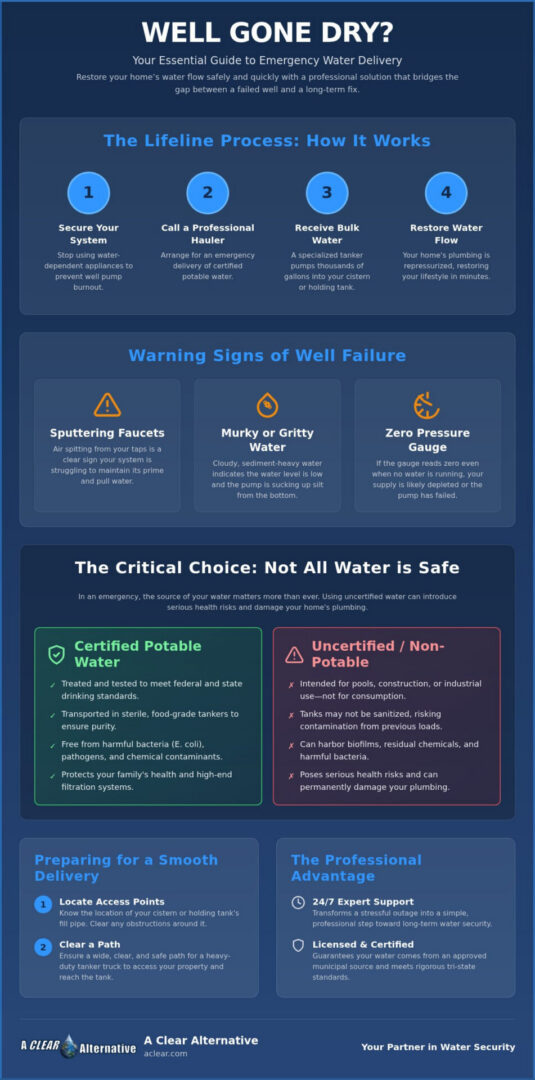
You turn the tap. Nothing happens. When your well fails, the immediate priority isn’t just fixing a pump; it’s restoring your home’s heartbeat: the water supply. You need a solution that works right now. The first step is to stop using any water dependent appliances to prevent your well pump from burning out. Once you’ve secured your equipment, the most effective way to regain your lifestyle is through emergency well water delivery. This service bridges the gap between a dry tank and a long term fix.
A professional hauling service uses specialized tanker trucks to bring thousands of gallons of potable water directly to your property. Instead of waiting for the water table to recover or for a driller to arrive, a technician pumps this water into your cistern or holding tank. This process bypasses the well’s current issues and pressurizes your home’s plumbing within minutes. It’s a clean, efficient, and sophisticated approach to a crisis that feels anything but simple. By choosing a licensed potable hauler, you ensure the water entering your home meets strict safety standards, protecting your family and your high end filtration systems.
Signs Your Well is Failing vs. Running Dry
Understanding what a water well is and how it interacts with the local water table helps you spot trouble early. If your faucets start sputtering or spitting air, your system is struggling to maintain a prime. Murky, sediment heavy water often indicates that the water level has dropped so low that the pump is sucking up silt from the bottom. Before you panic, check your well pressure gauge. If the needle sits at zero even when no water is running, your pump isn’t just tired; your supply is likely depleted. Catching these signs early can save your pump from a total mechanical meltdown.
The Speed of Emergency Hauling
When the water stops, every hour feels like a day. That’s why 24/7 support is essential for well dependent homes. In areas like Tabernacle and Medford Lakes, local dispatch makes a massive difference in response times. During extreme drought conditions or heat waves, demand for water spikes, and local expertise allows for smarter routing and faster arrivals. A professional team understands the local geography and the specific needs of residential cisterns. They coordinate the logistics so that from your first call to a full tank, the process is seamless and stress free. You don’t have to navigate this alone; modern emergency well water delivery is designed to get your life back to normal with zero friction.
Potable vs. Non-Potable: Why Licensed Hauling Matters
In a crisis, it’s tempting to think that any water is good water. If your taps are dry, you just want them to run again. But there’s a massive difference between the liquid used for dust control on a construction site and the water your family drinks. Potable water is specifically treated and tested to meet federal and state drinking standards. When you arrange for emergency well water delivery, you aren’t just buying volume. You’re buying peace of mind that your water is free from pathogens and chemical contaminants.
Using non-potable or “construction-grade” water in your home poses serious risks. These trucks often carry water intended for pools or industrial use. Their tanks might not be food-grade or regularly sanitized. Residual chemicals or bacteria from previous loads can easily migrate into your home’s pipes. At A Clear Alternative, we maintain a sterile environment for every tanker. This ensures that the water entering your holding tank is as pure as the day it was treated at the source. If you’re currently facing a dry well, choosing a licensed potable water hauler is the first step toward a safe recovery.
The Health Risks of Unlicensed Water
Visual clarity is a poor indicator of safety. Water that looks crystal clear can still harbor harmful bacteria like E. coli or Coliform. As a homeowner, you are responsible for making sure your private well water is safe, and that responsibility extends to the water you have delivered. Uncertified tanks are breeding grounds for biofilms. Professional haulers maintain specific chlorine residuals in their bulk water. This residual acts as a final layer of protection, keeping the water safe while it sits in your cistern before use.
Tri-State Standards for Water Hauling
Regulations for water transport in Pennsylvania, New Jersey, and Delaware are rigorous for a reason. State health departments require haulers to undergo regular inspections and maintain detailed logs of their water sources. You should always feel empowered to ask for a hauler’s credentials or health department certifications before they hook up to your system. Every load must come from an approved municipal source. This guarantee ensures that your emergency well water delivery isn’t just a temporary fix, but a high-quality lifestyle choice that prioritizes your family’s health and well-being.
Beyond the Tanker: Diagnosing Why Your Well Failed
Getting your water back is a relief. It’s the moment you can finally relax and return to your routine. While emergency well water delivery solves the immediate crisis, it’s often a signal that something deeper is happening with your system. We see it as a vital bridge to safety, but it’s not a permanent cure for a failing well. If your tank is empty, you’re likely dealing with a mechanical breakdown or a shift in the local water table. Ignoring the root cause leads to repeat outages and unnecessary stress that disrupts your lifestyle.
One of the biggest risks during a dry event is pump burnout. When the water level drops below the intake, your pump works overtime to pull liquid that isn’t there. This creates friction and intense heat, which can melt internal components in minutes. Additionally, as the water level lowers, the pump often sucks up heavy sediment from the bottom of the well. This grit doesn’t just stay in the well; it travels into your home, potentially clogging your plumbing and damaging your sophisticated hardware. Following an EPA guide to well water safety is a smart way to understand these risks. Once your supply is restored, scheduling professional well water testing is essential to check for any post-crisis contamination or bacterial intrusion.
Common Causes of Well Failure in South Jersey
South Jersey aquifers are generally reliable, but seasonal drought is a frequent culprit in our region. When the water table dips, shallow wells are often left stranded. It’s a natural cycle, but it’s hard on your home’s infrastructure. Mechanical failures are just as common. A faulty pressure switch or a waterlogged pressure tank can stop your system even if there’s plenty of water underground. If you have an acid neutralizer, be aware that well-bottom sediment can overwhelm the media bed. This reduces its effectiveness and can even cause a complete blockage in your treatment line.
Protecting Your Home Infrastructure
Action is your best defense when the water stops. If you notice your pressure dropping or air sputtering from the faucet, turn off the power to your well pump immediately. This simple step prevents the motor from burning out while you wait for your emergency well water delivery. After the haul is complete, take a moment to inspect your whole house water filtration system. Sediment from the dry event often clogs pre-filters, which can restrict your new water flow. For a long-term solution, you might consider deepening your well or installing a larger atmospheric storage tank. These upgrades ensure your home remains a sanctuary of comfort, no matter what happens underground.
Preparing for Emergency Delivery: Logistics and Access
Restoring your home’s water supply is a coordinated effort. It starts with preparation. Before the tanker arrives, you need to know exactly where the water is going. Locate your cistern, holding tank, or well-head access point. If it’s buried, clear away any dirt or debris so the technician can work efficiently. Next, focus on the path. A heavy-duty tanker truck needs a clear, wide approach to reach your fill point. Move any vehicles and check for low-hanging branches that could snag the truck. Most residential properties require between 1,000 and 5,000 gallons for a standard emergency well water delivery. Finally, plan to be home. Verifying the fill and inspecting your system for leaks ensures the job is done right the first time.
Tanker Access and Property Safety
Properties in Shamong and Tabernacle often feature gravel or winding driveways. These surfaces are sensitive to the weight of a full tanker. Let your hauler know about any soft spots or steep inclines before they arrive. It’s also vital to identify your septic field. You must keep heavy trucks off these areas to prevent crushing your pipes or tank. Most trucks carry specific hose lengths, usually reaching up to 150 feet, so proximity to the fill point is crucial for a fast and safe delivery. If your tank is far from the driveway, mention this during your initial call to ensure the team brings enough hose.
Managing Your Delivered Water
A typical residential holding tank has a capacity of approximately 1,000 to 1,500 gallons. Once the tank is full, you aren’t quite finished. You’ll likely need to prime your pump to remove air from the lines. This restores pressure to your faucets and appliances instantly. Monitoring your usage is also a smart move. While you have a fresh supply, being mindful of water consumption helps the delivery last until your well is fully repaired. If you need immediate help restoring your supply, you can schedule your bulk water delivery with our expert team today.
Managing a dry well is stressful, but the right logistics make it manageable. By clearing the way and knowing your tank’s capacity, you turn a crisis into a routine service visit. This preparation protects your landscaping and ensures the emergency well water delivery is seamless. You’ll be back to enjoying your home’s comfort in no time, with the peace of mind that your infrastructure is secure.
A Clear Alternative: 24/7 Emergency Water Support
A dry well is more than a technical glitch; it’s a disruption to your peace and your daily rhythm. You need a team that responds with urgency and treats your home with the care it deserves. Since 1991, A Clear Alternative has served as a trusted Tri-State partner, helping families navigate these high pressure moments with ease. We’ve spent over 30 years refining our process to ensure that when you call for emergency well water delivery, you receive more than just a refill. You get the expertise of a family owned business that understands the unique geology and community needs of Medford Lakes and Tabernacle.
What sets us apart is our dual expertise. Most haulers simply drop off water and leave, but we look at the bigger picture. We’re licensed potable water haulers and master level water treatment specialists. This means we don’t just fill your tank; we understand how that water interacts with your Acid Neutralizers, Water Softeners, and Reverse Osmosis Systems. We ensure that every drop delivered is safe, potable, and compatible with your home’s sophisticated infrastructure. Our 24/7 emergency response team is always ready. This gives you the confidence that your water security is never more than a phone call away.
Comprehensive Water Security
True water security is about prevention as much as it is about response. We offer a full spectrum of services designed to keep your home running smoothly year round. This includes everything from emergency well water delivery to our convenient water softener salt delivery service. By enrolling in an annual maintenance program, you can identify potential well issues before they turn into midnight crises. Our commitment is to provide clean, potable water that enhances your quality of life and protects your long term investment in your home.
Contact Us for Immediate Assistance
If your faucets are dry right now, don’t wait for the situation to worsen. Our emergency dispatch line is open 24/7 to get your household back on track. When you call, please have your tank size, property location, and any specific access points ready for our technicians. This information helps us deploy the right equipment and reach you faster. We’ve built our reputation on being accessible and human centric, breaking down the old barriers between service provider and client. Restore your water and your confidence today by reaching out to the experts who understand your needs.
Restore Your Home’s Harmony and Flow
A dry well doesn’t have to mean a disrupted life. You’ve learned that professional emergency well water delivery is the most reliable bridge to restoring your home’s comfort while protecting your valuable plumbing infrastructure. By choosing a licensed potable hauler, you ensure your family’s health remains the top priority. This service isn’t just a temporary fix; it’s a professional solution that gives you the breathing room to diagnose underlying mechanical issues and secure your system against future outages.
Since 1991, our family owned and operated team has provided the Tri-State area with sophisticated water solutions. As a Licensed Potable Water Hauler with 24/7 emergency dispatch, we’re ready to transform your water crisis into a seamless recovery. Don’t let an empty tank diminish your quality of life. Take the proactive step toward a secure, high quality water supply right now.
Request Emergency Water Delivery from A Clear Alternative and get your taps flowing again with confidence. We’re here to support your modern lifestyle every step of the way.
Frequently Asked Questions
How much water can a standard delivery truck hold for an emergency?
A standard tanker truck typically carries between 2,000 and 6,000 gallons of water per load. For most residential properties, a delivery of 1,000 to 5,000 gallons is sufficient to fill a cistern or holding tank. This volume usually restores a household’s routine for several weeks while you address the root cause of your well’s failure. Having this bulk supply on hand prevents the stress of daily water shortages.
Is the delivered well water safe for drinking and cooking?
Yes, the water is safe provided you choose a licensed potable water hauler. We source our water from approved municipal supplies that meet all state and federal safety standards. This ensures the emergency well water delivery you receive is safe for drinking, cooking, and bathing. We maintain sterile tanker environments and follow strict sanitization protocols to prevent any contamination during transport, keeping your family’s health secure.
How long does it take for an emergency water truck to arrive?
Arrival times vary based on your location and current demand, but our 24/7 emergency dispatch team prioritizes crisis situations. In local areas like Tabernacle and Medford Lakes, we aim for the fastest possible response to minimize your downtime. We coordinate logistics immediately after your call so you aren’t left waiting without basic sanitation. Our goal is to restore your home’s water flow and your peace of mind as quickly as possible.
Will the weight of the water truck crack my driveway?
A fully loaded tanker is heavy, so there is a risk for thin asphalt, decorative pavers, or soft gravel driveways. We recommend discussing your driveway’s condition with our team before we arrive. Our technicians are skilled at positioning the truck safely, and we often utilize long hoses to keep the vehicle on the most stable ground possible. This approach protects your property’s aesthetics while ensuring a successful fill.
Can I pump delivered water directly into my well?
You should never pump delivered water directly into your well casing. This is highly inefficient because the water will likely soak into the surrounding ground rather than staying in the well for your pump to use. Instead, we pump bulk water directly into your atmospheric storage tank or cistern. This method ensures the water stays contained and pressurized for your home’s immediate use without wasting a drop.
What is the difference between a water hauler and a water treatment company?
A water hauler focuses on the logistics of transporting bulk water, while a treatment company specializes in filtration hardware and water quality. Our team provides a unique advantage by offering both licensed hauling and master level treatment expertise. We don’t just deliver water; we understand how it interacts with your softeners and neutralizers. This dual knowledge ensures your entire system remains healthy and functional after the delivery.
Do I need to disinfect my pipes after a dry well event?
Disinfecting your pipes is often a smart precaution after your well runs dry. When a system loses pressure, it can pull in sediment or bacteria from the bottom of the well casing that may linger in your lines. We suggest professional water testing after your emergency well water delivery to confirm your system is clean. This simple step ensures that the fresh water in your tank stays pure as it travels to your faucets.
How many gallons of water does an average family use per day during an emergency?
An average family typically uses between 50 and 100 gallons per person each day, though you can significantly reduce this during an emergency. By limiting laundry and long showers, a 2,000 gallon delivery can easily support a family of four for two weeks or more. Understanding your daily consumption helps you manage your delivered supply effectively. This conservation gives you more time to coordinate permanent repairs to your well infrastructure.