
Acid Neutralizer Guide: Protecting Your South Jersey Home from Acidic Well Water (2026)
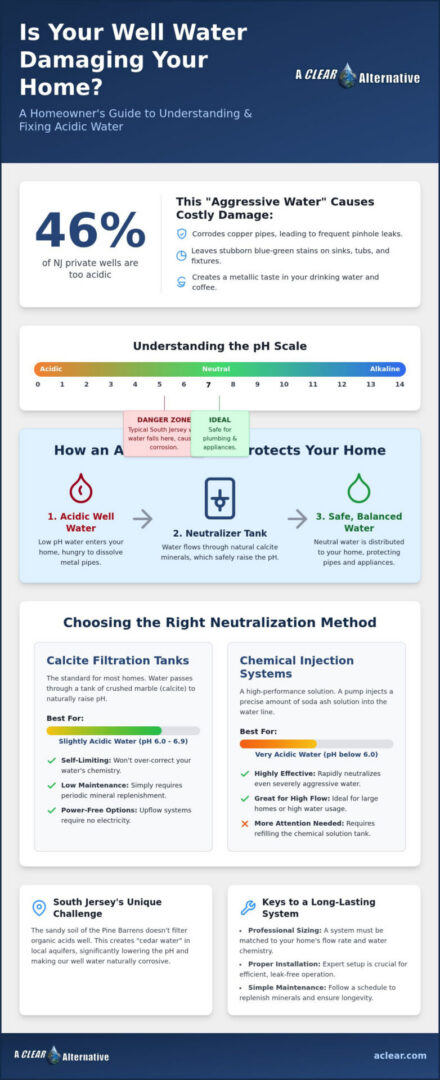
Nearly 46% of private wells tested across New Jersey show pH levels that are far too acidic for a healthy home. If you’re seeing stubborn blue-green stains on your sinks or dealing with a strange metallic taste in your morning coffee, your South Jersey well is likely part of that statistic. These symptoms aren’t just cosmetic. They signal aggressive water that’s quietly corroding your copper pipes and causing frequent, costly pinhole leaks. Installing a high quality acid neutralizer is the most effective way to stabilize your water chemistry and protect your home’s infrastructure for years to come.
It’s exhausting to feel like your own plumbing is a ticking time bomb, especially when you’re worried about lead leaching from older fixtures. You deserve the peace of mind that comes with crystal clear, safe water. In this guide, you’ll learn how to accurately identify acidic water and select the perfect acid neutralizer system to end corrosion for good. We’ll walk through the latest 2026 technology and local solutions, ensuring your plumbing and appliances live a long, leak-free life while restoring your confidence in every drop that comes from your tap.
Key Takeaways
- Understand how an acid neutralizer serves as your home’s “immune system” by using natural minerals to balance pH and stop aggressive water damage.
- Identify the specific red flags of acidic water, from those frustrating blue-green bathtub stains to the hidden pinhole leaks threatening your copper pipes.
- Compare the most effective neutralization methods, including the key differences between calcite filtration and soda ash injection systems.
- Learn why professional sizing and local South Jersey expertise are essential for a system that runs discreetly and efficiently.
- Discover the simple maintenance steps that guarantee clear, stain-free water and a longer lifespan for your home’s appliances.
What is an Acid Neutralizer and Why Does Your Well Need One?
Think of an acid neutralizer as the essential immune system for your home’s infrastructure. It’s a specialized filtration tank that works behind the scenes to balance your water’s chemistry before it ever reaches your faucets. By circulating your well water through a bed of natural mineral media, usually calcite, the system raises the pH to a safe, non-corrosive level. This is a vital step for any South Jersey well testing below 7.0 on the pH scale. Without this intervention, your water is considered “aggressive,” meaning it’s chemically hungry to dissolve the very pipes and fixtures it flows through every day.
The Science of Low pH Water
The pH scale is a simple 0 to 14 measurement, where 7.0 represents the ideal balance for residential water. When your water dips below that neutral mark, it stops being a passive liquid and starts acting like a solvent. Fundamentally, neutralization is a chemical reaction where an alkaline material, like the calcite in your tank, reacts with the acid to stabilize the solution. This acidity often stems from dissolved carbon dioxide or decaying organic matter trapped in the ground. Interestingly, the “soft” water many South Jersey residents enjoy is actually more prone to acidity. Because it lacks dissolved minerals like calcium to buffer the pH, it attacks your copper pipes with much more intensity than “hard” water would.
South Jersey’s Unique Acidity Problem
South Jersey’s geography isn’t just unique; it’s demanding for homeowners. The Pine Barrens geology creates a specific challenge for residents in Tabernacle, Shamong, and Medford Lakes. Our sandy soil doesn’t filter out organic acids as effectively as the clay-heavy soils found in other regions. This leads to the famous “cedar water” phenomenon found in our local aquifers. These organic acids drop the pH of local wells significantly, making the water highly corrosive to metal plumbing. While city water is treated and balanced at a central plant, well owners are their own utility managers. Choosing a high quality acid neutralizer isn’t just a maintenance task. It’s a smart lifestyle choice that ensures your water feels as good as it looks, preserving your appliances and your long-term peace of mind.
Calcite vs. Soda Ash: Comparing Acid Neutralization Methods
Choosing the right acid neutralizer isn’t just about picking a tank; it’s about matching technology to your specific chemistry. If your pH is only slightly low, a natural mineral approach is usually best. For more aggressive water, you might need a more active injection system. Your goal is a solution that fits your lifestyle and protects your home’s aesthetic appeal. Acidic water creates a range of aesthetic problems like metallic tastes and stained laundry, so picking the right tool for the job is the first step toward a worry-free home.
Calcite Filtration Tanks (The Standard)
Calcite tanks are the gold standard for most South Jersey homes. They work by passing water through a bed of crushed marble. As the acidic water flows over these mineral rocks, it slowly dissolves them. This process naturally raises the alkalinity. One major benefit is that calcite is self-limiting. It only dissolves as much as the water needs to reach a neutral state, so you don’t have to worry about over-correcting your water chemistry.
You can choose between backwashing and upflow designs. Backwashing systems use a control valve to periodically rinse the media, preventing clogs and keeping the mineral bed active. Upflow systems are simpler and don’t require power, but they can struggle if your water has high sediment levels. For water that needs an extra push, we often mix in magnesium oxide, sometimes called Corosex. This acts as a turbocharger for the calcite, increasing the reaction speed for slightly more stubborn acidity levels.
Chemical Injection Systems
When your well water tests significantly below 6.0, a standard media tank might not be fast enough to neutralize the acid. This is where chemical injection systems shine. These systems use a precise metering pump to inject a solution of soda ash or potash directly into your water line. It’s a high performance approach often used in commercial settings or homes with very high flow rates where contact time in a standard tank is limited.
While these systems are incredibly effective, they do require a bit more attention than a standard acid neutralizer tank. You’ll need to regularly mix and refill the solution tank to keep the system running. However, the trade-off is total control over your water’s pH level, regardless of how acidic the source water is. If you’re unsure which path is right for your home, you can schedule a professional water test to get a clear picture of your needs and find the most efficient solution for your plumbing.
3 Signs You Need an Acid Neutralizer in Your Home
Living with well water shouldn’t feel like a constant guessing game. Many South Jersey homeowners notice subtle changes in their water quality long before a major pipe failure occurs. Recognizing the common signs of acidic water allows you to act proactively. An acid neutralizer is the definitive solution to these issues, turning aggressive water into a gentle, life-enhancing resource that protects your family and your property.
The Visual Warning: Blue-Green Stains
If your white porcelain tubs or sinks are developing vibrant blue or teal rings around the drain, your water is literally eating your plumbing. This isn’t just a cleaning nuisance. It’s a chemical reaction where acidic water strips copper from the inside of your pipes and redeposits it on your fixtures. Unlike the orange streaks of iron or the crusty white buildup of hard water, these teal stains are a direct SOS from your copper lines. For a deeper look at remediation, check out our resource on Fixing Blue-Green Stains in Sinks: A Guide for NJ. These stains are often the most visible “smoking gun” that your pH levels have dropped into the danger zone.
The Structural Warning: Pinhole Leaks
Pinhole leaks are the silent killers of residential plumbing. This process, known as pitting, occurs when the acid in your well water focuses its energy on a single tiny spot in the copper wall, eventually boring through it. You’ll often find these leaks near joints or elbows first. Because they start as a slow drip, they often go unnoticed behind drywall or under floorboards until mold or wood rot sets in. Investing in an acid neutralizer often pays for itself simply by preventing the need for a full home repipe. Repairing a single leak is a temporary fix; addressing the water chemistry is a permanent solution for your home’s health.
Beyond the pipes, your morning routine often provides the final clue. A sharp, metallic, or “pennylike” taste in your water is a clear indicator of high copper content caused by acidity. You might also notice that your water heater or dishwasher isn’t lasting as long as it should. Acidic water aggressively attacks heating elements and metal seals, leading to premature appliance failure. Protecting these investments starts with a simple water test and a modern filtration strategy that keeps your home running smoothly and efficiently.
Selecting and Maintaining Your Acid Neutralizer System
Choosing the right acid neutralizer system is about more than just finding a space in your basement. It’s about precision and understanding your home’s unique rhythm. A common mistake is undersizing the unit, which leads to poor results. If your home has high water demand, the water needs enough “contact time” with the mineral media to actually change its chemistry. If the tank is too small, the water rushes through too quickly, leaving it just as aggressive as when it left the well. Getting the sizing right ensures your water is perfectly balanced before it ever hits your copper pipes.
Most modern installations in 2026 favor backwashing systems. These units require a power source and a drain line, but they’re much more reliable for long-term use. The backwash cycle periodically fluffs the media, which prevents it from packing down or “channeling.” While upflow systems are simpler and don’t require power, they often require more frequent manual checks to ensure the water is still flowing through the media correctly. For most South Jersey families, the automated reliability of a backwashing system is the smarter, more discreet choice.
The Importance of Professional Water Testing
A simple DIY strip test might tell you your pH is low, but it won’t tell you how to fix it. Professional Well Water Testing in Tabernacle, Shamong, and Medford Lakes is the first step in designing a system that works. We don’t just look at the pH; we measure your flow rate in Gallons Per Minute (GPM). This is critical because an improperly sized filter can cause a frustrating drop in water pressure. By analyzing your specific water chemistry, we can determine if you need pure calcite or a specialized blend to handle your home’s specific needs.
Routine Maintenance for Longevity
Maintaining your system is surprisingly simple, but it’s essential for keeping your water clear. You can perform a quick “flashlight test” by shining a bright light through the side of the translucent tank. This lets you see the media level without opening the system. Over time, the calcite dissolves as it does its job, so you’ll need to replenish it. If you let the level get too low, your water will slowly become acidic again, and those blue-green stains will return.
Annual professional service is the best way to prevent “cementing.” This happens when the mineral media sits too long and hardens into a solid block, rendering the filter useless. A quick yearly checkup keeps the media loose and effective, ensuring your acid neutralizer continues to protect your home’s infrastructure for decades. It’s a small investment in maintenance that prevents the massive headache of a full plumbing repipe. If you’re ready to secure your home’s future, schedule your professional water analysis today and let us help you find the perfect fit.
Why Tabernacle Homeowners Trust A Clear Alternative
Families in Tabernacle have relied on A Clear Alternative since 1991. We’re a family-owned and operated business, not a faceless national franchise. We understand that every well in the Tri-State area has its own personality. Our decades of experience allow us to design a custom acid neutralizer that fits your specific water chemistry perfectly. We don’t just drop off a tank and leave; we provide comprehensive service from that first diagnostic test to the annual maintenance that keeps your plumbing pristine.
Our team is available for 24/7 emergency support because we know water issues don’t follow a 9-to-5 schedule. If a pipe bursts or your system fails at midnight, you aren’t calling a distant call center. You’re calling a local neighbor who understands the urgency of protecting your home and your quality of life. This direct connection builds a bridge of trust that national brands simply can’t replicate.
Local Service vs. National Brands
Local knowledge matters when dealing with the unique aquifers of Medford Lakes and Shamong. We’ve spent over thirty years analyzing the specific mineral content and acidity levels of South Jersey wells. National companies often use “one-size-fits-all” filters that struggle with our local “cedar water” conditions. As a licensed potable water hauler, we also provide a level of security that others can’t match. We have the resources to ensure your family always has access to safe water, even during a total well failure. You can learn more about why choosing local experts makes a difference in our guide to Expert Water Treatment Companies Near Tabernacle, Shamong, and Medford Lakes.
Get Your Water Analyzed Today
The path to clear, stain-free water is simpler than you think. Our process is designed to be seamless and stress-free. We start with a professional analysis to pinpoint your exact pH and flow rate. Then, we install a modern, high-efficiency acid neutralizer tailored to your home’s needs. Finally, we handle the routine maintenance so you never have to worry about blue-green stains or pinhole leaks again. It’s a modern lifestyle choice that prioritizes your comfort and your home’s long-term value.
Don’t wait for a major plumbing disaster to act. Pinhole leaks can cause thousands in hidden damage before you even see a puddle on the floor. Reclaim your confidence in your home’s water and enjoy the peace of mind you deserve. Schedule your professional water test with A Clear Alternative today and let us take the guesswork out of your well water. We’re ready to help you achieve the crystal-clear results your family deserves.
Secure Your Home’s Future with Crystal Clear Water
Protecting your South Jersey home starts with understanding the aggressive nature of local well water. Whether you’ve noticed telltale blue-green stains or you’re worried about hidden pipe corrosion, installing a professional acid neutralizer is the most effective way to safeguard your plumbing. By balancing your pH levels today, you’re preventing expensive repipes and ensuring your appliances run efficiently for years to come. It’s about more than just pipes; it’s about the peace of mind that comes with every glass of water you pour for your family.
Since 1991, we’ve helped families in Tabernacle, Shamong, and Medford Lakes reclaim their confidence in their tap water. As South Jersey well water experts, we combine modern technology with the neighborly service you expect from a family-owned business. We’re even here with 24/7 emergency service for those moments when water issues simply can’t wait. You deserve water that feels as good as it looks, and we’re here to make that a reality for your household.
Protect your home and health—Schedule a Water Analysis with A Clear Alternative today!
Take the first step toward a healthier, worry-free home. We’re ready to help you transform your water quality and protect your investment for the long haul.
Frequently Asked Questions
Is acidic well water safe to drink?
Acidic water isn’t necessarily toxic on its own, but it becomes a health risk because of how it reacts with your plumbing. Low pH water is corrosive, meaning it leaches heavy metals like lead and copper from your pipes and brass fixtures directly into your drinking supply. While the acidity itself is an aesthetic issue, consuming these leached metals over time is unsafe for your family. Neutralizing the water is the only way to stop this chemical reaction at the source.
How much does an acid neutralizer system cost to maintain?
Maintenance for an acid neutralizer is relatively affordable compared to the massive cost of a full home repipe. Your primary ongoing expense will be the natural mineral media, such as calcite, which is consumed as it balances your water. Most homeowners also opt for a yearly professional checkup to ensure the control valve is operating efficiently and the media hasn’t hardened into a solid block. This proactive care keeps your system running discreetly for years.
How often do I need to add calcite to my neutralizer tank?
Most South Jersey households find they need to replenish their calcite media every six to twelve months. This frequency depends entirely on your family’s water usage and the initial acidity level of your well. If your water is extremely aggressive, the media will dissolve faster to compensate. You can easily monitor the level using the flashlight test on the side of the tank, ensuring you never run out of the minerals that protect your pipes.
Will an acid neutralizer fix the blue-green stains in my shower?
An acid neutralizer will stop new blue-green stains from forming, but it won’t remove the stains that are already there. These teal marks are actually copper deposits leached from your pipes. Once the system is installed and your pH is balanced, the water stops being aggressive, and the staining will cease. You’ll just need to give your fixtures one final scrub with a copper-removing cleanser to enjoy a pristine, stain-free bathroom again.
Does an acid neutralizer affect my water pressure?
A properly sized and maintained system won’t have a noticeable impact on your home’s water pressure. Pressure drops usually only happen if the system is too small for your home’s peak demand or if the mineral bed has become packed down from a lack of backwashing. When we install a system, we calculate your specific flow rate requirements to ensure you can run multiple showers and appliances simultaneously without ever feeling a dip in performance.
Can I install an acid neutralizer myself or do I need a pro?
While some DIY kits exist, professional installation is the best way to ensure your system is calibrated to your specific well conditions. A professional understands how to route the drain lines correctly and set the backwash cycles for maximum efficiency. Most importantly, a pro can perform a detailed flow-rate analysis to prevent pressure issues. Professional setup also ensures your manufacturer warranty remains valid, giving you long-term peace of mind and reliable local support.
What is the difference between a water softener and an acid neutralizer?
These two systems solve completely different problems. A water softener removes minerals like calcium and magnesium to prevent “hard” water scale and soap scum. An acid neutralizer does the opposite; it adds those minerals back into the water to raise the pH and stop corrosion. In many South Jersey towns like Tabernacle and Shamong, homes actually require both systems to achieve water that is neither too hard nor too acidic for modern plumbing.
How long does an acid neutralizer system typically last?
The main tank and digital control valve of a high-quality system typically last between 10 and 15 years. Because the mineral media is designed to be replenished as it’s used, the “filtering” part of the system never really wears out as long as you keep it filled. Regular annual service can extend the life of the mechanical components significantly. It’s a durable, long-term investment that protects your home’s infrastructure and your family’s health for a decade or more.