
The Complete Guide to Reverse Osmosis System Maintenance in 2026
If you spent hundreds of dollars on a high-end filtration setup, why does your morning coffee still taste like the local tap? Most homeowners assume their water stays pure forever, but the truth is that your equipment is only as good as your last service. Consistent reverse osmosis system maintenance is the difference between a high-performing lifestyle asset and a bulky under-sink liability. You shouldn’t have to guess which filter goes where or worry about hidden bacteria. We understand that South Jersey’s high mineral content and complex well water can make even the best systems struggle without the right professional care.
It’s completely normal to feel overwhelmed by technical manuals and conflicting advice on filter lifespans. You want the confidence of knowing every glass of water is pristine without becoming a part-time plumber. Our expert maintenance roadmap removes the guesswork, giving you a simple, predictable schedule to follow. We’ll show you how to keep your water crystal clear and your system running at peak efficiency for years to come. From identifying filter types to preventing leaks, this guide covers everything you need to transform your water quality into a seamless, high-quality experience that fits your modern lifestyle.
Key Takeaways
- Understand why a consistent schedule for reverse osmosis system maintenance is the only way to protect your family from local contaminants like PFAS and nitrates.
- Learn the precise timing for filter swaps, including why pre-filters need attention every 6 to 12 months to prevent system damage.
- Discover the “hidden” step of sanitizing your storage tank to eliminate biofilm and keep your water tasting fresh and crisp.
- Decide between the hands-on DIY approach or the “set it and forget it” luxury of professional service tailored to South Jersey’s unique well water challenges.
- Master the roadmap to extending your system’s lifespan while ensuring every glass of water reflects the premium quality you deserve.
Why Reverse Osmosis System Maintenance is Critical for Your Home
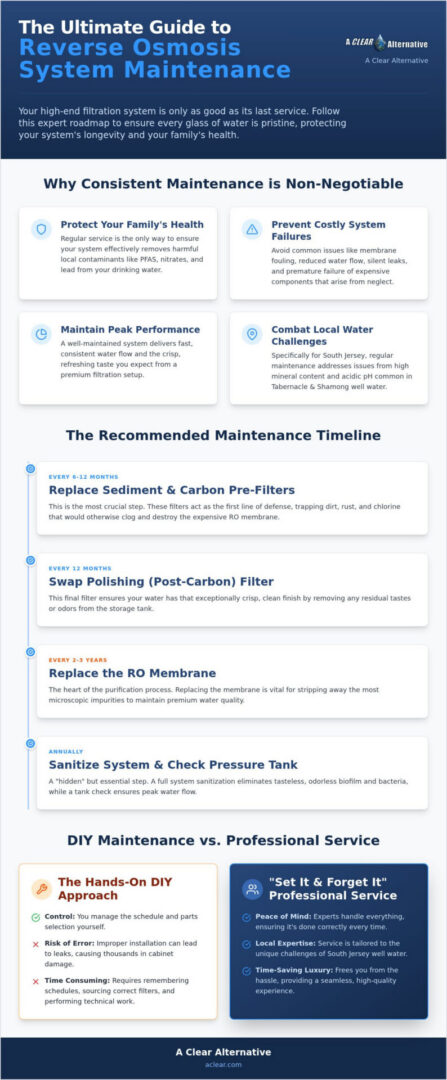
Your reverse osmosis system is a silent guardian for your home. It works behind the scenes to ensure every glass of water is a premium experience. However, this level of purity isn’t a “set it and forget it” luxury. Proactive reverse osmosis system maintenance is the only way to keep your water tasting crisp while protecting your family from modern contaminants like lead, nitrates, and “forever chemicals” like PFAS. When you ignore the schedule, you’re not just risking a change in taste; you’re allowing the very toxins you bought the system to stop back into your kitchen.
Beyond health, consistent care keeps your system running at peak performance. If you’ve noticed a slow trickle at your dedicated RO faucet, it’s likely a sign of neglect. Regular care prevents several common issues:
- Membrane fouling caused by high mineral buildup that chokes the system.
- Reduced flow rates that make filling a simple pitcher feel like an eternity.
- Small, silent leaks that can cause thousands in damage to your custom cabinetry.
- Premature failure of expensive internal components that are costly to replace.
Understanding the RO Process
Think of your RO system as a multi-stage security team. The semi-permeable membrane is the elite specialist, catching the microscopic impurities that standard filters miss. But this membrane is delicate. Pre-filters act as the first line of defense, scrubbing out larger sediment and chlorine before they can reach the membrane. When you stay on top of reverse osmosis system maintenance, you aren’t just changing parts; you’re ensuring this sophisticated process remains invisible and effective. This invisible work is what creates that signature, refreshing taste you’ve come to expect.
Local Water Factors in Tabernacle and Shamong
Living in the NJ Pinelands offers beautiful scenery, but the water chemistry here is unique. In areas like Tabernacle and Shamong, well water often carries a high mineral load and a naturally acidic pH. Acidic water can be aggressive, slowly wearing down system components if left unchecked. High iron or sulfur content, common in South Jersey, can lead to membrane fouling much faster than in city systems. This is why local water testing is the first step in any plan. It allows for a customized approach to the specific challenges of your backyard, ensuring your system isn’t working harder than it needs to.
The Ultimate Reverse Osmosis Maintenance Schedule
Consistency is the secret to a high-end lifestyle. Just as you wouldn’t skip an oil change for a luxury vehicle, your water filtration requires a steady beat of attention. A predictable reverse osmosis system maintenance plan ensures you never have to question the safety of your family’s hydration. While every home in South Jersey is different, following a standardized timeline prevents the slow degradation of water quality that often goes unnoticed until it’s too late.
- Every 6 to 12 Months: Replace your sediment and carbon pre-filters to protect the delicate internal components.
- Every 12 Months: Swap out the polishing (post-carbon) filter to maintain that crisp, clean finish.
- Every 2 to 3 Years: Test and likely replace the RO membrane, which is the heart of the purification process.
- Annually: Perform a full system sanitization and check the pressure tank to ensure peak flow rates.
Sticking to this roadmap turns a technical chore into a seamless part of your home’s wellness routine. If you’re unsure about your current water quality, starting with comprehensive water testing can help you tailor this schedule to your specific needs.
Filter-by-Filter Breakdown
Understanding each component’s role makes the process feel less like a mystery and more like a precision service. Sediment filters are your first line of defense, trapping dirt, rust, and silt that would otherwise clog the system. Carbon filters follow, acting as a chemical shield by removing chlorine and organic compounds that can physically melt the RO membrane over time. Finally, the RO membrane itself performs the heavy lifting, stripping away microscopic impurities. Because this membrane is the most expensive part of the system, keeping the pre-filters fresh is the smartest way to protect your investment.
Signs Your Schedule Needs to Move Faster
Sometimes, local conditions in places like Medford Lakes or Shamong require a more aggressive approach. You don’t always need to wait for the calendar to tell you it’s time for service. A noticeable drop in water pressure or a tank that takes hours to refill usually indicates that your filters are reaching capacity. If you detect a metallic taste, a faint odor, or see spotting on your crystal glassware, your system is signaling for help. These aren’t just inconveniences; they’re signs that your reverse osmosis system maintenance needs to happen sooner rather than later to restore your water’s premium profile.
DIY Maintenance vs. Professional RO Service
Choosing how to handle your reverse osmosis system maintenance is ultimately about your lifestyle and comfort level. Some homeowners in South Jersey enjoy the hands-on process of managing their own home systems. If you have a basic set of tools, such as a housing wrench, food-grade lubricant, and a collection of towels, you can certainly tackle the filter swaps yourself. It’s a way to stay connected to the mechanics of your home. However, it’s vital to recognize that this isn’t just about unscrewing a canister.
Small errors can lead to big headaches. A pinched O-ring or a slightly misaligned filter can cause slow, silent leaks that damage your flooring. Even more concerning is the risk of accidental contamination. Without strict hygiene protocols, you might introduce bacteria into the system during a filter change, turning your purification unit into a breeding ground for biofilm. For many busy families in Medford Lakes, professional service isn’t just a luxury. It’s a modern convenience that ensures your water remains a source of health, not a source of worry.
What a Professional Service Call Includes
A dedicated service visit goes far beyond simply swapping parts. It starts with comprehensive water testing to verify that your system is actually doing its job. We don’t guess; we confirm the performance. A professional technician will also calibrate your pressure tank. This step is often overlooked by DIYers, yet it’s essential for maintaining that strong, consistent flow at your tap. Finally, we perform a deep sanitization of the entire unit using specialized, food-grade cleaners that are more effective than standard household solutions.
Cost-Benefit Analysis
When you look at the numbers, the value of a professional plan becomes clear. Buying individual high-quality filters at retail prices can add up quickly. A bundled service plan often provides a more predictable, cost-effective way to manage your reverse osmosis system maintenance. You’re also paying for the security of 24/7 emergency support. If a leak happens at midnight, you’re not on your own. Additionally, a professional can ensure your drinking water unit is perfectly integrated with your whole house water filtration system. This holistic approach protects your entire plumbing infrastructure, giving you the peace of mind to focus on what matters most.
How to Sanitize Your Reverse Osmosis System
Sanitization is often the missing piece of the puzzle. While many homeowners focus on filter swaps, they forget that the storage tank is a dark, damp environment where water can sit for days. This is where “biofilm” thrives. It’s a thin, slimy layer of bacteria that can compromise the purity of your drinking water over time. Including a deep clean in your reverse osmosis system maintenance routine ensures your water isn’t just filtered, but truly hygienic. Choosing to sanitize is a commitment to the highest standard of water quality and household health.
The industry gold standard is to sanitize your system once a year. For home use, we recommend specialized, food-grade sanitizing packets or a very mild hydrogen peroxide solution. Avoid using high-concentration household bleach. It can damage the delicate internal seals and leave a harsh chemical residue that’s difficult to flush out. If you’d rather leave the handling of chemicals to the experts, you can schedule a professional sanitization service to ensure the job is done safely and thoroughly.
Step-by-Step Sanitization Guide
Performing a sanitization requires a bit of patience, but the results are worth the effort. Follow these steps to refresh your system:
- Drain the System: Shut off the main water supply valve and open the RO faucet. Let it run until the storage tank is completely empty and the flow stops.
- Add the Solution: Remove the pre-filters from their housings. Pour your sanitizing agent directly into the first stage housing.
- Circulate: Reassemble the housings without the filters inside. Turn the water back on and let the tank fill. Once full, let the solution sit for at least 30 to 60 minutes.
- Flush: Open the faucet and drain the entire tank again. You’ll need to fill and flush the system at least twice to ensure no cleaning agent remains.
Troubleshooting Post-Sanitization
It’s normal to have a few questions after the process is complete. If your water has a lingering taste of cleaner, it simply needs more flushing; run another full tank through the tap. Check every connection point for leaks. The pressure changes during sanitization can sometimes shift an older O-ring or expose a loose fitting. Finally, don’t forget to reset your “Change Filter” indicator light. Most modern systems require holding a specific reset button for 3 to 5 seconds until the light flashes or turns green. This small step keeps your reverse osmosis system maintenance schedule accurate for the year ahead.
Experience the “Clear Alternative” Difference
Since 1991, we’ve approached water purity as a commitment to our neighbors. Being a family-owned business in New Jersey means we don’t just see customers; we see families who deserve the same quality of water we provide for our own homes. We’ve spent over 35 years refining our reverse osmosis system maintenance protocols to handle the unique, often aggressive water chemistry found throughout the Tri-State area. This isn’t just about plumbing. It’s about protecting your health and enhancing your daily life through a service that’s as reliable as it is discreet.
Every community has its own story when it comes to water. Residents in Tabernacle, Shamong, and Medford Lakes face specific challenges, from high iron content to the naturally acidic profile of the Pinelands. Our maintenance plans are never “one size fits all.” We customize every schedule to match your specific well water analysis and your household’s usage patterns. We also take the mental load off your shoulders with automatic reminders and easy scheduling. You’ll never have to wonder when your last filter change was or worry about missing a critical sanitization step again.
Sometimes, the best way to maintain your RO system is to protect it from the start. If your water has a low pH, it can slowly corrode your filtration components. We often integrate acid neutralizers to balance your water’s chemistry before it even reaches the RO membrane. This holistic approach ensures your drinking water is perfectly balanced and your system’s lifespan is maximized. It’s a premium, integrated solution that fits seamlessly into a modern, health-conscious lifestyle.
Our Local Expertise
Serving South Jersey requires more than just technical skill; it requires a deep understanding of local regulations and environmental factors. Our team consists of licensed professionals who are experts in NJ water standards. We’re also proud to offer 24/7 emergency support. If you ever discover a leak or a sudden drop in pressure, you won’t be left waiting for an appointment. We’re deeply committed to the health of our local South Jersey community, and that commitment shows in every service call we make.
Get Started with a Water Health Check
We believe that every successful maintenance plan begins with data. That’s why our service starts with a professional water health check. We analyze your water to confirm your system is performing at its peak and removing the contaminants you care about most. We provide transparent pricing for all filter replacements and recurring plans, so you always know exactly what you’re paying for. You deserve the confidence of knowing your water is pristine. Schedule your RO system maintenance today and let us help you maintain the high-quality lifestyle you’ve built for your family.
Secure Your Home’s Premium Water Quality
Elevating your daily life starts with the water you drink. You now have the roadmap to ensure your system remains a high-performing asset rather than an overlooked liability. By following a predictable schedule and understanding the unique needs of South Jersey’s water chemistry, you’re protecting your family from invisible contaminants while extending your equipment’s lifespan. Remember that annual sanitization and professional testing are the final touches that guarantee a truly pristine experience.
We’ve been a family-owned presence in the Tri-State area since 1991, and we’re proud to be a licensed NJ potable water hauler. With our 24/7 emergency support, you’re never on your own if a technical issue arises. Consistent reverse osmosis system maintenance doesn’t have to be a source of stress; it can be a seamless part of your modern lifestyle. Ensure Your Water is Pure—Book Your RO Maintenance Now to experience the confidence that comes with expert care. Your journey to perfect water is just a click away.
Frequently Asked Questions
How often should I change my reverse osmosis filters?
You should replace your sediment and carbon pre-filters every 6 to 12 months to maintain peak performance. The polishing filter follows a 12-month cycle, while the RO membrane typically lasts between 2 and 3 years. If you live in an area with high mineral content, you might need to swap them sooner. Consistent reverse osmosis system maintenance ensures your water remains crisp and free from local contaminants.
Can I use any brand of filters in my RO system?
Most standard systems use universal 10-inch filters, but some modern, sleek designs require proprietary cartridges. It’s vital to use high-quality components that match your system’s specifications to prevent leaks or bypass issues. Low-grade filters can also fail to protect the delicate membrane from chlorine damage. We recommend verifying your system’s requirements before purchasing to ensure a perfect fit and consistent water purity for your home.
Why is my reverse osmosis water running so slowly?
A slow flow at your tap usually signals that your filters are clogged or your storage tank has lost its air charge. Over time, sediment traps become full, restricting the water’s path. If your filters are fresh, the issue might be a fouled membrane caused by high mineral buildup in South Jersey wells. Checking your tank’s pressure or scheduling a professional health check can quickly restore the strong, convenient flow you expect.
Do I really need to sanitize the RO storage tank?
Yes, sanitizing the storage tank is a critical step to prevent the growth of biofilm and bacteria. Because the tank is a dark, enclosed environment where water sits, it can become a breeding ground for microorganisms over time. We recommend a full system sanitization at least once a year. This ensures your drinking water stays as hygienic as it is clear, maintaining the high-end experience of your modern filtration system.
How do I know if my RO membrane is still working?
The most accurate way to check your membrane is by using a TDS meter to measure the water’s purity. A healthy membrane should remove between 90% and 98% of dissolved solids from your incoming water. If you notice a salty taste or visible spotting on your glassware, the membrane has likely reached the end of its life. Professional reverse osmosis system maintenance includes this testing to ensure your defense remains strong.
Is it normal for an RO system to make a gurgling noise?
Some gurgling is normal while the system is processing water and sending brine to the drain. You’ll often hear this subtle sound after you’ve used a significant amount of water and the tank is refilling. However, if the noise becomes loud or constant, it could indicate a clog in the drain line or an issue with the air gap at your faucet. A quick inspection can ensure everything is flowing smoothly and quietly.
What happens if I don’t change my RO filters on time?
Skipping your filter changes allows chlorine and sediment to reach the delicate RO membrane, which can permanently damage it. This leads to a total system failure and a drop in water quality. You’ll likely notice a foul taste, unpleasant odors, and a significant decrease in water pressure. Neglecting maintenance also increases the risk of bacteria buildup, turning your purification system into a potential health hazard for your family and home.
Does a reverse osmosis system remove minerals I need?
Reverse osmosis is incredibly effective at removing almost everything from your water, including some beneficial minerals like calcium and magnesium. While most people get these minerals from a balanced diet, you can easily add a remineralization filter to the final stage of your system. This adds a hint of healthy minerals back into the water, giving it a more alkaline profile and a smooth, refreshing taste that fits your wellness-focused lifestyle.