
Blue-Green Stains in Sink: Causes and Solutions for Tabernacle & Shamong Homeowners
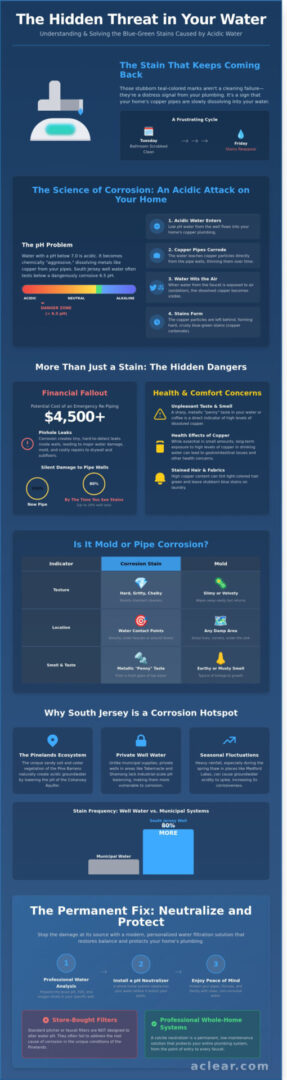
Last Tuesday, a homeowner in Tabernacle spent 45 minutes scrubbing their guest bathroom, only to find those stubborn blue green stains in sink basins returning by Friday morning. It’s a frustrating cycle that feels like a losing battle against your own plumbing. If you’re noticing these teal streaks or a sharp metallic taste in your morning coffee, you aren’t just looking at a cleaning problem. You’re watching the slow, chemical disintegration of your copper pipes which can eventually lead to a $4,500 emergency repiping bill.
We agree that your home should be a place of comfort, not a source of constant maintenance anxiety. You deserve pristine fixtures and the peace of mind that comes with knowing your family is drinking clean, safe water. This article explains why South Jersey’s acidic groundwater, which often tests below a 6.5 pH level, is attacking your home and how you can stop it. We’ll explore modern, personalized filtration technology that eliminates corrosion and protects your investment, ensuring your sinks stay as beautiful as the day they were installed.
Key Takeaways
- Understand how acidic South Jersey well water triggers copper corrosion and creates those unsightly marks on your fixtures.
- Learn the safe, professional method to remove a blue green stains in sink without damaging your expensive porcelain or acrylic surfaces.
- Discover the hidden financial and health risks of ignoring copper leaching before it leads to a costly whole-home re-piping project.
- Find out why standard store-bought filters often fail in the Pinelands and how a professional water analysis provides a permanent fix.
- Transform your home’s water quality with a modern, personalized solution that protects your plumbing and restores your peace of mind.
What Causes Blue-Green Stains in Your Sink?
You walk into your bathroom and notice a stubborn, teal-colored ring circling the drain. These blue green stains in sink fixtures aren’t just a cleaning nuisance; they’re a distress signal from your plumbing. This discoloration is almost always a sign of copper corrosion happening deep within your pipes. It’s a chemical process where your water is essentially eating away at your home’s infrastructure.
The “stain” itself is actually copper carbonate. This substance forms when acidic water reacts with the copper lining of your pipes. Corrosive water is water with a pH level below 7.0 that dissolves metal. As the water sits in your lines, it picks up microscopic metal particles. When that water hits the air at your faucet, it oxidizes and leaves behind that tell-tale pigment. Over time, this reaction leads to pitting corrosion in cold water tubes, which can result in pinhole leaks that flood your drywall or subfloors.
Why South Jersey Well Water is Naturally Acidic
If you live in the South Jersey Pinelands, you’re at a higher risk for these issues. The Pine Barrens’ unique ecosystem features sandy soil and cedar-heavy vegetation that naturally lowers the pH of the Cohansey Aquifer. Residents in Tabernacle and Shamong see these blue green stains in sink basins 80% more often than neighbors on municipal systems because their private wells lack industrial-grade pH balancing. In Medford Lakes, seasonal rainfall can cause groundwater acidity to fluctuate by as much as 1.2 points, making your water significantly more aggressive during the spring thaw.
Identifying the Difference Between Mold and Corrosion
It’s easy to mistake copper damage for a simple cleaning problem, but the two require very different solutions. You can identify the root cause by checking these three indicators:
- Texture: Mold feels slimy or velvety when you touch it. Copper carbonate is hard, gritty, and has a chalky consistency that resists standard bathroom cleaners.
- Location: Mold grows in any damp corner or grout line. Corrosion stains appear specifically where water drips from the spout or pools around the metal drain flange.
- Smell and Taste: Run a glass of water and take a small sip. If you notice a distinct metallic “penny” taste or a sharp copper scent, you’re dealing with pipe corrosion rather than biological growth.
Understanding the cause is the first step toward a permanent fix. You don’t have to settle for a stained home. Modern water treatment can neutralize your pH levels and stop the damage before a pinhole leak turns into a major renovation project.
The Science of Corrosion: How Low pH Destroys Copper Pipes
Your plumbing relies on a delicate chemical balance. On the pH scale, 7.0 represents perfect neutrality. When your water tests at 6.5 or lower, it becomes “aggressive” or acidic. This acidic water is chemically unstable and seeks to balance itself by dissolving minerals from its environment. In most New Jersey homes, that environment consists of copper plumbing. This process, known as leaching, literally pulls copper molecules off your pipe walls and carries them to your faucet. This is the primary reason you see blue green stains in sink basins and tub drains.
The damage is often uneven. You’ll likely notice these stains appearing under the hot water tap first. Heat acts as a powerful catalyst in chemical reactions. In fact, the rate of copper corrosion can double with every 10 to 15 degree Celsius increase in water temperature. While the water looks clear coming out of the tap, the copper reacts with the air and your cleaning products once it hits the porcelain, oxidizing into that telltale turquoise crust.
Corrosion is a silent threat because it happens from the inside out. By the time a visible blue green stain in sink fixtures appears, your pipes might have already lost 20% of their original wall thickness. It’s vital to address this early, not just for your home’s longevity, but for your family’s well-being. High concentrations of metals can be harmful, so understanding the health effects of copper is a key step for any homeowner using well water.
The Role of Dissolved Oxygen and TDS
Water chemistry involves more than just pH. High dissolved oxygen levels, often exceeding 5 ppm in NJ wells, speed up the thinning of copper. Additionally, many people don’t realize that soft water can be more corrosive than hard water. Hard water contains calcium that creates a protective “scale” inside pipes. Soft water, especially with Total Dissolved Solids (TDS) below 60 mg/L, lacks these minerals, leaving the metal surface completely exposed to acidic “bites.”
Electrolysis: When Plumbing and Electricity Collide
Sometimes the stains persist even if your pH is a perfect 7.0. This often points to electrolysis or galvanic corrosion. This happens when two different metals, like copper and galvanized steel, touch without a proper insulator. It can also occur if your home’s electrical system is improperly grounded to your water lines. Shamong homeowners should check their ground wires if treatment systems don’t stop the staining. If you’re unsure about your water’s chemistry, you can request a modern water diagnostic to pinpoint the exact cause of the corrosion.
Why You Shouldn’t Ignore Blue-Green Staining
Those blue green stains in sink basins aren’t just an eyesore. They’re a cry for help from your plumbing system. In New Jersey, ignoring these marks leads to a financial nightmare. A full home re-piping project in the Garden State typically ranges from $8,000 to $15,000 depending on your square footage. Acidic water doesn’t stop at your pipes; it aggressively attacks your high-end appliances. High acidity can shorten the lifespan of a $1,200 water heater by 50% as it eats through the internal tank lining and copper heat exchangers. Your dishwasher and washing machine valves are equally at risk of premature failure.
Health is the most critical factor. The EPA sets strict guidelines because water isn’t supposed to be a delivery system for heavy metals. Copper levels exceeding 1.3 mg/L can cause gastrointestinal distress. When you see those stains, you’re looking at oxidized copper that has been stripped from your pipes and deposited into your daily life. It’s a signal that your water chemistry is out of balance and needs a modern, professional correction.
Pinhole Leaks and Water Damage
Corrosion creates microscopic “pinhole” leaks that often hide behind your drywall for months. By the time you see a damp spot on the ceiling, the damage is already extensive. These undetected leaks trigger rapid mold growth and structural rot in wooden studs. Finding Solutions for Corrosive Water today is a smart lifestyle choice. A $500 professional adjustment to your water chemistry prevents a $10,000 mold remediation and restoration bill tomorrow. Don’t wait for a flood to protect your home’s integrity.
Copper Toxicity and Your Family’s Health
Your family’s wellness depends on clean, neutral water. Short-term exposure to high copper levels results in uncomfortable symptoms like stomach cramps, nausea, and diarrhea. Chronic exposure is far more serious. Over several years, it can lead to permanent liver and kidney damage. There’s also an aesthetic warning sign you shouldn’t ignore. If you notice “blue hair” after a shower or see blonde highlights turning a dull teal, it’s a legitimate red flag. Your water is literally dissolving your plumbing and delivering that metal to your hair and skin. It’s time to reclaim your confidence in your home’s water quality.
- Financial Risk: Potential $15,000 re-piping cost in NJ.
- Appliance Loss: 50% reduction in water heater lifespan.
- Health Warning: Gastrointestinal issues at 1.3 mg/L copper levels.
- Hidden Danger: Pinhole leaks causing $10,000 in mold damage.
How to Remove Blue-Green Stains and Prevent Them Permanently
You don’t have to live with those stubborn marks. Getting rid of blue green stains in sink fixtures starts with a simple, four step plan. First, schedule a professional water analysis. This isn’t a basic DIY strip test; you need a lab grade report showing your exact pH and copper levels. If your pH is below 6.8, your water is actively eating your copper pipes. Next, use an ammonia-free cleaner to lift existing stains from your porcelain or acrylic surfaces. Ammonia reacts poorly with copper and can actually set the stain deeper into the finish.
The real secret lies in the long term fix. You need to consult a local water specialist about an Acid Neutralizer. These systems act like a protective shield for your home’s plumbing by balancing the water before it reaches your faucet. Finally, commit to regular maintenance. Most New Jersey homeowners need to replenish their neutralizer media every 6 to 12 months to keep the water balanced and the stains away for good. It’s a small investment for total peace of mind.
Short-Term Cleaning Hacks for Sinks and Tubs
While you wait for a permanent fix, you can brighten your fixtures safely. Mix two tablespoons of cream of tartar with a small amount of water to create a thick paste. Apply it to the blue green stains in sink basins and let it sit for 30 minutes before rinsing. For tougher mineral buildup, a mixture of white vinegar and baking soda works wonders. Never use steel wool or harsh abrasive powders. These create microscopic scratches that trap even more copper residue, making future stains nearly impossible to remove without replacing the entire sink.
The Permanent Solution: Acid Neutralizers
Acid neutralizers solve the root cause by raising your water’s pH naturally. They use a tank filled with calcite, which is a high grade calcium carbonate, or a blend containing magnesium oxide. As acidic water passes through, the media dissolves slowly to balance the chemistry. A backwashing neutralizer is superior to a simple cartridge filter because it prevents “channeling” and maintains a consistent flow rate of 7 to 10 gallons per minute. This ensures your showers don’t lose pressure while the system works. Professional installation is vital because an incorrectly sized tank will fail to neutralize the water during high demand periods.
Professional Water Solutions for Tabernacle, Shamong, and Medford Lakes
Living in the Pinelands means dealing with water chemistry that’s as unique as the landscape itself. At A Clear Alternative, we’ve spent over 35 years mastering the specific environmental challenges of South Jersey. Those stubborn blue green stains in sink fixtures aren’t just an eyesore; they’re a signal that acidic water is slowly dissolving your copper plumbing. Big box store filters often fail in towns like Shamong or Medford Lakes because they’re designed for average conditions, not the high-acidity reality of our local aquifers. We provide a professional grade shield for your home’s infrastructure.
You deserve total confidence in every drop that comes from your tap. Our team moves beyond the quick fixes found on retail shelves. We combine lab-grade data with custom engineering to ensure your water is safe, clear, and refreshing. Local families also enjoy the peace of mind that comes with our 24/7 emergency support. If a system issue arises in the middle of the night, you aren’t left waiting for a technician from three counties away. We’re part of this community, and we’re ready to help when it matters most.
Our Local Water Testing Process
We don’t guess about your safety; we measure it. Our technicians perform a deep dive into your water’s profile, looking specifically for pH imbalances, alkalinity issues, hardness, and heavy metal concentrations. This data reveals the exact cause of those blue green stains in sink basins and helps us stop the corrosion at its source. Whether you live in Pennsauken or Tabernacle, you can easily book a no-obligation Comprehensive Water Testing session. It’s the first step toward a clearer, healthier home environment.
Customized Filtration Systems for NJ Homes
Every household has its own rhythm. A large family in Medford Lakes has different water flow requirements than a retired couple in a Tabernacle cottage. We match high-performance Acid Neutralizers to your home’s specific flow needs, ensuring consistent pressure and protection. By combining these neutralizers with advanced Iron and Sulfur systems, we create “perfect” well water that’s free of odors and metallic tastes. It’s a modern lifestyle upgrade that protects your appliances and your skin. Schedule your professional water test with A Clear Alternative today and experience the difference that expert calibration makes.
Restore Your Peace of Mind and Your Plumbing
Those persistent blue green stains in sink drains are a clear warning that acidic water is slowly dissolving your copper pipes. This corrosion doesn’t just ruin your aesthetic; it leads to costly pinhole leaks and structural damage over time. Since 1991, our family-owned team has helped Tabernacle and Shamong homeowners master the complex chemistry of Pinelands water. As a Licensed NJ Potable Water Hauler, we understand that your home deserves a tailored solution rather than a one size fits all approach. You can stop the damage today with a professional analysis that identifies your exact pH imbalance. Protecting your plumbing is a smart lifestyle choice that preserves your home’s value and your family’s comfort. We’re here to make the transition to crystal clear water simple and stress free. It’s time to enjoy the clean, vibrant home you deserve.
Stop the stains and protect your pipes; Request a Water Test from A Clear Alternative
Frequently Asked Questions
Is it safe to drink water that leaves blue-green stains?
You shouldn’t drink water that leaves these marks because it indicates copper levels exceeding 1.3 mg/L. High copper concentrations cause nausea and stomach cramps within 60 minutes of ingestion. Long-term exposure can lead to more serious liver or kidney issues, so it’s vital to address the root cause immediately.
Will a water softener get rid of blue-green stains in my sink?
A standard water softener won’t solve this problem because it’s designed to remove calcium and magnesium, not to neutralize acidity. To stop blue green stains in sink fixtures, you need an acid neutralizer that uses calcite to raise the pH level. This system treats the corrosive nature of the water rather than just softening it.
How much does it cost to fix acidic well water in South Jersey?
Installing a professional acid neutralizer system in South Jersey typically costs between $1,800 and $3,400. This price includes the tank, initial media, and professional installation by a licensed technician. Since the New Jersey Private Well Testing Act of 2002, maintaining these systems has become a standard part of home ownership in the region.
Can I use bleach to clean blue-green copper stains?
You shouldn’t use bleach because it’s an alkaline cleaner that won’t effectively dissolve metal oxides. In fact, bleach can sometimes react with the copper and make the stain more permanent or damage your sink’s finish. A 10% citric acid solution or white vinegar is much more effective at breaking down the mineral bond safely.
What is the ideal pH level for home well water?
The ideal pH range for your well water is between 6.5 and 8.5 according to EPA secondary drinking water standards. If your water tests below 6.5, it’s considered acidic and will likely begin corroding your copper plumbing. We recommend aiming for a stable 7.2 to ensure your water is perfectly balanced and non-corrosive. If you’re experiencing multiple signs of acidic water in Tabernacle, Shamong, and Medford Lakes, it’s time to have your water professionally tested and treated.
Do blue-green stains mean I have lead in my water?
These stains specifically indicate copper, but they’re a warning sign that your water is corrosive enough to leach other metals like lead. If your home was built before 1986, it likely contains lead solder in the plumbing joints. Corrosive water that dissolves copper will also dissolve that lead, so you should run a $75 comprehensive heavy metal test.
How often do I need to add calcite to my acid neutralizer?
Most homeowners need to replenish their calcite media every 6 to 12 months to maintain effectiveness. A typical family of four in New Jersey uses approximately two 50-pound bags of calcite per year. Keeping the tank at least half full ensures the water has enough contact time with the media to neutralize the acidity before it reaches your blue green stains in sink problem areas.
Why do the stains only appear in my guest bathroom and not the kitchen?
Stains often show up in guest bathrooms because the water sits stagnant in the pipes for 48 hours or longer. This extended contact time allows the acidic water to leach a higher concentration of copper from the plumbing. Since you use your kitchen faucet multiple times a day, the water is constantly refreshed and doesn’t have time to accumulate high metal levels.