
Well Water Testing South Jersey: The 2026 Homeowner’s Guide to Safe Water
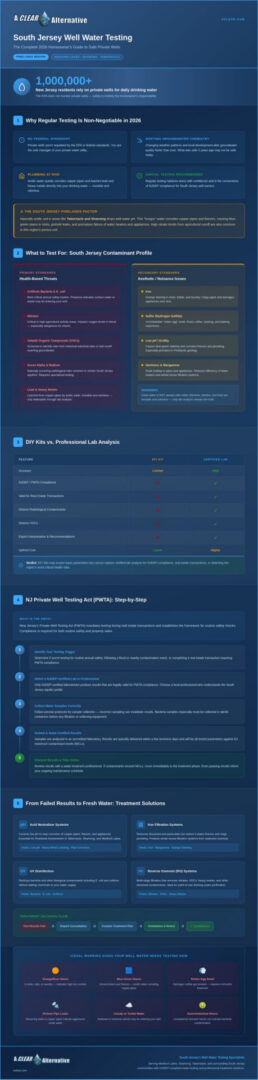
Did you know that over one million New Jersey residents rely on private wells for their daily glass of water? It’s a massive number, yet many homeowners still feel in the dark when arranging their well water testing south jersey. You likely moved to this region for the lifestyle and the peace of mind, not to stress over invisible toxins or acidic water quietly eating through your copper pipes. We know how frustrating it is to feel overwhelmed by complex lab reports and shifting state requirements.
You deserve total confidence in every drop your family drinks. This 2026 guide simplifies the path to a safer home and a more confident lifestyle. We’ll show you how to navigate the latest NJDEP regulations, identify contaminants specific to our local geology, and turn confusing data into actionable results. From protecting your children’s health to preserving your plumbing, we’ve mapped out everything you need to know for a clear, refreshing future.
Key Takeaways
- Understand why private well safety is entirely your responsibility and why 2026 environmental shifts make annual checks non-negotiable.
- Learn to identify common local threats like E. coli and acidic pH levels through professional well water testing south jersey to protect your home’s plumbing.
- Discover the critical differences between basic DIY kits and certified lab analysis to ensure your results are accurate and state-compliant.
- Navigate the New Jersey Private Well Testing Act (PWTA) with a simple step-by-step process for both routine safety and real estate transactions.
- Explore how modern solutions like acid neutralizers and iron filtration systems turn failed test results into a fresh, high-quality water supply.
Why Regular Well Water Testing is Essential in 2026
Owning a home in South Jersey means enjoying a certain level of freedom. You have your own land and your own water. But that independence means you are also the manager of your own private utility. The EPA doesn’t monitor your tap; that job is yours alone. Because unregulated private wells aren’t subject to federal oversight, staying proactive is the only way to guarantee safety. In 2026, staying ahead of environmental changes through well water testing south jersey is the smartest way to protect your family and your investment.
The landscape is shifting. Changing weather patterns and local development can alter groundwater chemistry faster than in previous decades. What was safe three years ago might not be safe today. Regular testing isn’t just about avoiding illness; it’s about maintaining the quality of life you moved here to enjoy. It’s a simple, modern step that replaces worry with confidence.
Invisible Risks in Your Glass
Contaminants like bacteria and nitrates are often invisible. They don’t change the color of your water, but they can significantly impact your health. If your water is naturally acidic, it doesn’t just stay in the glass. It reacts with your plumbing. This process leaches lead and other heavy metals from your pipes, turning a refreshing drink into a health risk. Potable water is defined as water that is biologically and chemically safe for human consumption without risk of immediate or long term illness. To keep your home a sanctuary, you need to ensure your supply meets this standard every day.
The South Jersey Pinelands Factor
The beauty of the Pinelands comes with a specific geological catch. Soil in areas like Tabernacle and Shamong is naturally acidic, which drops the pH of your well water. This “hungry” water is aggressive. It seeks out minerals to neutralize itself, often finding them by corroding your copper pipes and expensive fixtures. You might notice blue-green stains in your sinks or pinhole leaks in your plumbing. This isn’t just a nuisance; it’s a financial drain that can destroy water heaters and high end appliances long before their time.
Local geography also dictates your chemical profile. High nitrate levels from agricultural runoff are common in our region’s porous soil. Don’t be fooled by appearances. Clear water is not always safe water. A professional analysis reveals what your eyes cannot see, allowing you to choose the right treatment and enjoy the peace of mind that comes with truly clean water.
Essential Contaminants: What to Test for in South Jersey Wells
Understanding what is in your water is the first step toward total home confidence. While the list of potential contaminants can feel long, well water testing south jersey focuses on a few key players that define our region’s unique water profile. Some of these are health risks, while others simply interfere with your lifestyle and home aesthetics. Knowing the difference helps you prioritize your testing and treatment strategy.
Health-Based vs. Aesthetic Contaminants
Contaminants fall into two main categories. Primary standards are the non-negotiables. These are the “silent” issues that demand your attention to keep your family safe. They include:
- Coliform Bacteria and E. coli: These are the most critical annual safety markers. Their presence indicates that surface water or waste may be entering your well.
- Volatile Organic Compounds (VOCs): We screen for these to identify risks from historical industrial sites or fuel runoff that might have reached the groundwater.
- Nitrates: Particularly important in areas with high agricultural activity, as they can impact oxygen levels in the blood.
Secondary standards are often called “nuisance” contaminants. They won’t necessarily make you sick, but they will ruin your morning coffee and your laundry. Iron and sulfur are the culprits behind orange stains in your sinks and that unmistakable “rotten egg” smell. Hardness and manganese can also build up in your pipes. Addressing these aesthetic issues is the best way to protect a whole house water filtration system, ensuring it runs efficiently without being bogged down by heavy sediment.
Regional Red Flags for Medford Lakes and Shamong
Our local geology in Medford Lakes and Shamong brings specific challenges. Naturally occurring radiological risks like Gross Alpha and Radium are common in certain South Jersey aquifers. These require specialized testing through PWTA certified laboratories to ensure levels remain within safe limits. Another regional signature is manganese, which often appears as tiny black flakes or sediment that clogs your fixtures.
Finally, pay close attention to your pH levels. As we discussed, the acidic nature of Pinelands soil makes your water aggressive. If you see blue-green staining on your shower heads or faucets, your water is likely leaching copper from your own plumbing. This is more than an aesthetic issue; it’s a sign that your home’s “circulatory system” is under attack. Identifying these markers through well water testing south jersey allows you to take control before a minor leak becomes a major renovation.
If you’re seeing these signs in your home, consulting with a professional water treatment company near you is the fastest way to restore your peace of mind.
Comparing Testing Methods: DIY Kits vs. Professional Lab Analysis
When you’re curious about your water, a quick trip to the hardware store for a DIY kit seems like a win. It’s inexpensive and provides instant feedback. However, these strips often fail to catch the nuances of well water testing south jersey. While they might show basic pH or hardness, they frequently miss dangerous trace levels of lead or arsenic. These “false negatives” create a dangerous sense of security, leading you to believe your water is safe when it actually contains silent threats.
State and county labs offer a higher tier of accuracy. They use calibrated equipment that detects contaminants at parts per billion. The downside? You’re often left with a long wait and a stack of data that’s impossible to read. They provide the “what” but never the “why” or the “how to fix it.” For compliance with the New Jersey Private Well Testing Act (PWTA), professional sampling is actually required for real estate transactions. You can’t just drop off a bottle you filled yourself. A certified professional must collect the sample to ensure the chain of custody and scientific validity.
The Pitfalls of Store-Bought Test Strips
Instant tests lack the sensitivity needed for family safety. They’re designed for broad ranges, not the precise detection limits required for toxins. There’s also the human element. Maintaining a sterile technique is difficult without training. If you accidentally touch the inside of the cap or the rim of the collection bottle, you’ve contaminated the sample. This leads to “false positives” for bacteria, causing unnecessary panic and potentially expensive, unneeded treatments.
The Value of Expert Interpretation
A lab report is a technical document, not a lifestyle guide. It’s filled with abbreviations like MCL, mg/L, and CFU. You need a partner who can translate those numbers into a plan for your home. At A Clear Alternative, we don’t just hand you a piece of paper. We provide the context you need to make informed decisions about your water quality. We turn raw data into a clear path toward a healthier home.
Professional sampling also makes your results legally binding. This is crucial if you’re buying or selling a home in the Tri-State area. We’ve spent over 35 years helping families in Tabernacle and Medford Lakes navigate these complexities. If a critical failure is detected, we offer 24/7 support to ensure your family isn’t left without a safe supply. Choosing professional well water testing south jersey means you’re investing in accuracy, legality, and long term peace of mind.
The NJ Private Well Testing Act (PWTA) and Your Step-by-Step Guide
Navigating the legal side of homeownership doesn’t have to be a headache. The New Jersey Private Well Testing Act (PWTA) is designed to protect you, but the requirements are strict. Understanding the nuances of well water testing south jersey is vital when legal deadlines are looming. Whether you are selling a family estate or just checking in on your home’s health, following a clear process ensures your results are accurate and legally valid.
- Step 1: Identify your goal. Determine if you are testing for routine annual safety or if this is for a real estate transaction. Real estate tests require a specific, expanded panel of contaminants dictated by the state.
- Step 2: Book your appointment. Schedule a visit from a water treatment company near you. A certified professional must perform the sampling for the results to be accepted by the NJDEP.
- Step 3: On-site collection. Our experts visit your property to collect water samples directly from the appropriate tap or well head. We use sterile techniques to prevent any outside interference with the data.
- Step 4: Certified lab analysis. Your samples are rushed to a lab that follows rigorous NJDEP and EPA protocols. This detects everything from bacteria to the latest PFAS compounds required in 2026.
- Step 5: Submission and review. For home sales, we handle the electronic submission of results to the state. Afterward, we provide a direct consultation to explain the findings in plain English.
When Does the PWTA Apply to You?
If you are buying or selling a home with a private well in New Jersey, the PWTA is mandatory. With an estimated 20,000 to 30,000 real estate transactions subject to this act every year, it is a standard part of the process. Landlords in Medford Lakes and Shamong also have responsibilities; they must test their rental properties once every five years and provide those results to every tenant. Even if you aren’t moving, new well construction requires a mandatory testing window before the water can be used for drinking.
Preparing for Your Sampling Appointment
A little preparation goes a long way. Make sure our team has clear access to your well head and indoor fixtures. If we are performing a “first draw” lead test, you should avoid using any water in the house for 6 to 12 hours before we arrive. This includes flushing toilets or running the dishwasher. If you have previous test results, have them ready. Comparing past data helps us identify changing water quality trends and ensures your well water testing south jersey provides the most complete picture possible.
Ready to secure your home’s water quality? Schedule your PWTA-compliant test today to get started.
From Failed Results to Fresh Water: Professional Treatment Solutions
Receiving a failed lab report doesn’t have to be a source of stress. Think of it as a roadmap to a better, more comfortable home lifestyle. Once well water testing south jersey identifies your specific challenges, you can move away from guesswork and toward precision. Modern filtration technology makes it easier than ever to transform your water supply into something that feels premium and tastes even better. We specialize in turning those technical red flags into a reliable, high quality supply that protects your family and your property.
Our unique local geology means many homeowners require an acid neutralizer to stop pipe corrosion in its tracks. If your water has that unmistakable “rotten egg” smell or leaves orange streaks in your shower, Iron and Sulfur Filtration Systems offer a sleek, modern fix. For those concerned about microbiological safety, UV Sterilizers provide a chemical free path to pure water by using light to neutralize bacteria. At A Clear Alternative, we’ve been a family owned partner for the Tabernacle community since 1991, focusing on results that last.
Solving Low pH and Metallic Staining
Acidity is the most common hidden enemy in our region. We use calcite-based neutralizers to balance Pinelands water naturally. This process doesn’t just improve the taste; it acts as an insurance policy for your home’s infrastructure. By neutralizing aggressive water, you extend the life of your water heater, dishwasher, and luxury fixtures. Protecting your investment requires more than just installation. We emphasize the importance of regular maintenance for whole house systems to ensure they continue to perform at peak efficiency year after year.
Your Partner in Long-Term Water Safety
Our relationship with you goes far beyond a single test. We understand that water issues don’t always happen during business hours. That is why we offer 24/7 emergency support and are a licensed potable water hauler. If your well fails completely, our emergency water hauling and bulk delivery services keep your household running without interruption. We design customized filtration plans based on the specific South Jersey aquifer your well taps into, ensuring your solution is as unique as your home.
Don’t let confusing data stand in the way of your peace of mind. Schedule your professional well water analysis today!
Secure Your Home’s Future with Crystal Clear Confidence
Your home is your sanctuary, and the water flowing through it should reflect that. We’ve explored why professional well water testing south jersey is the only way to replace uncertainty with absolute clarity. From navigating the strict requirements of the PWTA to identifying the specific acidic signature of our Pinelands aquifers, taking control of your water quality is a modern lifestyle choice that protects both your family’s health and your property’s value. You don’t have to settle for orange stains or “rotten egg” odors when sophisticated, chemical free solutions are within reach.
A Clear Alternative has been the supportive partner for Tri-State families since 1991. As a family owned and operated team, we combine 35 years of local expertise with comprehensive NJDEP certified lab testing to ensure your results are accurate and actionable. We don’t just hand you a report; we provide the path to a better quality of life. Schedule Your Professional Well Water Analysis with A Clear Alternative today. It’s time to enjoy the peace of mind that comes with a truly safe and refreshing water supply.
Frequently Asked Questions
How often should I test my well water in South Jersey?
You should test your well for coliform bacteria and nitrates at least once every year. It’s also smart to schedule a test if you notice any sudden changes in the taste, color, or odor of your water. Families with young children or pregnant women should be especially diligent about these annual checks to ensure long term safety.
What is the NJ Private Well Testing Act (PWTA) and does it apply to me?
The PWTA is a state law that mandates well water testing south jersey during real estate transactions and for rental properties. If you are selling your home or if you’re a landlord, this act applies to you. Landlords must test their wells every five years and share the results with their tenants to stay compliant with New Jersey regulations.
Why does my well water smell like rotten eggs?
That unmistakable odor is typically caused by hydrogen sulfide gas. This gas can occur naturally in the groundwater or result from sulfur-reducing bacteria living in your well system. While it’s often considered an aesthetic nuisance, it’s easily corrected with modern iron and sulfur filtration systems that restore your water’s fresh scent.
How much does a professional well water test cost in NJ?
The cost of a professional analysis depends on the specific panel of contaminants you need to check. A routine safety screening is generally more affordable than the comprehensive testing required by the PWTA for a home sale. We recommend reaching out for a personalized quote that matches your specific county requirements and safety goals.
Can I test my own well water with a kit from a big-box store?
You can use store-bought kits for a basic, unofficial check, but they often lack the sensitivity to detect dangerous trace levels of toxins like lead or arsenic. For legal real estate transactions or total peace of mind, you need professional well water testing south jersey. Certified labs use advanced technology that provides much more reliable results than a DIY strip.
What should I do if my water test results show high levels of bacteria?
Stop drinking the water immediately and switch to bottled water for cooking and brushing teeth. You’ll need to have your well professionally disinfected, a process often called shock chlorination, to eliminate the bacteria. After the treatment, a follow-up test is required to confirm the water is safe before you resume normal use.
How long does it take to get well water test results back?
You can typically expect your final lab report within one to two weeks after the sample is collected. The timeline includes the time needed for the lab to culture samples and run precise chemical analyses. If you are closing on a home, we recommend starting the process at least six to eight weeks before your target date.
Does A Clear Alternative offer emergency water testing services?
Yes, we provide 24/7 emergency support for families facing critical well failures or sudden water quality issues. Our team understands that a safe water supply is essential for your daily life, so we stay available around the clock. We also offer emergency water hauling and bulk potable water delivery if your well goes dry or becomes unusable.