
Water Softener Ran Out of Salt? A Recovery Guide for South Jersey Homeowners
Last Tuesday, a homeowner in Medford Lakes noticed white, crusty spots on their kitchen faucet just three hours after a morning shower left their skin feeling itchy and dry. It is a frustrating moment when you realize your water softener ran out of salt and the hard water minerals have returned. You invested in your system for a premium, comfortable lifestyle in Tabernacle or Shamong. Seeing those chalky deposits on your fixtures feels like a setback for your home’s aesthetic and your own well-being.
Key Takeaways
- Discover why your water quality drops the moment your water softener ran out of salt and how to stop mineral buildup in its tracks.
- Protect your South Jersey home from “iron breakthrough” and the stubborn red stains common in Tabernacle and Shamong well water.
- Follow a simple recovery process, including the essential “Two-Hour Rule” for dissolving new salt effectively.
- Learn to spot hidden issues like “salt bridges” and “mushing” that disrupt your system even when the tank looks full.
- Simplify your home maintenance and save your back by automating your salt levels with a professional delivery service.
What Happens When Your Water Softener Runs Out of Salt?
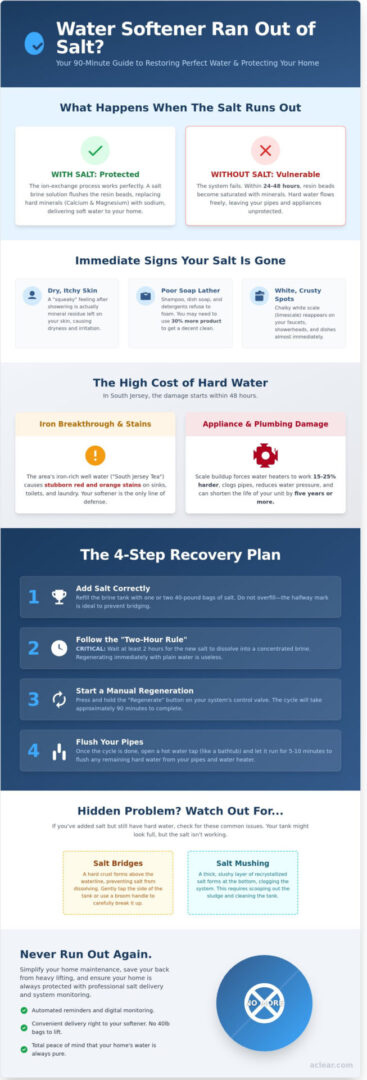
It happens to the best of us. You head down to the basement or out to the garage and realize your water softener ran out of salt. The moment that brine tank hits empty, the invisible chemistry protecting your home stops working. Inside your system, the ion-exchange process relies on a constant supply of sodium to strip away calcium and magnesium. Without salt, those resin beads become saturated with minerals within 24 to 48 hours, leaving your plumbing vulnerable.
In South Jersey towns like Tabernacle, the impact is immediate. Hard water minerals don’t just stay in the pipes; they begin coating your water heater’s heating elements with a layer of scale. This buildup can reduce your heater’s efficiency by 15% in a matter of weeks. While a two-day lapse is a minor hiccup, leaving the system empty for a month can lead to resin fouling. This is where the beads become permanently coated in iron or mineral deposits, potentially shortening the life of your unit by five years or more.
The Role of Salt in Regeneration
Think of salt as the reset button for your system. During the regeneration cycle, a concentrated brine solution flushes the resin tank. This process, known as Water softening, forces the hard minerals off the beads and replaces them with sodium ions. If the tank is empty, the system might still go through the motions of a cycle, but it’s only pulling air or plain water. It cannot self-heal. Without that fresh sodium or potassium supply, the resin remains clogged and useless, allowing hard water to flow freely into your home.
Immediate Signs Your Salt Level is Too Low
You’ll notice the change before you even check the tank. In Medford Lakes, where groundwater minerals can be stubborn, the first sign is usually white, chalky scale appearing on your chrome fixtures. You might also notice several physical changes in your daily routine:
- Soap Lather: Your shampoo and dish soap refuse to lather, often requiring 30% more product to get a decent foam.
- Skin Texture: A “squeaky” or “sticky” feeling on your skin after showering, which is actually mineral residue that hasn’t been rinsed away.
- Visual Check: Use the “water above the salt” rule. If you see more than 3 inches of water standing above your salt pellets, your level is dangerously low.
Checking your salt levels once a month is the easiest way to maintain that soft, comfortable lifestyle you’ve invested in. When your water softener ran out of salt, your priority should be a manual regeneration to get the system back on track and protect your appliances from long-term damage.
The Impact of Hard Water on South Jersey Plumbing and Appliances
Your home’s plumbing feels the weight of South Jersey’s unique geology every day. In towns like Tabernacle and Medford Lakes, well water carries a heavy load of calcium, magnesium, and dissolved iron. When your water softener ran out of salt, these minerals stopped being captured and started flowing freely through your pipes. This isn’t just a minor inconvenience; it’s a chemical assault on your infrastructure. Most local residents understand what hard water is, but they don’t always realize how quickly it acts. Within 48 hours of a salt-out event, the “Iron Breakthrough” begins. This is why you see those stubborn red stains in your sinks and toilets almost immediately. It’s the signature of the Pine Barrens’ iron-rich soil entering your living space.
Well Water Challenges in the Tri-State Area
Resin Bed Fouling: The Hidden Danger
The real damage often happens where you can’t see it. Inside your softener tank, millions of tiny resin beads do the heavy lifting. When you run out of salt, iron particles attach themselves to these beads. Without a brine wash to strip them away, the iron “fouls” the resin, creating a sticky coating that prevents future softening. For Shamong homeowners with high-iron wells, this leads to permanent capacity loss. Your system might only work at 60% efficiency even after you refill the salt. Using a specialized resin cleaner is often necessary to restore the system’s ability to provide the soft, clear water you expect.
Step-by-Step: How to Restore Your System After Running Out of Salt
If your water softener ran out of salt, you have likely noticed the immediate return of dry skin, dull hair, and spotted glassware. Don’t worry. Restoring your water quality is a straightforward process that brings back the comfort you expect in your Medford Lakes home. It’s a quick fix that ensures your plumbing and appliances stay protected from mineral buildup.
Start by refilling the brine tank. You should fill it until the salt level is between one-half and two-thirds full. Avoid filling it to the very top. Leaving that extra space helps prevent salt bridges, which are hard crusts that stop the salt from dissolving into the water. Once the salt is in, you must follow the “Two-Hour Rule.” Your system needs at least 120 minutes for the salt to dissolve and create a concentrated brine solution. This wait time is vital because the water softening process relies on this brine to effectively recharge the resin beads during the regeneration cycle.
Initiating a Manual Regeneration
Once the two hours have passed, you need to tell the system to clean itself. Most modern control valves make this easy. For a Clack valve, press and hold the “Regen” button for five seconds. If you have a Fleck system, turn the dial to the “Regen” position or hold the extra cycle button. For Autotrol models, push the “Regen” button down until the motor starts. If your water softener ran out of salt for more than 14 days, run a “double regeneration.” This means starting a second manual cycle immediately after the first one finishes to ensure the resin is completely cleared of hardness. You’ll know it’s working when you hear a steady stream of water flowing through the drain line.
Flushing the Hard Water Out
A successful regeneration cycle doesn’t instantly change the water at your tap. Hard water is still sitting in your pipes and your water heater. To clear the lines, run the cold water faucets furthest from the softener for 5 to 10 minutes. This pushes the remaining hard water out of the system. Your water heater is the biggest hurdle. Since it holds a 40 or 50-gallon reservoir of hard water, it typically takes about 24 hours of normal household use before you’ll feel truly soft water in the shower. To ensure your system recovers with maximum efficiency, always use the best salt for water softeners to prevent future clogs or salt bridges.
Salt Bridges and Mushing: Common Issues in Medford Lakes Households
Salt mushing is the opposite problem. It occurs when salt collapses into a thick, salty paste at the bottom of the tank. This sludge blocks the intake valve. When this happens, the system can’t draw brine. It behaves exactly as if your water softener ran out of salt because the resin beads never get cleaned. Both issues are common in our region due to the high mineral content and local climate conditions.
Identifying a Salt Bridge
If you live in Shamong and notice your salt level hasn’t moved in 14 days, you likely have a bridge. You can verify this with the broom handle test. Take a blunt tool like a broom handle and gently push down on the salt. If it feels rock-solid and then suddenly gives way to a hollow space, you’ve found the culprit. Be careful during this process. Stay at least 5 inches away from the brine well. This is the plastic tube housing the float assembly. Hitting this tube can crack the plastic or misalign the float, which often leads to a flooded basement or utility room.
Cleaning a Mushed Brine Tank
To fix a mushed tank, you’ll need the Fresh Start method. This involves completely emptying the brine tank. Use a wet-dry vacuum to remove the salty sludge at the bottom. Once empty, scrub the tank walls with a mixture of 1 gallon of water and 1 ounce of unscented household bleach. This removes any bacterial film that has started to grow in the stagnant mush. To prevent this from recurring, switch to 99.8% pure evaporated salt pellets. These dissolve more cleanly than solar salt or rock salt. High-purity pellets are less likely to clump in the Jersey heat, ensuring your system stays efficient year-round.
Never Run Out Again: Professional Maintenance and Salt Delivery
You shouldn’t have to spend your Saturday morning wrestling with heavy plastic bags. For many homeowners in South Jersey, the physical toll of hauling 40lb bags down steep, narrow basement stairs is more than just a nuisance. It’s a recurring strain that risks back injury and takes up valuable time. When your water softener ran out of salt, it likely happened because the chore was too cumbersome to stay on top of. Moving 200 pounds of salt every few months is a heavy lift that most people would rather skip.
Professional water softener delivery services transform this burden into a seamless lifestyle benefit. Instead of monitoring a brine tank yourself, you can rely on a scheduled system that ensures your water quality never dips. This consistency is vital for protecting your home’s plumbing and maintaining the soft, clean feel of your water. By removing the manual labor, you ensure that your system stays functional without ever having to touch a salt bag again.
The Freedom of Salt Delivery
Searching for water softener salt delivery near me has become the top maintenance request for a reason. A Clear Alternative manages the heavy lifting for Tabernacle and Shamong residents through a comprehensive “No-Touch” service. We don’t just drop bags on your driveway. Our team enters the basement, fills the tank to the correct level, and inspects the brine well for salt bridges.
A salt bridge is a hard crust that forms inside the tank, making it look full even when the water underneath isn’t touching any salt. This creates “The Salt Gap,” where your system fails to regenerate despite appearing ready. Our service eliminates this risk. For Medford Lakes families and seasonal residents, this means total peace of mind. You can leave for the season or focus on your busy week knowing your water remains soft and your appliances stay protected from scale buildup.
Annual System Check-ups
- Testing current “hardness” levels to match 2026 water quality standards.
- Cleaning the brine tank to remove sediment and impurities.
- Adjusting regeneration cycles based on your actual household water usage.
- Checking valves and seals to prevent leaks before they start.
If your water softener ran out of salt recently, your system might need a quick reset to ensure it’s operating at peak efficiency. Modern water treatment is about more than just salt; it’s about digital precision and hardware longevity. We make sure your settings are optimized for the specific mineral content of South Jersey well water. Schedule your salt delivery or system check-up today and enjoy the confidence of a home that runs itself.
Enjoy the Freedom of Crystal Clear Water Every Day
If your water softener ran out of salt, you’ve already felt the immediate impact on your skin and seen the stubborn scale building up on your fixtures. South Jersey water is notoriously tough on your plumbing and high-end appliances. You don’t have to spend your weekends lugging heavy bags or troubleshooting complex system resets alone. Since 1991, our family-owned team has provided the expertise Medford Lakes residents trust to keep their homes running efficiently. We operate as a licensed potable water hauler and offer 24/7 emergency water treatment support to handle any issue that arises. You deserve a home that works for you, giving you back your time and peace of mind. It’s about more than just salt; it’s about the confidence that comes with a perfectly maintained system. Let us handle the heavy lifting so you can focus on enjoying your home. Save your back and your plumbing, schedule your South Jersey salt delivery today!
Your home is your sanctuary, and keeping your water soft is the simplest way to protect that investment. We’re here to make sure you never have to deal with hard water headaches again.
Frequently Asked Questions
Is it bad if my water softener ran out of salt for a few days?
Running out of salt for a few days won’t damage your equipment, but it will allow hard water to enter your home’s plumbing. South Jersey water often measures over 120 parts per million in hardness, which means scale starts building up in your water heater and appliances within 48 hours. You’ll notice itchy skin and dull hair almost immediately after the resin bed loses its charge.
How long does it take for water to get soft again after adding salt?
It takes about 90 to 120 minutes for a standard regeneration cycle to complete and restore soft water. After the system finishes its cycle, you still have hard water sitting in your 40 or 50 gallon water heater. You’ll need to use up that remaining volume or flush your pipes for about 15 minutes before you feel the soft water at your faucets.
Can I still use the water while the softener is out of salt?
You can definitely use the water, but it’ll be untreated and high in mineral content. Without salt, the system acts like a bypass, sending calcium and magnesium directly to your fixtures. This results in 30% less soap efficiency and visible white spotting on your glassware. It’s safe for drinking, but it’s tough on your skin and laundry.
Why is my water still hard after I added salt and regenerated?
Your tank likely has a salt bridge, which is a hard crust that forms above the water level. This happens in roughly 20% of systems when humidity levels are high. The salt looks full, but the water underneath isn’t touching it. Use a broom handle to break the crust and then start another regeneration to fix the issue.
Should I manually regenerate my water softener twice if it was empty?
Yes, you should trigger two manual regenerations if your water softener ran out of salt and stayed empty for several days. The first cycle often only restores a portion of the resin’s softening capacity. A second cycle ensures the 1.0 to 1.5 cubic feet of resin is fully recharged, providing the consistent 0 grain hardness you expect from your system.
How much salt should be in my brine tank at all times?
Maintain your salt level at least 3 to 4 inches above the water line in the brine tank. For most South Jersey households, this means keeping the tank between half and two thirds full. Checking the level on the 1st of every month helps prevent the system from going dry. Never pack the salt to the rim, as this leads to bridging.
Will running out of salt cause iron stains in my Medford Lakes home?
Yes, iron levels in Medford Lakes frequently exceed 0.3 mg/L, which causes immediate orange staining on porcelain. When your softener is out of salt, the resin can’t flush out the trapped iron particles. You’ll likely see rust colored rings in your toilets and showers within 3 to 5 days of the system running empty. Salt is your first line of defense.
Can I mix different types of salt when refilling my empty tank?
You can mix salt types in an emergency, but it’s better to stay consistent with high purity pellets. Different salts, like solar crystals and evaporated pellets, dissolve at different rates. This can cause the brine concentration to fluctuate by 10% or more. Stick to 99.9% pure salt pellets to keep your system running efficiently and minimize the need for tank cleaning.